Results by title
461 books match the query 'Teaching' and 17 start with b
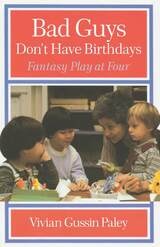
Bad Guys Don't Have Birthdays
Fantasy Play at FourVivian Gussin Paley
University of Chicago Press, 1991
Their play is filled with warnings. They invent chaos in order to show that everything is under control. They portray fear to prove that it can be conquered. No theme is too large or too small for their intense scrutiny. Fantasy play is their ever dependable pathway to knowledge and certainty.
" It . . . takes a special teacher to value the young child's communications sufficiently, enter into a meaningful dialogue with the youngster, and thereby stimulate more productivity without overwhelming the child with her own ideas. Vivian Paley is such a teacher."—Maria W. Piers, in the American Journal of Education
"[Mrs. Paley's books] should be required reading wherever children are growing. Mrs. Paley does not presume to understand preschool children, or to theorize. Her strength lies equally in knowing that she does not know and in trying to learn. When she cannot help children—because she can neither anticipate nor follow their thinking—she strives not to hinder them. She avoids the arrogance of adult to small child; of teacher to student; or writer to reader."—Penelope Leach, author of Your Baby & Child in the New York Times Book Review
"[Paley's] stories and interpretation argue for a new type of early childhood education . . . a form of teaching that builds upon the considerable knowledge children already have and grapple with daily in fantasy play."—Alex Raskin, Los Angeles Times Book Review
"Through the 'intuitive language' of fantasy play, Paley believes, children express their deepest concerns. They act out different roles and invent imaginative scenarios to better understand the real world. Fantasy play helps them cope with uncomfortable feelings. . . . In fantasy, any device may be used to draw safe boundaries."—Ruth J. Moss, Psychology Today
Basic Principles of Curriculum and Instruction
Ralph W. Tyler
University of Chicago Press, 2013
Basic Principles of Curriculum and Instruction has been the standard in the field for decades, and it continues to be the leading guide to curriculum development today. Ralph W. Tyler presents here the concept that curriculum should be dynamic, a program under constant evaluation and revision. Before the publication of this book, curriculum had generally been thought of as a static, set program, and in an era preoccupied with student testing, he offered the innovative idea that teachers and administrators should spend as much time evaluating their plans as they do assessing their students.
Although not a strict how-to guide, the book shows how educators can critically approach curriculum planning, studying progress and retooling when needed. Its four sections focus on setting objectives, selecting learning experiences, organizing instruction, and evaluating progress. Readers will come away with a firm understanding of how to formulate educational objectives and how to analyze and adjust their plans so that students meet the objectives. Tyler also explains that curriculum planning is a continuous, cyclical process, an instrument of education that needs to be fine-tuned.
This emphasis on thoughtful evaluation has kept Basic Principles of Curriculum and Instruction a relevant, trusted companion for decades. Even as the educational landscape changes and teachers and administrators have to adjust to new developments in testing, student engagement, regulation, and more, the core principles animating this book remain as valid and effective as ever. And with school districts across the nation working to align their curriculum with Common Core standards, Tyler's straightforward recommendations are sound and effective tools for educators working to create a curriculum that integrates national objectives with their students' needs.
Basic Principles of Curriculum and Instruction
Ralph W. Tyler
University of Chicago Press, 2013
In 1949, a small book had a big impact on education. In just over one hundred pages, Ralph W. Tyler presented the concept that curriculum should be dynamic, a program under constant evaluation and revision. Curriculum had always been thought of as a static, set program, and in an era preoccupied with student testing, he offered the innovative idea that teachers and administrators should spend as much time evaluating their plans as they do assessing their students.
Since then, Basic Principles of Curriculum and Instruction has been a standard reference for anyone working with curriculum development. Although not a strict how-to guide, the book shows how educators can critically approach curriculum planning, studying progress and retooling when needed. Its four sections focus on setting objectives, selecting learning experiences, organizing instruction, and evaluating progress. Readers will come away with a firm understanding of how to formulate educational objectives and how to analyze and adjust their plans so that students meet the objectives. Tyler also explains that curriculum planning is a continuous, cyclical process, an instrument of education that needs to be fine-tuned.
This emphasis on thoughtful evaluation has kept Basic Principles of Curriculum and Instruction a relevant, trusted companion for over sixty years. And with school districts across the nation working feverishly to align their curriculum with Common Core standards, Tyler's straightforward recommendations are sound and effective tools for educators working to create a curriculum that integrates national objectives with their students' needs.
Becoming Writers
Twenty-First-Century Ways of ComposingKaren Lunsford
Utah State University Press, 2026
Becoming Writers draws on phenomenological and lifespan approaches to writing research, reframing writing as a lived process shaped by social contexts, evolving technologies, and a writer’s own sense of self and agency. It moves beyond familiar binaries and offers a more holistic account of what it means to become a writer today.
Bringing together scholars from across the fields of writing studies and rhetoric/composition to consider the ways “writing” is changing in the twenty-first century, this collection tracks how and why people talk about the various forms of writing they do. Contributors address how younger generations understand the role and place of writing in their lives, particularly amid increasing and dramatic economic, social, and political change, as well as the ever-evolving role of writing in what it means to be human.
Becoming Writers builds on the Wayfinding Project (https://thewayfindingproject.com), a multiyear study of writing development focused on college graduates. Rather than focusing solely on the classroom, Becoming Writers investigates how writing functions in people’s professional, civic, personal, and digital lives. By centering lived experiences across domains, it provides a model of the empirical depth and different methodological approaches being used by scholars interested in writing development across the lifespan.
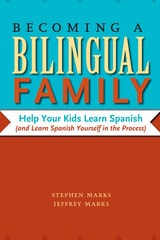
Becoming a Bilingual Family
Help Your Kids Learn Spanish (and Learn Spanish Yourself in the Process)By Stephen Marks and Jeffrey Marks
University of Texas Press, 2013
Would you like your children to grow up bilingual, even if you aren’t yet? Then speak to your kids in Spanish as you learn the language along with them. Becoming a Bilingual Family gives English-speaking parents the tools to start speaking Spanish with their kids in their earliest years, when children are most receptive to learning languages. It teaches the vocabulary and idioms for speaking to children in Spanish and offers practical, proven ways to create a language-learning environment at home.
The first part of the book introduces parents to many resources—books, audio books, music, television, computer programs, childcare workers, school, and friends—that can help you establish a home environment conducive to the acquisition of Spanish. The second part is a Spanish phrasebook that takes you through all the typical activities that parents and children share, from getting up in the morning to going to bed at night. Few, if any, other Spanish study aids provide this much vocabulary and guidance for talking to small children about common daily activities. The authors also include a quick course in Spanish pronunciation and enough grammar to get a parent started. Spanish-language resources, kids’ names in Spanish, and an easy-to-use index and glossary complete the book.
Take the Markses’ advice and start talking to your kids in Spanish, even if it’s not perfect. You’ll learn the language together and share the excitement of discovering the peoples and cultures that make up the Spanish-speaking world.
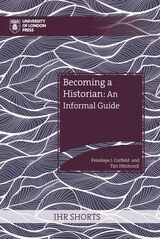
Becoming a Historian
An Informal GuideEdited by Penelope J. Corfield and Tim Hitchcock
University of London Press, 2022
Writing history is both an art and a craft. This handbook is designed as an instructional guide to support students, independent scholars, and more. Becoming a Historian guides prospective historians on how best to participate in this vibrant community of scholars. This friendly guide will teach readers how to design research projects, how to differentiate between quantitative and qualitative research methodologies, and how to follow a project through to a positive conclusion. Becoming a Historian is also frank about the pains and pleasures of sticking with a long-term project. Finally, this guide explains how to present original research to wider audiences, including the appropriate use of social media, the art of public lecturing, and strategies for publication.
Written by esteemed historians Penelope J. Corfield and Tim Hitchcock, who bring more than forty years of collective experience to the project, Becoming a Historian explodes the myths and systems that can make the world of research seem intimidating. Instead, this guide offers step-by-step advice designed to make it easier to join this community of scholarship.
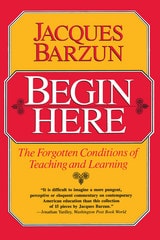
Begin Here
The Forgotten Conditions of Teaching and LearningJacques Barzun
University of Chicago Press, 1991
"It is difficult to imagine a more pungent, perceptive or eloquent commentary on contemporary American education than this collection of 15 pieces by Jacques Barzun."—Jonathan Yardley, Washington Post Book World
"Mr. Barzun's style is elegant, distinctive, philosophically consistent and much better-humored than that of many contemporary invective-hurlers."—David Alexander, New York Times Book Review
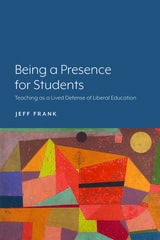
Being a Presence for Students
Teaching as a Lived Defense of Liberal EducationJeff Frank
Lever Press, 2019
Belonging and Identity in STEM Higher Education
Edited by Camille Kandiko Howson and Martyn Kingsbury
University College London, 2024
In Belonging and Identity in STEM Higher Education, Camille Kandiko Howson and Martyn Kingsbury examine the role of science, technology, engineering, and mathematics (STEM) pedagogies in facilitating belonging, variable impacts across student characteristics, and the experiences of STEM students in higher education. Through case study contributions, the book analyzes the unique educational environments for STEM staff and students throughout Europe and Asia, challenging the assumptions that STEM fields are inherently unemotional and impersonal disciplines.
Better Practices
Exploring the Teaching of Writing in Online and Hybrid SpacesAmy Cicchino
University Press of Colorado, 2024
Between Talk And Teaching
Reconsidering the Writing ConferenceLaurel Johnson Black
Utah State University Press, 1998
The teacher-student conference is standard in the repertoire of teachers at all levels. Because it's a one-to-one encounter, teachers work hard to make it comfortable; but because it's a pedagogical moment, they hope that learning occurs in the encounter, too. The literature in this area often suggests that a conference is a conversation, but this doesn't account for a teacher's need to use it pedagogically. Laurel Johnson Black's new book explores the conflicting meanings and relations embedded in conferencing and offers a new theoretical understanding of the conference along with practical approaches to conferencing more effectively with students.
Analyzing taped conferences of several different teachers and students, Black considers the influence that power, gender, and culture can have on a conference. She draws on sociolinguistic theory, as well as critical theory in composition and rhetoric, to build an understanding of the writing conference as an encounter somewhere between conversation and the classroom. She finds neither the conversation model nor versions of the master-apprentice model satisfactory. Her approach is humane, student-centered, and progressive, but it does not ignore the valid pedagogical purposes a teacher might have in conferencing. Between Talk and Teaching will be a valuable addition to the professional library of writing teachers and writing program administrators.
Bitter Milk
Women and TeachingMadeleine R. Grumet
University of Massachusetts Press, 1988
The first and last chapters address the familial relations that fall under the category of reproduction, a frame designed to emphasize the relations of reproduction and their importance to educational theory. The chapters closest to this margin are those that address women's work in schools, and the juxtaposition is chosen to accentuate the dialectical relation of our public and private meanings. The middle chapters are the ones most directly concerned with curriculum, that provisional ground that Grumet is naming as our mediating space, the place where we can heal. The fundamental argument of this text is that knowledge evolves in human relationships.
Boo-Tickle Tales
Not-So-Scary Stories for Ages 4-9Lynette Ford & Sherry Norfolk
Parkhurst Brothers, Inc., 2016
The attraction of scary stories begins very early in childhood, but the fortitude to be truly scared comes later. So where are the scary stories for young children? Educators and storytellers, Ford and Norfolk deliver a silly and gently spooky collection of jumps, laughs, interactive moments, and mostly happy endings to satisfy the curious-for-creepy Pre-K through Grade 4 set. Their weirdly funny and gently scary collection of adapted folktales, original stories, and verses will delight those who enjoy being surprised more than being scared.
This book is for:
Parents, grandparents, and other mentors who work with children developmentally aged 4 to 9
Educators, librarians and others serving young listeners, who like silly and creepy stories, but may not like very scary material
Audiences ages 4-9, who like creepy but not-too-scary stories.
Twelve pen-and-ink drawings based on folktale motifs complement the fanciful tone of the book.
Boys and Girls
Superheroes in the Doll CornerVivian Gussin Paley
University of Chicago Press, 1984
"I will admit my biases up front: having a three-year old daughter of my own made it impossible for this book to be anything but fun to read. I dare anyone who enjoys children not to enjoy this story about stories, this narrative about narratives."—Jerry Powell, Winterthur Portfolio
Boys and Girls
Superheroes in the Doll CornerVivian Gussin Paley
University of Chicago Press, 2014
For more than forty years, Boys and Girls has a classic account of the little-known world that young children create together when they play. Vivian Gussin Paley takes readers inside a kindergarten classroom to show them in detail how boys and girls play—and how, by playing and fantasizing in different ways, they work through complicated notions of gender roles and identity. The children’s own conversations, stories, playacting, and scuffles are interwoven with Paley’s observations and accounts of her vain attempts to alter their stereotyped play. In the decades since the book's original publication, play in kindergarten and early years of school has lost ground to structured teaching and even testing, which makes Paley's book, updated for a new era, more important than ever. To teach kids successfully, we must make space for play.
Bringing Montessori to America
S. S. McClure, Maria Montessori, and the Campaign to Publicize Montessori EducationGerald L. Gutek and Patricia A. Gutek
University of Alabama Press, 2016
2016 CHOICE OUTSTANDING ACADEMIC TITLE
The remarkable story of how Montessori education crossed the Atlantic and transformed American educational thought.
Born on the Adriatic, Montessori first entered the world stage in 1906 as the innovator of a revolutionary teaching method that creates an environment where children learn at their own pace and initiate skills like reading and writing in a spontaneous way. As her school in Rome swiftly attracted attention, curiosity, and followers, Montessori recruited disciples whom she immersed in a rigorous and detailed teacher-training regimen of her own creation.
McClure was an Irish-born media baron of America’s Gilded Age, best known as the founder and publisher of McClure’s Magazine. Against the backdrop of Theodore Roosevelt’s Bull Moose insurgency, the brilliant and mercurial McClure used his flagship publication as a vehicle to advance Progressive Party causes. After meeting in 1910, McClure and Montessori embarked on a five-year collaboration to introduce Montessori’s innovative teaching style in the United States.
Gerald and Patricia Gutek trace the dramatic arc of the partnership between the Italian teacher and American publisher united by a vision of educational change in the United States. After her triumphal lecture tour in 1913, Montessori, secure in her trust of her American partner, gave McClure her power of attorney and returned to Italy. The surge in popularity of Montessori education in America, however, deeply concerned Montessori, who had heretofore exerted total control over her method, apparatus, schools, and teacher training. The American entrepreneurial spirit, along with a desire to disseminate the Montessori method quickly, led to major conflicts between the Italian educator and American businesspeople, particularly McClure. Feeling betrayed, Montessori ended her relationship with her erstwhile collaborator.
Gutek and Gutek describe the fascinating story of this first wave of Montessori education in the United States, which did not sustain itself during Montessori’s lifetime. It would not be until the 1950s that Montessori education was revived with the successful establishment of Montessori academies throughout the United States.
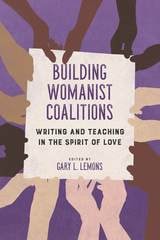
Building Womanist Coalitions
Writing and Teaching in the Spirit of LoveEdited by Gary L. Lemons
University of Illinois Press, 2019