Results by title
129 books match the query 'Technique' and 5 start with b
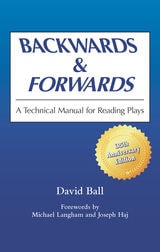
Backwards & Forwards
A Technical Manual for Reading PlaysDavid Ball. Forewords by Michael Langham and Joseph Haj
Southern Illinois University Press, 1983
The best-selling script analysis book for thirty-five years
Considered an essential text since its publication thirty-five years ago, this guide for students and practitioners of both theater and literature complements, rather than contradicts or repeats, traditional methods of literary analysis of scripts.
Ball developed his method during his work as literary director at the Guthrie Theater, building his guide on the crafts playwrights of every period and style use to make their plays stageworthy. The text is full of tools for students and practitioners to use as they investigate plot, character, theme, exposition, imagery, conflict, theatricality, and the other crucial parts of the superstructure of a play. Also included are guides for discovering what the playwright considers a play’ s most important elements, thus permitting interpretation based on the foundation of the play rather than its details.
Using Shakespeare’s Hamlet as illustration, Ball assures a familiar base for clarifying script-reading techniques as well as exemplifying the kinds of misinterpretation readers can fall prey to by ignoring the craft of the playwright. Of immense utility to those who want to put plays on the stage (actors, directors, designers, production specialists) Backwards & Forwards is also a fine playwriting manual because the structures it describes are the primary tools of the playwright.
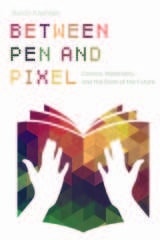
Between Pen and Pixel
Comics, Materiality, and the Book of the FutureAaron Jacob Kashtan
The Ohio State University Press, 2018
In Between Pen and Pixel: Comics, Materiality, and the Book of the Future, Aaron Kashtan argues that paying attention to comics helps us understand the future of the book. Debates over the future of the book tend to focus on text-based literature, particularly fiction. However, because comics make the effects of materiality visible, they offer a clearer demonstration than prose fiction of how the rise of digital reading platforms transforms the reading experience. Comics help us see the effects of alterations in features such as publication design and typography, whereas in print literature, such transformations often go unnoticed.
With case studies of the work of Alison Bechdel, Matt Kindt, Lynda Barry, Carla Speed McNeil, Chris Ware, and Randall Munroe, Kashtan examines print comics that critique digital technology, comics that are remediated from print to digital and vice versa, and comics that combine print and digital functionality. Kashtan argues that comics are adapting to the rise of digital reading technologies more effectively than print literature has yet done. Therefore, looking at comics gives us a preview of what the future of the book looks like. Ultimately, Between Pen and Pixel argues that as print literature becomes more sensitive to issues of materiality and mediacy, print books will increasingly start to resemble to comic books.
Book Of The Incipit
Beginnings in the Fourteenth CenturyD. Vance Smith
University of Minnesota Press, 2001
An intriguing evaluation of the concept of beginnings in the medieval period.
Medieval Studies/Literary Theory
An intriguing evaluation of the concept of beginnings in the medieval period. In the first book to examine one of the most peculiar features of one of the greatest and most perplexing poems of England’s late Middle Ages-the successive attempts of Piers Plowman to begin, and to keep beginning-D. Vance Smith compels us to rethink beginning, as concept and practice, in both medieval and contemporary terms.The problem of beginning was invested with increasing urgency in the fourteenth century, imagined and grappled with in the courts, the churches, the universities, the workshops, the fields, and the streets of England. The Book of the Incipit reveals how Langland’s poem exemplifies a widespread interest in beginning in the thirteenth and fourteenth centuries, an interest that appears in such divergent fields as the physics of motion, the measurement of time, logic, grammar, rhetoric, theology, book production, and insurrection. Smith offers a theoretical understanding of beginning that departs from the structuralisms of Edward Said and the traditional formalisms of A. D. Nuttall and most medievalist and modernist treatments of closure. Instead, he conceives a work’s beginning as a figure of the beginning of the work itself, the inception of language as the problem of beginning to which we continue to return.ISBN 0-8166-3760-1 Cloth/jacket £24.50 $34.95x296 Pages 5 7/8 x 9 MayMedieval Cultures Series, volume 28Translation Inquiries: University of Minnesota Press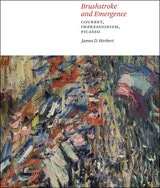
Brushstroke and Emergence
Courbet, Impressionism, PicassoJames D. Herbert
University of Chicago Press, 2015
Yet the question of how much we can credit to the individual brushstroke is complicated—and in Brushstroke and Emergence, James D. Herbert uses that question as a starting point for an extended essay that draws on philosophy of mind, the science of emergence, and art history. Brushstrokes, he reminds us, are as much creatures of habit and embodied experience as they are of intent. When they gather in great numbers they take on a life of their own, out of which emerge complexity and meaning. Analyzing ten paintings by Courbet, Manet, Cézanne, Monet, Seurat, and Picasso, Herbert exposes vital relationships between intention and habit, the singular and the complex. In doing so, he uncovers a space worthy of historical and aesthetic analysis between the brushstroke and the self.
Building Your Play
Theory and Practice for the Beginning PlaywrightDavid Rush
Southern Illinois University Press, 2010
David Rush takes beginning playwrights through the first draft of a play and deep into the revision process. Drawing on examples from such classics as Othello and The Glass Menagerie, Rush provides detailed models for writers to evaluate their work for weaknesses and focus on the in-depth development of their plays.
Rush encourages writers to make sure their plays are clear and focused. He shows how to keep plays dramatically compelling and offers ways to avoid common mistakes that make them dull, confusing, or ineffective. He then distills the essence of traditional revision into key questions and discusses frequently overlooked tools, terms, and strategies that go beyond established methods of evaluation.