Results by title
234 books match the query 'Technological innovations' and 9 start with b

Barbs, Bullets, and Blood
The 1880s Texas barbed Wire WarsHarold D. Jobes
University of North Texas Press, 2025

Blockchain
Sandra Hirsh and Susan Alman
American Library Association, 2019
This book in the Library Futures Series examines blockchain technology, a concept with far-reaching implications for the future of the information professions. Blockchain uses a distributed database (multiple devices not connected to a common processor) that organizes data into records (blocks) that have cryptographic validation. The data are timestamped and linked to previous records so that they can only be changed by those who own the encryption keys to write to the files. In this book, editors Hirsh and Alman offer a primer of what librarians and information professionals need to understand about blockchain technology. Several speculative visions for how blockchain could support the core work of libraries are included to help librarians understand the possibilities for improved operations and services. Featuring essays from a range of information professionals who have interest and experience in blockchain technologies, this book presents valuable ideas for exploration relevant to everyone interested in the future of librarianship.

Blockchain Technology in e-Healthcare Management
Suyel Namasudra
The Institution of Engineering and Technology, 2022
Book Was There
Reading in Electronic TimesAndrew Piper
University of Chicago Press, 2012
Bourgeois Equality
How Ideas, Not Capital or Institutions, Enriched the WorldDeirdre Nansen McCloskey
University of Chicago Press, 2016
Why? Most economists—from Adam Smith and Karl Marx to Thomas Piketty—say the Great Enrichment since 1800 came from accumulated capital. McCloskey disagrees, fiercely. “Our riches,” she argues, “were made not by piling brick on brick, bank balance on bank balance, but by piling idea on idea.” Capital was necessary, but so was the presence of oxygen. It was ideas, not matter, that drove “trade-tested betterment.” Nor were institutions the drivers. The World Bank orthodoxy of “add institutions and stir” doesn’t work, and didn’t. McCloskey builds a powerful case for the initiating role of ideas—ideas for electric motors and free elections, of course, but more deeply the bizarre and liberal ideas of equal liberty and dignity for ordinary folk. Liberalism arose from theological and political revolutions in northwest Europe, yielding a unique respect for betterment and its practitioners, and upending ancient hierarchies. Commoners were encouraged to have a go, and the bourgeoisie took up the Bourgeois Deal, and we were all enriched.
Few economists or historians write like McCloskey—her ability to invest the facts of economic history with the urgency of a novel, or of a leading case at law, is unmatched. She summarizes modern economics and modern economic history with verve and lucidity, yet sees through to the really big scientific conclusion. Not matter, but ideas. Big books don’t come any more ambitious, or captivating, than Bourgeois Equality.
Bright Signals
A History of Color TelevisionSusan Murray
Duke University Press, 2018
Broken Ballots
Will Your Vote Count?Douglas E. Jones and Barbara Simons
CSLI, 2012
For many of us, the presidential election of 2000 was a wake-up call. The controversy following the vote count led to demands for election reform. But the new voting systems that were subsequently introduced to the market have serious security flaws, and many are confusing and difficult to use. Moreover, legislation has not kept up with the constantly evolving voting technology, leaving little to no legal recourse when votes are improperly counted. How did we come to acquire the complex technology we now depend on to count votes? Douglas Jones and Barbara Simons probe this question, along with public policy and regulatory issues raised by our voting technologies. Broken Ballots is a thorough and incisive analysis of the current voting climate that approaches American elections from technological, legal, and historical perspectives. The authors examine the ways in which Americans vote today, gauging how inaccurate, unreliable, and insecure our voting systems are. An important book for election administrators, political scientists, and students of government and technology policy, Broken Ballots is also a vital tool for any voting American.
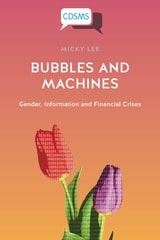
Bubbles and Machines
Gender, Information and Financial CrisesMicky Lee
University of Westminster Press, 2019
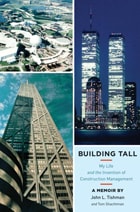
Building Tall
My Life and the Invention of Construction ManagementJohn L. Tishman and Tom Shachtman
University of Michigan Press, 2011
"John Tishman is a true pioneer in the Construction Management industry. Through his CM leadership, some of America's most well-known buildings have been brought to successful completion."
---Bruce D'Agostino, president and chief executive, Construction Management Association of America
"Building Tall will provide readers with insights into John Tishman's career as a visionary engineer, landmark builder, and great businessman. Responsible for some of the construction world's most magnificent projects, John is one of the preeminent alumni in the history of Michigan Engineering. His perspectives have helped me throughout my time as dean, and his impact will influence generations of Construction Management professionals and students."
---David C. Munson, Jr., Robert J. Vlasic Dean of Engineering, University of Michigan
In this memoir, University of Michigan graduate John L. Tishman recounts the experiences and rationale that led him to create the entirely new profession now recognized and practiced as Construction Management. It evolved from his work as the construction lead of the "owner/builder" firm Tishman Realty and Construction, and his personal role as hands-on Construction Manager in the building of an astonishing array of what were at the time the world's tallest and most complex projects. These include
- The world's first three 100-story towers---the original "twin towers" of the World Trade Center in Manhattan and the Hancock Tower in Chicago.
- The Epcot Center at Disney World.
- The Renaissance Center in Detroit.
- New York's Madison Square Garden.
Tishman interweaves the stories behind the construction of these and many other important buildings and projects with personal reminiscences of his dealings with Henry Ford, Jr., Disney's Michael Eisner, casino magnate Steve Wynn, and many others into a practical history of the field of Construction Management, which he pioneered.
This book will be of interest not only to a general public interested in the stories and personalities behind many of the most iconic construction projects of the post–World War II period in the United States but to students of engineering and architecture and members of the new field of Construction Management.