Results by title
333 books match the query 'Television' and 17 start with b
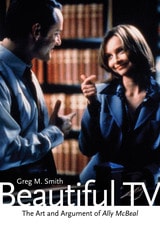
Beautiful TV
The Art and Argument of Ally McBealBy Greg M. Smith
University of Texas Press, 2007
During its five-year run from 1997 to 2002, the popular TV show Ally McBeal engaged viewers in debates over what it means to be a woman or a man in the modern workplace; how romance factors into the therapeutic understanding of relationships; what value eccentricity has and how much oddity society should tolerate; and what utility fantasy has in the pragmatic world. In addition to these social concerns, however, Ally McBeal stood out for being well-constructed, narratively complex, and stylistically rich—in short, beautiful TV.
Starting from the premise that much of television today is "drop-dead gorgeous" and that TV should be studied for its formal qualities as well as its social impact, Greg M. Smith analyzes Ally McBeal in terms of its aesthetic principles and narrative construction. He explores how Ally's innovative use of music, special effects, fantasy sequences, voiceovers, and flashbacks structures a distinctive fictional universe, while it also opens up new possibilities for televisual expression. Smith also discusses the complex narrative strategies that Ally's creator David E. Kelley used to develop a long-running storyline and shows how these serial narrative practices can help us understand a wide range of prime-time TV serials.
By taking seriously the art and argument of Ally McBeal, Beautiful TV conclusively demonstrates that aesthetic and narrative analysis is an indispensable key for unlocking the richness of contemporary television.

Becoming Citizens in the Age of Television
How Americans Challenged the Media and Seized Political Initiative during the Iran-Contra DebateDavid Thelen
University of Chicago Press, 1996
Thelen argues that the self-referential world of politics and journalism during elections excludes the concerns and voices of Americans, resulting in lower voter turnouts and increased voter apathy. Televised hearings and trials, however—from O. J. Simpson to Anita Hill vs. Clarence Thomas to Oliver North and Iran-Contra—have ignited storms of controversy and public debate. Focusing upon the spontaneous, unmediated reactions of American citizens to these events, Thelen discovers a new kind of political participation in which Americans shape their interventions.
Through an analysis of a remarkable documentary collection—the correspondence sent by citizens to the House Select Committee on Iran-Contra in the wake of the Oliver North testimony—Thelen explains how Americans are reclaiming the political process. Examining more than 5,000 letters and telegrams, Thelen uncovers the anger and resolve of a vocal public insulted by the media and opinion-managers who have misrepresented them as mindless supporters of "Olliemania."
Concluding with suggestions on how citizens can reclaim their voice from the opinion managing industries, this work promises to provoke the kind of public discourse on which democracy depends.
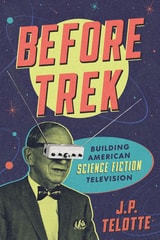
Before Trek
Building American Science Fiction TelevisionJ. P. Telotte
University of Texas Press, 2026
Recounts the early development of TV science fiction as it shaped how American audiences looked at television in an increasingly mediated world.
Long before Star Trek became synonymous with televised science fiction, a generation of space operas and anthology programs laid the groundwork for the genre’s cultural legitimacy. With Before Trek, J. P. Telotte reexamines the formative decades of science fiction television, the late 1940s through the mid-1960s, when both the medium and genre were defining themselves. At a moment when science fiction was often dismissed as juvenile escapism, early programs such as Captain Video, Space Patrol, Tales of Tomorrow, and Science Fiction Theatre worked to reshape audience and industry expectations, establishing the genre as a vehicle for serious storytelling.
Tracing the evolution of the genre through The Twilight Zone, The Outer Limits, and ultimately Star Trek, Telotte reveals how television and science fiction developed in tandem, each helping to articulate the technological anxieties of the postwar era. These programs offered viewers new ways of seeing: approaches to social critique, political tension, and cultural change that conventional broadcasting often could not accommodate. By situating early televised science fiction within broader debates about media, modernity, and what Guy Debord termed the “Society of the Spectacle,” Telotte reclaims a largely overlooked body of work and demonstrates its foundational role in shaping both contemporary television and the imaginative vocabulary of modern culture.
Below the Line
Producers and Production Studies in the New Television EconomyVicki Mayer
Duke University Press, 2011
Beyond Squid Game
Korean Media and the Netflix ParadigmBenjamin M. Han
University of Texas Press, 2026
Examining Netflix’s global influence through its complex global-local dynamics in Korean media.
Korea is a global entertainment powerhouse, thanks in no small part to Netflix. Analyzing the artistry and industry behind Netflix-produced Korean hits like Squid Game, The Glory, and Narco-Saints, Benjamin Han argues that Korea is ground zero for an emerging “Netflix Paradigm.” The US-based streaming platform generates massive profits by erasing boundaries of foreign and domestic production, even as it underscores the resilience of the national media within global popular culture.
Beyond Squid Game breaks down the intricate and often ambivalent relationship between Netflix and the Korean media business, drawing on interviews with creative workers navigating the streaming giant’s ever-increasing economic and cultural power. Challenging narratives that present Netflix as a revolutionary disruptor, Han shows how the company has replicated abroad the precarious labor conditions and tensions over intellectual property from which US studios have long benefited. At the same time, Beyond Squid Game underscores the complex dynamics of a globalized media industry in which cultural imperialism thrives on localization and perceived authenticity.
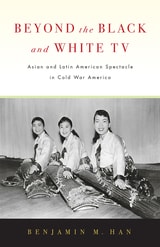
Beyond the Black and White TV
Asian and Latin American Spectacle in Cold War AmericaBenjamin M. Han
Rutgers University Press, 2020

Bits and Pieces
Screening Animal Life and DeathSarah O'Brien
University of Michigan Press, 2023
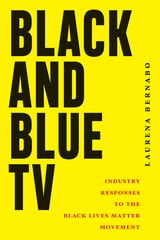
Black and Blue TV
Industry Responses to the Black Lives Matter MovementLaurena Bernabo
Rutgers University Press, 2026
Black and Blue TV explores the ways television productions have responded to the Black Lives Matter movement. Television programs’ engagement with BLM was common before George Floyd’s murder sparked international protests in the summer of 2020, at which point it became nearly unavoidable for many series. Images of police using violence against Black Americans fueled criticisms of the role of television—especially cop shows—in perpetuating “copaganda,” highlighting the fact that television’s cops are nearly always the good guys, even when they break the law and use excessive force. Black and Blue TV identifies trends and anomalies in television’s engagement with BLM but also investigates the people who influence what those representations look like. Pairing textual criticism with interviews with television creatives, executives, and media activists, author Laurena Bernabo traces shifts in how these individuals understand their role in televisual culture and the cultural forum of narratives that are produced and distributed as a result.
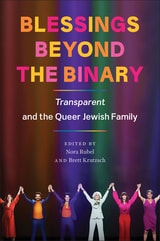
Blessings Beyond the Binary
Transparent and the Queer Jewish FamilyNora Rubel
Rutgers University Press, 2024
Blessings beyond the Binary brings together leading scholars to analyze and offer commentary on what scholar Josh Lambert calls “the most important work of Jewish culture of the century so far.” The book explores the show’s depiction of Jewish life, religion, and history, as well as Transparent’s scandals and criticisms and how it fits into and diverges from today’s transgender and queer politics.
The first book to focus on Transparent, Blessings beyond the Binary offers a rich analysis of the groundbreaking series and its connections to contemporary queer, trans, and Jewish life.
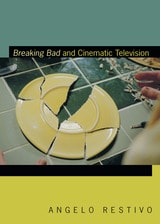
Breaking Bad and Cinematic Television
Angelo Restivo
Duke University Press, 2019
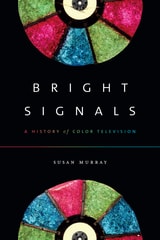
Bright Signals
A History of Color TelevisionSusan Murray
Duke University Press, 2018

British Television Intellectuals
Unusual Kinds of StarJohn Tulloch
Intellect Books, 2026
Offering a pioneering exploration of one of Britain’s most significant yet often overlooked television phenomena, this book traces the rise and development of the TV intellectual as a distinct presence over the past sixty-five years. Situated within the framework of public intellectual theory, it explores several of Britain’s most notable and influential cultural figures, revealing how these unusual kinds of stars have combined creativity and intellect to engage wide international audiences.
At the heart of these intellectuals’ work lies a profound engagement with the concept of civilization—ranging from early concerns about its survival to critical reflections on colonialism and its legacies. The book shows how these influential figures, together with the television medium itself, have explored civilization in all its complexities, including thoughtful considerations of its future.
Blending historical analysis with cultural critique, this book will appeal to students and scholars in media and cultural studies, offering a compelling study of the intellectual and creative forces shaping British television across decades.

British Television
The formative yearsRussell Burns
The Institution of Engineering and Technology, 1986
British and French Television Drama
Innovation and Change in the 1950s and 1960sJoy Leman
Intellect Books, 2026
The era after World War II marked a formative moment for television drama in France and Britain—a time of technological change, social transformation, and new possibilities for innovation in communication systems. Although the two countries developed distinct broadcasting cultures, this book reveals striking similarities in the intentions and achievements of socially conscious communication practitioners.
Drawing on cross-boundary comparison, the book uncovers the internal struggles within the French and British institutions that controlled broadcasting. It shows how creative initiatives with a social class perspective were able to break through the dense fabric of institutional control before bureaucratic structures fully solidified. The study offers a unique view of the active engagement and political judgment of writers, editors, producers, and directors who, though facing managerial skepticism and at times direct interference, persisted in reaching rapidly expanding audiences.
Combining historical contextual research, detailed case studies, and first-hand practitioner insights, the book illuminates the personal and political dimensions of television drama production in both nations. In doing so, it also speaks to contemporary debates, addressing current threats to public broadcasting from political and commercial pressures worldwide.
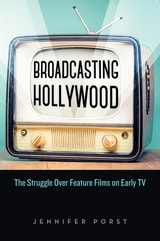
Broadcasting Hollywood
The Struggle over Feature Films on Early TVJennifer Porst
Rutgers University Press, 2021
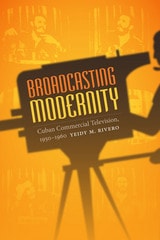
Broadcasting Modernity
Cuban Commercial Television, 1950-1960Yeidy M. Rivero
Duke University Press, 2015
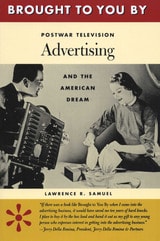
Brought to You By
Postwar Television Advertising and the American DreamBy Lawrence R. Samuel
University of Texas Press, 2002