81 books match the query 'Tradition' and 3 start with b
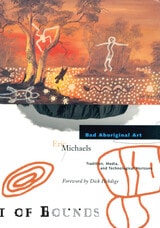
cover of Bad Aboriginal Art: Tradition, Media, and Technological Horizons

Bad Aboriginal Art

Tradition, Media, and Technological Horizons

Eric Michaels

University of Minnesota Press, 1994

Bad Aboriginal Art is the extraordinary account of Eric Michaels’ period of residence and work with the Warlpiri Aborigines of western Central Australia, where he studied the impact of television on remote Aboriginal communities.

Sharp, exact, and unrelentingly honest, Michaels records with an extraordinary combination of distance and immersion the intervention of technology into a remote Aboriginal community and that community’s forays into the technology of broadcasting. Michaels’s analyses in Bad Aboriginal Art will disrupt and redirect current debates surrounding the theory and practice of anthropology, ethnography, film and video making, communications policy, and media studies - no less than his work has already disrupted and redirected the cultural technologies of both the Warlpiri and Australian technocrats.

[more]
cover of Blues Legacy: Tradition and Innovation in Chicago

Blues Legacy

Tradition and Innovation in Chicago

David Whiteis

University of Illinois Press, 2019

Chicago blues musicians parlayed a genius for innovation and emotional honesty into a music revered around the world. As the blues evolves, it continues to provide a soundtrack to, and a dynamic commentary on, the African American experience: the legacy of slavery; historic promises and betrayals; opportunity and disenfranchisement; the ongoing struggle for freedom. Through it all, the blues remains steeped in survivorship and triumph, a music that dares to stare down life in all its injustice and iniquity and still laugh--and dance--in its face.

David Whiteis delves into how the current and upcoming Chicago blues generations carry on this legacy. Drawing on in-person interviews, Whiteis places the artists within the ongoing social and cultural reality their work reflects and helps create. Beginning with James Cotton, Eddie Shaw, and other bequeathers, he moves through an all-star council of elders like Otis Rush and Buddy Guy and on to inheritors and today's heirs apparent like Ronnie Baker Brooks, Shemekia Copeland, and Nellie "Tiger" Travis.

Insightful and wide-ranging, Blues Legacy reveals a constantly adapting art form that, whatever the challenges, maintains its links to a rich musical past.
[more]
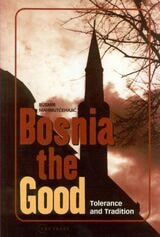
cover of Bosnia the Good: Tolerance and Tradition

Bosnia the Good

Tolerance and Tradition

Rusmir Mahmutcehajic

Central European University Press, 2000

Bosnia the Good is an indictment of the partition of Bosnia, formalized in 1995 by the Dayton Accord. This unequalled volume is a plea from one of Bosnia-Herzegovina's most prominent dissidents appealing for Bosnia's communities to reject ethnic segregation and restore mutual trust. The author argues for the history and reality of a Bosnia-Herzegovina based upon a model of 'unity in diversity'. He shows that ethnic and religious cultures co-existed in Bosnia for centuries and that Croatian and Serbian leaders determined to enact their own nationalist programs are to be blamed for the conflicts that devastated a nation. He points out the decisive moment when the international community accepted the Serb/Croat argument that ancient ethnic hatreds were endemic to Bosnia and that ethnic segregation became not only acceptable but desirable. He examines the reasons why Western liberal democracies have regarded with sympathy the struggles of Serbia and Croatia for national recognition, while viewing Bosnia's multicultural society with suspicion. Bosnia the Good confronts the religious dimension of the Bosnian dilemmas from the perspective of a Bosniak committed to inter-religious dialogue. The author argues that the only way Bosnia will reclaim its unique civilization is more than simple tolerance among Serbs, Croats and Bosnians. They have to recognize that Judaism, Christianity and Islam all share the same deity and it is this common transcendent perspective that should open the door to the acceptance and celebration of religious diversity. Bosnia is at present divided and shaken to its foundations, but the author argues it could become a model for European progress. The greatest danger is for Bosnia to be declared just another ethnoreligious entity, in this case a 'Muslim State' ghettoized inside Europe. If protected and allowed to develop however, the author explains how Bosnia could find a place in a new European order.
[more]