Results by title
134 books match the query 'Transformation' and 7 start with b
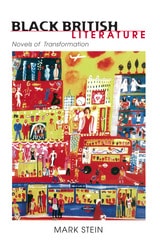
BLACK BRITISH LITERATURE
NOVELS OF TRANSFORMATIONMark Stein
The Ohio State University Press, 2004
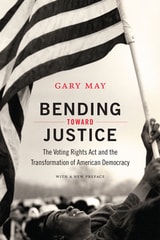
Bending Toward Justice
The Voting Rights Act and the Transformation of American DemocracyGary May
Duke University Press, 2015
Beyond Collapse
Archaeological Perspectives on Resilience, Revitalization, and Transformation in Complex SocietiesEdited by Ronald K. Faulseit
Southern Illinois University Press, 2015
Essays in the book are arranged into five sections. The first section addresses previous research on the subject of collapse and reorganization as well as recent and historic theoretical trends. In the second section, contributors look at collapse and resilience through the concepts of collective action, eventful archaeology, and resilience theory. The third section introduces critical analyses of the effectiveness of resilience theory as a heuristic tool for modeling the phenomena of collapse and resilience. In the fourth section, contributors examine long-term adaptive strategies employed by prehistoric societies to cope with stresses. Essays in the fifth section make connections to contemporary research on post-decline societies in a variety of time periods and geographic locations.
Contributors consider collapse and reorganization not as unrelated phenomena but as integral components in the evolution of complex societies. Using archaeological data to interpret how ancient civilizations responded to various stresses—including environmental change, warfare, and the fragmentation of political institutions—contributors discuss not only what leads societies to collapse but also why some societies are resilient and others are not, as well as how societies reorganize after collapse. The implications of the fate of these societies for modern nations cannot be underestimated. Putting in context issues we face today, such as climate change, lack of social diversity, and the failure of modern states, Beyond Collapse is an essential volume for readers interested in human-environment interaction and in the collapse—and subsequent reorganization—of human societies.
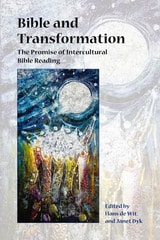
Bible and Transformation
The Promise of Intercultural Bible ReadingHans de Wit
SBL Press, 2015
Engage the delightful and inspiring, sometimes rough and rocky road to inclusive and transformative Bible reading
This book offers the results of research within a new area of discipline—empirical hermeneutics in intercultural perspective. The book includes interpretations from the homeless in Amsterdam, to Indonesia, from African Xhosa readers to Norway, to Madagascar, American youths, Germany, Czech Republic, Colombia, and Haitian refugees in the Dominican Republic.
Features:
- Interpretations from ordinary readers in more than twenty-five countries
- Background introduction with history of the text
- Discussion of intertextual connections with Greco-Roman authors
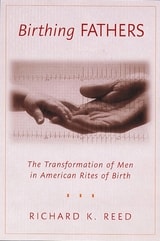
Birthing Fathers
The Transformation of Men in American Rites of BirthRichard K. Reed
Rutgers University Press, 2005
In the past two decades, men have gone from being excluded from the delivery room to being admitted, then invited, and, finally, expected to participate actively in the birth of their children. No longer mere observers, fathers attend baby showers, go to birthing classes, and share in the intimate, everyday details of their partners' pregnancies.
In this unique study, Richard Reed draws on the feminist critique of professionalized medical birthing to argue that the clinical nature of medical intervention distances fathers from child delivery. He explores men's roles in childbirth and the ways in which birth transforms a man's identity and his relations with his partner, his new baby, and society. In other societies, birth is recognized as an important rite of passage for fathers. Yet, in American culture, despite the fact that fathers are admitted into delivery rooms, little attention is given to their transition to fatherhood.
The book concludes with an exploration of what men's roles in childbirth tell us about gender and American society. Reed suggests that it is no coincidence that men's participation in the birthing process developed in parallel to changing definitions of fatherhood more broadly. Over the past twenty years, it has become expected that fathers, in addition to being strong and dependable, will be empathetic and nurturing.
Well-researched, candidly written, and enriched with personal accounts of over fifty men from all parts of the world, this book is as much about the birth of fathers as it is about fathers in birth.

Breaking the Land
The Transformation of Cotton, Tobacco, and Rice Cultures since 1880Pete Daniel
University of Illinois Press, 1985
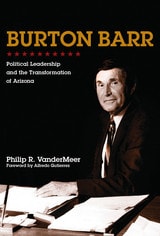
Burton Barr
Political Leadership and the Transformation of ArizonaPhilip R. VanderMeer, Foreword by Alfredo Gutierrez
University of Arizona Press, 2014
Considered perhaps the most influential person in Arizona’s political development, Burton Barr represented north central Phoenix in the Arizona House of Representatives for the twenty-two years from 1964 to 1986. As the Republican House Majority Leader for twenty of those years, he left his fingerprints on every major piece of legislation during those decades, covering such issues as air pollution, health care for indigents, school aid, the tax code, prison reform, child care, groundwater management, and freeway funding.
Burton Barr’s political life unfolded during the very time his state and region shifted from being outliers to trendsetters. His choices in policy making and his leadership style were both an outcome and a creator of his sociopolitical environment. Arizona politics in the 1960s and ’70s was a rich brew of key elements, a time when the economy was being transformed, the nature and distribution of populations shifted, partisan politics were in flux, and the very lifeblood of the West—water—was being contested under increasing pressures of usage and depletion.
How Barr successfully responded to those challenges is the story of Arizona’s development during those years. At the heart of it, Barr’s political life and personality are inextricably bound up with the life of the West.