Results by title
111 books match the query 'Trials, litigation, etc' and 6 start with b
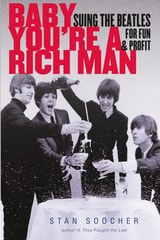
Baby You're a Rich Man
Suing the Beatles for Fun and ProfitStan Soocher
University Press of New England, 2015
Barbarous Souls
David L. Strauss
Northwestern University Press, 2010
Barbarous Souls tells the story of Darrel Parker’s wrongful conviction for Nancy’s murder. Lincoln native David Strauss weaves a shocking true crime story with an exposé of still-prevalent methods of interrogation—methods that often lead to false confessions and the conviction of innocent suspects. After he was convicted, Parker served thirteen years of a life sentence before agreeing to a deal that would free him but not clear his record. It was later discovered that a murderer who died in prison in 1988 had taped a confession to the crime.
A roller-coaster ride in the tradition of John Grisham’s The Innocent Man, Barbarous Souls is a thorough examination of a wrongful conviction based on a false confession, and an illuminating portrayal of a widespread phenomenon that still plagues the justice system.
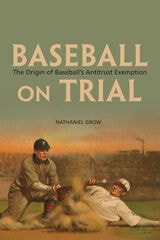
Baseball on Trial
The Origin of Baseball's Antitrust ExemptionNathaniel Grow
University of Illinois Press, 2014
Currently a billion dollar enterprise, professional baseball teams crisscross the country while the games are broadcast via radio, television, and internet coast to coast. The sheer scope of this activity would seem to embody the phrase "interstate commerce." Yet baseball is the only professional sport--indeed the sole industry--in the United States that currently benefits from a judicially constructed antitrust immunity. How could this be?
Drawing upon recently released documents from the National Baseball Hall of Fame, Grow analyzes how the Supreme Court reached this seemingly peculiar result by tracing the Federal Baseball litigation from its roots in 1914 to its resolution in 1922, in the process uncovering significant new details about the proceedings. Grow observes that while interstate commerce was measured at the time by the exchange of tangible goods, baseball teams in the 1910s merely provided live entertainment to their fans, while radio was a fledgling technology that had little impact on the sport. The book ultimately concludes that, despite the frequent criticism of the opinion, the Supreme Court's decision was consistent with the conditions and legal climate of the early twentieth century.
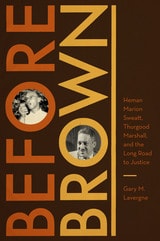
Before Brown
Heman Marion Sweatt, Thurgood Marshall, and the Long Road to JusticeBy Gary M. Lavergne
University of Texas Press, 2010
Winner, Coral Horton Tullis Memorial Prize for Best Book on Texas History, Texas State Historical Association, 2010
Carr P. Collins Award, Texas Institute of Letters, 2011
On February 26, 1946, an African American from Houston applied for admission to the University of Texas School of Law. Although he met all of the school's academic qualifications, Heman Marion Sweatt was denied admission because he was black. He challenged the university's decision in court, and the resulting case, Sweatt v. Painter, went to the U.S. Supreme Court, which ruled in Sweatt's favor. The Sweatt case paved the way for the landmark Brown v. Board of Education of Topeka rulings that finally opened the doors to higher education for all African Americans and desegregated public education in the United States.
In this engrossing, well-researched book, Gary M. Lavergne tells the fascinating story of Heman Sweatt's struggle for justice and how it became a milestone for the civil rights movement. He reveals that Sweatt was a central player in a master plan conceived by the National Association for the Advancement of Colored People (NAACP) for ending racial segregation in the United States. Lavergne masterfully describes how the NAACP used the Sweatt case to practically invalidate the "separate but equal" doctrine that had undergirded segregated education for decades. He also shows how the Sweatt case advanced the career of Thurgood Marshall, whose advocacy of Sweatt taught him valuable lessons that he used to win the Brown v. Board of Education case in 1954 and ultimately led to his becoming the first black Associate Justice of the Supreme Court.
Bending the Law
The Story of the Dalkon Shield BankruptcyRichard B. Sobol
University of Chicago Press, 1991
"Mr. Sobol has produced a readable yet fully researched and detailed study of the operation of the bankruptcy and its effects upon all concerned—the women who were injured, the swarms of lawyers who represented parties in the bankruptcy, and the court which oversaw the bankruptcy in Richmond. . . . This book adds greatly to the current debate about how strong a managerial federal judge our system should have."—Paul D. Rheingold, New York Law Journal
"Bending the Law is polemical and relentless. It is also minutely researched, fluidly written, and persuasive."—Paul Reidinger, ABA Journal
"Bending the Law is a must read for bankruptcy practitioners, and for anyone else concerned about the use of bankruptcy law to deal with mass torts. Although its author is a civil rights lawyer, he details the subtle art of practicing bankruptcy law with a discerning eye, and is a gifted storyteller as well."—Joryn Jenkins, Federal Bar News and Journal
"This is an accessible history of the case by a veteran civil-rights lawyer."—Washington Post Book World
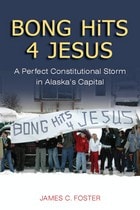
Bong Hits 4 Jesus
A Perfect Constitutional Storm in Alaska's CapitalJames C. Foster
University of Alaska Press, 2010
In January 2002, for the first time, the Olympic Torch Relay visited Alaska on its way to the Winter Games. When the relay runner and accompanying camera cars passed Juneau-Douglas High School, senior Joseph Frederick and several friends unfurled a fourteen-foot banner reading "BONG HiTS 4 JESUS."
An in-depth look at student rights within a public high school, this book chronicles the events that followed: Frederick's suspension, the subsequent suit against the school district, and, ultimately, the escalation of a local conflict into a federal case. Brought to life through interviews with the principal figures in the case, Bong Hits 4 Jesus is a gripping tale of the boundaries of free speech in an American high school.