Results by title
141 books match the query 'Twentieth Century' and 9 start with b
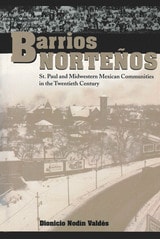
Barrios Norteños
St. Paul and Midwestern Mexican Communities in the Twentieth CenturyBy Dionicio Nodín Valdés
University of Texas Press, 2000
Mexican communities in the Midwestern United States have a history that extends back to the turn of the twentieth century, when a demand for workers in several mass industries brought Mexican agricultural laborers to jobs and homes in the cities. This book offers a comprehensive social, labor, and cultural history of these workers and their descendants, using the Mexican barrio of "San Pablo" (St. Paul) Minnesota as a window on the region.
Through extensive archival research and numerous interviews, Dennis Valdés explores how Mexicans created ethnic spaces in Midwestern cities and how their lives and communities have changed over the course of the twentieth century. He examines the process of community building before World War II, the assimilation of Mexicans into the industrial working class after the war, the Chicano Movement of the 1960s and 1970s, and more recent changes resulting from industrial restructuring and unprecedented migration and population growth. Throughout, Valdés pays particular attention to Midwestern Mexicans' experiences of inequality and struggles against domination and compares them to Mexicans' experiences in other regions of the U.S.
BitterSweet
The Memoir of a Chinese Indonesian Family in the Twentieth CenturyStuart Pearson
National University of Singapore Press, 2013
BitterSweet
The Memoir of a Chinese-Indonesian Family in the Twentieth CenturyStuart Pearson
Ohio University Press, 2008
BitterSweet is the account of one Chinese-Indonesian family whose story stretches over the generations as their fortunes waxed and waned through revolution, riots, war, depression, occupation, and finally emigration to yet another country—Australia.
BitterSweet offers a unique insight into a world rarely seen before. An Sudibjo’s memoir, written from a woman’s perspective, is a valuable resource for anyone studying Indonesian history or the Chinese Diaspora.
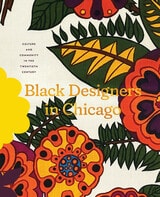
Black Designers in Chicago
Culture and Community in the Twentieth CenturyEdited by Chris Dingwall, David Hartt, and Daniel Schulman
University of Chicago Press, 2026
In twentieth-century Chicago, generations of Black artisans, craftspeople, art educators, clothing makers, commercial illustrators, sign painters, furniture makers, beauticians, graphic designers, art directors, and screen printers made and remade the city into an energetic center for modern design. Ambitious, enterprising, and resolutely modern, these Black designers were workers and intellectuals, activists and entrepreneurs. They created works for commercial and everyday use and helped to build community institutions such as the South Side Community Art Center and businesses like the Johnson Publishing Company. Their works ranged from branding and housewares for major corporations to pamphlets and posters made in the name of civil rights and Black Power. Together, they made Black Chicago into a dynamic design scene, working against racism in their professions while embracing the possibilities of design as a medium of social change.
This book is the first to chronicle their collective history while also celebrating their influence on design as well as African American culture more broadly. Based on extensive archival research and building on a major 2018 exhibition, Black Designers in Chicago presents essays by experts in African American history and design. The book features illustrations of a stunning variety of works—from graphic design to screenprints to textiles and household wares—placing African Americans at the center of modern design history, while highlighting the role of design in the cultural history of Black Chicago.
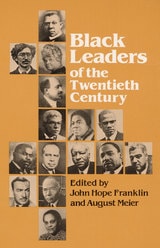
Black Leaders of the Twentieth Century
Edited by John Hope Franklin and August Meier
University of Illinois Press, 1982

Blood Ties
Sex, Scandal, and Serial Murder at the Turn of the Twentieth CenturyHarold Schechter
University of Iowa Press, 2027
Body and Nation
The Global Realm of U.S. Body Politics in the Twentieth CenturyEmily S. Rosenberg and Shanon Fitzpatrick, eds.
Duke University Press, 2014
Contributors. Frank Costigliola, Janet M. Davis, Shanon Fitzpatrick, Paul A. Kramer, Shirley Jennifer Lim, Mary Ting Yi Lui, Natalia Molina, Brenda Gayle Plummer, Emily S. Rosenberg, Kristina Shull, Annessa C. Stagner, Marilyn B. Young
Britain in Transition
The Twentieth CenturyAlfred F. Havighurst
University of Chicago Press, 1985
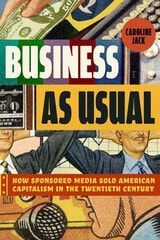
Business as Usual
How Sponsored Media Sold American Capitalism in the Twentieth CenturyCaroline Jack
University of Chicago Press, 2024
Business as Usual reveals how American capitalism has been promoted in the most ephemeral of materials: public service announcements, pamphlets, educational films, and games—what Caroline Jack calls “sponsored economic education media.” These items, which were funded by corporations and trade groups who aimed to “sell America to Americans,” found their way into communities, classrooms, and workplaces, and onto the airwaves, where they promoted ideals of “free enterprise” under the cloaks of public service and civic education. They offered an idealized vision of US industrial development as a source of patriotic optimism, framed business management imperatives as economic principles, and conflated the privileges granted to corporations by the law with foundational political rights held by individuals. This rhetoric remains dominant—a harbinger of the power of disinformation that so besets us today. Jack reveals the funding, production, and distribution that together entrenched a particular vision of corporate responsibility—and, in the process, shut out other hierarchies of value and common care.