Results by title
301 books match the query 'West (U.S.)' and 17 start with b

Bandido
The Death and Resurrection of Oscar "Zeta" AcostaIlan Stavans
Northwestern University Press, 2003
Hailed as "a fine, learned homage" (Kirkus), "a kaleidoscopic portrait" (Booklist), and "a game of mirrors" (The Washington Post), Bandido is a veritable tour de force. Through interviews and Acosta's writings (published and unpublished), Ilan Stavans reconstructs—even reinvents—the man behind the myth. Part biographical appraisal, part reflection on the legacy of the Civil Rights era, Bandido is an opportunity to understand the challenges and pitfalls Latinos face in finding a place of their own in America.
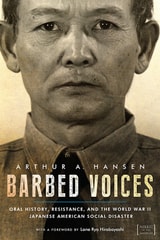
Barbed Voices
Oral History, Resistance, and the World War II Japanese American Social DisasterArthur A. Hansen
University Press of Colorado, 2021
What historically was benignly termed the “Japanese American Evacuation” was in fact a social disaster, which, unlike a natural disaster, is man-made. Examining the emotional implications of targeted systemic incarceration, Hansen highlights the psychological traumas that transformed Japanese American identity and culture for generations after the war. While many accounts of Japanese American incarceration rely heavily on government documents and analytic texts, Hansen’s focus on first-person Nikkei testimonies gathered through powerful oral history interviews gives expression to the resistance to this social disaster.
Analyzing the evolving historical memory of the effects of wartime incarceration, Barbed Voices presents a new scholarly framework of enduring value. It will be of interest to students and scholars of oral history, US history, public history, and ethnic studies as well as the general public interested in the WWII experience and civil rights.
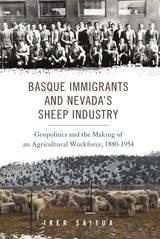
Basque Immigrants and Nevada's Sheep Industry
Geopolitics and the Making of an Agricultural Workforce, 1880-1954Iker Saitua
University of Nevada Press, 2019
Between the 1880s and the 1950s, the western open-range sheep industry was the original economic attraction for Basque immigrants. This engaging study tracks the development of the Basque presence in the American West, providing deep detail about the sheepherders’ history, native and local culture, the challenges they faced, and the changing conditions under which the Basques lived and worked. Saitua also shows how Basque immigrant sheepherders went from being a marginalized labor group to a desirable, high-priced workforce in response to the constant demand for their labor power.
As the twentieth century progressed, the geopolitical tide in America began to change. In 1924, the Restrictive Immigration Act resulted in a truncated labor supply from the Basque Country in Spain. During the Great Depression and the Second World War, the labor shortage became acute. In response, Senator Patrick McCarran from Nevada lobbied on behalf of his wool-growing constituency to open immigration doors for Basques, the most desirable laborers for tending sheep in remote places. Subsequently, Cold War international tensions offered opportunities for a reconciliation between the United States and Francisco Franco, despite Spain’s previous sympathy with the Axis powers.
This fresh portrayal shows how Basque immigrants became the backbone of the sheep industry in Nevada. It also contributes to a wider understanding of the significance of Basque immigration by exploring the role of Basque agricultural labor in the United States, the economic interests of Western ranchers, and McCarran’s diplomacy as catalysts that eventually helped bring Spain into the orbit of western democracies.
Basques of the American West
New and Collected Essays on History and EthnicityRichard W. Etulain
University of Nevada Press, 2026
This collection offers readers a thoughtful and engaging look at the enduring presence and influence of Basques across the cultural and historical landscape of the American West.
Battle Against Extinction
Native Fish Management in the American WestEdited by W. L. Minckley and James E. Deacon; Foreword by Stewart L. Udall
University of Arizona Press, 1991
Nearly a third of the native fish fauna of North America lives in the arid West; this book traces their decline toward extinction as a result of human interference and the threat to their genetic diversity posed by decreases in their populations. What can be done to slow or end this tragedy? As the most comprehensive treatment ever attempted on the subject, Battle Against Extinction shows how conservation efforts have been or can be used to reverse these trends.
In covering fishes in arid lands west of the Mississippi Valley, the contributors provide a species-by-species appraisal of their status and potential for recovery, bringing together in one volume nearly all of the scattered literature on western fishes to produce a monumental work in conservation biology. They also ponder ethical considerations related to the issue, ask why conservation efforts have not proceeded at a proper pace, and suggest how native fish protection relates to other aspects of biodiversity planetwide. Their insights will allow scientific and public agencies to evaluate future management of these animal populations and will offer additional guidance for those active in water rights and conservation biology.
First published in 1991, Battle Against Extinction is now back in print and available as an open-access e-book thanks to the Desert Fishes Council.
Best of the West 2009
New Stories from the Wide Side of the MissouriEdited by James Thomas and D. Seth Horton
University of Texas Press, 2009
Best of the West: New Stories from the Wide Side of the Missouri, an annual anthology of exceptional short fiction rooted in the western United States, debuted in 1988 and continued publication until 1992. Recognizing that the West remains rewarding territory for literary explorations, James Thomas and Seth Horton are now reviving the series in Best of the West 2009.
Thomas and Horton combed some 250 literary journals and magazines to gather these eighteen stories published since the fall of 2007. They come from both emerging and established writers, including Lee K. Abbott, Louise Erdrich, Dagoberto Gilb, Antonya Nelson, Joyce Carol Oates, and Annie Proulx. Like Bass, the editors believe "the Western short story" inhabits a wide territory; the subjects in this collection range from illegal immigrants tending illegal crops in California's national forests, to mismatched Mormon missionaries on the conversion trail in Nevada, to a Native American college student exploring her sexuality, to Papa Hemingway's meditations as he loads the shotgun in his Idaho cabin. As these stories make clear, the West continues to shape our literary landscape. Thomas and Horton have preserved the best of that work in this vital anthology.

Best of the West 2010
New Stories from the Wide Side of the MissouriEdited by James Thomas and D. Seth Horton
University of Texas Press, 2010
Best of the West: New Stories from the Wide Side of the Missouri, an annual anthology of exceptional short fiction rooted in the western United States, debuted in 1988 and continued publication until 1992. Recognizing that the West remains rewarding territory for literary explorations, James Thomas and D. Seth Horton revived the series in 2009.
Best of the West 2010 brings together established and emerging writers who reinterpret this most vital of literary regions and create, as Kent Meyers puts it in his foreword, "gift[s] the nation needs right now." Editors Horton and Thomas have chosen nineteen stories by writers including Sherman Alexie, Rick Bass, Ron Carlson, Julia Glass, William Kittredge, Kent Nelson, and Deb Olin Unferth. Their subjects vary from a Greek community in Wyoming dealing with a suicide, to a re-creation of Christ's crucifixion in New Mexico, to an unlikely friendship that peaks at a burial ground in Alaska. Best of the West 2010 is the latest indication that the West has become one of the most crucial settings for contemporary American fiction.
Contributors:
- Sherman Alexie
- Rick Bass
- John Blanchard
- Elea Carey
- Ron Carlson
- Natalie Diaz
- Darren Dillman
- Ben Ehrenreich
- Julia Glass
- Dina Guidubaldi
- Ben Kostival
- William Kittredge
- Paul Mihas
- Kent Nelson
- Daniel Orozco
- Kirstin Valdez Quade
- Aurelie Sheehan
- Justin St. Germain
- Deb Olin Unferth
Best of the West 2011
New Stories from the Wide Side of the MissouriEdited by James Thomas and D. Seth Horton
University of Texas Press, 2011
Best of the West: New Stories from the Wide Side of the Missouri, an annual anthology of exceptional short fiction rooted in the western United States, debuted in 1988 and continued publication until 1992. Recognizing that the West remains rewarding territory for literary explorations, James Thomas and D. Seth Horton revived the series in 2009.
Best of the West 2011: New Stories from the Wide Side of the Missouri is the latest volume in what has become one of the nation's most important anthologies. Editors Horton and Thomas have chosen twenty stories by writers including Rick Bass, T. C. Boyle, Ron Carlson, Philipp Meyer, Dagoberto Gilb, Yiyun Li, Antonya Nelson, and Sam Shepard. Subjects vary from an Idaho family that breeds lions and tigers with disastrous results, to a Mormon veteran whose mind is taken over by a nineteenth-century consciousness, to a Texas boy who spends an afternoon with Bonnie and Clyde shortly before their deaths. Taken together, these stories suggest that the West has become one of the most exciting and diverse literary regions in the twenty-first century.

Biology and Management of Noxious Rangeland Weeds
Roger L. Sheley
Oregon State University Press, 1999
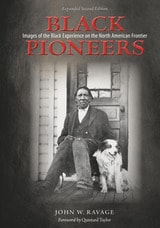
Black Pioneers
Images of the Black Experience on the North American FrontierJohn Ravage
University of Utah Press, 1997
Using public and private collections in every western state and in Canada, Ravage has gathered more than three hundred photographs, line drawings, lithographs, stereoviews, and other images. This new edition also adds sections on black entertainers and ranchers, a chapter on the dating of historic photographs and their genealogical significance, as well as an expanded bibliography. All aid understanding of the black frontier experience.
Ravage goes beyond the stereotypical photography of the era, which often reflected white fears and prejudices, to present the works of frontier photographers. Galveston’s Lucius Harper, Denver’s John Green, and the Northwest’s nomadic James Presley Ball all bring life to their subjects and meaning to their presence in the American West. Black Pioneers is a vibrant visual document of the profound influence blacks had on communal and frontier history.

Blood Orchid
An Unnatural History of AmericaBy Charles Bowden, Foreword by William Langewiesche
University of Texas Press, 2018
Through stark observations and visceral experiences, Blood Orchid begins Charles Bowden’s dizzying excavation of the brutal, systemic violence and corruption at the roots of American society. Like a nightmarish fever dream that turns out to be our own reality, Bowden visits dying friends in skid row apartments in Los Angeles, traverses San Francisco byways lined with clubs and joints, and roams through village bars and streets in the Sierra Madre mountains. In these wanderings resides a yearning for the understanding of past and present sins, the human penchant for warfare, abuse, and oppression, and the true war between humanity, the industrialized world, and the immense tolls of our shared land. Deeply personal, hauntingly prophetic, and bracingly sharp, the start to Bowden’s harrowed quest to unearth our ugly truths remains strikingly poignant today.

Blue Architecture
Water, Design, and Environmental FuturesBrook Muller
University of Texas Press, 2022
2023 Finalist, PROSE Award in Architecture and Urban Planning
A guide to water-focused and climate-resilient architectural and urban design.
Le Corbusier famously said, “A house is a machine for living in.” We now confront the litany of environmental challenges associated with the legacy of the architectural machine: a changing climate, massive species die-off, diminished air and water quality, and resource scarcities. Brook Muller offers an alternative: water-centric urban design that fosters sustainability, equity, and architectural creativity.
Inspired by the vernacular, such as the levadas of Madeira Island and both the arid and drenched places of the American West, Muller articulates a “hydro-logical” philosophy in which architects and planners begin by conceptualizing interactions between existing waterways and the spaces they intend to develop. From these interactions—and the new technologies and approaches enabling them—aesthetic, spatial, and experiential opportunities follow. Not content merely to work around sensitive ecology, Muller argues for genuinely climate-adapted urban landscapes in which buildings act as ecological infrastructure that actually improve watersheds while delivering functionality and beauty for diverse communities. Rich in images and practical examples, Blue Architecture will change the way we think about our designed world.
Books, Bluster, and Bounty
Local Politics and Carnegie Library Building Grants in the Intermountain West, 1890-1920Susan H. Swetnam
Utah State University Press, 2012
Books, Bluster, and Bounty examines a cross-section of Carnegie library applications to determine how local support was mustered for cultural institutions in the late nineteenth and early twentieth century West. This comparative study considers the entire region between the Rockies and the Cascades/Sierras, including all of Idaho, Utah, Nevada, and Arizona; western Montana, Wyoming, and Colorado; eastern Oregon and Washington; and small parts of California and New Mexico. The author's purpose is to address not only the how of the process but also the variable why. Although virtually all citizens and communities in the West who sought Carnegie libraries expected tangible benefits for themselves that were only tangentially related to books, what they specifically wanted varied in correlation with the diverse nature of western communities. By looking at the detailed records of the Carnegie library campaigns, the author is able to provide an alternative lens through which to perceive and map the social-cultural makeup and town building of western communities at the turn of the century.

Bridging the Distance
Common Issues of the Rural WestDavid B. Danbom
University of Utah Press, 2015
The essays in Bridging the Distance are fresh, informative, and insightful examinations of the complex problems facing the rural West. This is a book that will spur both conversations and the search for solutions.
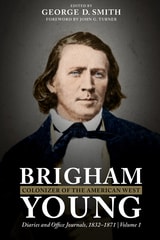
Brigham Young, Colonizer of the American West
Diaries and Office Journals, 1832–1871George D. Smith
Signature Books, 2019
Thus, by 1877, some 400 Mormon settlements spanned the western frontier from Salt Lake City to outposts in Idaho, Nevada, Arizona, Wyoming, and California. As prophet of the LDS Church and governor of the proposed State of Deseret, Young led several campaigns for Utah statehood while defending polygamy and local sovereignty. His skillful and authoritarian leadership led historian Bernard de Voto to classify him as an “American genius,” responsible for turning Joseph Smith’s visions “into the seed of life.”
Young’s diaries and journals reveal a man dedicated to his church, defensive of his spiritual and temporal claims to authority, and determined to create a modern Zion within the Utah desert. Editor George D. Smith’s careful organization and annotation of Young’s personal writings provide insights into the mind of Mormonism’s dynamic church leader and frontier statesman.
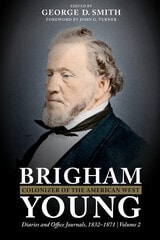
Brigham Young, Colonizer of the American West
Diaries and Office Journals, 1832–1871: Volume 2George D. Smith
Signature Books, 2021
Thus, by 1877, some 400 Mormon settlements spanned the western frontier from Salt Lake City to outposts in Idaho, Nevada, Arizona, Wyoming, and California. As prophet of the LDS Church and governor of the proposed State of Deseret, Young led several campaigns for Utah statehood while defending polygamy and local sovereignty. His skillful and authoritarian leadership led historian Bernard de Voto to classify him as an “American genius,” responsible for turning Joseph Smith’s visions “into the seed of life.”
Young’s diaries and journals reveal a man dedicated to his church, defensive of his spiritual and temporal claims to authority, and determined to create a modern Zion within the Utah desert. Editor George D. Smith’s careful organization and annotation of Young’s personal writings provide insights into the mind of Mormonism’s dynamic church leader and frontier statesman.
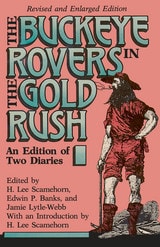
Buckeye Rovers in the Gold Rush
An Edition of Two DiariesH. Lee Scamehorn
Ohio University Press, 1989
When “California Fever” raced through southeastern Ohio in the spring of 1849, a number of residents of Athens County organized a cooperative venture for traveling overland to the mines. Known as the “Buckeye Rovers,” the company began its trip westward in early April. The Buckeye Rovers, along with thousands who traveled the overland route to California, endured numerous hardships and the seemingly constant threat of attacks from hostile Indians. On reaching their destination, the Ohioans discovered that rich deposits of gold were extremely rare, and that except for a few lucky fortune–seekers, mining required hard physical labor and yielded small rewards. They persisted nonetheless and most of the company returned to Athens in late 1851 or early 1852 with modest fortunes.
The arduous experiences of the overland trek were recorded by two Buckeye Rover diarists. The more compete account was compiled by John Banks. He wrote effusively while on the trail and throughout his stay of more than two years in the gold regions. J. Elza Armstrong, by contrast, was brief, even laconic, and his journal ended upon reaching California. The contrast between the two brings into focus the divergent personalities who were drawn to California by the lure of gold.
A nine–month segment of Bank’s diary, from February to November, 1851, had been missing at the time the story of the Buckeye Rovers was first published in 1965. This revised and enlarged edition contains the complete diaries. They offer valuable record of the Buckeyes’ adventures from the time they left home until the time they departed California for the return trip to Ohio.