Results by title
441 books match the query 'Women and literature' and 13 start with b

Backtalk
Women Writers Speak OutDonna Perry
Rutgers University Press, 1993
Agents or victims, liberated or oppressed, "bad girls" or "good girls." What do these labels mean and do they further or hinder women's progress? How are today's visions of female sexuality and power like or unlike those of the past? How do younger women define feminism? Isn't the personal still political?
Dismayed by the media's tendency to reduce the feminist enterprise to labels and superstars, Donna Perry and Nan Bauer Maglin decided to find out what a diverse group of feminists think about women, sex, and power in the nineties. The result is a provocative and varied collection of twenty-four essays by second- and third-wave feminists; artists and activists; professors and graduate students; professional journalists and just-published writers; mothers and daughters. By focusing on society's construction, containment, and exploitation of female sexuality, in particular, these essays offer fresh perspectives on women's agency or lack of it.
The contributors focus on the oversimplifications and false dichotomies in current discussions of female sexuality, as well as the privileged perspective and individualism that currently dominate the popularized feminist message. Individual writers--including Emma Amos, bell hooks, Ann Jones, Lisa Jones, Paula Kamen, Matuschka, Marge Piercy, Katha Pollitt, Anna Quindlen, Elayne Rapping, Lillian S. Robinson, and Ellen Willis--reexamine women's empowerment in the light of issues like AIDS, battering, acquaintance rape, narratives of childhood sexual abuse, and pornography. Several draw political conclusions from their personal struggles, while others read stories and texts--from history, the art world, the media, popular culture, and social science research--in new and controversial ways.

Being a Minor Writer
Gail Gilliland
University of Iowa Press, 1994
There are countless theoretical arguments that attempt to define “major” and “minor” literatures, but this lively and deeply felt work is one of the first to speak from the authority of the experience of being minor—of being the “minor writer” who, according to the definition of “author” given by Michel Foucault, does not possess a “name.” This book, then, is an impassioned critical and ethical defense of the act of writing for purposes other than critical acclaim.
In the tradition of Horace's
Ars Poetica,Gilliland uses comments by a broad range of writers, as well as her own experience as a minor woman writer, to consider the basic Horatian questions of purpose, choice of subject matter and genre, diction, characterization, setting, and style. She points out that in the absence of major recognition, the minor writer is continually confronted by the existential question, why do I (still) write? This book offers not only a challenge to existing critical theories but an argument in favor of being—for
stillbeing, for continuing
anywaywith one's life and art
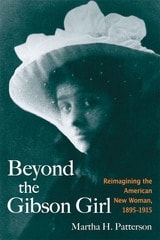
Beyond the Gibson Girl
Reimagining the American New Woman, 1895-1915Martha H. Patterson
University of Illinois Press, 2005
Challenging monolithic images of the New Woman as white, well-educated, and politically progressive, this study focuses on important regional, ethnic, and sociopolitical differences in the use of the New Woman trope at the turn of the twentieth century. Using Charles Dana Gibson's "Gibson Girls" as a point of departure, Martha H. Patterson explores how writers such as Pauline Hopkins, Margaret Murray Washington, Sui Sin Far, Mary Johnston, Edith Wharton, Ellen Glasgow, and Willa Cather challenged and redeployed the New Woman image in light of other “new” conceptions: the "New Negro Woman," the "New Ethics," the "New South," and the "New China."
As she appears in these writers' works, the New Woman both promises and threatens to effect sociopolitical change as a consumer, an instigator of evolutionary and economic development, and (for writers of color) an icon of successful assimilation into dominant Anglo-American culture. Examining a diverse array of cultural products, Patterson shows how the seemingly celebratory term of the New Woman becomes a trope not only of progressive reform, consumer power, transgressive femininity, modern energy, and modern cure, but also of racial and ethnic taxonomies, social Darwinist struggle, imperialist ambition, assimilationist pressures, and modern decay.
Black Women Writing Autobiography
A Tradition Within a TraditionJoanne Braxton
Temple University Press, 1990
Black Women, Identity, and Cultural Theory
(Un)Becoming the SubjectKevin Everod Quashie
Rutgers University Press, 2004
In Black Women, Identity, and Cultural Theory, Kevin Everod Quashie explores the metaphor of the “girlfriend” as a new way of understanding three central concepts of cultural studies: self, memory, and language. He considers how the work of writers such as Toni Morrison, Ama Ata Aidoo, Dionne Brand, photographer Lorna Simpson, and many others, inform debates over the concept of identity. Quashie argues that these authors and artists replace the notion of a stable, singular identity with the concept of the self developing in a process both communal and perpetually fluid, a relationship that functions in much the same way that an adult woman negotiates with her girlfriend(s). He suggests that memory itself is corporeal, a literal body that is crucial to the process of becoming. Quashie also explores the problem language poses for the black woman artist and her commitment to a mastery that neither colonizes nor excludes.
The analysis throughout interacts with schools of thought such as psychoanalysis, postmodernism, and post-colonialism, but ultimately moves beyond these to propose a new cultural aesthetic, one that ultimately aims to center black women and their philosophies.
Blue Studios
Poetry and Its Cultural WorkRachel Blau DuPlessis
University of Alabama Press, 2006
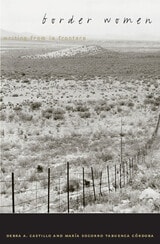
Border Women
Writing From La FronteraDebra A. Castillo
University of Minnesota Press, 2002
The first study to foreground writing by women who live at the U.S.-Mexico Border.
It is a peculiar fact that U.S.-Mexico border theory is dominated by those who write about, not from, the border. By looking at the work of women writers from both sides of the border, Debra A. Castillo and María-Socorro Tabuenca Córdoba open border studies to a truly transnational analysis while bringing questions of gender to the fore.
Border Women rethinks border theory by emphasizing women writers whose work—in Spanish, English, or a mixture of the two languages—calls into question accepted notions of border identities. These writers include those who are already well recognized internationally (Helena María Viramontes, Sheila and Sandra Ortiz Taylor, and María Novaro); those who have become part of the Chicano canon (Norma Cantú, Alicia Gaspar de Alba, and Demetria Martínez); along with some of the lesser-known, yet most exciting, women’s voices from the Mexican border (Rosario Sanmiguel, Rosina Conde, and Regina Swain).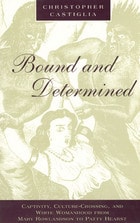
Bound and Determined
Captivity, Culture-Crossing, and White Womanhood from Mary Rowlandson to Patty HearstChristopher Castiglia
University of Chicago Press, 1996
Examining more than sixty accounts by women captives, as well as novels ranging from Susanna Rowson's eighteenth-century classic Rueben and Rachel to today's mass-market romances, Castiglia investigates paradoxes central to the genre. In captivity, women often find freedom from stereotypical roles as helpless, dependent, sexually vulnerable, and xenophobic. In their condemnations of their non-white captors, they defy assumptions about race that undergird their own societies. Castiglia questions critical conceptions of captivity stories as primarily an appeal to racism and misogyny, and instead finds in them an appeal of a much different nature: as all-too-rare stories of imaginative challenges to rigid gender roles and racial ideologies.
Whether the women of these stories resist or escape captivity, endure until they are released, or eventually choose to live among their captors, they end up with the power to be critical of both cultures. Castiglia shows that these compelling narratives, with their boundary crossings and persistent explorations of cultural divisions and differences, have significant implications for current critical investigations into the construction of gender, race, and nation.
Breaking Boundaries
Women'S Regional WritingSherrie A. Inness
University of Iowa Press, 1997
These lively essays reveal the generational continuum of women's regional literature, which has always offered a voice to women and their concerns. By exploring the multiplicity of connections between women and regional writing and the subversive potential of regional writing to put forth social criticisms and correctives, Breaking Boundaries charts some of the major ways in which this literary genre is of particular importance to today's writers.
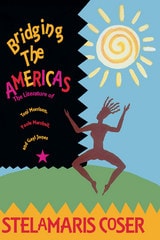
Bridging The Americas
The Literature of Paule Marshall, Toni Morrison, and Gayl JonesStelamaris Coser
Temple University Press, 1994
A literary study of three important black women writers, this book examines the "inter-American" characteristics in the work of Marshall, Morrison, and Jones, including detailed discussions of Morrison's Song of Solomon and Tar Baby, Jones's Corregidora and Song of Anninho, and Marshall's The Chose Place, The Timeless People.
Coser defines the inter-American characteristics in these authors' novels as a connection based on a common African heritage and a shared legacy of colonialism and racism. These three authors redefine the boundaries between the Americas, bridging the "extended Caribbean" that stretches from the U.S. Atlantic coast to Brazil. Their work reinterprets ethnic and sexual identity. Issues of race, class, and nationality overlap. History and identity are reinvented.
To explore the collective forms of resistance and cultural processes in Brazil, the Caribbean, and the United States, Coser also makes provocative connections between the visibility of black women writers and the popularity of male Latin American novelists like Carlos Fuentes and Gabriel Garcia Marquéz.
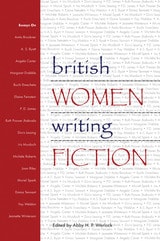
British Women Writing Fiction
Abby H.P. Werlock
University of Alabama Press, 2000
British women in the second half of the 20th century have produced a body of work that is as diverse as it is entertaining. This book offers an informal, jargon-free introduction to the fiction of sixteen contemporary writers either brought up or now living in England, from Muriel Spark to Jeanette Winterson.
British Women Writing Fiction presents a balanced view comprising women writing since the 1950s and 1960s, those who attracted critical attention during the 1970s and 1980s, and those who have burst upon the literary scene more recently, including African-Caribbean and African women. The essays show how all of these writers treat British subjects and themes, sometimes from radically different perspectives, and how those who are daughters of immigrants see themselves as women writing on the margins of society.
Abby Werlock's introduction explores the historical and aesthetic factors that have contributed to the genre, showing how even those writers who began in a traditional vein have created experimental work. The contributors provide complete bibliographies of each writer's works and selected bibliographies of criticism. Exceptional both in its breadth of subjects covered and critical approaches taken, this book provides essential background that will enable readers to appreciate the singular merits of each writer. It offers an approach toward better understanding favorite authors and provides a way to become acquainted with new ones.
Broken Silences
Interviews with Black and White Women WritersEdited by Shirley M Jordan
Rutgers University Press, 1993
In these 20 interviews with women writers of fiction, Jordan, who teaches at Hampton University in Virginia, attempts to plumb the relations between black and white women in fiction and in life, and to explore the creative process. Although the book suffers from lengthy discussions of somewhat obscure work, the interviewees, most of whom have portrayed female characters of a race other than their own, offer intriguing, often conflicting observations about the primacy of race, gender or class. Kaye Gibbons ( Ellen Foster ) suggests that rural locations offer commonality to black and white Southern women; Marita Golden ( Long Distance Life ) observes that white writers emphasize female beauty while black writers focus on character. This book may be a useful supplement to literature courses.
From Library Journal
The message derived from the candid and articulate women interviewed here is, as Belva Plain states, "you learn as you live together." Editor Jordan (Hampton Univ., Virginia) has opened a dialog on writing and race relations by publishing these interviews with 20 significant contemporary black and white women writers, from Alice Childress and Joyce Carol Oates to Mildred Pitts Walker. The substance of these writers' thoughts is that the commonality of women's experience informs the genuine portrayal of a character as much as does the writer's understanding of her blackness or whiteness. This special book, so different from others that examine the writing process, is likely to stimulate dialog among women and to provoke serious study of many excellent women writers working today. Recommended for all collections supporting the study of literature, women's studies, and race relations.
Building Domestic Liberty
Charlotte Perkins Gilman's Architectural FeminismPolly Wynn Allen
University of Massachusetts Press, 1988
Building Domestic Liberty offers a critical and admiring analysis of feminist philosopher Charlotte Perkins Gilman (1860–1935). Polly Allen examines Gilman's approach to architecture, landscape, and neighborhood design and discusses Gilman's case against prevailing household design and looks at her philosophy of world improvement.