Results by title
1296 books match the query 'Women authors' and 53 start with b
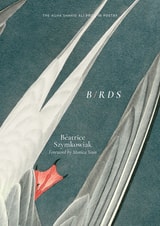
B/RDS
Béatrice Szymkowiak
University of Utah Press, 2023
B/RDS endeavors to dismantle discourses that create an artificial distinction between nature and humanity through a subversive erasure of an iconic work of natural history: John James Audubon’s Birds of America (1827-1838). This process of erasure considers the text of Birds of America as an archival cage. The author selectively erases words from the textual cage to reveal its ambiguity and the complex relationship between humanity and the other-than-human world. As the cage disappears, leaving a space for scarce, lyrical poems, birds break free, their voices inextricably entangled with ours.
Prose poems written in the author’s own words and prompted by the erasure process are also interspersed throughout the collection. These migratory poems, like ripples, trace the link between past and present and reveal the human-nature disconnect at the root cause of environmental and social problems, including the COVID-19 pandemic.
Along its five movements, B/RDS also explores how we can reimagine our relationship to environment through language within new frameworks of interconnectedness. Thus, as the collection resists the distinction between nature and culture on which traditional nature poetry relies, it also acts as an ecopoetic manifesto. It suggests that a critical, lyrical poetry could contribute to ecological awareness by singing humanity back within nature.
Back to the Woods
Cynthia Cruz
Four Way Books, 0
National Book Critics Circle Award Winner Cynthia Cruz reevaluates the paradox of the death drive in her eighth collection of poetry, Back to the Woods. Could it be that in ceaselessly snuffing ourselves out we are, in fact, trying to survive? In “Shine,” Cruz’s speaker attests that “if [she] had a home, it would be // a still in a film / where the sound / got jammed.” This book inhabits the silence of the empty orchestra pit, facing “dread, and its many / instruments of sorrow.” The quiet asks, “Did you love this world / and did this world / not love you?” We return to the site of our suffering, we perform the symphony of all our old injuries, to master what has broken us. To make possible the future, we retreat into the past. “I don’t know / the ending. // I don’t know anything,” our speaker insists, but she follows the wind’s off-kilter song of “winter / in the pines” and “the dissonance / of siskins.” Cruz heeds the urgency of our wandering, the mandate that we must get back to the woods, not simply for the forest to devour us — she recognizes in the oblivion “flooding out / from its spiral branches” an impossible promise. At the tree line, we might vanish to begin again.

Backtalk
Women Writers Speak OutDonna Perry
Rutgers University Press, 1993
Agents or victims, liberated or oppressed, "bad girls" or "good girls." What do these labels mean and do they further or hinder women's progress? How are today's visions of female sexuality and power like or unlike those of the past? How do younger women define feminism? Isn't the personal still political?
Dismayed by the media's tendency to reduce the feminist enterprise to labels and superstars, Donna Perry and Nan Bauer Maglin decided to find out what a diverse group of feminists think about women, sex, and power in the nineties. The result is a provocative and varied collection of twenty-four essays by second- and third-wave feminists; artists and activists; professors and graduate students; professional journalists and just-published writers; mothers and daughters. By focusing on society's construction, containment, and exploitation of female sexuality, in particular, these essays offer fresh perspectives on women's agency or lack of it.
The contributors focus on the oversimplifications and false dichotomies in current discussions of female sexuality, as well as the privileged perspective and individualism that currently dominate the popularized feminist message. Individual writers--including Emma Amos, bell hooks, Ann Jones, Lisa Jones, Paula Kamen, Matuschka, Marge Piercy, Katha Pollitt, Anna Quindlen, Elayne Rapping, Lillian S. Robinson, and Ellen Willis--reexamine women's empowerment in the light of issues like AIDS, battering, acquaintance rape, narratives of childhood sexual abuse, and pornography. Several draw political conclusions from their personal struggles, while others read stories and texts--from history, the art world, the media, popular culture, and social science research--in new and controversial ways.
Barrio Dreams
Selected PlaysSilviana Wood; Edited by Norma E. Cantú and Rita E. Urquijo-Ruiz
University of Arizona Press, 2016
Barrio Dreams is the first book to collect the work of one of Arizona’s foremost teatristas, playwright Silviana Wood. During her decades-long involvement in theater, Wood forged a reputation as a playwright, actor, director, and activist. Her works form a testimonio of Chicana life, steeped in art, politics, and the borderlands. Wood’s plays challenge, question, and incite women to consider their lot in life. She ruptures stereotypes and raises awareness of social issues via humor and with an emphasis on the use of the physical body on stage.
The play Una vez, en un barrio de sueños . . . offers a glimpse into familiar terrain—the barrio and its dwellers—in three actos. In Amor de hija, a fraught mother-daughter relationship in contemporary working-class Arizona is dealt an additional blow as the family faces Alzheimer’s disease. In the tragedy A Drunkard’s Tale of Melted Wings and Memories, and in the trilingual (Spanish, English, and Yaqui) tragicomedy Yo, Casimiro Flores, characters love, live, die, travel through time and space, and visit the afterlife. And in Anhelos por Oaxaca, a grandfather travels back in time through flashbacks, as he and his grandson travel through homelands from Arizona to Oaxaca.
Part of Wood’s genius is the way she portrays life in what Gloria Anzaldúa called “el mundo zurdo,” that space inhabited by the people of color, the poor, the female, and the outsiders. It is a place for the atravesados, the odd, the different, those who do not fit the mainstream. The people who inhabit Wood’s plays are common folk—janitors, mothers, grandmothers, and teenagers—hardworking people who, in one way or another, have made their way in life and who embody life in the barrio.
Beauty Refracted
Carol Moldaw
Four Way Books, 2018
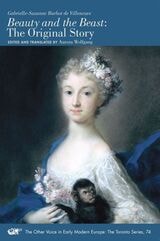
Beauty and the Beast
The Original StoryGabrielle-Suzanne Barbot de Villeneuve
Iter Press, 2020
The Other Voice in Early Modern Europe: The Toronto Series volume 74
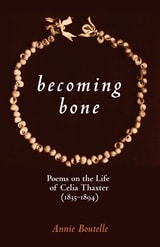
Becoming Bone
Poems on the Life of Celia Thaxter (1836-1894)Annie Boutelle
University of Arkansas Press, 2005
In the tradition of such outstanding biography-in-poetry collections as Maurice Manning’s A Companion of Owls about Daniel Boone and Sharon Chmielarz’s The Other Mozart, Annie Boutelle’s first collection probes the layered life of one of nineteenth-century America’s most popular poets, who is now almost forgotten. The Celia Thaxter who speaks these poems disturbs the placid myth created around her public persona, and focuses on the fierce mysteries and ironies that frame her. Boutelle carefully reveals Thaxter’s childhood on the stark Isles of Shoals off the New Hampshire coast; the trap of a Victorian marriage; the struggle to invent herself as a writer and painter; her celebrated circle of friends, which included Nathaniel Hawthorne, John Greenleaf Whittier, Sarah Orne Jewett, and Childe Hassam; and the hard-won serenity of her last decade. At the fringes of Thaxter’s life a wider world clamors, particularly with the onset of the Civil War. At the center rests a quiet, almost elliptical silence.
Like fine champagne, these poems ravish. Clear, airy, crystalline, they move us into an elemental world where “nothing is left but water, / air, and the uncertain space between.” The spare language resonates. With restraint and lyric tenderness, Boutelle leads us toward a woman who shifts from pose to necessary pose, who survives in these pages with intelligence and grace: “The grave / flesh melts. What’s left / is light as bone.”
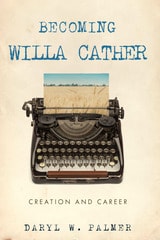
Becoming Willa Cather
Creation and CareerDaryl W. Palmer
University of Nevada Press, 2019
Willa Cather has long been admired for O Pioneers! (1913), Song of the Lark (1915), and My Ántonia (1918)—the “prairie novels” about the lives of early Nebraska pioneers that launched her career. Thanks in part to these masterpieces, she is often viewed as a representative of pioneer life on the Great Plains, a controversial innovator in American modernism, and a compelling figure in the literary history of LGBTQ America. A century later, scholars acknowledge Cather’s place in the canon of American literature and continue to explore her relationship with the West.
Drawing on original archival research and paying unprecedented attention to Cather’s early short stories, Palmer demonstrates that the relationship with Nebraska in the years leading up to O Pioneers! is more dynamic than critics and scholars thought. Readers will encounter a surprisingly bold young author whose youth in Nebraska served as a kind of laboratory for her future writing career. Becoming Willa Cather changes the way we think about Cather, a brilliant and ambitious author who embraced experimentation in life and art, intent on reimagining the American West.
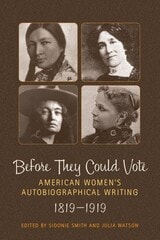
Before They Could Vote
American Women's Autobiographical Writing, 1819–1919Edited by Sidonie A. Smith and Julia Watson
University of Wisconsin Press, 2006
"This rich new anthology sets in motion an inter-textual conversation of remarkable vitality that will change the ways we understand gender, class, ethnicity, culture, and nation in nineteenth-century America."—Susanna Egan, author of Mirror-Talk
Bending into the Light
Alice Attie
Seagull Books, 2023
The poems in Alice Attie’s new volume, Bending into the Light, are poised on an ever-shifting threshold where words “up and down, side to side” appear as “figures in the distance approaching, each a declaration, each persisting”. Beings, things, ideas, present or vanishing, flow through the vessel of language wherein each exudes “its own aura, its own being, its own disappearance.” Attie’s voice is intricate and intimate, shaping and reshaping the space of being and the space of non-being. These contemplative poems, interspersed with a few haunting photographs and artworks, extol, and mourn, melding the quotidian with the philosophical where we are formed and transformed in the profound knowledge that “the voice has no center.”
Beyond Borders
The Selected Essays of Mary AustinRueben J Ellis
Southern Illinois University Press, 1996
Seventeen essays by Mary Hunter Austin (1868–1934), author of the western classic The Land of Little Rain (1903), demonstrate her wide-ranging interests and equally varied writing styles.
Although she was born in Carlinville, Illinois, and graduated from Blackburn College, Mary Austin spent most of her writing career in California, New York, and finally Sante Fe, New Mexico. A well-known, popular, and prolific writer, Austin published thirty-three books and three plays and was closely associated with many important literary figures of her time, including H. G. Wells, George Bernard Shaw, Mabel Dodge Luhan, Jack London, and Willa Cather. Still best known today for her nature writing and southwestern cultural studies, Austin has been increasingly recognized for her work on feminist themes, including the play The Arrow Maker, the nonfiction The Young Woman Citizen, and the novels A Woman of Genius and No. 26 Jayne Street. What has been perhaps an overemphasis on Austin’s nature writing has, since her death, eclipsed the fact that Austin was known during her lifetime as a colorful, eccentric, and controversial person whose direct and outspoken opinions engaged a wide variety of topics.
Beyond Borders demonstrates that variety. In addition to her monographs, Austin also published her short fiction and essays in periodicals. In fact, like many a writer earning a living from her work, Austin wrote prolifically for the magazine market, producing during her career over two hundred individual pieces published in over sixty periodicals. Although a collection of her short fiction appeared in 1987, Austin’s nonfiction periodical work has remained uncollected until now.
In support of Austin’s essays, Reuben J. Ellis provides an introduction that establishes a biographical and historical context for Austin’s work. In addition, each Austin essay is prefaced by brief introductory remarks by the editor. A selected bibliography of Austin’s essays is also included.
Beyond Human
Vital Materialisms in the Andean Avant-GardesDaly, Tara
Bucknell University Press, 2019
Published by Bucknell University Press. Distributed worldwide by Rutgers University Press.
Beyond the Gibson Girl
Reimagining the American New Woman, 1895-1915Martha H. Patterson
University of Illinois Press, 2005
Challenging monolithic images of the New Woman as white, well-educated, and politically progressive, this study focuses on important regional, ethnic, and sociopolitical differences in the use of the New Woman trope at the turn of the twentieth century. Using Charles Dana Gibson's "Gibson Girls" as a point of departure, Martha H. Patterson explores how writers such as Pauline Hopkins, Margaret Murray Washington, Sui Sin Far, Mary Johnston, Edith Wharton, Ellen Glasgow, and Willa Cather challenged and redeployed the New Woman image in light of other “new” conceptions: the "New Negro Woman," the "New Ethics," the "New South," and the "New China."
As she appears in these writers' works, the New Woman both promises and threatens to effect sociopolitical change as a consumer, an instigator of evolutionary and economic development, and (for writers of color) an icon of successful assimilation into dominant Anglo-American culture. Examining a diverse array of cultural products, Patterson shows how the seemingly celebratory term of the New Woman becomes a trope not only of progressive reform, consumer power, transgressive femininity, modern energy, and modern cure, but also of racial and ethnic taxonomies, social Darwinist struggle, imperialist ambition, assimilationist pressures, and modern decay.
Bianca
Eugenia Leigh
Four Way Books, 2023
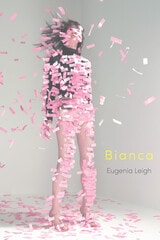
“I thought I forgave you,” Eugenia Leigh tells the specter of her father in Bianca. “Then I took root and became / someone’s mother.” Leigh’s gripping second collection introduces us to a woman managing marriage, motherhood, and mental illness as her childhood abuse resurfaces in the light of “this honeyed life.” Leigh strives to reconcile the disconnect between her past and her present as she confronts the inherited violence mired in the body’s history. As she “choose[s] to be tender to [her] child—a choice / [her] mangled brain makes each day,” memories arise, asking the mother in her to tend, also, to the girl she once was. Thus, we meet her manic alter ego, whose history becomes the gospel of Bianca: “We all called her Bianca. My fever, my havoc, my tilt.” These poems recover and reconsider Leigh’s girlhood and young adulthood with the added context of PTSD and Bipolar Disorder. They document the labyrinth of a woman breaking free from the cycle of abuse, moving from anger to grief, from self-doubt to self-acceptance. Bianca is ultimately the testimony of one woman’s daily recommitment to this life. To living. “I expected to die much younger than I am now,” Leigh writes, in awe of the strangeness of now, of “every quiet and colossal joy.”
Black California Gold
Wendy M. Thompson
Bucknell University Press, 2025
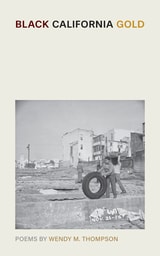
In this arresting debut poetry collection, Thompson traces the past and present of California’s Bay Area, exploring themes of family, migration, girlhood, and identity against a backdrop of urban redevelopment, advanced gentrification, and the erasure of Black communities. Traveling down both familiar highways and obscure side streets, her poems map a region where race, class, and language are just some of the fault lines that divide communities and produce periodic tremors of violence and resistance.
Confronting assimilationist myths of the American Dream, Black California Gold depicts a setting that is less a melting pot than a smelting pot, subjecting different ethnic groups to searing trials and extreme pressures that threaten to break them down entirely. Yet, it also celebrates the Black residents of the Bay Area who have struggled to sustain home and hope amid increasingly desperate conditions.
Black Drum
Enid Shomer
University of Arkansas Press, 1997
In Black Drum, Enid Shomer fuses mind with body, knowledge with physical being, and affirms the capacity of language to accomplish this fusion. With clearly fashioned images, her focus often narrows on close particulars or leaps to wide angles, as in these lines from the title poem in which the narrator is battling a fish:
We had been struggling for ten
minutes—a lifetime—over whose world
would prevail: his, with its purled
edges and continuous center, or mine
with its yin and yang,
its surface incised into sky
and sea, the land like a scar
between.
The characters in Shomer’s poems discover the ceaseless motion of living in the body and the inevitability of decay. In “Notes from the Sketch book of Gustav Klimt,” Shomer boldly says, “I have always balked / at the purely decorative, / but then I saw that the symbolic / could stir us by its absence.”
Black Drum insists that life on earth speaks of transformation and transience; epiphany can happen any where, with “schemes illegal and grand” with slot machines, race horses, dead or estranged relatives, and lost love. Enid Shomer signals us to make the most of life, despite our limitations and in the face of bewildering catastrophe.
Black Internationalist Feminism
Women Writers of the Black Left, 1945-1995Cheryl Higashida
University of Illinois Press, 2013
Black Speculative Feminisms
Memory and Liberated Futures in Black Women's FictionCassandra L. Jones
The Ohio State University Press, 2024
Black Women Unhinged
Writing Beyond the Bounds of MadnessMegan Finch
University of Minnesota Press, 2027
Rethinking the theoretical and political deployment of madness in the late twentieth century through the critical work of black women novelists
Black Women Unhinged revisits the “black women’s literary renaissance” to offer new terms at the intersection of gender, race, and madness before and beyond its crystallization into discourses of mental health and disability. Reconstructing the cultural zeitgeist of the 1960s–1980s, when madness emerged as a radical position in the work of Michel Foucault, Gilles Deleuze, Luce Irigaray, and David Cooper, and in the politics of feminists and Black Power activists, Black Women Unhinged reassesses black women’s overlooked contributions to this politics of madness. Megan Finch reads this renaissance’s catalogue of ostensibly mad literary characters—schizophrenic girls, infanticidal and drug-addicted mothers, castrating murderesses, and suicidal revolutionaries—beyond madness’s philosophical and political bounds.
Centering the relationship between Reason and the multiple forms of unReason central to modern politics, Finch traces the deployment of madness by the Black Power/Art’s movements and second-wave feminists to fortify black men’s and white women’s civic inclusion while dismissing black women’s politics as irremediable folly. Finch argues that black women’s novels of the period—including Toni Morrison’s The Bluest Eye and Beloved, Gayl Jones’s Corregidora and Eva’s Man, Toni Cade Bambara’s The Salt Eaters, and Nettie Jones’s Fish Tales—depict characters who exceed the category of madness and are unhinged from the curative politics of inclusion purchased through another’s abjection. Black Women Unhinged reckons with black women’s literary and theoretical contributions to the politics of madness and their attempts, past and present, to move beyond them to something akin to freedom.
Retail e-book files for this title are screen-reader friendly.
Black Women Writing Autobiography
A Tradition Within a TraditionJoanne Braxton
Temple University Press, 1990
Black Women, Identity, and Cultural Theory
(Un)Becoming the SubjectKevin Everod Quashie
Rutgers University Press, 2004
In Black Women, Identity, and Cultural Theory, Kevin Everod Quashie explores the metaphor of the “girlfriend” as a new way of understanding three central concepts of cultural studies: self, memory, and language. He considers how the work of writers such as Toni Morrison, Ama Ata Aidoo, Dionne Brand, photographer Lorna Simpson, and many others, inform debates over the concept of identity. Quashie argues that these authors and artists replace the notion of a stable, singular identity with the concept of the self developing in a process both communal and perpetually fluid, a relationship that functions in much the same way that an adult woman negotiates with her girlfriend(s). He suggests that memory itself is corporeal, a literal body that is crucial to the process of becoming. Quashie also explores the problem language poses for the black woman artist and her commitment to a mastery that neither colonizes nor excludes.
The analysis throughout interacts with schools of thought such as psychoanalysis, postmodernism, and post-colonialism, but ultimately moves beyond these to propose a new cultural aesthetic, one that ultimately aims to center black women and their philosophies.
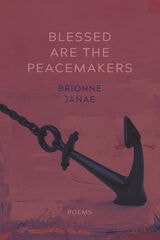
Blessed Are the Peacemakers
PoemsBrionne Janae
Northwestern University Press, 2022
Winner of the 2020 Cave Canem Northwestern University Press Poetry Prize
At once interested in the cyclical nature of domestic dysfunction and what we do when secrets of buried harm come to light, Blessed Are the Peacemakers asks what it means to make peace in the wake of intrafamilial violence and child sexual assault. These poems explore the ways the truth is often hidden behind layers of bleach and shame, and the ways we fail survivors by dismissing their stories and tolerating their abusers.
Filled with elegies to the people who have been murdered by state violence, racism, and anti-Blackness in the United States, Blessed Are the Peacemakers interrogates the lengths and limitations of grace. Brionne Janae examines what it means to survive—particularly as a Black girl, woman, queer person, or human—and uses self-portraiture to explore how familial and communal trauma plague our mental health. How do we survive the grief of the past and present without becoming numb to or consumed by it? How do we remember, despite our pain, to enjoy our bodies and our lives while we still have them?
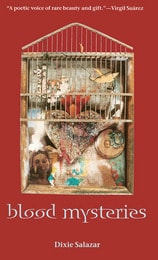
Blood Mysteries
Dixie Salazar
University of Arizona Press, 2003
Through images brutally honest and disarmingly off-center, Dixie Salazar explores the hidden lives of everyday people, objects, and experiences—and their transformation in the hidden realms of the heart. Charting furious descents into the darkest crevices of our souls, Salazar paints for us a lost city that exists below our mundane consciousness. Blood Mysteries is a tribute to lost souls, from a suicidal mental patient who doesn't believe she exists—"melting out of a landscape spotted with shadows, washing her hands in an empty basin of light"—to Marilyn Monroe, victim even in the morgue. In finely tuned lyricism showing an uncanny grasp of frayed lives, she gives flesh and vitality to women normally encountered only as statistics. The incarcerated, the homeless, the hopeless. Missing young girls who turn up violated and murdered.
Salazar presents us with blood mysteries not only of women, but of family as well. In poems invoking her dual heritage, she explores the identity crises brought on by having a Spanish father and a mother from the deep South, leaving her a product of American meltdown with a predisposition to check "other" for race on applications. "Other can be a place," she reminds us, "a residence for those of us without / papers, where halos of lightning bugs / swarm the rickety family tree." Salazar writes with toughness and grit "for all the shipwrecked saints / and wretches among us." But beneath the surface of words sometimes gritty, sometimes playful, lies a testament to the power of empathy, giving voice to those whose voices have been stifled and offering hope for those who have found none. Blood Mysteries is a forceful prayer for the disenfranchised that offers not merely hope, but transcendence.
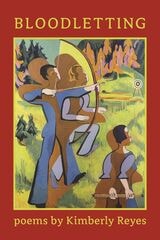
Bloodletting
Kimberly Reyes
Omnidawn, 2025
This is a collection of poems about how we find and cultivate love amid wars, including wars that often go ignored. Throughout Bloodletting, Kimberly Reyes considers how we define love and who gets to experience it, paying special attention to the ways that race and sex influence how we are perceived and valued by society. Through the voice of a Black woman coming to terms with her own perspectives on relationship-building, Reyes shows the damage that contemporary culture can do to women, and Black women in particular. Resisting passivity, Reyes’s poetry cuts through pervasive doom scrolling, virtue signaling, and parasocial relationships, inviting readers to remember what care is really supposed to feel like.
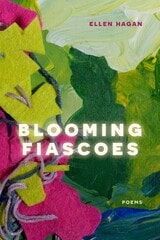
Blooming Fiascoes
PoemsEllen Hagan
Northwestern University Press, 2021
Blooming Fiascoes is a collective of verse that deconstructs identity. We are beautiful and monstrous. We live in a beautiful and monstrous world. Ellen Hagan poetically mirrors these metaphoric adversaries, drawing on her experiences as a woman, an artist, a mother, a transplanted southerner, and above all, a human being. She plumbs origins in history, body, and living to question how we reckon our whole selves in the catacombs of a world gone mad:
We mourn, we bless, / we blow, we wail, we / wind—down, we sip, / we spin, we blind, we / bend, bow & hem. We / hip, we blend, we bind, / we shake, we shine, / shine. We lips & we / teeth, we praise & protest.
In these poems, Assyrian, Italian, and Irish lines seep deeper into a body that is growing older but remains engaged with unruly encounters: the experience of raising daughters, sexual freedom, and squaring body image against the body’s prohibitions. This is a work where the legacy is still evolving and always asking questions in real time. Blooming Fiascos spindles poetry that is not afraid to see itself and the lives it inhabits.
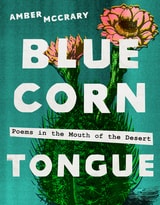
Blue Corn Tongue
Poems in the Mouth of the DesertAmber McCrary
University of Arizona Press, 2025
In a voice that is jubilant, irreverent, sometimes scouring, sometimes heartfelt, and always unmistakably her own, Amber McCrary remaps the deserts of Arizona through the blue corn story of a young Diné woman figuring out love and life with an O’odham man. Reflecting experiences of Indigenous joy, pain, and family, these shapeshifting poems celebrate the love between two Native partners, a love that flourishes alongside the traumas they face in the present and the past. From her ethereal connection with her saguaro muse, Hosh, to the intricate tapestry of her relationships with Diné relatives and her awakening to the complex world of toxic masculinity, McCrary brings together DIY zine aesthetics, life forms of juniper and mountains, and the beauty of Diné Bizaad to tell of the enduring bonds between people and place.
Journeying from the Colorado Plateau to the Sonoran Desert and back again, Blue Corn Tongue invokes the places, plants, and people of Diné Bikéyah and O’odham jeweḍ in a deeply honest exploration of love, memory, and intimacy confronting the legacy of land violence in these desert homelands.
Blue Guide
Lee Briccetti
Four Way Books, 2018
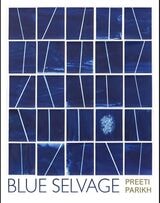
Blue Selvage
Preeti Parikh
Tupelo Press, 2026
Blue Selvage reminds us that a revolutionary message often requires new forms of discourse.
The poems in Blue Selvage weave lyric, essay, documentary fragments, and historical reckoning into an exploration of skin, cloth, color, and form as living archives—where the gendered, racialized, and colonial histories inscribed on the body are continually exposed, resisted, and re-stitched through memory, touch, and language itself.
Preeti Parikh’s debut poetry collection is a mapping of boundaries, a (re)framing of fractured interiority, a text(ile) unfurling across shifting homelands. In this deeply embodied, formally daring meditation, the corpus is both archive and threshold, a site where “what’s felt becomes the body, what’s draped becomes form.” Here, passion for indigo, a medical-science informed perspective, fascination with the materiality of cloth and skin, and a journeying towards reclamation interlace with feminist inquiries and cultural examination to conceptualize the poems’ multivalent inhabitances.
Expansive in its rhetorical modes and landscapes, Blue Selvage is unified by a remarkable singularity of voice and vision through which Parikh skillfully invokes form as metaphor, performance, dramatization, and content. Throughout the book, recurrent vocabularies and silences—integument, selvage, gaze—operate as warp and weft, binding personal experience to collective striving, devotion, and survival. Meanwhile, on the page, multilingual textures and typographic openness resist closure, offering apertures for looking within and without. What emerges is a capacious field of attention, where intimacy and history press against one another, and where writing itself becomes an act of unstitching and re-making—an ethical, sensuous practice of staying with what the body remembers and what culture would prefer to erase.
Blue Studios
Poetry and Its Cultural WorkRachel Blau DuPlessis
University of Alabama Press, 2006
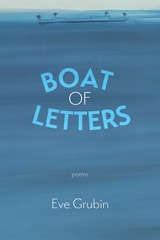
Boat of Letters
Eve Grubin
Four Way Books, 2025
In her much anticipated second full-length collection of poems, Eve Grubin conjures an "inky swamp, wild and warm, / where leaves hang down like muted lamps." Grubin navigates wild waters in a "boat of letters" she constructs, with poems narrating a daughter in mourning for her mother in adulthood's half-light; a wife in the middle of life's existential marathon; a mother raising two children in the terrifying present; an American living in London; a Jewish woman following religious tradition in what can feel like a faithless world. Grubin shapes language and silences into a bridge that holds us between longing and understanding, between effort and the holy ground of that unattainable destination. "The Poetics of Reticence" describes hovering above the waters where "there is no vessel; there are no oars," just the "sounds of a boat creaking," a material contradiction in the hushed void. "Silence is praise: words cannot touch glory," Grubin writes, but she also demonstrates what wonders our speech makes possible. In one poem, the narrator looks back at her wedding and considers how little she knew about marriage, and thinking in the context of her husband's area of expertise, palaeography, she reflects, "I didn't know that when two graphemes join / in a single glyph there is potential for stylistic re-imaginings, / for inventive, elegant variations." All is preordained, she seems to say, while paradoxically, we re-imagine and invent. And even as we create our future, we embrace the beauty of all that we cannot know: "Yesterday, we talked about the shade / of a certain blue mentioned in the Torah. / Was it the blue of our son's lips after a bath? // Or the blue of redemption? // Or the dark blue of the sky / the night we walked across the sands, the seas all around us."
Body My House
May Swenson's Work and Lifeedited by Paul Crumbley and Patricia M. Gantt
Utah State University Press, 2000
The first collection of critical essays on May Swenson and her literary universe, Body My House initiates an academic conversation about an unquestionably major poet of the middle and late twentienth century. Includes many previously unpublished Swenson poems.
Essays here address the breadth of Swenson's literary corpus and offer varied scholarly approaches to it. They reference Swenson manuscripts---poems, letters, diaries, and other prose---some of which have not been widely available before. Chapters focus on Swenson's work as a nature writer; the literary and social contexts of her writing; her national and international acclaim; her work as a translator; associations with other poets and writers (Bishop, Moore, and others); her creative process; and her profound explorations of gender and sexuality. The first full volume of scholarship on May Swenson, Body My House suggests an ambitious agenda for further work.
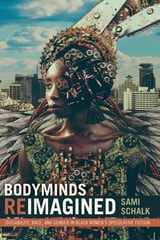
Bodyminds Reimagined
(Dis)ability, Race, and Gender in Black Women's Speculative FictionSami Schalk
Duke University Press, 2018
Bone Dance
New and Selected Poems, 1965-1993Wendy Rose
University of Arizona Press, 1994
"Rich in poems which enhance our awareness of the human complexity of our social and moral dilemmas." —Book Review Digest
"There is a whisper in the wind among the chapters . . . and a singing rain beyond the window." —American Indian Culture Research Journal
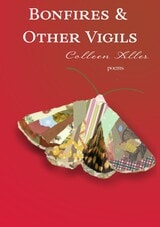
Bonfires & Other Vigils
PoemsColleen Alles
University of Alabama Press, 2024
Any event can be a vigil: a walk by a river, a flu shot at Walgreens, an hour spent by a bird feeder attracting mostly cardinals. A vigil means you are keeping watch, and these poems are watching the world around them—and the worlds beneath those worlds, too. The poems in this collection pull from dreams and apparitions as much as they do reality: a woman in a house, a coffee mug, a book of matches, a load of unfolded laundry, a goldfish won at a county fair. All is fair game. Bonfires & Other Vigils celebrates the watching in unconventional ways. Readers can expect to revel in the elusive wonder of haziness, otherworldliness, and wildness of examining life through lenses of vigilant dreaming.

Book M
A London Widow's Life WritingsKatherine Austen, Edited by Pamela S. Hammons
Iter Press, 2013
—Margaret J. M. Ezell
Distinguished Professor of English and John and Sara Lindsay Chair of Liberal Arts
Texas A&M University

Boomer Girls
Poems by Women from the Baby Boom GenerationPamela Gemin
University of Iowa Press, 1999
Where were you between Betty Crocker and Gloria Steinem? With that question in mind poets Pamela Gemin and Paula Sergi began collecting the poems in Boomer Girls, an anthology of coming-of-age poems written by women born between 1945 and 1964, give or take a few years on either side. The answers to that question fill this volume with the energy, passion, heartbreak, and giddiness of women's lives from childhood to adolescence to middle age.
The poems in Boomer Girls are by unknown, emerging, and established writers, women who participated in the second wave of feminism. From Sandra Cisneros' "My Wicked Wicked Ways" to Barbara Crooker's "Nearing Menopause, I Run into Elvis at Shoprite," from Wendy Mnookin's "Polio Summer" to Kyoko Mori's "Barbie Says Math Is Hard," these poems call for us to celebrate (in the words of poet Diane Seuss-Brakeman) "glances, romances, beauty and guilt, regret, remorse, rebates and rejuvenations."
Boomer Girls share a common culture, bound by their generation's political history, by pop icons like Barbie—that pedestaled Boomer Girl who's just turned forty—and by the music that's never stopped playing: Janis Joplin, Marvin Gaye, Jimi Hendrix, the Ronettes, Van Morrison, Patsy Cline, John Lennon. The Boomer poets in this feisty anthology speak with diverse voices and embody a wide range of experiences, yet their generation's universal images—the hula hoops, TV shows, finned automobiles, and other household gods of their youth—unite them in ways both hilarious and tender.
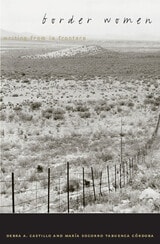
Border Women
Writing From La FronteraDebra A. Castillo
University of Minnesota Press, 2002
The first study to foreground writing by women who live at the U.S.-Mexico Border.
It is a peculiar fact that U.S.-Mexico border theory is dominated by those who write about, not from, the border. By looking at the work of women writers from both sides of the border, Debra A. Castillo and María-Socorro Tabuenca Córdoba open border studies to a truly transnational analysis while bringing questions of gender to the fore.
Border Women rethinks border theory by emphasizing women writers whose work—in Spanish, English, or a mixture of the two languages—calls into question accepted notions of border identities. These writers include those who are already well recognized internationally (Helena María Viramontes, Sheila and Sandra Ortiz Taylor, and María Novaro); those who have become part of the Chicano canon (Norma Cantú, Alicia Gaspar de Alba, and Demetria Martínez); along with some of the lesser-known, yet most exciting, women’s voices from the Mexican border (Rosario Sanmiguel, Rosina Conde, and Regina Swain).
Bound and Determined
Captivity, Culture-Crossing, and White Womanhood from Mary Rowlandson to Patty HearstChristopher Castiglia
University of Chicago Press, 1996
Examining more than sixty accounts by women captives, as well as novels ranging from Susanna Rowson's eighteenth-century classic Rueben and Rachel to today's mass-market romances, Castiglia investigates paradoxes central to the genre. In captivity, women often find freedom from stereotypical roles as helpless, dependent, sexually vulnerable, and xenophobic. In their condemnations of their non-white captors, they defy assumptions about race that undergird their own societies. Castiglia questions critical conceptions of captivity stories as primarily an appeal to racism and misogyny, and instead finds in them an appeal of a much different nature: as all-too-rare stories of imaginative challenges to rigid gender roles and racial ideologies.
Whether the women of these stories resist or escape captivity, endure until they are released, or eventually choose to live among their captors, they end up with the power to be critical of both cultures. Castiglia shows that these compelling narratives, with their boundary crossings and persistent explorations of cultural divisions and differences, have significant implications for current critical investigations into the construction of gender, race, and nation.

Boy
Tracy Youngblom
CavanKerry Press, 2023
The death of a youngest child. An alcoholic and distant father. A grief-stricken family. A tentative faith. These are the building blocks of Boy, a sequence of poems that explores how death and loss color memory and influence the ways family members relate to each other and to their shared history.
Inspired by the death of her own younger brother, Tracy Youngblom has written a poetry collection that serves as a companion to grief. This book is for those who love poetry and those who are intimidated by it, those interested in the way childhood experience shapes life, and those interested in the psychology of addiction.
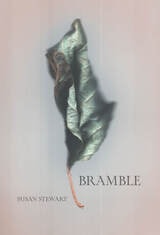
Bramble
Susan Stewart
University of Chicago Press, 2026
A finalist for the 2026 National Book Award for Poetry, this seventh collection by acclaimed poet Susan Stewart offers a meditation on difficulty and the powers of nature.
In the biblical book of Judges, the bramble is a figure of destructive leadership, thwarting the lives of trees. In ballads and fairy tales, roses grow “‘round the briar” in tragic contrast to heroines who are enveloped by the thorns. One of the oldest English words and an even older symbol, “bramble” reminds us of the entangled and unending struggle that comes with living in time and searching beyond appearances. The rough thicket presents impediments, yet it also bears fruit and delicate flowers.
With Bramble, Susan Stewart has composed a book of many forms, including satires, elegies, meditations, and songs. Bramble is also an exploration of the act of making such forms. The book’s three sections—“Mirror,” “Briar,” and “Channel”—link lyric time to our lives as they are situated in history and nature. Reflecting upon illness, grief, and change, the poems follow the progress of day and night, the movement of the seasons, and the path of water from springs to the sea.
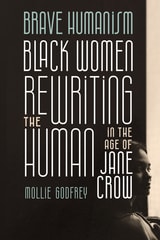
Brave Humanism
Black Women Rewriting the Human in the Age of Jane CrowMollie Godfrey
The Ohio State University Press, 2025
Breaking Boundaries
Women'S Regional WritingSherrie A. Inness
University of Iowa Press, 1997
These lively essays reveal the generational continuum of women's regional literature, which has always offered a voice to women and their concerns. By exploring the multiplicity of connections between women and regional writing and the subversive potential of regional writing to put forth social criticisms and correctives, Breaking Boundaries charts some of the major ways in which this literary genre is of particular importance to today's writers.
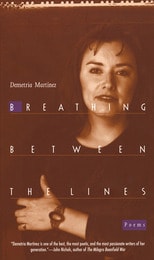
Breathing Between the Lines
PoemsDemetria Martínez
University of Arizona Press, 1997
Weaving together threads of love and family, social conviction and activism, loss and renewal, Breathing between the Lines carries the reader deep inside the head and heart of a talented Chicana writer. Page by page, the journey is an exhilarating one. What we find at the end is up to us.
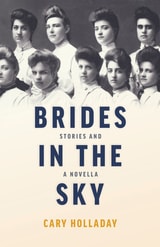
Brides in the Sky
Stories and a NovellaCary Holladay
Ohio University Press, 2019
Each of the crystalline worlds Cary Holladay brings us in the short stories and novella that make up Brides in the Sky has sisterhood, in all its urgency and peril, at its heart. In the title story, two women in 1850s Virginia marry brothers who promptly uproot them to follow the Oregon Trail west, until an unexpected shift of allegiance separates the sisters forever. Elsewhere in the book, a young boy’s kidnapping ignites tensions in a sorority house; frontier figure Cynthia Ann Parker struggles upon her return to her birth community from the Comanche people with whom she’s lived a full life; and in a metafictional twist, a gothic tale resonates in the present. In the novella, “A Thousand Stings,” three sisters come of age in the 1960s over a long summer of small-town scandal and universal stakes. These are just some of the lives, shaped by migrations, yearning, and the long shadows of myth, that Holladay creates. She crafts them with subtle humor, a stunning sense of place, and an unerring eye for character.
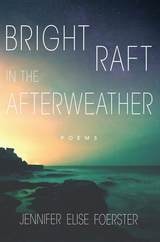
Bright Raft in the Afterweather
PoemsJennifer Elise Foerster
University of Arizona Press, 2018
Featuring recurring characters, settings, and motifs from her previous book, Leaving Tulsa, Foerster takes the reader on a solitary journey to the edges of the continents of mind and time to discover what makes us human. Along the way, the author surveys the intersection between natural landscapes and the urban world, baring parallels to the conflicts between Native American peoples and Western colonizers, and considering how imagination and representation can both destroy and remake our worlds.
Foerster’s captivating language and evocative imagery immerse the reader in a narrative of disorientation and reintegration. Each poem blends Foerster’s refined use of language with a mythic and environmental lyricism as she explores themes of destruction, spirituality, loss, and remembrance.
In a world wrought with ecological imbalance and grief, Foerster shows how from the devastated land of our alienation there is potential to reconnect to our origins and redefine the terms by which we inhabit humanity and the earth.
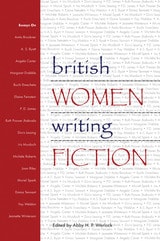
British Women Writing Fiction
Abby H.P. Werlock
University of Alabama Press, 2000
British women in the second half of the 20th century have produced a body of work that is as diverse as it is entertaining. This book offers an informal, jargon-free introduction to the fiction of sixteen contemporary writers either brought up or now living in England, from Muriel Spark to Jeanette Winterson.
British Women Writing Fiction presents a balanced view comprising women writing since the 1950s and 1960s, those who attracted critical attention during the 1970s and 1980s, and those who have burst upon the literary scene more recently, including African-Caribbean and African women. The essays show how all of these writers treat British subjects and themes, sometimes from radically different perspectives, and how those who are daughters of immigrants see themselves as women writing on the margins of society.
Abby Werlock's introduction explores the historical and aesthetic factors that have contributed to the genre, showing how even those writers who began in a traditional vein have created experimental work. The contributors provide complete bibliographies of each writer's works and selected bibliographies of criticism. Exceptional both in its breadth of subjects covered and critical approaches taken, this book provides essential background that will enable readers to appreciate the singular merits of each writer. It offers an approach toward better understanding favorite authors and provides a way to become acquainted with new ones.
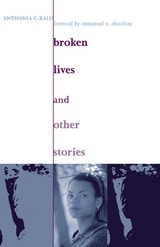
Broken Lives and Other Stories
Ris Af#79Anthonia C. Kalu
Ohio University Press, 2003
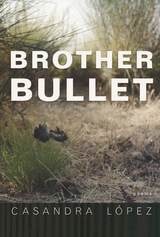
Brother Bullet
PoemsCasandra López
University of Arizona Press, 2019
Drawing on migratory experiences, López transports the reader to the Inland Empire, Baja California, New Mexico, and Arizona to create a frame for memory, filled with imagery, through the cyclical but changing essence of sorrow. This is paralleled with surrounding environments, our sense of belonging—on her family’s porch, or in her grandfather’s orange grove, or in the darkest desert. López’s landscapes are geographical markers and borders, connecting shared experiences and memories.
Brother Bullet tugs and pulls, drawing us into a consciousness—a story—we all bear.

Bruja
A DreamoirWendy C. Ortiz
Northwestern University Press, 2025
Dubbed a “dreamoir,” Bruja is a bold and harrowing journey through the dream worlds of Wendy C. Ortiz. Sister memoir to Hollywood Notebook, it catalogs the happenings of the night: strange visions of the past warped by present-day inklings; animals running loose, never where they should be; familiar nature and architecture made malleable and new. Ortiz’s subconscious is bared in full on these pages as the author interrogates her histories. We bravely adventure into new literary form, walking the parallel plane of Ortiz’s waking life alongside her. Where the self is anchored in the deepest recesses of the mind, Ortiz invites us to push the boundaries of the subconscious and enter into the dreamoir.
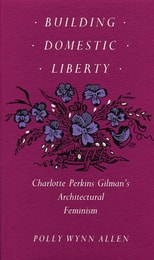
Building Domestic Liberty
Charlotte Perkins Gilman's Architectural FeminismPolly Wynn Allen
University of Massachusetts Press, 1988
Building Domestic Liberty offers a critical and admiring analysis of feminist philosopher Charlotte Perkins Gilman (1860–1935). Polly Allen examines Gilman's approach to architecture, landscape, and neighborhood design and discusses Gilman's case against prevailing household design and looks at her philosophy of world improvement.