Results by title
272 books match the query 'Work' and 9 start with b
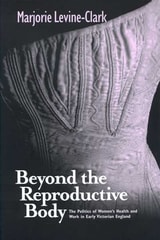
BEYOND THE REPRODUCTIVE BODY
Politics of Women’s Health & Work in Early Victorian EnglandMarjorie Levine-Clark
The Ohio State University Press, 2004
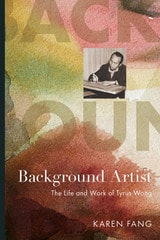
Background Artist
The Life and Work of Tyrus WongKaren Fang
Rutgers University Press, 2025
Chinese American Librarians Association Best Book Award (Honorary Mention, Adult Non-fiction category)
You might not know the name Tyrus Wong, but you probably know some of the images he created, including scenes from the beloved Disney classic Bambi. Yet when he came to this country as a child, Tyrus was an illegal immigrant locked up in an offshore detention center. How did he go on to a long and prosperous career drawing animation cels, storyboards, and greeting cards that shaped the American imagination?
Background Artist shares the inspiring story of Tyrus Wong’s remarkable 106-year life and showcases his wide array of creative work, from the paintings and fine art prints he made working for Roosevelt’s Works Progress Administration to the unique handmade kites he designed and flew on the Santa Monica beach. It tells how he came to the United States as a ten-year-old boy in 1920, at a time when the Chinese Exclusion Act barred him from legal citizenship. Yet it also shows how Wong found American communities that welcomed him and nurtured his artistic talent. Covering everything from his work as a studio sketch artist for Warner Bros. to the best-selling Christmas cards he designed for Hallmark and other greeting card companies, this book celebrates a multitalented Asian American artist and pioneer.
Larry Potash (WGN News) and "The artist who saved a Hollywood classic from never being made" (https://www.youtube.com/watch?v=P471NdY7TdE)
Band People
Life and Work in Popular MusicFranz Nicolay
University of Texas Press, 2024
A close look at the lives of working musicians who aren’t the center of their stage.
Secret (and not-so-secret) weapons, side-of-the-stagers, rhythm and horn sections, backup singers, accompanists—these and other “band people” are the anonymous but irreplaceable character actors of popular music. Through interviews and incisive cultural critique, writer and musician Franz Nicolay provides a portrait of the musical middle class. Artists talk frankly about their careers and attitudes toward their craft, work environment, and group dynamics, and shed light on how support musicians make sense of the weird combination of friend group, gang, small business consortium, long-term creative collaboration, and chosen family that constitutes a band. Is it more important to be a good hang or a virtuoso player? Do bands work best as democracies or autocracies? How do musicians with children balance their personal and professional lives? How much money is too little? And how does it feel to play on hundreds of records, with none released under your name? In exploring these and other questions, Band People gives voice to those who collaborate to create and dissects what it means to be a laborer in the culture industry.
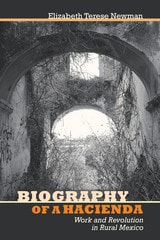
Biography of a Hacienda
Work and Revolution in Rural MexicoElizabeth Terese Newman
University of Arizona Press, 2014
Biography of a Hacienda is a many-voiced reconstruction of events leading up to the Mexican Revolution and the legacy that remains to the present day. Drawing on ethnohistorical, archaeological, and ethnographic data, Elizabeth Terese Newman creates a fascinating model of the interplay between the great events of the Revolution and the lives of everyday people.
In 1910 the Mexican Revolution erupted out of a century of tension surrounding land ownership and control over labor. During the previous century, the elite ruling classes acquired ever-increasingly large tracts of land while peasants saw their subsistence and community independence vanish. Rural working conditions became so oppressive that many resorted to armed rebellion. After the war, new efforts were made to promote agrarian reform, and many of Mexico’s rural poor were awarded the land they had farmed for generations.
Weaving together fiction, memoir, and data from her fieldwork, Newman reconstructs life at the Hacienda San Miguel Acocotla, a site located near a remote village in the Valley of Atlixco, Puebla, Mexico. Exploring people’s daily lives and how they affected the buildup to the Revolution and subsequent agrarian reforms, the author draws on nearly a decade of interdisciplinary study of the Hacienda Acocotla and its descendant community. Newman’s archaeological research recovered information about the lives of indigenous people living and working there in the one hundred years leading up to the Mexican Revolution.
Newman shows how women were central to starting the revolt, and she adds their voices to the master narrative. Biography of a Hacienda concludes with a thoughtful discussion of the contribution of the agrarian revolution to Mexico’s history and whether it has succeeded or simply transformed rural Mexico into a new “global hacienda system.”
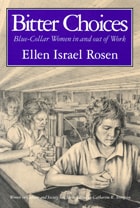
Bitter Choices
Blue-Collar Women in and out of WorkEllen Israel Rosen
University of Chicago Press, 1987
Drawing on quantitative and qualitative data from interviews with more than two hundred such women factory workers, Rosen traces the ways in which women who do "unskilled" factory work have gained in self-esteem as well as financial stability from holding paid jobs. Throughout, Rosen explores the relationship between public work experiences and private family life. She analyzes the dynamics of two-paycheck, working class families, clarifies relationships between class and gender, and explores the impact of patriarchy and capitalism on working class women. At the same time Rosen places women's job loss within the broader economic context of global industrial transformations, demonstrating how international capital shifts to cheaper labor in developing countries, as well as technological progress, are changing the shape of the entire American labor force and are beginning to undermine the material and symbolic gains of the American female factory worker, the promise of market equality, and progressive working conditions.
"This book is a significant contribution to our understanding of women's work and family lives, but it is also a valuable look at the consequences of deindustrialization in America for workers, their families, and their communities."—Myra Marx Ferree, American Journal of Sociology

Blanche Lazzell
The Life and Work of an American ModernistROBERT C. BRIDGES
West Virginia University Press, 2004
Blanche Lazzell went from Maidsville, West Virginia, to the leading edge of twentieth-century American art. A member of the prominent art communities of Paris and Provincetown, MA during the '20s and '30s, Lazzell was always on the fringe of important developments in the modern art world. Her studies in Paris led her to adopt the techniques of modernism as well as other emerging styles. Among her groundbreaking works were some of the first examples of abstraction in America. Blanche Lazzell: The Life and Work of an American Modernist is a significant contribution to the history of twentieth-century American art.
Know primarily as a Provincetown printmaker, Lazzell’s full life and career are presented here, generously accompanied by color reproductions of her work, showing the breadth of her accomplishment in painting, printmaking, and hooked rugs. Lazzell's true contribution to American art history was never fully appreciated during her lifetime. A renewed interest in the artist has developed over the past fifteen years, due mostly to the critical appreciation of her color wood block prints. She is worth remembering not only for her own work, but also for her role as a translator of the achievements of the European modernists for her colleagues in America. In Blanche Lazzell: The Life and Work of an American Modernist, nine essays and hundreds of full-color illustrations bring this incredibly talented and influential artist's work to life.
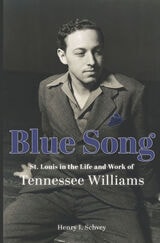
Blue Song
St. Louis in the Life and Work of Tennessee WilliamsHenry I. Schvey
University of Missouri Press, 2022
The question of this paradox lies at the heart of this book, an attempt not so much to correct the record about Williams’s well-chronicled dislike of the city, but rather to reveal how the city was absolutely indispensable to his formation and development both as a person and artist. Unlike the prevailing scholarly narrative that suggests that Williams discovered himself artistically and sexually in the deep South and New Orleans, Blue Song reveals that Williams remained emotionally tethered to St. Louis for a host of reasons for the rest of his life.
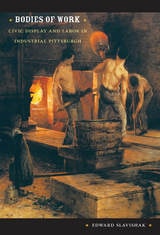
Bodies of Work
Civic Display and Labor in Industrial PittsburghEdward Slavishak
Duke University Press, 2008
Slavishak focuses on the workers whose bodies came to epitomize Pittsburgh, the men engaged in the arduous physical labor demanded by the city’s metals, glass, and coal industries. At the same time, he emphasizes how conceptions of Pittsburgh as quintessentially male limited representations of women in the industrial workplace. The threat of injury or violence loomed large for industrial workers at the turn of the twentieth century, and it recurs throughout Bodies of Work: in the marketing of artificial limbs, statistical assessments of the physical toll of industrial capitalism, clashes between labor and management, the introduction of workplace safety procedures, and the development of a statewide workmen’s compensation system.

Bread and Work
The Experience of Unemployment 1918-39Matt Perry
Pluto Press, 2000
Looking beyond statistics and economic cycles, Perry investigates the human impact of unemployment. He uncovers the experience of being jobless from the perspective of those who lived through it, their employers and their communities. He uses oral history, memoirs, literary accounts, and newspaper articles to reveal the reality of unemployment.
Perry argues that the scale of the crisis has been minimised by historians who have tended to emphasise that prolonged unemployment was the problem of the distressed fringe.
Finally, Perry argues that the lessons of the 1930s have direct relevance today since the structural problems of industrial capitalism remain inherent.