Results by title
331 books match the query 'World Literature' and 12 start with b
Bait
David Albahari
Northwestern University Press, 2001
Balkan Beauty, Balkan Blood
Modern Albanian Short StoriesRobert Elsie
Northwestern University Press, 2006
Albania's more established writers (including Dritëro Agolli, Ismail Kadare, Teodor Laço, and Eqrem Basha) appear here alongside newer talents (such as Ylljet Aliçka, Mimoza Ahmeti, Elivra Dones, Lindita Arapi, and Kim Mehmeti), providing English-speaking readers with an elucidating and entertaining overview of the recent history, and the future, of the nation's literature.
Ballad of Descent
Martin Vopenka
Northwestern University Press, 1995

Barren Lives
By Graciliano Ramos
University of Texas Press, 1971
A peasant family, driven by the drought, walks to exhaustion through an arid land. As they shelter at a deserted ranch, the drought is broken and they linger, tending cattle for the absentee ranch owner, until the onset of another drought forces them to move on, homeless wanderers again. Yet, like the desert plants that defeat all rigors of wind and weather, the family maintains its will to survive in the harsh and solitary land. Intimately acquainted with the region of which he writes and keenly appreciative of the character of its inhabitants, into whose minds he has penetrated as few before him, Graciliano Ramos depicts them in a style whose austerity well becomes the spareness of the subject, creating a gallery of figures that rank as classic in contemporary Brazilian literature.

Be Faithful Unto Death
Zsigmond Móricz
Central European University Press, 1996
Be Faithful unto Death is the moving story of a bright and sensitive schoolboy growing up in an old-established boarding school in the city of Debrecen in eastern Hungary. Misi, a dreamer and would-be writer, is falsely accused of stealing a winning lottery ticket. The torments through which he goes – and grows – are superbly described.
The novel is brimming with vivid detail from the provincial life that Móricz knew so well and shot through with a sense of the tragic fate of a newly truncated Hungary.
Beggar’s Bedlam
Nabarun Bhattacharya
Seagull Books, 2024
Beggar’s Bedlam is a surreal novel that unleashes the chaos of the carnival on the familiar. Part literary descendent of Bulgakov’s The Master and Margarita and part a reconstruction of lost Bengali history, Nabarun Bhattacharya’s masterpiece is a jubilant, fizzing wire of subaltern anarchy and insurrection.
Marshall Bhodi Sarkar and his lieutenant Sarkhel surreptitiously dig on the banks of the Ganges River looking for crude oil reserves. Instead, they unearth curved daggers, rusty broadswords, and a Portuguese cannon. Bhodi is an occasional military man and the lead sorcerer of the secret black-magic sect named Choktar. He joins forces with the flying Flaperoos—men with a predilection for alcohol and petty vandalism—to declare outright war against the Marxist–Leninist West Bengal government. In a bloodless revolution that is fascinating in its utter implausibility, a motley crew of yet more implausible characters come together in a magic-realist fictional remapping of Calcutta.

Beyond the World of Men
Women’s Fiction at the Czech Fin de SiècleEdited by Geoffrey Chew
Karolinum Press, 2024
Bringing together Czech fiction published by women between 1890 and 1910, Beyond the World of Men presents works that confront pivotal issues of the time, including the “woman question” and women’s rights, class conflict, lesbian love, and the relationship between the aristocracy and the Czech peasantry (as in two stories originally written in German by the aristocrat Marie von Ebner-Eschenbach). The collection contains stories that are of literary merit, but also hold historical value. In these works, the authors offer trenchant social commentary while injecting both comic and sentimental elements into their writing, employing humanity and subtlety.
As a whole, the collection suggests a revision of the critical understanding of Czech literary modernism; these writers represent voices that were not usually heard in the male writing of the period. They also demand evaluation in their differing (but constant) reactions to earlier women’s writing in Czech and in other European languages, but particularly that of the central figure of Božena Nemcová, to whose canonic novel Babicka they constantly return.
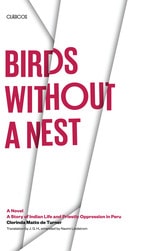
Birds without a Nest
A Novel: A Story of Indian Life and Priestly Oppression in PeruBy Clorinda Matto de Turner
University of Texas Press, 1996
"I love the native race with a tender love, and so I have observed its customs closely, enchanted by their simplicity, and, as well, the abjection into which this race is plunged by small-town despots, who, while their names may change, never fail to live up to the epithet of tyrants. They are no other than, in general, the priests, governors, caciques, and mayors." So wrote Clorinda Matto de Turner in Aves sin nido, the first major Spanish American novel to protest the plight of native peoples.
First published in 1889, Birds without a Nest drew fiery protests for its unsparing expose of small town officials, judicial authorities, and priests who oppressed the native peoples of Peru. Matto de Turner was excommunicated by the Catholic Church and burned in effigy. Yet her novel was strongly influential; indeed, Peruvian President Andres Avelino Caceres credited it with stimulating him to pursue needed reforms.
In 1904, the novel was published in a bowdlerized English translation with a modified ending. This edition restores the original ending and the translator's omissions. It will be important reading for all students of the indigenous cultures of South America.
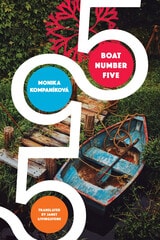
Boat Number Five
Monika Kompaníková
Seagull Books, 2021
A fierce, unapologetic eye captures the universal quest for connection in post-communist Eastern Europe.
Emotionally neglected by her immature, promiscuous mother and forced to care for her cantankerous dying grandmother, twelve-year-old Jarka is left to fend for herself in the social vacuum of a post-communist concrete jungle in Bratislava. She spends her days roaming the streets and daydreaming in the only place she feels truly safe: a small garden inherited from her grandfather. One day, stopping at a suburban railway station, she impulsively abducts twin babies.
Teetering on the edge of disaster, Jarka struggles to care for the children, and in the process, begins to discover herself. Boat Number Five—which was adapted into an award-winning Slovak film—brilliantly captures the ache and emptiness of a fractured society.

Border State
Tonu Onnepalu
Northwestern University Press, 2000
An immediate sensation upon its 1993 publication in Europe, already translated into more than a dozen languages, Border State is a brilliantly realized account of a man in the grip of Western excess, emotionally crippled by a world that is subsuming his own and inhabiting a West in which "all countries have become imaginary deserts of ruins where crowds of nomads roam from one attraction to the other." His tale, in which disillusion and murder become inextricably linked, is a compelling exploration of scarcity, longing, and madness.
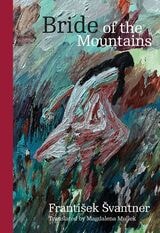
Bride of the Mountains
František Švantner
Karolinum Press, 2026
A classic work of twentieth-century Slovak literature that blends naturalism and depictions of rural life with the supernatural.
After many years, Libor returns to his native village, where he has been appointed gamekeeper. His childhood sweetheart, Zuna, is waiting for him there. But his homecoming is far from idyllic. He has “tasted city life” and soon becomes an outsider to the villagers. According to them, Zuna has become a local prostitute who sleeps with anyone who pays her. Zuna’s father, an old miller, has gone blind because he made a pact with the devil. The mill where Libor and Zuna used to play as children has fallen into disrepair and ruin. The more Libor gets to know the world that he has returned to, the more confused he becomes. The village is full of superstitions, secrets, and hostility. He meets the charcoal burner Tavo, who lives high in the mountains, and learns from him the mysterious and bloody story of Zuna’s birth. He also learns what matters most to him: Zuna is pure and innocent. Libor starts a relationship with her from scratch. But just when their forgotten love might finally come to fruition, He appears—a vagabond who can transform into a wolf—and Libor discovers that Zuna is meeting with him. Is it a monster that gouges people’s eyes out? The devil, or our immaterial, dark alter ego? Reality, dreams, and fantasy blend in Libor’s mind as his hopes seem crushed beyond redemption.
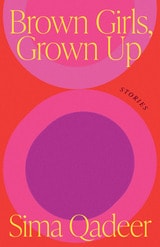
Brown Girls, Grown Up
StoriesSima Qadeer
Northwestern University Press, 2026
A poignant and graceful story collection about the clash and harmony of finding one’s place in an adult world that feels “other”
Brown Girls, Grown Up shines a light on the nuances of modern womanhood with grace, honesty, and charm. The stories in Qadeer’s debut collection delve into the subtleties and blatant struggles of navigating shifting identities as one matures, into the joys and challenges of intimacy and aging, and into the changing tides of motherhood. Middle-aged Amira takes radical action after meeting a new friend who lulls her into feeling safe and accepted; Hanna enrolls her biracial children in a local Sunday school after worrying they have no real connection to her Muslim heritage; betrayals and secrets come to light when a group of college friends reunite to take stock and compare achievements. Filled with humor and heartache, this collection offers a fresh and profoundly relatable perspective on the lifelong search for belonging in a world shaped by tradition, modernity, and individual ambition.