Results by title
141 books match the query 'World War I' and 3 start with b
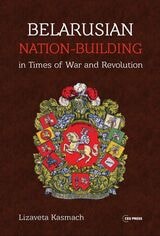
Belarusian Nation-Building in Times of War and Revolution
Lizaveta Kasmach
Central European University Press, 2023
The proclamation of Belarusian independence on March 25, 1918, and the rival establishment of the Soviet Belarusian state on January 1, 1919, created two distinct and mutually exclusive national myths, which continue to define contemporary Belarusian society. This book examines the processes that resulted in this dual resolution in the context of World War I and the subsequent Russian Revolutions.
Based on original archival material, Lizaveta Kasmach scrutinizes the development of competing concepts of Belarusian nationhood in the context of rivaling national aspirations and imperial policies. The analysis convincingly demonstrates the divisions within the nationalist movement, both politically between the moderates and socialists, and geographically between German-occupied territory with Vilna as a center versus Russian-controlled territory around Minsk. Besides the case study of Belarusian nation-building efforts, the book is a contribution to the study of the First World War in East Central Europe, approaching the war and its aftermath as a mobilizational moment in the region.
Benes & Masaryk
CzechoslovakiaPeter Neville
Haus Publishing, 2010
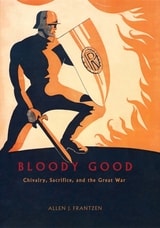
Bloody Good
Chivalry, Sacrifice, and the Great WarAllen J. Frantzen
University of Chicago Press, 2003
Here for the first time, Allen J. Frantzen traces these chivalric ideals from the Great War back to their origins in the Middle Ages and shows how they resulted in highly influential models of behavior for men in combat. Drawing on a wide selection of literature and images from the medieval period, along with photographs, memorials, postcards, war posters, and film from both sides of the front, Frantzen shows how such media shaped a chivalric ideal of male sacrifice based on the Passion of Jesus Christ. He demonstrates, for instance, how the wounded body of Christ became the inspiration for heroic male suffering in battle. For some men, the Crucifixion inspired a culture of revenge, one in which Christ's bleeding wounds were venerated as badges of valor and honor. For others, Christ's sacrifice inspired action more in line with his teachings—a daring stay of hands or reason not to visit death upon one's enemies.
Lavishly illustrated and eloquently written, Bloody Good will be must reading for anyone interested in World War I and the influence of Christian ideas on modern life.