Results by title
1832 books match the query 'Essays' and 68 start with b
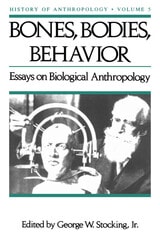
Bones, Bodies amd Behavior
Essays in Behavioral AnthropologyEdited by George W. Stocking, Jr.
University of Wisconsin Press, 1990
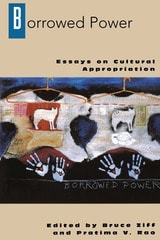
Borrowed Power
Essays on Cultural AppropriationEdited by Bruce Ziff
Rutgers University Press, 1997
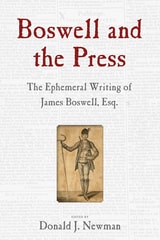
Boswell and the Press
Essays on the Ephemeral Writing of James BoswellDonald J. Newman
Bucknell University Press, 2021
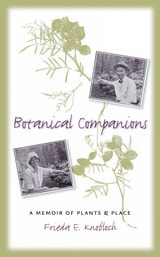
Botanical Companions
A Memoir of Plants and PlaceFrieda Knobloch
University of Iowa Press, 2005
Brazil
Essays on History and PoliticsLeslie Bethell
University of London Press, 2018
Breakfast Served Any Time All Day
Essays on Poetry New and SelectedDonald Hall
University of Michigan Press, 2004
Praise for Breakfast Served:
". . . the essays in this book are engaging, passionate, strange, and unified. Hall has been around a long time, and you can trace the concerns of a generation through the mind of this one man: questions about the diminished scope of poetry, the diminished ambitions of poets, how a poem 'means,' etc. . . . . Criticism . . . is an exercise in sanity, of which these essays are a splendid and useful example."
-Poetry
"A luminous and essential volume about the sensuality of language, its pleasures and sounds."
-Ploughshares
"It is in this merger of a poet's biography and a poem's body that Hall does his best work. . . . [Breakfast Served Any Time All Day] has an undeniably infectious quality to it. Finishing it, you cannot help but want to return to your bookshelf, and read-again or for the first time-the great forgotten poems of our past."
-Nathan Greenwood Thompson, Rain Taxi
Brewtown Tales
More Stories from Milwaukee and BeyondJohn Gurda
Wisconsin Historical Society Press, 2022

Bridges to Fantasy
Essays from the Eaton Conference on Science Fiction and Fantasy LiteratureGeorge E Slusser
Southern Illinois University Press, 1982
Thirteen original essays written specifically for the second Eaton Conference on Science Fiction and Fantasy Literature, held February 23–24, 1980, at the University of California, Riverside.
These essays demonstrate the variety of fantasy forms and their pervasiveness throughout the ages and will stimulate further study of this complex and elusive mode. The essays—by Harold Bloom, writer and DeVane Professor of the Humanities at Yale University; Larry McCaffery, Assistant Professor of English at San Diego State University; Marta E. Sánchez, Instructor of English at the University of California, San Diego; Arlen J. Hansen, Professor of English at the University of the Pacific, Stockton; David Clayton, Instructor of Comparative Literatureat the University of California, San Diego; Robert Sale, writer and Professor of English at the University of Washington; G. Richard Thompson, Professor of English at Purdue University, West Lafayette; Robert A. Collins, Coordinator of the annual Swann Conference on the Fantastic and Instructor at Florida Atlantic University, Boca Raton; John Gerlach, Associate Professor of English at Cleveland State University; David Ketterer, writer and Professor of English at Concordia University, Montreal; George R. Guffey, Professor of English at the University of California, Los Angeles; Jack P. Rawlins, Associate Professor of English at California State University, Chico; and Gary Kern, writer and translator of early Soviet literature—examine fantasy on many levels of interest: as an element of human thought, as a constant factor in the social and intellectual environment, and as a generator of form in art and literature.
Bridges to Science Fiction
George E Slusser
Southern Illinois University Press, 1980
Ten new critical essays written for presentation at the first Eaton Conference on Science Fiction and Fantasy Literature held 24–25February 1979,at the University of California, Riverside.
While critical discussion of science fiction has become increasingly sophisticated during the past decade, there remains a tendency among some teachers and readers to consider science fiction as an independent phenomenon that exists unconnected to the mainstream of our cultural inheritance. These essays—by Harry Levin, Irving Babbitt Professor of Comparative Literature at Harvard University; Kent T. Kraft, Assistant Professor of Comparative Literature at the University of Georgia, Athens; Stephen Potts, writer and instructor at San Diego State University; Gregory Benford, writer and Associate Professor of Physics at the University of California, Irvine; Robert Hunt, an editor at Glencoe Publishing; Eric S. Rabkin, Professor of English at the University of Michigan; Patrick Parrinder, instructor at the University of Reading, England; Thomas Keeling, Lecturer in English at the University of California, Los Angeles; Carl D. Malmgren, instructor at the University of Oregon, Eugene; and Thomas Hanzo, Professor of English and Chairman of the department at the University of California, Davis—suggest the connections that exist between science fiction and other aspects of Western cultural tradition.
Ranging in interest from the specifically philosophical to the specifically literary, the essays relate science fiction to such topics as medieval cosmological discourse, classical empirical philosophy, fairy tale, epic, and Gothic fiction. Emerging from the volume as a whole are both a coherent view of science fiction as a genre and a heightened sense of its complex relation to our cultural heritage.
Brief Interviews with the Romantic Past
Kathryn Nuernberger
The Ohio State University Press, 2017
With all the astonishments of history and the intimacy of memoir, Kathryn Nuernberger’s collection juxtaposes peripheral figures from the French Revolution—the assassin, the executioner, the mistress, the spy, the son of a slave, the transgender swordfighter—with the oral histories of poachers, prophets, well witches, and ghosts of the Ozarks a century later. In essays that are equal parts historical and personal, Nuernberger brings the marvelous strangeness of the past into our present moment with wry wit and insight. Nuernberger has an eye for salvaging overlooked snapshots of human decency and moments of moral courage—the memories of which we might just want to save for later.
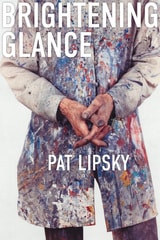
Brightening Glance
Art and LifePat Lipsky
University of Iowa Press, 2025
Brightening Glance offers a stunningly self-revealing portrait of the struggles and sacrifices, joys and excitement inherent in a modern painter’s life, and captures the evergreen allure of New York’s art world between 1970 and 2010. In stripped down, elegant prose, Lipsky summons a New York that no longer exists and ponders why we love (and hate) the art world. Ultimately, it’s a story of a contemporary woman, a mother, and a painter, who dares a career in a field where only a handful of women have succeeded.
Bringing It All Back Home
Essays on Cultural StudiesLawrence Grossberg
Duke University Press, 1997
The essays collected here recognize both the specificity of cultural studies, by locating it in a range of alternative critical perspectives and practices, and its breadth, by mapping the extent of its diversity. By discussing American scholars’ initial reception of cultural studies, its relation to communication studies, and its origins in leftist politics, Grossberg grounds the development of cultural studies in the United States in specific historical and theoretical context. His criticism of "easy" identification of cultural studies with the theories, models, and issues of communications and his challenge to some of cultural studies’ current directions and preoccupations indicates what may lie ahead for this dynamic field of study. Bringing together the Gramscian tradition of British cultural studies with the antimodernist philosophical positions of Foucault, Deleuze, and Guattari, Grossberg articulates an original and important vision of the role of the political intellectual in the contemporary world and offers an essential overview of the emerging field of cultural studies by one of its leading practitioners and theorists.
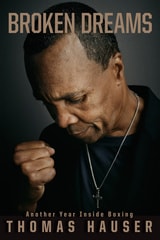
Broken Dreams
Another Year Inside BoxingThomas Hauser
University of Arkansas Press, 2021
Each year, readers, writers, and critics alike look forward to Thomas Hauser’s newest collection of articles about the contemporary boxing scene. As Booklist has proclaimed, “Many journalists have written fine boxing pieces, but none has written as extensively or as memorably as Thomas Hauser. . . . Hauser remains the current champion of boxing. . . . Hauser is a treasure.”
Broken Dreams meets this high standard with its coverage of 2020’s most important fighters and fights, outside-the-ring controversies, regulatory missteps, and other issues that defined the year’s boxing scene. Hauser explores the heavyweight trio of Tyson Fury, Anthony Joshua, and Deontay Wilder in depth, as well as Canelo Álvarez and historic greats like Jack Dempsey, Carlos Monzon, and Muhammad Ali.
Hauser also tackles the larger social challenges that imposed themselves so assertively in 2020, including the coronavirus pandemic, the Black Lives Matter movement, runaway social media, the presidential election, and other forces that left a deep imprint on the sport and business of boxing.
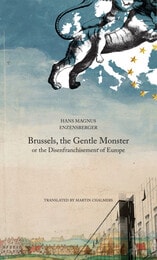
Brussels, the Gentle Monster
or the Disenfranchisement of EuropeHans Magnus Enzensberger
Seagull Books, 2011
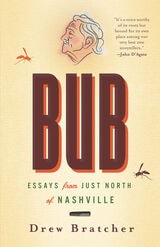
Bub
Essays from Just North of NashvilleDrew Bratcher
University of Iowa Press, 2022
Seamlessly blending memoir and arts criticism and aiming at both the heart and the head, this is a book about listening closely to stories and songs, about leaving home in order to find home, and about how the melodies and memories absorbed along the way become “a living music that advances and prevails upon us at formative moments, corralling chaos into the simple, liberating stockade of verse, chorus, verse.”
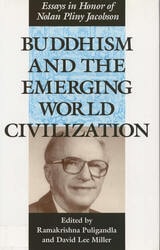
Buddhism and the Emerging World Civilization
Essays in Honor of Nolan Pliny JacobsonRamakrishna Puligandla
Southern Illinois University Press, 1996
This captivating new book, a milestone in Buddhist and comparative studies, is a compilation of seventeen essays celebrating the work and thought of Nolan Pliny Jacobson.
A profoundly motivated interdisciplinary thinker, Jacobson sought to discover, clarify, and synthesize points of similarity among leading thinkers of different Oriental and Western cultures. For almost half a century, he articulated his vision of an emerging world civilization, one in which all people can feel and express their creative, constructive powers for the benefit of others as well as for themselves.
Jacobson believed that philosophy and the works of philosophers should be understood as a vital force enriching all civilizational experience. His own philosophic perspective was rooted in the conviction that novelty is the source of all experience and the center of a creativity that lives beyond words, arguments, and rational paradigms. Throughout his career, Jacobson explored Buddhist texts and personalities, spending much time in the Orient, particularly Myanmar and Japan. He also closely studied the works of numerous Western philosophers, including Whitehead, Dewey, Peirce, James, Hartshorne, and Wieman. Jacobson believed that American philosophy and Buddhism concurred in many ways, with the potential to form a powerful basis for the development of a world civilization.
The essays in this volume are organized around Jacobson’s activities, publications, and interests. Authored by an impressive selection of scholars, the essays are grouped into four sections—"Historical Context," "Central Issues," "Practical Implications," and "The Japan Emphasis." Hajime Nakamura, Charles Hartshorne, Kenneth K. Inada, Seizo Oho, and numerous others discuss freedom, creativity, and Buddhism’s self-corrective nature, setting forth their reasons for sharing Jacobson’s ideas and visions.
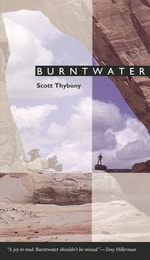
Burntwater
Scott Thybony
University of Arizona Press, 1997
This book takes the backroads, crossing the Colorado Plateau from the headwaters of the Virgin River to the mouth of the Dirty Devil, from the badlands below Twin Angels to a remote mesa in Bandelier. As the miles go by and the stories unfold, there is a growing sense of mystery, of words not spoken, of messages carried on the wind. Reaching the Shrine of the Stone Lions, the writer recounts a near-fatal descent into the Grand Canyon where he finds a way to reconnect with the beauty of life. There his journey ends with an emotional punch that goes straight to the mind and the heart.
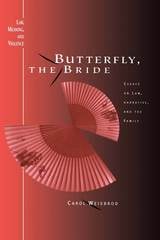
Butterfly, the Bride
Essays on Law, Narrative, and the FamilyCarol Weisbrod
University of Michigan Press, 2004
Butterfly, the Bride looks at law from the outside, using narrative to provide a fresh perspective on the issues of law and social structure---and individual responses to law. This book thoroughly explores relationships between inner and public lives by examining what is ordinarily classified as the sphere of private life---the world of family relationships.