1441 books match the query 'Great Britain' and 66 start with b
cover of Britain in Transition: The Twentieth Century

Britain in Transition

The Twentieth Century

Alfred F. Havighurst

University of Chicago Press, 1985
This new edition extends and brings up to date the story of political, economic, and social change among the British. An entirely new chapter covers the Thatcher years, discussing such events as the Falkland Island crisis and the General Election of 1983. Other sections have been revised to reflect information only recently available. Throughout, Havighurst has incorporated material from official documents, monographs, biographies, articles, and the press. His fascinating narrative fully captures the ongoing importance of change itself in shaping the character of Britain.
[more]
cover of Britain's Imperial Histories

Britain's Imperial Histories

Jeremy black

St. Augustine's Press, 2025

Military historian Jeremy Black continues his review of the global context of martial conflict and spatial conquest into the modern era (16th–20th centuries), focusing on the British empire and its lasting effect on this landscape. Black offers a representation of the "imperial experience" that is eye-opening for a generation of readers who associate this with a strictly negative connotation. But the notion of an empire is not understood at all if this is true. Indeed, not only is there "no one type of empire, no prototype," the basis of empire is much more 'order' than it is 'invasion.' Furthermore, reflecting on the unavoidable cultural and sociological symbiosis and transfer, Black makes the case that in all instances of influence and encounter, sameness between peoples never results. But how does one distinguish influence from control? What are the long-term benefits among peoples? "To many today, empire might seem obvious: governors with ostrich-feathers in their colonial garb ruling non-White peoples; but this scarcely describes the situation across time and place."

            Why did the European empires ultimately fall? When approaching this question, Britain's Imperial Histories proposes that the perspective of "making and remaking of the international system" be made distinct from the "rational pursuit of power and wealth and the use of technology." As seen in earlier work, Black's brilliance is centered in his capacity to incorporate the complexity of war and its battles in his assessments, while never neglecting the fact that wars themselves have specific and broad contexts that must be read thoroughly.

            Another highlight of the present work includes more insight into the British-American relationship and American political identity. "If the British empire is blamed for many of the aspects of modernization and globalization, is also serves as a way of offering historical depth to a critique of American power." Yet he is also adept at drawing in Asia into the study and does so with uncommon acumen. This book provides an approach to history that has been neglected, especially in the New World, and connects the present to the past with a kind of hermeneutical responsibility that has been of late abandoned.
[more]
cover of Britain's War on Poverty

Britain's War on Poverty

Jane Waldfogel

Russell Sage Foundation, 2010
In 1999, one in four British children lived in poverty—the third highest child poverty rate among industrialized countries. Five years later, the child poverty rate in Britain had fallen by more than half in absolute terms. How did the British government accomplish this and what can the United States learn from the British experience? Jane Waldfogel offers a sharp analysis of the New Labour government's anti-poverty agenda, its dramatic early success and eventual stalled progress. Comparing Britain's anti-poverty initiative to U.S. welfare reform, the book shows how the policies of both countries have affected child poverty, living standards, and well-being in low-income families and suggests next steps for future reforms. Britain's War on Poverty evaluates the three-pronged anti-poverty strategy employed by the British government and what these efforts accomplished. British reforms sought to promote work and make work pay, to increase financial support for families with children, and to invest in the health, early-life development, and education of children. The latter two features set the British reforms apart from the work-oriented U.S. welfare reforms, which did not specifically target income or program supports for children. Plagued by premature initiatives and what some experts called an overly ambitious agenda, the British reforms fell short of their intended goal but nevertheless significantly increased single-parent employment, raised incomes for low-income families, and improved child outcomes. Poverty has fallen, and the pattern of low-income family expenditures on child enrichment and healthy food has begun to converge with higher-income families. As Waldfogel sees it, further success in reducing child poverty in Britain will rely on understanding who is poor and who is at highest risk. More than half of poor children live in families where at least one parent is working, followed by unemployed single- and two-parent homes, respectively. Poverty rates are also notably higher for children with disabled parents, large families, and for Pakistani and Bangladeshi children. Based on these demographics, Waldfogel argues that future reforms must, among other goals, raise working-family incomes, provide more work for single parents, and better engage high-risk racial and ethnic minority groups. What can the United States learn from the British example? Britain's War on Poverty is a primer in the triumphs and pitfalls of protracted policy. Notable differences distinguish the British and U.S. models, but Waldfogel asserts that a future U.S. poverty agenda must specifically address child poverty and the income inequality that helps create it. By any measurement and despite obstacles, Britain has significantly reduced child poverty. The book's key lesson is that it can be done.
[more]
cover of Britain, France and the Decolonization of Africa: Future Imperfect?

Britain, France and the Decolonization of Africa

Future Imperfect?

Edited by Andrew W.M. Smith and Chris Jeppesen

University College London, 2017
Looking at decolonization in the conditional tense, this volume teases out the complex and uncertain ends of British and French empire in Africa during the period of ‘late colonial shift’ after 1945. Rather than view decolonization as an inevitable process, the contributors together explore the crucial historical moments in which change was negotiated, compromises were made, and debates were staged. Three core themes guide the analysis: development, contingency and entanglement. The chapters consider the ways in which decolonization was governed and moderated by concerns about development and profit. A complementary focus on contingency allows deeper consideration of how colonial powers planned for ‘colonial futures’, and how divergent voices greeted the end of empire. Thinking about entanglements likewise stresses both the connections that existed between the British and French empires in Africa, and those that endured beyond the formal transfer of power.
[more]
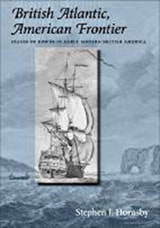
cover of British Atlantic, American Frontier: Spaces of Power in Early Modern British America

British Atlantic, American Frontier

Spaces of Power in Early Modern British America

Stephen J. Hornsby

University Press of New England, 2004

Reflecting the growing scholarly interest in transnational and comparative approaches to studying the past, British Atlantic, American Frontier offers a geographical perspective on the development of British America in the seventeenth and eighteenth centuries. It covers in detail not only the American eastern seaboard, but also eastern Canada and the West Indies, as well as the trans-Atlantic links to Western Europe and West Africa. At one level, the book synthesizes much of the current historical and geographical scholarship on these regions; at another level, it offers a provocative interpretation of British America, arguing that profound and long-standing differences existed between the American eastern seaboard and the Atlantic regions of eastern Canada and the West Indies. These differences ultimately led to the break-up of British America, the creation of the United States, and the reconfiguration of the British Empire. British Atlantic, American Frontier is illustrated with more than one hundred photographs, maps, and historical illustrations.
[more]
cover of British History 1600-2000: Expansion in Perspective

British History 1600-2000

Expansion in Perspective

Edited by Kazuhiko Kondo

University of London Press, 2010
The lands bordering the tidal river Thames and the Thames Estuary have historically been highly vulnerable to marine flooding. The most severe of these floods derive from North Sea storm surges, when wind and tide combine to drive huge quantities of water against the coast, as happened to devastating effect in 1953. This project seeks to understand the occurrence of storm flooding in the past, and to explore the ways in which people have responded to the threat. The project draws upon rich surviving documentary sources to study the impact of storm flooding upon the reclaimed marshlands bordering the tidal Thames and its estuary during the period c.1250-1550. Year-by-year accounts of the management of riverside properties have been examined and the degree to which reclaimed land was lost to the sea during the later Middle Ages assessed. The impact of population decline and agrarian recession upon the economics of coastal and river-side defence has been considered. The flood threat to medieval London’s low-lying suburbs has been investigated and the possibility that the long-term flooding of lands down-river spared the city the worst effects of North Sea storm surges explored. Parallels have also been sought in the modern policy of managed retreat or realignment. The volume concludes with an overview of the multi-faceted work of the Thames Discovery Programme, which is increasing our knowledge of many aspects of the Thames’s past, from medieval fish traps, through nineteenth-century shipbuilding, to the Blitz, which posed a new and very real flood threat to the mid-twentieth century metropolis.
[more]
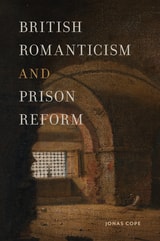
cover of British Romanticism and Prison Reform

British Romanticism and Prison Reform

Jonas Cope

Bucknell University Press, 2025

In eighteenth-century Britain, criminals were routinely whipped, branded, hanged, or transported to America. Only in the last quarter of the century—with the War of American Independence and legal and sociopolitical challenges to capital punishment—did the criminal justice system change, resulting in the reformed prison, or penitentiary, meant to educate, rehabilitate, and spiritualize even hardened felons. This volume is the first to explore the relationship between historical penal reform and Romantic-era literary texts by luminaries such as Godwin, Keats, Byron, and Austen. The works examined here treat incarceration as ambiguous: prison walls oppress and reinforce the arbitrary power of legal structures but can also heighten meditation, intensify the imagination, and awaken the conscience. Jonas Cope skillfully traces the important ideological work these texts attempt: to reconcile a culture devoted to freedom with the birth of the modern prison system that presents punishment as a form of rehabilitation.

Published by Bucknell University Press. Distributed worldwide by Rutgers University Press.
[more]
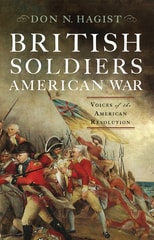
cover of British Soldiers, American War: Voices of the American Revolution

British Soldiers, American War

Voices of the American Revolution

Donald N. Hagist

Westholme Publishing, 2012

Advisor for Ken Burns The American Revolution on PBS®
Nine Rare and Fascinating First-Person Profiles of Soldiers Who Fought for the British Crown
Much has been written about the colonists who took up arms during the American Revolution and the army they created. Far less literature, however, has been devoted to their adversaries. The professional soldiers that composed the British army are seldom considered on a personal level, instead being either overlooked or inaccurately characterized as conscripts and criminals. Most of the British Redcoats sent to America in defense of their government’s policies were career soldiers who enlisted voluntarily in their late teens or early twenties. They came from all walks of British life, including those with nowhere else to turn, those aspiring to improve their social standing, and all others in between. Statistics show that most were simply hardworking men with various amounts of education who had chosen
the military in preference to other occupations. Very few of these soldiers left writings from which we can learn their private motives and experiences.
British Soldiers, American War: Voices of the American Revolution is the first collection of personal narratives by British common soldiers ever assembled and published. Author Don N. Hagist has located first-hand accounts of nine soldiers who served in America in the 1770s and 1780s. In their own words we learn of the diverse population—among them a former weaver, a boy who quarelled with his family, and a man with wanderlust—who joined the army and served tirelessly and dutifully, sometimes faithfully and sometimes irresolutely, in the uniform of their nation. To accompany each narrative, the author provides a contextualizing essay based on archival research giving background on the soldier and his military service. Taken as a whole these true stories reveal much about the individuals who composed what was, at the time, the most formidable fighting force in the world.
[more]
cover of British TV and Film Culture in the 1950s: Coming to a TV Near You

British TV and Film Culture in the 1950s

Coming to a TV Near You

Su Holmes

Intellect Books, 1995

This book focuses on the emerging historical relations between British television and film culture in the 1950s. Drawing upon archival research, it does this by exploring the development of the early cinema programme on television - principally Current Release (BBC, 1952-3), Picture Parade (BBC, 1956) and Film Fanfare (ABC, 1956-7) - and argues that it was these texts which played the central role in the developing relations between the media. Particularly when it comes to Britain, the early co-existence of television and cinema has been seen as hostile and antagonistic, but in situating these programmes within the contexts of their institutional production, aesthetic construction and reception, the book aims to ‘reconstruct’ television’s coverage of the cinema as crucial to the fabric of British film and television culture at the time. It demonstrates how the roles of cinema and television - as media industries and cultural forms, but crucially as sites of screen entertainment - effectively came together at this time in such a way that is unique to this decade.
[more]
cover of British Television: The formative years

British Television

The formative years

Russell Burns

The Institution of Engineering and Technology, 1986
On 2 November 1936 the world's first high definition television station was inaugurated at Alexandra Palace. Two competing companies, Marconi-EMI Television Company Ltd and Baird Television Ltd, provided studio and transmitting equipment for the new service which operated, on an alternate basis, with the systems of the two companies. After a trial period the 405-line system of the Marconi-EMI company was adopted and the last transmission by the 240-line system of Baird Television Ltd was sent out on 30 January 1937.
[more]
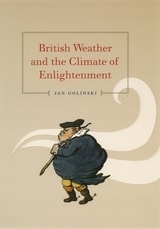
cover of British Weather and the Climate of Enlightenment

British Weather and the Climate of Enlightenment

Jan Golinski

University of Chicago Press, 2007

Enlightenment inquiries into the weather sought to impose order on a force that had the power to alter human life and social conditions. British Weather and the Climate of Enlightenment reveals how a new sense of the national climate emerged in the eighteenth century from the systematic recording of the weather, and how it was deployed in discussions of the health and welfare of the population. Enlightened intellectuals hailed climate’s role in the development of civilization but acknowledged that human existence depended on natural forces that would never submit to rational control.

Reading the Enlightenment through the ideas, beliefs, and practices concerning the weather, Jan Golinski aims to reshape our understanding of the movement and its legacy for modern environmental thinking. With its combination of cultural history and the history of science, British Weather and the Climate of Enlightenment counters the claim that Enlightenment progress set humans against nature, instead revealing that intellectuals of the age drew characteristically modern conclusions about the inextricability of nature and culture.
[more]
cover of British Women Writing Fiction

British Women Writing Fiction

Abby H.P. Werlock

University of Alabama Press, 2000

Original essays by American and British scholars offer a reader-friendly introduction to the work of Angela Carter, Doris Lessing, and a dozen other British women writers

British women in the second half of the 20th century have produced a body of work that is as diverse as it is entertaining. This book offers an informal, jargon-free introduction to the fiction of sixteen contemporary writers either brought up or now living in England, from Muriel Spark to Jeanette Winterson.

British Women Writing Fiction presents a balanced view comprising women writing since the 1950s and 1960s, those who attracted critical attention during the 1970s and 1980s, and those who have burst upon the literary scene more recently, including African-Caribbean and African women. The essays show how all of these writers treat British subjects and themes, sometimes from radically different perspectives, and how those who are daughters of immigrants see themselves as women writing on the margins of society.

Abby Werlock's introduction explores the historical and aesthetic factors that have contributed to the genre, showing how even those writers who began in a traditional vein have created experimental work. The contributors provide complete bibliographies of each writer's works and selected bibliographies of criticism. Exceptional both in its breadth of subjects covered and critical approaches taken, this book provides essential background that will enable readers to appreciate the singular merits of each writer. It offers an approach toward better understanding favorite authors and provides a way to become acquainted with new ones.
[more]
cover of Building Romanticism: Literature and Architecture in Nineteenth-Century Britain

Building Romanticism

Literature and Architecture in Nineteenth-Century Britain

Nicole Reynolds

University of Michigan Press, 2010
Building Romanticism sets the literary culture of Romantic Britain within the context of the period’s architectural productions in order to recover a relationship between these arts that, though deeply valued by writers and architects of the day, has been neglected by modern scholars in both fields. Toward this goal, Nicole Reynolds explores the centrality of architecture and architectural tropes to Romanticism’s dramatic reconceptualization of the individual subject and of the world that subject inhabits.Focusing on the correspondence between the period’s built environments and its literary pursuits, Building Romanticism argues that at this turbulent moment in British history a number of politically charged and aesthetically resonant architectural spaces, both real and imagined, negotiated intense anxieties about shifting notions of gender and sexuality, increased class mobility, the individual’s uncertain place in history, challenges to the British national character and to the project of nation building, and the very form and function of art itself. By tracing the reception of Romantic topoi—rhetorical and literal common places—through the nineteenth century, this book explores how Victorians remodeled Romanticism, its ideological preoccupations and cultural artifacts, according to their own era's social agendas.
[more]
cover of Bursting the Limits of Time: The Reconstruction of Geohistory in the Age of Revolution

Bursting the Limits of Time

The Reconstruction of Geohistory in the Age of Revolution

Martin J. S. Rudwick

University of Chicago Press, 2005

A masterful, authoritative account of the scientists and discoveries that enabled us to understand the age of the earth

In 1650, Archbishop James Ussher of Armagh joined the long-running theological debate on the age of the earth by famously announcing that creation had occurred on October 23, 4004 B.C. Although widely challenged during the Enlightenment, this belief in a six-thousand-year-old planet was only laid to rest during a revolution of discovery in the late eighteenth and early nineteenth centuries. In this relatively brief period, geologists reconstructed the immensely long history of the earth-and the relatively recent arrival of human life. Highlighting a discovery that radically altered existing perceptions of a human's place in the universe as much as the theories of Copernicus, Darwin, and Freud did, Bursting the Limits of Time is a herculean effort by one of the world's foremost experts on the history of geology and paleontology to sketch this historicization of the natural world in the age of revolution.

Addressing this intellectual revolution for the first time, Rudwick examines the ideas and practices of earth scientists throughout the Western world to show how the story of what we now call "deep time" was pieced together. He explores who was responsible for the discovery of the earth's history, refutes the concept of a rift between science and religion in dating the earth, and details how the study of the history of the earth helped define a new branch of science called geology. Rooting his analysis in a detailed study of primary sources, Rudwick emphasizes the lasting importance of field- and museum-based research of the eighteenth and nineteenth centuries.

Bursting the Limits of Time, the culmination of more than three decades of research, is the first detailed account of this monumental phase in the history of science.
[more]
cover of By Their Fruits: Eugenics, Population Control, and the Abortion Campaign

By Their Fruits

Eugenics, Population Control, and the Abortion Campaign

Ann FARMER 

Catholic University of America Press, 2008
Though controversial in subject, By Their Fruits presents an important examination of not only the history of abortion legislation but also the history and impact of the Eugenics movement.
[more]
cover of By Touch Alone: Blindness and Reading in Nineteenth-Century Culture

By Touch Alone

Blindness and Reading in Nineteenth-Century Culture

Vanessa Warne

University of Michigan Press, 2025

By Touch Alone demonstrates how reading by touch not only changed the lives of nineteenth-century blind people, but also challenged longstanding perceptions about blindness and reading. Over the course of the nineteenth century, thousands of blind people learned how to read by touch. Using fiction, essays, letters, and speeches authored by blind readers, By Touch Alone traces the ways in which literacy changed blind people's experiences of education, leisure, spirituality, and social engagement. Analyzing records of activism and innovation as well as frustration, this study documents the development of an inkless book culture shaped by blind readers’ preferences and needs. 

While By Touch Alone features the writing and ideas of an understudied community of nineteenth-century blind authors, innovators, and activists, it also engages the work of sighted authors such as George Eliot and Rudyard Kipling to explore the culture-wide effects of reading by touch. The emergence of a new category of readers who did not rely on sight to read prompted sighted people to reimagine blindness and adopt more progressive attitudes toward blind people. In our own era, one characterized by the increasing digitization of our reading lives, Vanessa Warne’s exploration positions scholars and blind readers to navigate present-day developments and shape the future of their reading lives. A carefully contextualized study of how reading by touch shaped Victorian culture, By Touch Alone adds new chapters to the history of disability and reading.
[more]