Results by title
1445 books match the query 'Life Sciences' and 65 start with b

Blood and Homeland
Eugenics and Racial Nationalism in Central and Southeast Europe, 1900-1940Paul J. Weindling
Central European University Press, 2007
Body by Darwin
How Evolution Shapes Our Health and Transforms MedicineJeremy Taylor
University of Chicago Press, 2015
In Body by Darwin, Taylor examines the evolutionary origins of some of our most common and serious health issues. To begin, he looks at the hygiene hypothesis, which argues that our obsession with anti-bacterial cleanliness, particularly at a young age, may be making us more vulnerable to autoimmune and allergic diseases. He also discusses diseases of the eye, the medical consequences of bipedalism as they relate to all those aches and pains in our backs and knees, the rise of Alzheimer’s disease, and how cancers become so malignant that they kill us despite the toxic chemotherapy we throw at them. Taylor explains why it helps to think about heart disease in relation to the demands of an ever-growing, dense, muscular pump that requires increasing amounts of nutrients, and he discusses how walking upright and giving birth to ever larger babies led to a problematic compromise in the design of the female spine and pelvis. Throughout, he not only explores the impact of evolution on human form and function, but he integrates science with stories from actual patients and doctors, closely examining the implications for our health.
As Taylor shows, evolutionary medicine allows us think about the human body and its adaptations in a completely new and productive way. By exploring how our body’s performance is shaped by its past, Body by Darwin draws powerful connections between our ancient human history and the future of potential medical advances that can harness this knowledge.
Bogs of the Northeast
Charles W. Johnson
University Press of New England, 1985
Bonebeds
Genesis, Analysis, and Paleobiological SignificanceEdited by Raymond R. Rogers, David A. Eberth, and Anthony R. Fiorillo
University of Chicago Press, 2007
Thirteen respected researchers combine their experiences in Bonebeds, providing readers with workable definitions, theoretical frameworks, and a compendium of modern techniques in bonebed data collection and analysis. By addressing the historical, theoretical, and practical aspects of bonebed research, this edited volume—the first of its kind—provides the background and methods that students and professionals need to explore and understand these fantastic records of ancient life and death.
Bones of Contention
Controversies in the Search for Human OriginsRoger Lewin
University of Chicago Press, 1997
in many ways, remains contentious.
"[An] un-put-downable book."—John Gribbon, Times Educational Supplement
"Not just another 'stones and bones' account of human evolution. It is Lewin's thesis, amply demonstrated, that paleoanthropology is the most subjective of sciences because it engages the emotions of virtually everyone; and since the evidence is scrappy, interpretation is everything. . . . A splendid, stirring, and eye-opening account, to be devoured."—Kirkus Reviews, starred review
"[Lewin shows] 'how very unscientific the process of scientific inquiry can be.'. . . Bones of Contention is . . . serious intellectual history."—Edward Dolnick, Wall Street Journal
"[Lewin] documents his thesis in persuasive detail. . . . The reader is carried along by the power of Mr. Lewin's reporting."—Robert Wright, New York Times Book Review
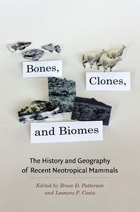
Bones, Clones, and Biomes
The History and Geography of Recent Neotropical MammalsEdited by Bruce D. Patterson and Leonora P. Costa
University of Chicago Press, 2012
As explorers and scientists have known for decades, the Neotropics harbor a fantastic array of our planet’s mammalian diversity, from capybaras and capuchins to maned wolves and mouse opossums to sloths and sakis. This biological bounty can be attributed partly to the striking diversity of Neotropical landscapes and climates and partly to a series of continental connections that permitted intermittent faunal exchanges with Africa, Antarctica, Australia, and North America. Thus, to comprehend the development of modern Neotropical mammal faunas requires not only mastery of the Neotropics’ substantial diversity, but also knowledge of mammalian lineages and landscapes dating back to the Mesozoic.
Bones, Clones, and Biomes offers just that—an exploration of the development and relationships of the modern mammal fauna through a series of studies that encompass the last 100 million years and both Central and South America. This work serves as a complement to more taxonomically driven works, providing for readers the long geologic and biogeographic contexts that undergird the abundance and diversity of Neotropical mammals. Rather than documenting diversity or distribution, this collection traverses the patterns that the distributions and relationships across mammal species convey, bringing together for the first time geology, paleobiology, systematics, mammalogy, and biogeography. Of critical importance is the book’s utility for current conservation and management programs, part of a rapidly rising conservation paleobiology initiative.
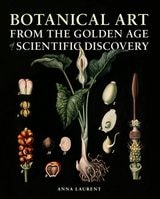
Botanical Art from the Golden Age of Scientific Discovery
Anna Laurent
University of Chicago Press, 2016
This beautifully illustrated oversized book gives the humble wall chart its due, reproducing more than two hundred of them in dazzling full color. Each wall chart is accompanied by captions that offer accessible information about the species featured, the scientists and botanical illustrators who created it, and any particularly interesting or innovative features the chart displays. And gardeners will be pleased to discover useful information about plant anatomy and morphology and species differences. We see lilies and tulips, gourds, aquatic plants, legumes, poisonous plants, and carnivorous plants, all presented in exquisite, larger-than-life detail.
A unique fusion of art, science, and education, the wall charts gathered here offer a glimpse into a wonderful scientific heritage and are sure to thrill naturalists, gardeners, and artists alike.
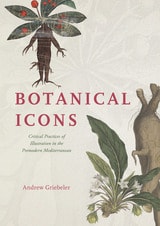
Botanical Icons
Critical Practices of Illustration in the Premodern MediterraneanAndrew Griebeler
University of Chicago Press, 2024
This book traces the history of botanical illustration in the Mediterranean from antiquity to the early modern period. By examining Greek, Latin, and Arabic botanical inquiry in this early era, Andrew Griebeler shows how diverse and sophisticated modes of plant depiction emerged and ultimately gave rise to practices now recognized as central to modern botanical illustration. The author draws on centuries of remarkable and varied documentation from across Europe and the Mediterranean.
Lavishly illustrated, Botanical Icons marshals ample evidence for a dynamic and critical tradition of botanical inquiry and nature observation in the late antique and medieval Mediterranean. The author reveals that many of the critical practices characteristic of modern botanical illustrations began in premodern manuscript culture. Consequently, he demonstrates that the distinctions between pre- and early modern botanical illustration center more on the advent of print, the expansion of collections and documentation, and the narrowing of the range of accepted forms of illustration than on the invention of critical and observational practices exclusive to modernity.
Griebeler’s emphasis on continuity, intercultural collaboration, and the gradual transformation of Mediterranean traditions of critical botanical illustration persuasively counters previously prevalent narratives of rupture and Western European exceptionalism in the histories of art and science.

Breeding Bio Insecurity
How U.S. Biodefense Is Exporting Fear, Globalizing Risk, and Making Us All Less SecureLynn C. Klotz and Edward J. Sylvester
University of Chicago Press, 2009
In the years since the 9/11 attacks—and the subsequent lethal anthrax letters—the United States has spent billions of dollars on measures to defend the population against the threat of biological weapons. But as Lynn C. Klotz and Edward J. Sylvester argue forcefully in Breeding Bio Insecurity, all that money and effort hasn’t made us any safer—in fact, it has made us more vulnerable.
Breeding Bio Insecurity reveals the mistakes made to this point and lays out the necessary steps to set us on the path toward true biosecurity. The fundamental problem with the current approach, according to the authors, is the danger caused by the sheer size and secrecy of our biodefense effort. Thousands of scientists spread throughout hundreds of locations are now working with lethal bioweapons agents—but their inability to make their work public causes suspicion among our enemies and allies alike, even as the enormous number of laboratories greatly multiplies the inherent risk of deadly accidents or theft. Meanwhile, vital public health needs go unmet because of this new biodefense focus. True biosecurity, the authors argue, will require a multipronged effort based in an understanding of the complexity of the issue, guided by scientific ethics, and watched over by a vigilant citizenry attentive to the difference between fear mongering and true analysis of risk.
An impassioned warning that never loses sight of political and scientific reality, Breeding Bio Insecurity is a crucial first step toward meeting the evolving threats of the twenty-first century.
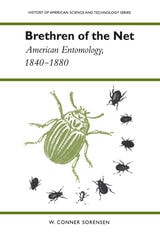
Brethren of the Net
American Entomology, 1840-1880W. Conner Sorensen
University of Alabama Press, 1995
Draws together information from diverse sources to illuminate an important chapter in the history of American science
Sorensen asks how it came about that, within the span of forty years, the American entomological community developed from a few gentlemen naturalists with primary links to Europe to a thriving scientific community exercising world leadership in entomological science. He investigates the relationship between American and European entomology, the background of American entomologists, the implications of entomological theory, and the specific links between 19th-century American society and the rapid institutional growth and advances in theoretical and applied entomology.
By the 1880s the entomologists constituted the largest single group of American zoologists and the largest group of ecologists in the world. While rooted in the British natural history tradition, these individuals developed a distinctive American style of entomological investigation. Inspired by the concept of the balance of nature, they excelled in field investigations of North American insects with special emphasis on insect pests that threatened crop production in a market-oriented agriculture. During this period, entomologists described over ten times as many North American insect species as had been previously named, and they consolidated their findings in definitive collections. Employing evolutionary theory, they contributed to the growing understanding of insect migration, mimicry, seasonal dimorphism, and the symbiotic relationship of plant and animal species. Americans also led in the revision of insect taxonomy according to the new principles. Their employment of entomological findings in the practical control of agricultural pests set new standards worldwide. Initially ridiculed as eccentric bug hunters, American entomologists eventually achieved stature as agricultural advisers and as investigators into the origin and nature of life.
Based primarily on the correspondence of American entomologists, Brethren of the Net draws together information from diverse sources to illuminate an important chapter in the history of American science.
Bristlecone Pine in the White Mountains of California
Growth and Ring-Width CharacteristicsHarold C. Fritts
University of Arizona Press, 1969
Papers of the Laboratory of Tree-Ring Research, No. 4
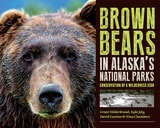
Brown Bears in Alaska's National Parks
Conservation of a Wilderness IconGrant V. Hilderbrand
University of Alaska Press, 2025
Brown bears are powerful symbols of wilderness, thriving in the vast, untamed ecosystems of Alaska’s remote national parks. Brown Bears in Alaska’s National Parks is a unique and thorough exploration of the conservation, ecology, and management of brown bears in these parks, including examinations of bear biology, human-bear interactions, population estimation methods, and the effects of climate change on bear populations. This lavishly illustrated volume offers fresh perspectives about the complex challenges that bears and humans face as they navigate coexistence in the evolving wilderness of Alaska.
Through park-specific chapters, the authors clearly present the current understanding of brown bear ecology across a wide range of ecosystems—from the sparse and frigid Gates of the Arctic, entirely above the Arctic Circle, to the bountiful coast of Katmai, where the marine and terrestrial systems converge. In Glacier Bay, bears roam newly exposed ecosystems shaped by retreating glaciers, while the interior landscapes of Lake Clark and Denali provide a mix of boreal forests, tundra, rivers, and towering mountains.
Brown bears—and the many species that share their habitats—face numerous challenges, with climate change among the greatest threats. The warming climate intensifies other pressures, such as industrial development, both within and around park boundaries. Management actions may also reduce native brown bear populations and, in turn, threaten healthy and naturally functioning ecosystems. The adaptability of brown bears, in concert with thoughtful and science-based management, is essential for the conservation of these majestic creatures and the wilderness landscapes on which they depend.
Written by the wildlife biologists and anthropologists who have dedicated their careers to studying brown (grizzly) bears and their relationship to people, Brown Bears in Alaska’s National Parks is a premier reference for bear enthusiasts, biologists, managers, and academics, as well as advocates for wild things and wild places.

Brutes or Angels
Human Possibility in the Age of BiotechnologyJames T. Bradley
University of Alabama Press, 2013
With stem cell research, Dolly the cloned sheep, in vitro fertilization, age retardation, and pharmaceutical mind enhancement, humankind is now faced with decisions that it has never before had to consider. The thoughtfulness, or lack of it, that we bring to those decisions will largely determine the future character of the living world.
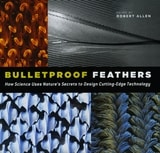
Bulletproof Feathers
How Science Uses Nature's Secrets to Design Cutting-Edge TechnologyEdited by Robert Allen
University of Chicago Press, 2010
Fabrics that are not only stain resistant but actually clean themselves. Airplane wings that change shape in midair to take advantage of shifts in wind currents. Hypodermic needles that use tiny serrations to render injections virtually pain free.
Though they may sound like the stuff of science fiction, in fact such inventions represent only the most recent iterations of natural mechanisms that are billions of years old—the focus of the rapidly growing field of biomimetics. Based on the realization that natural selection has for countless eons been conducting trial-and-error experiments with the laws of physics, chemistry, material science, and engineering, biomimetics takes nature as its laboratory, looking to the most successful developments and strategies of an array of plants and animals as a source of technological innovation and ideas. Thus the lotus flower, with its waxy, water-resistant surface, gives us stainproofing; the feathers of raptors become transformable airplane wings; and the nerve-deadening serrations on a mosquito’s proboscis are adapted to hypodermics.
With Bulletproof Feathers, Robert Allen brings together some of the greatest minds in the field of biomimetics to provide a fascinating—at times even jaw-dropping—overview of cutting-edge research in the field. In chapters packed with illustrations, Steven Vogel explains how architects and building engineers are drawing lessons from prairie dogs, termites, and even sand dollars in order to heat and cool buildings more efficiently; Julian Vincent goes to the very building blocks of nature, revealing how different structures and arrangements of molecules have inspired the development of some fascinating new materials, such as waterproof clothing based on shark skin; Tomonari Akamatsu shows how sonar technology has been greatly improved through detailed research into dolphin communication; Yoseph Bar-Cohen delves into the ways that robotics engineers have learned to solve design problems through reference to human musculature; Jeannette Yen explores how marine creatures have inspired a new generation of underwater robots; and Robert Allen shows us how cooperative behavior between birds, fish, and insects has inspired technological innovations in fields ranging from Web hosting to underwater exploration.
A readable, yet authoritative introduction to a field that is at the forefront of design and technology—and poised to become even more important in the coming decades as population pressures and climate change make the need for efficient technological solutions more acute—Bulletproof Feathers offers adventurous readers a tantalizing peek into the future, by way of our evolutionary past.

Burning Up
A Global History of Fossil Fuel ConsumptionSimon Pirani
Pluto Press, 2018
In Burning Up, Simon Pirani recounts the history of the relentless rise of fossil fuels in the past half century, and lays out the ways in which the expansion of the global capitalist economy has driven it forward. Dispelling common explanations that foreground Western consumerism, as well as arguments about unsustainable population growth, Pirani offers instead an insightful intervention in what is arguably the crisis of our time.