Results by title
3785 books match the query 'Poetry' and 173 start with b
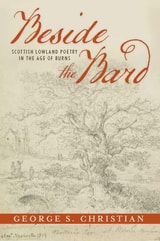
Beside the Bard
Scottish Lowland Poetry in the Age of BurnsGeorge S. Christian
Bucknell University Press, 2020
Published by Bucknell University Press. Distributed worldwide by Rutgers University Press.
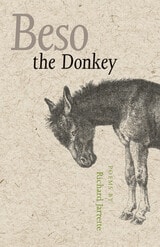
Beso the Donkey
Richard Jarrette
Michigan State University Press, 2010
Beso the Donkey is a poetry cycle about a wounded, neglected, and abandoned jackass. In sparklingly clear and luminous poems, Richard Jarrette tells the story of Beso and of his caregiver's attempts to understand and heal him—an endeavor that teaches the man much about the meaning of life, death, peace, and acceptance. With undertones of Buddhist, Christian, Taoist, and Islamic faiths, Beso the Donkey incorporates elements of philosophy, ethics, religion, and morality.
As the book progresses, we sense the poet’s growing acceptance of life’s passing. Along with the author, we feel a deeper peace blossoming as Beso’s life is ending (which is itself a beginning). This is a lyrical story of loss and acceptance.
Between History And Poetry
H.D. And Norman Holmes PearsonDonna Krolik Hollenberg
University of Iowa Press, 1997
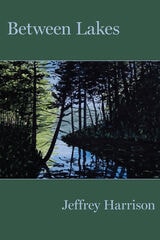
Between Lakes
Jeffrey Harrison
Four Way Books, 2020
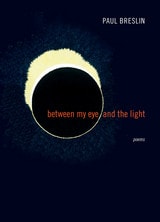
Between My Eye and the Light
PoemsPaul Breslin
Northwestern University Press, 2015
“Hole torn in the language, / How shall we speak?” The first lines of the first poem in Paul Breslin’s artful second collection of poetry demand an answer, of both poet and reader, to the seemingly unspeakable tragedies of modern life. Between My Eye and the Light forms a beautifully insistent exercise in the power of language to engage experiences both mundane and profound. Breslin queries far-flung corners of experience for answers, engaging childhood, his longtime home of Chicago, small moments of life, and encounters with artists such Rainer Maria Rilke and Derek Walcott. The poems even query the volume’s opening question, How shall we speak? While pat answers elude us, poetry acts as a bulwark against cliché and cynicism, strengthening those who have the courage to question and explore.
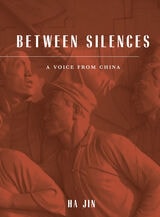
Between Silences
A Voice from ChinaHa Jin
University of Chicago Press, 1990
"In these poems Ha Jin gives voice to the millions whose lives were altered and whose tongues were silenced by the Cultural Revolution. . . .If Ha Jin speaks in tongues in these poems, we feel him behind those voices—the hidden director behind the scenes—never as a presence filled with stridency and self-congratulation; he brings a great empathy and compassion to his depiction of the fallible men and women whose acts and attitudes together make up history."—Roger Gilbert, Hungry Mind Review
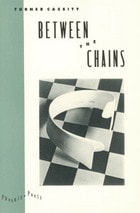
Between the Chains
Turner Cassity
University of Chicago Press, 1991
"Turner Cassity's excellent work is like no one else's. It is funny, at times perverse, and wickedly serious. In this present collection, such poems as 'When in Doubt, Remain in Doubt,' 'Acid Rain on Sherwood Forest,' and 'How Jazz Came up the Elbe' show one of our finest poets at the top of his game."—Timothy Steele
"Cassity thinks on his feet, agile and fierce—funny too."—Thom Gunn
"At a time when most poems seem a commodity, quickly written, quickly read and easily thrown away, Turner Cassity's poems seem even more astonishing examples of good writing and reading, exceptions to be admired and kept."—Edgar Bowers
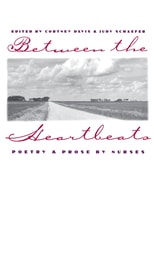
Between the Heartbeats
Poetry and Prose by NursesCortney Davis
University of Iowa Press, 1995
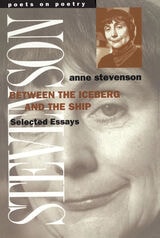
Between the Iceberg and the Ship
Selected EssaysAnne Stevenson
University of Michigan Press, 1998
Feminist critics will find much to invigorate and infuriate them in these essays. Stevenson believes that the "takeover" of poetry by critical theorists has, in recent years, all but brought about its demise in England and America. But she also fears that the media's doctrine of mass marketability may have a detrimental effect on the future of poetry. Her essays on Plath, Bishop, Irish poetry, and other subjects are as witty as they are challenging, upsetting many of the easy assumptions of our putatively "postmodern" era.
Anne Stevenson is the author of numerous books, including Bitter Fame: A Life of Sylvia Plath, The Other House, Four and a Half Dancing Men, and most recently, Collected Poems 1955- 1995.
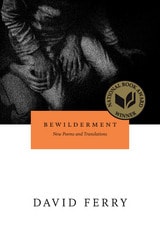
Bewilderment
New Poems and TranslationsDavid Ferry
University of Chicago Press, 2012
Winner of the 2012 National Book Award for Poetry.
To read David Ferry’s Bewilderment is to be reminded that poetry of the highest order can be made by the subtlest of means. The passionate nature and originality of Ferry’s prosodic daring works astonishing transformations that take your breath away. In poem after poem, his diction modulates beautifully between plainspoken high eloquence and colloquial vigor, making his distinctive speech one of the most interesting and ravishing achievements of the past half century. Ferry has fully realized both the potential for vocal expressiveness in his phrasing and the way his phrasing plays against—and with—his genius for metrical variation. His vocal phrasing thus becomes an amazingly flexible instrument of psychological and spiritual inquiry. Most poets write inside a very narrow range of experience and feeling, whether in free or metered verse. But Ferry’s use of meter tends to enhance the colloquial nature of his writing, while giving him access to an immense variety of feeling. Sometimes that feeling is so powerful it’s like witnessing a volcanologist taking measurements in the midst of an eruption.
From Bewilderment:
October
The day was hot, and entirely breathless, so
The remarkably quiet remarkably steady leaf fall
Seemed as if it had no cause at all.
The ticking sound of falling leaves was like
The ticking sound of gentle rainfall as
They gently fell on leaves already fallen,
Or as, when as they passed them in their falling,
Now and again it happened that one of them touched
One or another leaf as yet not falling,
Still clinging to the idea of being summer:
As if the leaves that were falling, but not the day,
Had read, and understood, the calendar.
Beyond Lament
Poets of the World Bearing Witness to the HolocaustMarguerite Striar
Northwestern University Press, 1998
Editor Marguerite M. Striar has arranged the nearly 300 poems in this volume to tell the story beginmning with the early premonitions of Nazi evil in 1933, through the course of the unthinkable violence that ended in 1945 with Hitler's demise, to the flourishing of concern for human rights in the aftermath of the Holocaust. These works by well-known poets such as Paul Celan, Nelly Sachs, Czeslaw Milosz, Dannie Abse, and Robert Pinsky, as well as many lesser-known or unknown poets, show how poetry makes history memorable, confirm the resiliance of the human spirit, and prove that even in the fact of great suffering, the flame of creation will not be extinguished.
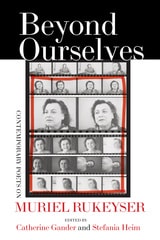
Beyond Ourselves
Contemporary Poets on Muriel RukeyserCatherine Gander
West Virginia University Press, 2026
Muriel Rukeyser has many faces: poet, biographer, theorist, playwright, novelist, story-writer, filmmaker, translator, ethnographer, and innovator of social, documentary poetics; feminist, queer, Jewish, single mother, and social justice activist. Yet above all, she was a poet. Threaded through her work, politics, and life was the conviction that poetry is an animating force that connects people and disciplines. Recent years have seen a surge of renewed interest in Rukeyser’s work, bringing her back into public consciousness as a crucial voice on the relations between poetry and social life in America and beyond.
Beyond Ourselves is the first volume of its kind to comprehensively consider the continued urgency and lasting legacy of Rukeyser’s work as a key source and inspiration for poets working today. Volume editors Catherine Gander and Stefania Heim—both scholars and poets—have gathered critical and creative contributions from some of the most innovative, exciting, and socially engaged poets writing today. In lyric and braided essays, scholarly critique, hybrid investigations, documentary collages, and collaborative poetry, these poets dive deeply into Muriel Rukeyser’s work and life to interrogate, explore, and challenge the models she provides for thinking and writing in our own social, political, and poetic moment. These essays address a range of themes, from the transhistorical politics of motherhood and contemporary relational and feminist poetics of war to communal history via documentary film and the possibilities of coalition-building beyond borders. As in Rukeyser’s own work, the forms of these texts animate their inquiries.
Beyond Ourselves is a volume at the intersections of creative and critical thought, reflecting on how Rukeyser’s expansive body of work offers a vision for, as she writes, “a kind of imagination with which to meet the world.”
Contributors: Daniel Borzutzky, Susan Briante, Catherine Gander, Stacy Hardy, Stefania Heim, Erika Meitner, Philip Metres, Jena Osman, Deborah Paredez, Khadijah Queen, Solmaz Sharif, and Nomi Stone.
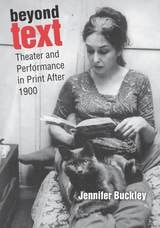
Beyond Text
Theater and Performance in Print After 1900Jennifer Buckley
University of Michigan Press, 2019
Winner of the 2020 Outstanding Book Award from the Association for Theatre in Higher Education
Taking up the work of prominent theater and performance artists, Beyond Text reveals the audacity and beauty of avant-garde performance in print. With extended analyses of the works of Edward Gordon Craig, German expressionist Lothar Schreyer, the Living Theatre, Carolee Schneemann, and Guillermo Gómez-Peña, the book shows how live performance and print aesthetically revived one another during a period in which both were supposed to be in a state of terminal cultural decline. While the European and American avant-gardes did indeed dismiss the dramatic author, they also adopted print as a theatrical medium, altering the status, form, and function of text and image in ways that continue to impact both the performing arts and the book arts.
Beyond Text participates in the ongoing critical effort to unsettle conventional historical and theoretical accounts of text-performance relations, which have too often been figured in binary, chronological (“from page to stage”), or hierarchical terms. Across five case studies spanning twelve decades, Beyond Text demonstrates that print—as noun and verb—has been integral to the practices of modern and contemporary theater and performance artists.

Beyond the Archipelago
Selected PoemsMuhammad Haji Salleh
Ohio University Press, 1994
A collections of 70 poems from one of Malaya’s leading poets, that depict longing, loneliness, modernization, and insights in Malaysian culture.
Beyond the Page
Poetry and Performance in Spanish AmericaJill S. Kuhnheim
University of Arizona Press, 2014
Jill S. Kuhnheim, looking at poetry and performance in Spanish America over time, has organized the book to begin with the early twentieth century and arrive at the present day. She includes noteworthy poets and artists such as José Martí, Luis Palés Matos, Eusebia Cosme, Nicomedes Santa Cruz, Pablo Neruda, César Vallejo, and Nicolás Guillén, as well as very recent artists whose performance work is not as well known. Offering fresh historical material and analysis, the author illuminates the relationship between popular and elite cultural activity in Spanish America and reshapes our awareness of the cultural work poetry has done in the past and may do in the future, particularly given the wide array of technological possibilities. The author takes a broad view of American cultural production and creates a dialogue with events and criticism from the United States as well as from Spanish American traditions.
Oral and written elements in poetry are complementary, says Kuhnheim, not in opposition, and they may reach different audiences. As poetry enjoys a revival with modern media, performance is part of the new platform it spans, widening the kind of audience and expanding potential meanings.
Beyond the Page will appeal to readers with an interest in poetry and performance, and in how poetry circulates beyond the page. With an international perspective and dynamic synthesis, the book offers an innovative methodology and theoretical model for humanists beyond the immediate field, reaching out to readers interested in the intersection between poetry and identity or the juncture of popular-elite and oral-written cultures.
Bianca
Eugenia Leigh
Four Way Books, 2023
“I thought I forgave you,” Eugenia Leigh tells the specter of her father in Bianca. “Then I took root and became / someone’s mother.” Leigh’s gripping second collection introduces us to a woman managing marriage, motherhood, and mental illness as her childhood abuse resurfaces in the light of “this honeyed life.” Leigh strives to reconcile the disconnect between her past and her present as she confronts the inherited violence mired in the body’s history. As she “choose[s] to be tender to [her] child—a choice / [her] mangled brain makes each day,” memories arise, asking the mother in her to tend, also, to the girl she once was. Thus, we meet her manic alter ego, whose history becomes the gospel of Bianca: “We all called her Bianca. My fever, my havoc, my tilt.” These poems recover and reconsider Leigh’s girlhood and young adulthood with the added context of PTSD and Bipolar Disorder. They document the labyrinth of a woman breaking free from the cycle of abuse, moving from anger to grief, from self-doubt to self-acceptance. Bianca is ultimately the testimony of one woman’s daily recommitment to this life. To living. “I expected to die much younger than I am now,” Leigh writes, in awe of the strangeness of now, of “every quiet and colossal joy.”
Bicycle Cowboy
And Other Poems About Growing UpRon Helmboldt
Parkhurst Brothers, Inc., 2016
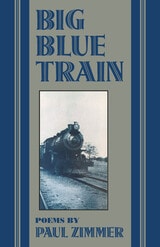
Big Blue Train
PoemsPaul Zimmer
University of Arkansas Press, 1993
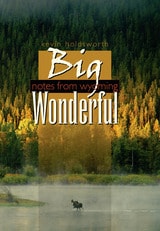
Big Wonderful
Notes from WyomingKevin Holdsworth
University Press of Colorado, 2006
Growing up in Utah, Holdsworth couldn't wait to move away. Once ensconced on the East Coast, however, he found himself writing westerns and dreaming of the mountains he'd skied and climbed. Fed up with city life, he moved to a small Wyoming town.
In Big Wonderful, he writes of a mountaineering companion's death, the difficult birth of his son, and his father's terminal illness - encounters with mortality that sharpened his ideas about risk, care, and commitment. He puts a new spin on mountaineering literature, telling wild tales from his reunion with the mountains but also relating the surprising willpower it took to turn back from risks he would have taken before he became a father. He found he needed courage to protect and engage deeply with his family, his community, and the wild places he loves.
Holdsworth's essays and poems are rich with anecdotes, characters, and vivid images. Readers will feel as if they themselves watched a bear destroy an entire expedition's food, walked with his great-great-grandmother along the icy Mormon Trail, and tried to plant a garden in Wyoming's infamous wind.
Readers who love the outdoors will enjoy this funny and touching take on settling down and adventuring in the West's most isolated country.
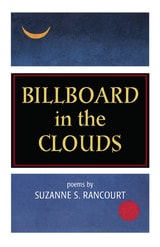
Billboard in the Clouds
Suzanne S. Rancourt
Northwestern University Press, 2004
In this remarkable debut book of poems, winner of the Native Writers First Book Award, Suzanne S. Rancourt, presents her experience as a mixed-raced person seeking understanding through relationship with the natural world and dominant culture. Her family portraits are reminiscent of E. A. Robinson; her sensuous nature poems are imbued with love of earth as a "blessing."
Dance
my legs are explosions
expressions
of lustful wind
i converse through cracks in the walls
slipping in my true intention like a snow drift
on the inside
side of a door i pound
your chest
has become my wailing wall
i crave your tongue dusted
with words and implications
i have something you need
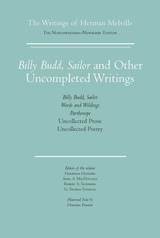
Billy Budd, Sailor and Other Uncompleted Writings
The Writings of Herman Melville, Volume 13Herman Melville; Historical Note by Hershel Parker
Northwestern University Press, 2017
These unfinished writings include, besides Billy Budd, two projected volumes containing poems and prose pieces, Weeds and Wildings and Parthenope; three prose pieces, “Rammon,” “Story of Daniel Orme,” and “Under the Rose”; and some three dozen poems of varying lengths. Some of these pieces were surely composed late in Melville’s career, during his retirement, but others may date to as early as the 1850s. Except for Billy Budd, many of these works have not been readily available in reliable texts, when available at all.
This volume, the result of the editors’ meticulous study of the manuscripts, offers new reading texts, with significant corrections of words, phrases, and titles, the inclusion of heretofore unpublished lines of verse, and the return to their original locations of the two poems, “The Enviable Isles” and “Pausilippo,” that Melville had extracted for use in John Marr (1888) and Timoleon (1891). Hershel Parker’s Historical Note traces how these writings fit into the trajectory of Melville’s career, and the rest of the Editorial Appendix presents the scholarly evidence and decisions made in creating the reading texts. As a whole, the Northwestern-Newberry Edition of The Writings of Herman Melville, now complete in fifteen volumes, offers for the first time the total body of Melville’s extant writings in a critical text, faithful to his intentions.
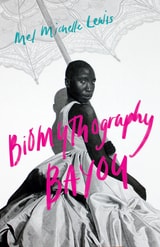
Biomythography Bayou
Mel Michelle Lewis
Bucknell University Press, 2025
Biomythography Bayou is more than just a book of memoir; it is a ritual for conjuring queer embodied knowledges and decolonial perspectives. Blending a rich gumbo of genres—from ingredients such as praise songs, folk tales, recipes, incantations, and invocations—it also includes a multimedia component, with “bayou tableau” images and audio recording links. Inspired by such writers as Audre Lorde, Zora Neale Hurston, and Octavia Butler, Mel Michelle Lewis draws from the well of her ancestors in order to chart a course toward healing Afrofutures. Showcasing the nature, folklore, dialect, foodways, music, and art of the Gulf’s coastal communities, Lewis finds poetic ways to celebrate their power and wisdom.
Birches
Carl Adamshick
Four Way Books, 2019
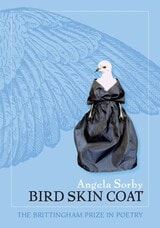
Bird Skin Coat
Angela Sorby
University of Wisconsin Press, 2009
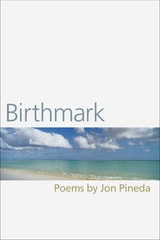
Birthmark
Jon Pineda
Southern Illinois University Press, 2004
In Jon Pineda’s debut collection Birthmark, loss takes the shape of a scar, memory the shape of a childhood, and identity the shape of a birthmark on a lover’s thigh. Like water taking the form of its container, Pineda’s poems swell to fill the lines of his experiences. Against the backdrop of Tidewater, Virginia’s crabs and cicadas, Pineda invokes his mestizo—the Tagalog word for being half Filipino—childhood, weaving laments for a tenuous paternal relationship and the loss of a sibling. Channeling these fragmented memories into a new discovery of self, Birthmark reclaims an identity, delicate yet unrelenting, with plaintive tones marked equally by pain, reflection, and redemption.
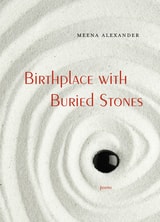
Birthplace with Buried Stones
PoemsMeena Alexander
Northwestern University Press, 2013
With their intense lyricism, Meena Alexander’s poems convey the fragmented experience of the traveler, for whom home is both nowhere and everywhere. The landscapes she evokes, whether reading Bashō in the Himalayas, or walking a city street, hold echoes of otherness. Place becomes a palimpsest, composed of layer upon layer of memory, dream, and desire. There are poems of love and poems of war—we see the rippling effects of violence and dislocation, of love and its aftermath. The poems in Birthplace with Buried Stones range widely over time and place, from Alexander’s native India to New York City. We see traces of mythology, ritual, and other languages. Uniquely attuned to life in a globalized world, Alexander’s poetry is an apt guide, bringing us face to face with the power of a single moment and its capacity to evoke the unseen and unheard.
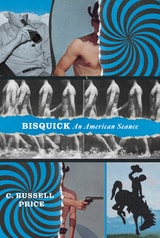
Bisquick
An American SeanceC. Russell Price
Northwestern University Press, 2026
A breathtaking gallop through spectral planes, grief, and ghosts
Grief is a rodeo filled with ghost clowns. In Bisquick: An American Seance, C. Russell Price explores spiritualism and the fetishization of the Midwest cowboy aesthetic, creating a vibrant world inhabited by three unforgettable characters: the speaker, a traumatized eco-anarchist working through grief; Ghost Cowboy, a ghost dream boyfriend hell-bent on hunting predators of the poor; and Bisquick, a blue ghost horse who just wants to dance. This spectral trio boogies, copulates, and fights against a system that ghosted them long before the demise of their physical bodies, determined to stay saddled to their dreams. Price gallops through the widths of time, the geography of the United States, the spectral plane, and the leather BDSM scene as they attempt to answer this provocative collection’s central question: If the dead could talk, wouldn’t they have something better to say?
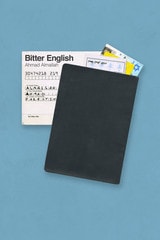
Bitter English
Ahmad Almallah
University of Chicago Press, 2019
Through finely crafted poems that utilize a plainspoken roughness to keep the reader slightly disoriented, Almallah replicates his own verbal and cultural experience of existing between languages and societies. There is a sense of displacement to these poems as Almallah recounts the amusing, sad, and perilous moments of day-to-day living in exile. At the heart of Bitter English is a sense of loss, both of home and of his mother, whose struggle with Alzheimer’s becomes a reflection of his own reality in exile. Filled with wit, humor, and sharp observations of the world, Bitter English brings a fresh poetic voice to the American immigrant experience.
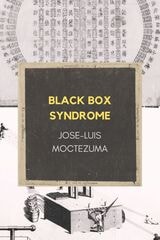
Black Box Syndrome
Jose-Luis Moctezuma
Omnidawn, 2023
Jose-Luis Moctezuma’s Black Box Syndrome is a series of poems—or “black boxes”—based on black hexagrams in the I Ching, an ancient Chinese divination text. Following the aleatoric tradition popularized by the surrealists and extended by the work of John Cage and Jackson Maclow, these poems cast their lenses on the hazards of the incessant financialization of everyday life. Synthesizing chance-operational aesthetics with Aztec anatomical science, conspiracy theory with systems theory, and the black box model with the concept of the “influencing machine,” Black Box Syndrome explores tensions between lyric excess and digital compaction in the age of pandemic. Over and against the corrosive world-shrinking effects of Wall Street risk management and futures trading, the black boxes in this book propose a counter-divination that distorts, deranges, and decolonizes the logic of empire.
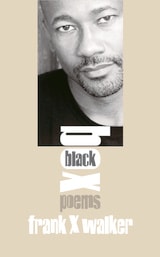
Black Box
PoemsFrank X Walker
Ohio University Press, 2005
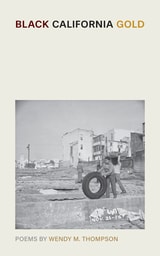
Black California Gold
Wendy M. Thompson
Bucknell University Press, 2025
In this arresting debut poetry collection, Thompson traces the past and present of California’s Bay Area, exploring themes of family, migration, girlhood, and identity against a backdrop of urban redevelopment, advanced gentrification, and the erasure of Black communities. Traveling down both familiar highways and obscure side streets, her poems map a region where race, class, and language are just some of the fault lines that divide communities and produce periodic tremors of violence and resistance.
Confronting assimilationist myths of the American Dream, Black California Gold depicts a setting that is less a melting pot than a smelting pot, subjecting different ethnic groups to searing trials and extreme pressures that threaten to break them down entirely. Yet, it also celebrates the Black residents of the Bay Area who have struggled to sustain home and hope amid increasingly desperate conditions.
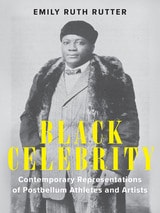
Black Celebrity
Contemporary Representations of Postbellum Athletes and ArtistsEmily Ruth Rutter
University of Delaware Press, 2022
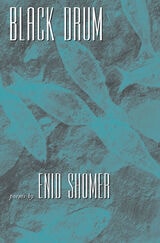
Black Drum
Enid Shomer
University of Arkansas Press, 1997
In Black Drum, Enid Shomer fuses mind with body, knowledge with physical being, and affirms the capacity of language to accomplish this fusion. With clearly fashioned images, her focus often narrows on close particulars or leaps to wide angles, as in these lines from the title poem in which the narrator is battling a fish:
We had been struggling for ten
minutes—a lifetime—over whose world
would prevail: his, with its purled
edges and continuous center, or mine
with its yin and yang,
its surface incised into sky
and sea, the land like a scar
between.
The characters in Shomer’s poems discover the ceaseless motion of living in the body and the inevitability of decay. In “Notes from the Sketch book of Gustav Klimt,” Shomer boldly says, “I have always balked / at the purely decorative, / but then I saw that the symbolic / could stir us by its absence.”
Black Drum insists that life on earth speaks of transformation and transience; epiphany can happen any where, with “schemes illegal and grand” with slot machines, race horses, dead or estranged relatives, and lost love. Enid Shomer signals us to make the most of life, despite our limitations and in the face of bewildering catastrophe.
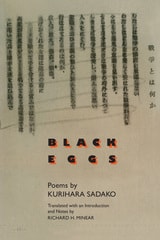
Black Eggs
Poems by Kurihara SadakoKurihara Sadako; Translated with an Introduction and Notes by Richard H. Minear
University of Michigan Press, 1994

Black Epic
Poetics in the Time of Black Lives MatterDavid M. de León
Duke University Press, 2027
Black Moods
Collected PoemsFrank Marshall Davis
University of Illinois Press, 2001
John Edgar Tidwell’s introduction examines both Davis’s poetry and his politics, presenting a subtle portrait of a complex writer devoted to exposing discriminatory practices and reaffirming the humanity of the common people.

Blacks
Gwendolyn Brooks
Northwestern University Press, 1987
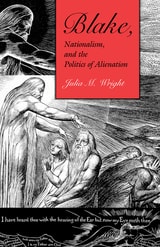
Blake, Nationalism, and the Politics of Alienation
Julia M. Wright
Ohio University Press, 2027
William Blake’s reputation as a staunch individualist is based in large measure on his repeated attacks on institutions and belief systems that constrain the individual’s imagination. Blake, however, rarely represents isolation positively, suggesting that the individual’s absolute freedom from communal pressures is not the ideal. Instead, as Julia Wright argues in her award-winning study Blake, Nationalism, and the Politics of Alienation, Blake’s concern lies with the kind of community that is being established. Moreover, writing at the moment of the emergence of modern nationalism, Blake reveals a concern with the national community in particular.
Beginning with a discussion of the priority of national narrative in late-eighteenth-century art theory and antiquarianism, Blake, Nationalism, and the Politics of Alienation traces its relevance in Blake’s printed works, from The Poetical Sketches and the Lambeth Prophecies to The Laocoön. Professor Wright then turns to Europe, America, and Visions of the Daughters of Albion, focusing on Blake’s portrayals of particular characters’ alienation from the groups and ideologies represented in the texts. The book closes by arguing that Blake’s major printed works, Milton and Jerusalem, are explicit and extensive engagements with the question of nation—and empire.
Although nationalism existed in various forms during the Romantic period, Blake’s contemporaries generally assumed that nations should progress continuously, producing a clear narrative line from an auspicious origin to the perfect fulfillment of that promise. Wright argues that these mutually determining constructs of national character and national narrative inform Blake’s handling of the problem of the individual-within-a-community.
Blank Verse
A Guide to Its History and UseRobert B. Shaw
Ohio University Press, 2007
With its compact but inclusive survey of more than four centuries of poetry, Blank Verse is filled with practical advice for poets of our own day who may wish to attempt the form or enhance their mastery of it. Enriched with numerous examples, Shaw’s discussions of verse technique are lively and accessible, inviting not only to apprentice poets but to all readers of poetry.
Shaw’s approach should reassure those who find prosody intimidating, while encouraging specialists to think more broadly about how traditional poetic forms can be taught, learned, practiced, and appreciated in the twenty-first century. Besides filling a conspicuous gap in literary history, Blank Verse points the way ahead for poets interested in exploring blank verse and its multitude of uses.
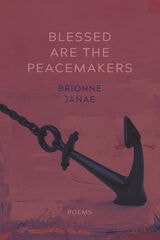
Blessed Are the Peacemakers
PoemsBrionne Janae
Northwestern University Press, 2022
Winner of the 2020 Cave Canem Northwestern University Press Poetry Prize
At once interested in the cyclical nature of domestic dysfunction and what we do when secrets of buried harm come to light, Blessed Are the Peacemakers asks what it means to make peace in the wake of intrafamilial violence and child sexual assault. These poems explore the ways the truth is often hidden behind layers of bleach and shame, and the ways we fail survivors by dismissing their stories and tolerating their abusers.
Filled with elegies to the people who have been murdered by state violence, racism, and anti-Blackness in the United States, Blessed Are the Peacemakers interrogates the lengths and limitations of grace. Brionne Janae examines what it means to survive—particularly as a Black girl, woman, queer person, or human—and uses self-portraiture to explore how familial and communal trauma plague our mental health. How do we survive the grief of the past and present without becoming numb to or consumed by it? How do we remember, despite our pain, to enjoy our bodies and our lives while we still have them?
Blessings for the Hands
Matthew Schwartz
University of Chicago Press, 2008
What you feel
reveals you.
Watch
for the sustenance
inclined to a source,
enamored of singularity,
quickly here and quickly
gone, shadow from which
the body's courage comes.
Fireflies
apparently stumbling.
I slapped one on my leg.
Its blood glowed.
Blessings for the Hands follows various speakers—often disabled speakers, who never once figure themselves as objects of complaint or self-pity—through the haunted dreamscape of “normalcy.” Indeed, dreams are continuous presences in this unusually subtle and elegant debut collection that juxtaposes physical circumstances with the vast interior life of the imagination. The subjects of Blessings for the Hands are real and imagined confrontations—and reconciliations—between family members, friends, strangers, and animals. Matthew Schwartz’s quasi-autobiographical verse complicates and clarifies the emotions waiting just underneath the patterns and expectations of the speakers’ daylight lives, where anger, joy, corporeality, and mortality all seem to collide. For Schwartz, poetry is a sleight of hand that keeps the reader guessing through nearly imperceptible shifts between present vision and absent reality. Blessings for the Hands is a lyric reckoning of the tension between the life we are given and the life we are determined to lead.
“Blessings for the Hands is emotionally strong and imaginatively wild, distinctive, deeply moving, without an ort of self-pity, and pervaded by ‘compassion down to your fingertips’ (which Chekhov said is ‘the only method’ both to write and to live). This angle of vision is sharp enough to unify much disparate material. The poems are clear and musical and consequently a pleasure to read and reread despite their gravity. I think this may be lasting work.”—Michael Ryan

Blood Feather
Karla Kelsey
Tupelo Press, 2020
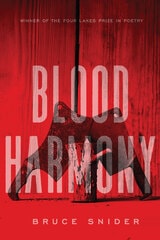
Blood Harmony
Bruce Snider
University of Wisconsin Press, 2025
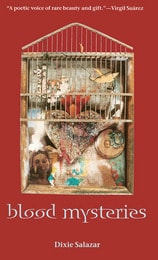
Blood Mysteries
Dixie Salazar
University of Arizona Press, 2003
Through images brutally honest and disarmingly off-center, Dixie Salazar explores the hidden lives of everyday people, objects, and experiences—and their transformation in the hidden realms of the heart. Charting furious descents into the darkest crevices of our souls, Salazar paints for us a lost city that exists below our mundane consciousness. Blood Mysteries is a tribute to lost souls, from a suicidal mental patient who doesn't believe she exists—"melting out of a landscape spotted with shadows, washing her hands in an empty basin of light"—to Marilyn Monroe, victim even in the morgue. In finely tuned lyricism showing an uncanny grasp of frayed lives, she gives flesh and vitality to women normally encountered only as statistics. The incarcerated, the homeless, the hopeless. Missing young girls who turn up violated and murdered.
Salazar presents us with blood mysteries not only of women, but of family as well. In poems invoking her dual heritage, she explores the identity crises brought on by having a Spanish father and a mother from the deep South, leaving her a product of American meltdown with a predisposition to check "other" for race on applications. "Other can be a place," she reminds us, "a residence for those of us without / papers, where halos of lightning bugs / swarm the rickety family tree." Salazar writes with toughness and grit "for all the shipwrecked saints / and wretches among us." But beneath the surface of words sometimes gritty, sometimes playful, lies a testament to the power of empathy, giving voice to those whose voices have been stifled and offering hope for those who have found none. Blood Mysteries is a forceful prayer for the disenfranchised that offers not merely hope, but transcendence.
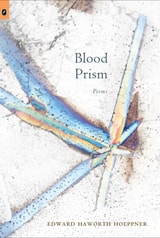
Blood Prism
Edward Haworth Hoeppner
The Ohio State University Press, 2011
The poems in Blood Prism span a lifetime. Its three sections, “Memory,” “Politics,” and “Age,” frame meditations on a violence-blotched world with reflections on the author’s childhood and conclusions about a decades-long life of writing. “I’m 60 and still . . . alive in this world, with love and with its palindrome,” one poem says. And the argument of the book turns on that precise puzzle: on evol, invoking as it does both evil and evolve, both human wrong and life as something more than mere survival. In a variety of styles—prose poems, standard and dislocated forms—Hoeppner uses “blood” to represent family and history, his surprising and richly imagistic language rendering the emptiness he calls imagination “into remains. Into what persists.”
Blood Work
Matthew Siegel
University of Wisconsin Press, 2015
Finalist, Poetry, Foreword Reviews IndieFab Book of the Year Awards
Blood and Bone
Poems by PhysiciansAngela Belli
University of Iowa Press, 1998
Blood of the Air
PoemsAma Codjoe
Northwestern University Press, 2020
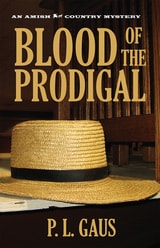
Blood of the Prodigal
An Amish Country MysteryP. L. Gaus
Ohio University Press, 1999
P. L. Gaus’s Blood of the Prodigal, a mystery in the tradition of Tony Hillerman, is back in a new edition, including an exclusive interview with the author, discussion questions for reading groups, and a detailed map and driving guide to Holmes County, Ohio, with everything one needs to visit the iconic scenes depicted in the story.
In Holmes County, Ohio—home to the largest Amish and Mennonite settlements in the world—mystery and foreboding lurk in the quiet Old Order Amish community led by Bishop Eli Miller.
The illusion of peace is shattered one early morning when a young Amish boy goes missing—abducted from his home and from Bishop Miller’s care. At first, the bishop suspects the child’s father, who was exiled from the Old Order ten years ago, but a murder soon casts doubt on the bishop’s theory. With a strong distrust of law enforcement and the modern “English” ways, the bishop must put his faith in an unlikely partnership with Professor Michael Branden before it’s too late.With the help of the peaceful pastor Cal Troyer and the reckless Sheriff Bruce Robertson, Branden plunges headlong into the closed culture to unravel the mystery of the missing child and uncover truths many would prefer to leave undisturbed.
Blood, Sparrows and Sparrows
Eugenia Leigh
Four Way Books, 2014