Results by title
8812 books match the query 'Political Science' and 358 start with b

Becoming Transnational Youth Workers
Independent Mexican Teenage Migrants and Pathways of Survival and Social MobilityIsabel Martinez
Rutgers University Press, 2018
Becoming Trustworthy White Allies
Melanie S. Morrison
Duke University Press, 2025
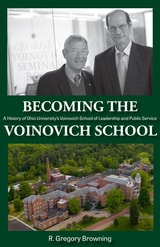
Becoming the Voinovich School
A History of Ohio University’s Voinovich School of Leadership and Public ServiceR. Gregory Browning, Ph.D.
Ohio University Press, 0
The evolution of a university-based public service model that integrates leadership, applied research, and regional engagement in Appalachian Ohio
Becoming the Voinovich School chronicles the evolution of Ohio University’s Voinovich School of Leadership and Public Service, a pioneering institution that blends academic rigor with hands-on public engagement. Founded on the vision of political scientist Mark Weinberg and inspired by the leadership philosophy of former US senator and Ohio governor George V. Voinovich, the school has become a national model for university-based public service.
From its modest beginnings in 1976—when Weinberg was hired to build a public administration program from scratch—the school has grown into a dynamic “do tank” serving the Appalachian Ohio region and beyond. Early initiatives like the Institute for Local Government Administration and Rural Development laid the groundwork for a new kind of academic center: one that connects faculty expertise with real-world problem-solving. Through applied research, GIS analysis, leadership training, and program evaluation, the school has become a trusted convener and catalyst for change.
The Voinovich School’s mission spans five key sectors: economic development, community development, education and child wellness, environmental restoration, and health and well-being. Its work is rooted in a commitment to empowering communities, especially those facing the economic and health challenges of postindustrial Appalachia. By pairing grant-funded projects with experiential education, the school has created opportunities for students to engage directly with pressing public issues while building leadership capacity across the region.
In 2007, the center was formally renamed the Voinovich School, reflecting its expanded scope and growing impact. Over the next decade, it launched new graduate programs, raised its national ranking, and became the educational partner for the Ohio Economic Development Institute. Today, the school continues to leverage state and federal funding, private-sector partnerships, and alumni networks to address complex challenges with innovative, community-driven solutions.
This book offers a compelling account of how one university unit transformed public service education—and how its legacy continues to shape leadership and policy in and beyond Ohio.
Beer Places
The Microgeographies of Craft BeerDaina Cheyenne Harvey
University of Arkansas Press, 2023
With insight from social scientists, beer bloggers, travel writers, and food entrepreneurs who recount their experiences of taprooms, breweries, and bottle shops from North Carolina to Zimbabwe, Beer Places reveals differences in the craft beer scene across multiple geographies. Situating craft beer as an emerging and important component of food studies, the essays in this volume attest to the singular power of craft beer to connect people and places.
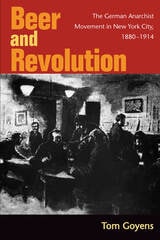
Beer and Revolution
The German Anarchist Movement in New York City, 1880-1914Tom Goyens
University of Illinois Press, 2007
Beer and Revolution examines the rollicking life and times of German immigrant anarchists in New York City from 1880 to 1914. Offering a new approach to an often misunderstood political movement, Tom Goyens puts a human face on anarchism and reveals a dedication less to bombs than to beer halls and saloons where political meetings, public lectures, discussion circles, fundraising events, and theater groups were held.
Goyens brings to life the fascinating relationship between social space and politics by examining how the intersection of political ideals, entertainment, and social activism embodied anarchism not as an abstract idea, but as a chosen lifestyle for thousands of women and men. He shows how anarchist social gatherings were themselves events of defiance and resistance that aimed at establishing anarchism as an alternative lifestyle through the combination of German working-class conviviality and a dedication to the principle that coercive authority was not only unnecessary, but actually damaging to full and free human development as well. Goyens also explores the broader circumstances in both the United States and Germany that served as catalysts for the emergence of anarchism in urban America and how anarchist activism was hampered by police surveillance, ethnic insularity, and a widening gulf between the anarchists' message and the majority of American workers.
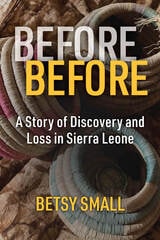
Before Before
A Story of Discovery and Loss in Sierra LeoneBetsy Small
University of Michigan Press, 2025
2025 Foreword INDIES Finalist for Political and Social Sciences
- 2026 Nautilus Silver Book Award in World Cultures' Transformational Growth & Development
Sierra Leone is often sensationalized as a place of extreme violence and suffering—of blood diamonds, child soldiers, war amputations, and Ebola and now the highly addictive drug Kush. Before Before captures daily life in a different country, one Betsy Small first encountered as a Peace Corps worker between 1984–1987, and then rediscovered when she returned decades later with her daughter. Living in Tokpombu, a remote community of forty rice-farming families, the author faced struggles that changed her forever and witnessed the growing tensions in this rainforest village—between the young and old, between the traditions of oral history and honoring the ancestors valued by the elders and the siren call of the illicit diamond mines faced by the youth.
Before Before offers a rare portrait of everyday people, with particular focus on the lives of women and girls, before the brutal war of 1991 tore the country apart. Through Small’s account of immersion in another world as she witnessed injustice and was welcomed as a friend, readers are invited to explore the shared ground of our humanity.
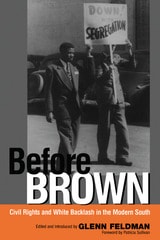
Before Brown
Civil Rights and White Backlash in the Modern SouthGlenn Feldman
University of Alabama Press, 2004
Details the ferment in civil rights that took place across the South before the momentous Brown vs. Board of Education decision in 1954
This collection refutes the notion that the movement began with the Supreme Court decision, and suggests, rather, that the movement originated in the 1930s and earlier, spurred by the Great Depression and, later, World War II—events that would radically shape the course of politics in the South and the nation into the next century.
This work explores the growth of the movement through its various manifestations—the activities of politicians, civil rights leaders, religious figures, labor unionists, and grass-roots activists—throughout the 1940s and 1950s. It discusses the critical leadership roles played by women and offers a new perspective on the relationship between the NAACP and the Communist Party.
Before Brown shows clearly that, as the drive toward racial equality advanced and national political attitudes shifted, the validity of white supremacy came increasingly into question. Institutionalized racism in the South had always offered white citizens material advantages by preserving their economic superiority and making them feel part of a privileged class. When these rewards were threatened by the civil rights movement, a white backlash occurred.
Before Norms
Institutions and Civic CultureRobert W. Jackman and Ross A. Miller
University of Michigan Press, 2005
Before Roe
Abortion Policy in the StatesRosemary Nossiff
Temple University Press, 2000
In this groundbreaking book, Rosemary Nossiff examines the force that shaped abortion policy during those years, and the ways in which states responded to them. To provide in-depth analysis while still looking broadly at the picture, she studies New York, which passed the most permissive abortion bill in the country, and Pennsylvania, which passed one of the most restrictive. That these two states, which share similar demographic, political, and economic characteristics, should reach two such different outcomes provides a perfect case study for observing political dynamics at the state level.
Nossiff examines the medical, religious, and legal discourses employed on both sides of the debate, as well as the role played by feminist discourse. She looks at the role of the political parties in the campaigns, as well as such interest groups as the National Council of Catholic Bishops, the Clergy Consultation Service, the National Organization for Women, and the National Association for the Repeal of Abortion Laws. In addition, she analyzes the strategies used by both sides, as well as partisan and institutionalized developments that facilitated success or failure. Finally, in the Epilogue, she assesses the Roe decision and its aftermath, including an analysis of the pro-life movement in Pennsylvania.
As the author remarks, "Without question people's positions on abortion are shaped by a myriad of social, moral, and economic factors. But ultimately abortion policy is shaped in the political arena. This book examines how one of the most intimate decisions a woman makes, whether to continue or terminate a pregnancy, has become one of the most politicized issues in contemporary American politics.
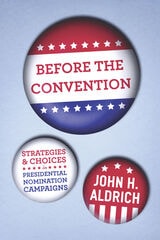
Before the Convention
Strategies and Choices in Presidential Nomination CampaignsJohn H. Aldrich
University of Chicago Press, 1980
Campaigns to win the Democratic and Republican presidential nominations are longer, more complex, and more confusing to the observer than the general election itself. The maze of delegate-selection procedures includes state primaries and caucuses as well as the traditional "smoke-filled room." Complicated federal election laws govern campaign financing. Sometimes many candidates enter and drop out of the race, while sometimes a stable two-way contest occurs: the 1976 nomination campaigns of Jimmy Carter and Gerald Ford exemplified each extreme. Is it possible to propose general principles to explain the apparent chaos of our presidential nomination system? Can those principles account for two such starkly different campaigns as occurred in 1976? In Before the Convention, political scientist John H. Aldrich presents a systematic analysis of presidential nomination politics, based on application of rational-choice models to candidate behavior. Aldrich views the candidates as decision makers with limited resources in a highly competitive environment. From this perspective, he seeks to determine why and how candidates choose to run, why some succeed and others fail, and what consequences the nomination process has for the general election and, later, for the President in office.
Aldrich begins with a brief history of the presidential selection process, focusing on the continuing shift of power from political elites to the mass electorate. He then turns to a detailed analysis of the 1976 nomination campaigns. Using data from a variety of sources, Aldrich demonstrates that the very different patterns in these races both conform to the rational-choice model. The analysis includes consideration of numerous questions of strategy. Is there a "momentum" to campaigns? How does a candidate identify and exploit this intangible quality? How do candidates decide where to contend and where not to contend? What is the nature of policy competition among candidates? When does a candidate prefer a "fuzzy" position to a clearly stated one? Other topics include reforms in campaign financing and the expanded and changed role of news coverage.
Before the Convention fills a significant gap in the literature on presidential politics, and therefore should be of particular importance to specialists in this area. It will be ofinterest also to everyone who is concerned with understanding the "rules of the game" for a complicated but vitally important exercise of American democracy.
Before the Nation
Kokugaku and the Imagining of Community in Early Modern JapanSusan L. Burns
Duke University Press, 2003
Central to Burns's analysis is Motoori Norinaga’s Kojikiden, arguably the most important intellectual work of Japan's early modern period. Burns situates the Kojikiden as one in a series of attempts to analyze and interpret the mythohistories dating from the early eighth century, the Kojiki and Nihon shoki. Norinaga saw these texts as keys to an original, authentic, and idyllic Japan that existed before being tainted by "flawed" foreign influences, notably Confucianism and Buddhism. Hailed in the nineteenth century as the begetter of a new national consciousness, Norinaga's Kojikiden was later condemned by some as a source of Japan's twentieth-century descent into militarism, war, and defeat. Burns looks in depth at three kokugaku writers—Ueda Akinari, Fujitani Mitsue, and Tachibana Moribe—who contested Norinaga's interpretations and produced competing readings of the mythohistories that offered new theories of community as the basis for Japanese social and cultural identity. Though relegated to the footnotes by a later generation of scholars, these writers were quite influential in their day, and by recovering their arguments, Burns reveals kokugaku as a complex debate—involving history, language, and subjectivity—with repercussions extending well into the modern era.
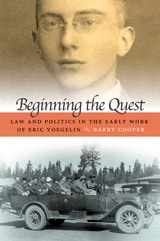
Beginning the Quest
Law and Politics in the Early Work of Eric VoegelinBarry Cooper
University of Missouri Press, 2009
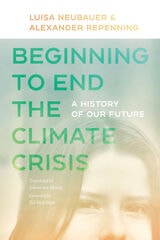
Beginning to End the Climate Crisis
A History of Our FutureLuisa Neubauer and Alexander Repenning
Brandeis University Press, 2023
“Act as though your house is on fire. Because it is.” Following Greta Thunberg, millions of young climate activists have been taking to the streets around the globe as part of the Fridays For Future movement. They demand that we “unite behind the science,” as, for too long, climate scientists have been ringing the alarm bells about rising temperatures, tipping points, and the devastating consequences of extreme weather—but politicians do nothing.
So how do you begin to end the climate crisis? Luisa Neubauer and Alexander Repenning begin by telling stories. Neubauer cofounded the youth climate activist group in Germany and has become its most prominent voice. In this book she and Repenning weave in personal accounts of their evolution as climate activists with a thorough analysis of how climate change impacts their generation, and what every one of us can and must do about it. The young and old in the United States and around the world can learn valuable lessons from their European counterparts.
Behavioral Public Finance
Edward J. McCaffery
Russell Sage Foundation, 2006
Behavioral Sciences and the Mass Media
Frederick T. C. Yu
Russell Sage Foundation, 1968
Behind the Development Banks
Washington Politics, World Poverty, and the Wealth of NationsSarah Babb
University of Chicago Press, 2009
The World Bank and other multilateral development banks (MDBs) carry out their mission to alleviate poverty and promote economic growth based on the advice of professional economists. But as Sarah Babb argues in Behind the Development Banks, these organizations have also been indelibly shaped by Washington politics—particularly by the legislative branch and its power of the purse.
Tracing American influence on MDBs over three decades, this volume assesses increased congressional activism and the perpetual “selling” of banks to Congress by the executive branch. Babb contends that congressional reluctance to fund the MDBs has enhanced the influence of the United States on them by making credible America’s threat to abandon the banks if its policy preferences are not followed. At a time when the United States’ role in world affairs is being closely scrutinized, Behind the Development Banks will be necessary reading for anyone interested in how American politics helps determine the fate of developing countries.

Behind the Search Box
Google and the Global Internet IndustryShinJoung Yeo
University of Illinois Press, 2023
An incisive look at a pervasive presence in our lives, Behind the Search Box places the search engine industry’s rise and ongoing success within an original political economy of digital capitalism.

Behind the Wall
An American in East Germany, 1988-89Paul Gleye
Southern Illinois University Press, 1991
Standing in long lines in the shops, coaxing clean laundry from an outdated washing machine, traveling despite unpredictable train schedules, and being without hot water, fruit, and vegetables through the gray winter months failed to dull Paul Gleye’s perceptions during the year he lived in Weimar, East Germany. Day by day Gleye documented his varied observations and experiences, unaware that they would prove a unique record of what would soon be an extinct society.
Gleye was in East Germany as a Fulbright lecturer. Living beyond the capital city of East Berlin and traveling and conversing freely, Gleye gained access to people and places that had been almost completely closed to Americans and other Westerners for decades.
Being Colonized
The Kuba Experience in Rural Congo, 1880–1960Jan Vansina
University of Wisconsin Press, 2010
Vansina’s case study of the colonial experience is the realm of Kuba, a kingdom in Congo about the size of New Jersey—and two-thirds the size of its colonial master, Belgium. The experience of its inhabitants is the story of colonialism, from its earliest manifestations to its tumultuous end. What happened in Kuba happened to varying degrees throughout Africa and other colonized regions: racism, economic exploitation, indirect rule, Christian conversion, modernization, disease and healing, and transformations in gender relations. The Kuba, like others, took their own active part in history, responding to the changes and calamities that colonization set in motion. Vansina follows the region’s inhabitants from the late nineteenth century to the middle of the twentieth century, when a new elite emerged on the eve of Congo’s dramatic passage to independence.

Being Governor
The View from the OfficeThad L. Beyle and Lynn Muchmore, eds.
Duke University Press, 1983
The editors base their data on personal experience; interviews with governors, former governors, and staff; on -site visits; and responses to a series of nineteen surveys of governors and their staff conducted between 1976 and 1981. The research was undertaken by the Center for Policy Research of the National Governors' Association.
Being Human
Political Modernity and Hospitality in Kurdistan-IraqFazil Moradi
Rutgers University Press, 2024
Being Interdisciplinary
Adventures in Urban Science and BeyondAlan Wilson
University College London, 2022
In Being Interdisciplinary, Alan Wilson draws on five decades as a leading figure in urban science to set out a systems approach to interdisciplinarity for those conducting research in this and other fields. He argues that most research is interdisciplinary at its base and that a systems perspective is particularly appropriate for collaboration because it fosters an outlook that sees beyond disciplines. A systems approach enables researchers to identify the game-changers of the past as a basis for thinking outside of convention, for learning how to do something new and how to be ambitious.
Building on this systems focus, the book first establishes the basics of interdisciplinarity. Then, by drawing on the author’s wide experience in interdisciplinary research—as a researcher in urban science, a university professor and vice-chancellor, a civil servant, and an institute director, it illustrates general principles and a framework from which researchers can build their own interdisciplinary approach. In the last section, the book tackles questions of managing and organizing research from individual to institutional scales.
Being Political
Genealogies of CitizenshipEngin F. Isin
University of Minnesota Press, 2002
A provocative counterhistory-and a bold new approach-to notions of citizenship.
What does it mean to be political? Every age has based its answer on citizenship, bequeathing us such indelible images as that of the Greek citizen exercising his rights and obligations in the agora, the Roman citizen conducting himself in the forum, medieval citizens receiving their charter before the guildhall. Being Political disrupts these images by approaching citizenship as otherness, presenting a powerful critique of universalistic and orientalist interpretations of the origins of citizenship and a persuasive alternative history of the present struggles over citizenship.
Who were the strangers and outsiders of citizenship? What strategies and technologies were invented for constituting those forms of otherness? Focusing on these questions, rather than on the images conveyed by history’s victors, Being Political offers a series of genealogies of citizenship as otherness. Engin F. Isin invokes the city as a "difference machine," recovering slaves, peasants, artisans, prostitutes, vagabonds, savages, flextimers, and squeegee men in the streets of the polis, civitas, metropolis, and cosmopolis. The result is a challenge to think in bolder terms about citizenship at a time when the nature of citizenship is an increasingly open question.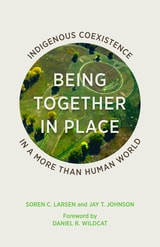
Being Together in Place
Indigenous Coexistence in a More Than Human WorldSoren C. Larsen
University of Minnesota Press, 2017
Being Together in Place explores the landscapes that convene Native and non-Native people into sustained and difficult negotiations over their radically different interests and concerns. Grounded in three sites—the Cheslatta-Carrier traditional territory in British Columbia; the Wakarusa Wetlands in northeastern Kansas; and the Waitangi Treaty Grounds in Aotearoa/New Zealand—this book highlights the challenging, tentative, and provisional work of coexistence around such contested spaces as wetlands, treaty grounds, fishing spots, recreation areas, cemeteries, heritage trails, and traditional village sites. At these sites, activists learn how to articulate and defend their intrinsic and life-supportive ways of being, particularly to those who are intent on damaging or destroying these places.
Using ethnographic research and a geographic perspective, Soren C. Larsen and Jay T. Johnson show how the communities in these regions challenge the power relations that structure the ongoing (post)colonial encounter in liberal democratic settler-states. Emerging from their conversations with activists was a distinctive sense that the places for which they cared had agency, a “call” that pulled them into dialogue, relationships, and action with human and nonhuman others. This being-together-in-place, they find, speaks in a powerful way to the vitalities of coexistence: where humans and nonhumans are working to decolonize their relationships; where reciprocal guardianship is being stitched back together in new and unanticipated ways; and where a new kind of “place thinking” is emerging on the borders of colonial power.
Being Useful
Policy Relevance and International Relations TheoryMiroslav Nincic and Joseph Lepgold, Editors
University of Michigan Press, 2000
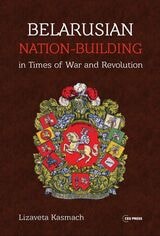
Belarusian Nation-Building in Times of War and Revolution
Lizaveta Kasmach
Central European University Press, 2023
The proclamation of Belarusian independence on March 25, 1918, and the rival establishment of the Soviet Belarusian state on January 1, 1919, created two distinct and mutually exclusive national myths, which continue to define contemporary Belarusian society. This book examines the processes that resulted in this dual resolution in the context of World War I and the subsequent Russian Revolutions.
Based on original archival material, Lizaveta Kasmach scrutinizes the development of competing concepts of Belarusian nationhood in the context of rivaling national aspirations and imperial policies. The analysis convincingly demonstrates the divisions within the nationalist movement, both politically between the moderates and socialists, and geographically between German-occupied territory with Vilna as a center versus Russian-controlled territory around Minsk. Besides the case study of Belarusian nation-building efforts, the book is a contribution to the study of the First World War in East Central Europe, approaching the war and its aftermath as a mobilizational moment in the region.
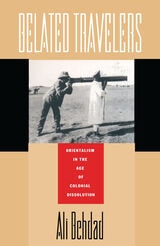
Belated Travelers
Orientalism in the Age of Colonial DissolutionAli Behdad
Duke University Press, 1994
Through readings of Flaubert, Nerval, Kipling, Blunt, and Eberhardt, and following the transition in travel literature from travelog to tourist guide, Belated Travelers addresses the specific historical conditions of late nineteenth-century orientalism implicated in the discourses of desire and power. Behdad also views a broad range of issues in addition to nostalgia and tourism, including transvestism and melancholia, to specifically demonstrate the ways in which the heterogeneity of orientalism and the plurality of its practice is an enabling force in the production and transformation of colonial power.
An exceptional work that provides an important critique of issues at the forefront of critical practice today, Belated Travelers will be eagerly awaited by specialists in nineteenth-century British and French literatures, and all concerned with colonial and postcolonial discourse.

Believing in Cleveland
Managing Decline in “The Best Location in the Nation”J. Mark Souther
Temple University Press, 2017
Detractors have called it "The Mistake on the Lake." It was once America’s "Comeback City." According to author J. Mark Souther, Cleveland has long sought to defeat its perceived civic malaise. Believing in Cleveland chronicles how city leaders used imagery and rhetoric to combat and, at times, accommodate urban and economic decline.
Souther explores Cleveland's downtown revitalization efforts, its neighborhood renewal and restoration projects, and its fight against deindustrialization. He shows how the city reshaped its image when it was bolstered by sports team victories. But Cleveland was not always on the upswing. Souther places the city's history in the postwar context when the city and metropolitan area were divided by uneven growth. In the 1970s, the city-suburb division was wider than ever.
Believing in Cleveland recounts the long, difficult history of a city that entered the postwar period as America's sixth largest, then lost ground during a period of robust national growth. But rather than tell a tale of decline, Souther provides a fascinating story of resilience for what some folks called "The Best Location in the Nation."
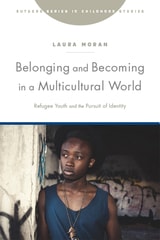
Belonging and Becoming in a Multicultural World
Refugee Youth and the Pursuit of IdentityLaura Moran
Rutgers University Press, 2020
Download open access ebook.
Belonging, Identity, and Conflict in the Central African Republic
Gino Vlavonou
University of Wisconsin Press, 2023
Focusing on violent struggles in the Central African Republic between 2012 and 2019, Gino Vlavonou explores the social practices, discursive strategies, and government policies that emerged in the relentless project of African state building. Conflict pitted Christian-animist communities, loosely organized as vigilante groups under the name anti-Balaka, against Muslim rebels known as the Séléka. Fighters of the anti-Balaka claimed that they were autochthonous, the “true Central Africans,” reframing their Muslim neighbors as foreigners to be expelled. While the country had previously witnessed episodes of violence, both peoples had lived together relatively peacefully and intermarried. The speed and ferocity with which identity was weaponized puzzled many observers. To understand this phenomenon, Vlavonou probes autochthony as a category of identity that differs from ethnicity in important ways. He argues that elites and ordinary citizens alike mobilize the language of original belonging as “identity capital,” a resource to be deployed. The value of that capital is lodged in what people say and do every day to give meaning to their identity, and its content changes across time and space.
Bending Archaeology toward Social Justice
Transformational Action for Positive PeaceBarbara J. Little
University of Alabama Press, 2023
Introduces an analytic model for how archaeologists can work toward social justice
In this time of Black Lives Matter, the demands of NAGPRA, and climate crises, the field of American archaeology needs a radical transformation. It has been largely a white, male, privileged domain that replicates an entrenched patriarchal, colonial, and capitalist system. In Bending Archaeology toward Social Justice, Barbara J. Little explores the concepts and actions required for such a change, looking to peace studies, anthropology, sociology, social justice activism, and the achievements of community-based archaeology for helpful approaches in keeping with the UN Sustainable Development Goals. She introduces an analytic model that uses the strengths of archaeology to destabilize violence and build peace.
As Little explains, the Diachronic Transformational Action model and the peace/violence triad of interconnected personal, cultural, and structural domains of power can help disrupt the injustice of all forms of violence. Diachronic connects the past to the present to understand how power worked in the past and works now. Transformational influences power now by disrupting the stability of the violence triad. Action refers to collaborative work to diagnose power relations and transform toward social justice.
Using this framework, Little confronts the country’s founding and myth of liberty and justice for all, as well as the American Dream. She also examines whiteness, antiracism, privilege, and intergenerational trauma, and offers white archaeologists concepts to grapple with their own racialized identities and to consider how to relinquish white supremacy. Archaeological case studies examine cultural violence and violent direct actions against women, Indigenous peoples, African Americans, and Japanese Americans, while archaeologies of poverty, precarity, and labor are used to show how archaeologists have helped expose the roots of these injustices. Because climate justice is integral to social justice, Little showcases insights that archaeology can bring to bear on the climate crisis and how lessons from the past can inform direct actions today. Finally, Little invites archaeologists to embrace inquiry and imagination so that they can both imagine and achieve the positive peace of social justice.
Bending Toward Justice
The Voting Rights Act and the Transformation of American DemocracyGary May
Duke University Press, 2015
Bending the Law
The Story of the Dalkon Shield BankruptcyRichard B. Sobol
University of Chicago Press, 1991
"Mr. Sobol has produced a readable yet fully researched and detailed study of the operation of the bankruptcy and its effects upon all concerned—the women who were injured, the swarms of lawyers who represented parties in the bankruptcy, and the court which oversaw the bankruptcy in Richmond. . . . This book adds greatly to the current debate about how strong a managerial federal judge our system should have."—Paul D. Rheingold, New York Law Journal
"Bending the Law is polemical and relentless. It is also minutely researched, fluidly written, and persuasive."—Paul Reidinger, ABA Journal
"Bending the Law is a must read for bankruptcy practitioners, and for anyone else concerned about the use of bankruptcy law to deal with mass torts. Although its author is a civil rights lawyer, he details the subtle art of practicing bankruptcy law with a discerning eye, and is a gifted storyteller as well."—Joryn Jenkins, Federal Bar News and Journal
"This is an accessible history of the case by a veteran civil-rights lawyer."—Washington Post Book World
Bending the Rules
Procedural Politicking in the BureaucracyRachel Augustine Potter
University of Chicago Press, 2019
With Bending the Rules, Rachel Augustine Potter shows that rulemaking is not the rote administrative activity it is commonly imagined to be but rather an intensely political activity in its own right. Because rulemaking occurs in a separation of powers system, bureaucrats are not free to implement their preferred policies unimpeded: the president, Congress, and the courts can all get involved in the process, often at the bidding of affected interest groups. However, rather than capitulating to demands, bureaucrats routinely employ “procedural politicking,” using their deep knowledge of the process to strategically insulate their proposals from political scrutiny and interference. Tracing the rulemaking process from when an agency first begins working on a rule to when it completes that regulatory action, Potter shows how bureaucrats use procedures to resist interference from Congress, the President, and the courts at each stage of the process. This exercise reveals that unelected bureaucrats wield considerable influence over the direction of public policy in the United States.
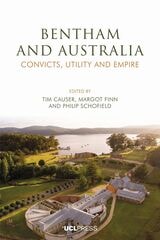
Bentham and Australia
Convicts, Utility and EmpireEdited by Tim Causer, Margot Finn, and Philip Schofield
University College London, 2022
This volume considers Jeremy Bentham’s Australian writings. In the first part of the volume, Bentham’s works are placed in their historical contexts, while the second part provides a critical assessment of the historical accuracy and plausibility of Bentham’s arguments against transportation from the British Isles. In the third part, attention turns to Bentham’s claim that New South Wales was founded illegally and to the imperial and colonial constitutional ramifications of that claim. The authors also discuss Bentham’s work of 1831 in which he supports the establishment of a free colony on the southern coast of Australia. In the final part, the authors shed light on the history of Bentham’s panopticon penitentiary scheme, his views on the punishment and reform of criminals and what role, if any, religion had to play in that regard, and discuss apparently panopticon-inspired institutions built in the Australian colonies.
This collection will appeal to readers interested in Bentham’s life and thought, the history of transportation from the British Isles and of British penal policy more generally, colonial and imperial history, Indigenous history, legal and constitutional history, and religious history.

Bergson, Politics, and Religion
Alexandre Lefebvre and Melanie White, eds.
Duke University Press, 2012
Contributors. Keith Ansell-Pearson, G. William Barnard, Claire Colebrook, Hisashi Fujita, Suzanne Guerlac, Vladimir Jankélévitch, Frédéric Keck, Leonard Lawlor, Alexandre Lefebvre, Paola Marrati, John Mullarkey, Paulina Ochoa Espejo, Carl Power, Philippe Soulez, Jim Urpeth, Melanie White, Frédéric Worms
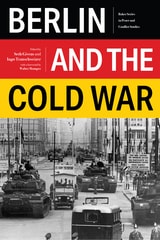
Berlin and the Cold War
Seth Givens; Ingo Trauschweizer
Ohio University Press, 2024
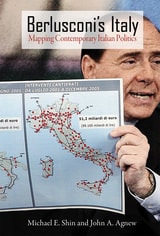
Berlusconi's Italy
Mapping Contemporary Italian PoliticsMichael E. Shin and John A. Agnew
Temple University Press, 2008
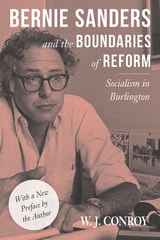
Bernie Sanders and the Boundaries of Reform
Socialism in BurlingtonW. J. Conroy
Temple University Press, 2016
In his preface to this reissue of the 1990 book, Challenging the Boundaries of Reform, W. J. Conroy reflects on the recent legacy of Sanders, his Agenda for America, and his appeal to young voters. His book then looks back to identify Sanders’ experience in Burlington by examining several case studies that unfolded amidst a conservative trend nationally, an unsympathetic state government, and a hostile city council.
Ultimately, Conroy asks what lessons can be drawn from the case of Burlington that would aid the American left in its struggle to capture both government and civil society?
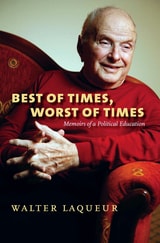
Best of Times, Worst of Times
Memoirs of a Political EducationWalter Laqueur
Brandeis University Press, 2009
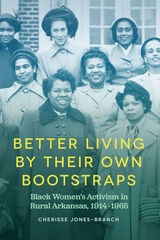
Better Living by Their Own Bootstraps
Black Women's Activism in Rural Arkansas, 1914-1965Cherisse Jones-Branch
University of Arkansas Press, 2021
The first major study to consider Black women’s activism in rural Arkansas, Better Living by Their Own Bootstraps foregrounds activists’ quest to improve Black communities through language and foodways as well as politics and community organizing. In reexamining these efforts, Cherisse Jones-Branch lifts many important figures out of obscurity, positioning them squarely within Arkansas’s agrarian history.
The Black women activists highlighted here include home demonstration agents employed by the Arkansas Agricultural Cooperative Extension Service and Jeanes Supervising Industrial Teachers, all of whom possessed an acute understanding of the difficulties that African Americans faced in rural spaces. Examining these activists through a historical lens, Jones-Branch reveals how educated, middle-class Black women worked with their less-educated rural sisters to create all-female spaces where they confronted economic, educational, public health, political, and theological concerns free from white regulation and interference.
Centered on the period between 1914 and 1965, Better Living by Their Own Bootstraps brings long-overdue attention to an important chapter in Arkansas history, spotlighting a group of Black women activists who uplifted their communities while subverting the formidable structures of white supremacy.

Betting the Earth
How We Can Still Win the Biggest Gamble of all TimeJohn Charles Kunich
Parkhurst Brothers, Inc., 2010
"Betting the Earth explores the uneasy parallels between our contemporary environmental challenges and our national fascination with gambling. How much should we bet on preserving biodiversity? Should we bet more on responding to climate change? where should we place each bet: on federal or state laws, on acquiring public or private preserves, on preventing environmental harms or saving places of special environmental significance? Like it or not, we must make such choices every day, and Betting the Earth helps us to understand how we do so."
Professor John Copeland Nagle, John N. Matthews Chair in Law, University of Notre Dame Law School
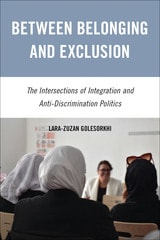
Between Belonging and Exclusion
The Intersections of Integration and Anti-Discrimination PoliticsLara-Zuzan Golesorkhi
Temple University Press, 2026
Integration and discrimination are two of the most salient yet contradictory forces shaping contemporary European politics. In Between Belonging and Exclusion Lara-Zuzan Golesorkhi asserts that this tension exists because integration politics do not facilitate non-discrimination, nor do they address experiences of discrimination. She draws on interviews with refugees and other key actors in integration politics to examine the barriers hindering refugee women’s labor market participation in Germany.
Golesorkhi introduces four explanatory tropes that reveal how and why integration efforts have often fallen short. She examines the power relations and limitations in migration governance as well as the identity narratives of Germanness/Europeanness, and the gendered and racialized mechanisms of “othering” that contribute to discrimination.
Between Belonging and Exclusion delineates what Germany and the EU “get wrong” about integration and anti-discrimination as it outlines conceptual and practical suggestions for expanding the terms of inclusion.
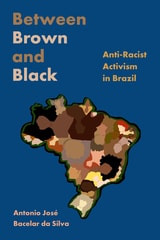
Between Brown and Black
Anti-Racist Activism in BrazilAntonio José Bacelar da Silva
Rutgers University Press, 2022
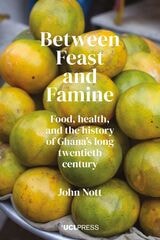
Between Feast and Famine
Food, Health, and the History of Ghana's Long Twentieth CenturyJohn Nott
University College London, 2025
Between Feast and Famine unravels the intertwined histories of food, health, and capitalism in Ghana, charting the country’s shifting nutritional landscape from colonial-era hunger crises to contemporary epidemics of obesity and diabetes. Moving between Ghana’s diverse ecological and economic zones, John Nott excavates how uneven capitalist transformation reshaped diets and childhood nutrition across the twentieth century. At the heart of this story is the evolving science of nutrition itself, from its colonial-era applications to its role in shaping modern health policies.
Using a new historical approach, Between Feast and Famine exposes how global scientific debates and local lived realities co-produced the country’s shifting nutritional conditions. A necessary contribution to African history and medical humanities, this book debunks preconceived notions about hunger and public health, suggesting crucial insights into the complex relationship between food systems and human well-being.
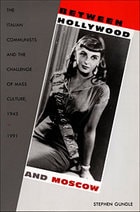
Between Hollywood and Moscow
The Italian Communists and the Challenge of Mass Culture, 1943-1991Stephen Gundle
Duke University Press, 2000
Gundle focuses on the theme of cultural policy, examining how the PCI’s political strategies incorporated cultural policies and activities that were intended to respond to the Americanization of daily life in Italy. In formulating this policy, Gundle contends, the Italian Communists were torn between loyalty to the alternative values generated by the Communist tradition and adaptation to the dominant influences of Italian modernization. This equilibrium eventually faltered because the attractive aspects of Americanization and pop culture proved more influential than the PCI’s intellectual and political traditions.
The first analysis in English of the cultural policies and activities of the PCI, this book will appeal to readers with an interest in modern Italy, the European left, political science, and media studies.

Between Jesus and the Market
The Emotions that Matter in Right-Wing AmericaLinda Kintz
Duke University Press, 1997
With texts from such organizations as the Christian Coalition, the Heritage Foundation, and Concerned Women for America, and writings by Elizabeth Dole, Newt Gingrich, Pat Robertson, and Rush Limbaugh, Kintz traces the usefulness of this activism for the secular claim that conservative political economy is, in fact, simply an expression of the deepest and most admirable elements of human nature itself. The discussion of Limbaugh shows how he draws on the skepticism of contemporary culture to create a sense of absolute truth within his own media performance—its truth guaranteed by the market. Kintz also describes how conservative interpretations of the Holy Scriptures, the U.S. Constitution, and the Declaration of Independence have been used to challenge causes such as feminism, women’s reproductive rights, and gay and lesbian rights. In addition to critiquing the intellectual and political left for underestimating the power of right-wing grassroots organizing, corporate interests, and postmodern media sophistication, Between Jesus and the Market discusses the proliferation of militia groups, Christian entrepreneurship, and the explosive growth and "selling" of the Promise Keepers.
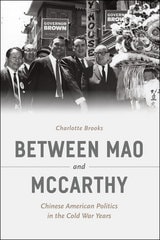
Between Mao and McCarthy
Chinese American Politics in the Cold War YearsCharlotte Brooks
University of Chicago Press, 2014
Between Mao and McCarthy looks at the divergent ways that Chinese Americans in these two cities balanced domestic and international pressures during the tense Cold War era. On both coasts, Chinese Americans sought to gain political power and defend their civil rights, yet only the San Franciscans succeeded. Forging multiracial coalitions and encouraging voting and moderate activism, they avoided the deep divisions and factionalism that consumed their counterparts in New York. Drawing on extensive research in both Chinese- and English-language sources, Charlotte Brooks uncovers the complex, diverse, and surprisingly vibrant politics of an ethnic group trying to find its voice and flex its political muscle in Cold War America.
Between Military Rule and Democracy
Regime Consolidation in Greece, Turkey, and BeyondYaprak Gürsoy
University of Michigan Press, 2017
Based on more than 150 interviews with Greek and Turkish elites, Gürsoy offers a detailed analysis of both countries from the interwar period to recent regime crises. She argues that officers, politicians, and businesspeople prefer democracy, authoritarianism, or short-lived coups depending on the degree of threat they perceive to their interests from each other and the lower classes. The power of elites relative to the opposition, determined in part by the coalitions they establish with each other, affects the success of military interventions and the consolidation of regimes.
With historical and theoretical depth, Between Military Rule and Democracy will interest students of regime change and civil-military relations in Greece, Turkey, Thailand, and Egypt, as well as in countries facing similar challenges to democratization.
Between Past and Future
The Revolution of 1989 and Their AftermathSorin Antohi
Central European University Press, 2000