Results by title
1185 books match the query 'Travel' and 57 start with b

Brazilian Adventure
Peter Fleming
Northwestern University Press, 1999
Nothing indeed. In 1932, Peter Fleming, a literary editor, traded his pen for a pistol and took off as part of the celebrated search for missing English explorer Colonel P.H. Fawcett. With meager supplies, faulty maps, and packs of rival newspapermen on their trail, Fleming and his companions marched, canoed, and hacked through 3,000 miles of wilderness and alligator-ridden rivers in search of the fate of the lost explorer. One of the great adventure stories, Brazilian Adventure is as fresh a story today as it was when originally published in 1933.

Breweries of Wisconsin
Jerry Apps
University of Wisconsin Press, 2005
The story of the Dairy State’s other major industry—beer! From the immigrants who started brewing here during territorial days to the modern industrial giants, this is the history, the folklore, the architecture, the advertising, and the characters that made Wisconsin the nation’s brewing leader. Updated with the latest trends on the Wisconsin brewing scene.
"Apps adeptly combines diligent scholarship with fascinating anecdotes, vividly portraying brewmasters, beer barons, saloonkeepers, and corporate raiders. All this plus color reproductions of popular beer labels and a detailed recipe for home brew."—Wisconsin Magazine of History
"In a highly readable style Apps links together ethnic influence, agriculture, geography, natural resources, meteorology, changing technology, and transportation to explore some of the mystique, romance and folklore associated with beer from antiquity to the present day in Wisconsin."—The Brewers Bulletin
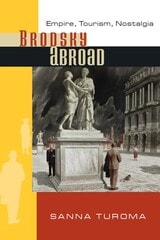
Brodsky Abroad
Empire, Tourism, NostalgiaSanna Turoma
University of Wisconsin Press, 2010
Expelled from the Soviet Union in 1972 and honored with the Nobel Prize fifteen years later, poet Joseph Brodsky in many ways fit the grand tradition of exiled writer. But Brodsky’s years of exile did not render him immobile: though he never returned to his beloved Leningrad, he was free to travel the world and write about it. In Brodsky Abroad, Sanna Turoma discusses Brodsky’s poems and essays about Mexico, Brazil, Turkey, and Venice. Challenging traditional conceptions behind Brodsky’s status as a leading émigré poet and major descendant of Russian and Euro-American modernism, she relocates the analysis of his travel texts in the diverse context of contemporary travel and its critique. Turoma views Brodsky’s travel writing as a response not only to his exile but also to the postmodern and postcolonial landscape that initially shaped the writing of these texts.
In his Latin American encounters, Brodsky exhibits disdain for third-world politics and invokes the elegiac genre to reject Mexico’s postcolonial reality and to ironically embrace the romanticism of an earlier Russian and European imperial age. In an essay on Istanbul he assumes Russia’s ambiguous position between East and West as his own to negotiate a distinct, and controversial, interpretation of Orientalism. And, Venice, the emblematic tourist city, becomes the site for a reinvention of his lyric self as more fluid, hybrid, and cosmopolitan.
Brodsky Abroad reveals the poet’s previously uncharted trajectory from alienated dissident to celebrated man of letters and offers new perspectives on the geopolitical, philosophical, and linguistic premises of his poetic imagination.

Brothers in Arms
A Journey from War to PeaceBy William Broyles, Jr.
University of Texas Press, 1996
Reviews of the Knopf edition:
"A wonderful book—fresh and intelligent. Broyles's eye for Vietnam, then and now, is unerring." —Peter Jennings
"[A] superbly written, often moving story of Broyles' journey back to the killing ground in Vietnam where he once served as a Marine lieutenant. A cool, clear meditation that stings the heart." —Kirkus Reviews
"A first-rate piece of work, infused with an ideal American common decency and common sense." —Kurt Vonnegut
"Exceptional and memorable." —Gay Talese
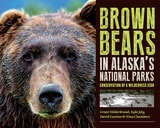
Brown Bears in Alaska's National Parks
Conservation of a Wilderness IconGrant V. Hilderbrand
University of Alaska Press, 2025
Brown bears are powerful symbols of wilderness, thriving in the vast, untamed ecosystems of Alaska’s remote national parks. Brown Bears in Alaska’s National Parks is a unique and thorough exploration of the conservation, ecology, and management of brown bears in these parks, including examinations of bear biology, human-bear interactions, population estimation methods, and the effects of climate change on bear populations. This lavishly illustrated volume offers fresh perspectives about the complex challenges that bears and humans face as they navigate coexistence in the evolving wilderness of Alaska.
Through park-specific chapters, the authors clearly present the current understanding of brown bear ecology across a wide range of ecosystems—from the sparse and frigid Gates of the Arctic, entirely above the Arctic Circle, to the bountiful coast of Katmai, where the marine and terrestrial systems converge. In Glacier Bay, bears roam newly exposed ecosystems shaped by retreating glaciers, while the interior landscapes of Lake Clark and Denali provide a mix of boreal forests, tundra, rivers, and towering mountains.
Brown bears—and the many species that share their habitats—face numerous challenges, with climate change among the greatest threats. The warming climate intensifies other pressures, such as industrial development, both within and around park boundaries. Management actions may also reduce native brown bear populations and, in turn, threaten healthy and naturally functioning ecosystems. The adaptability of brown bears, in concert with thoughtful and science-based management, is essential for the conservation of these majestic creatures and the wilderness landscapes on which they depend.
Written by the wildlife biologists and anthropologists who have dedicated their careers to studying brown (grizzly) bears and their relationship to people, Brown Bears in Alaska’s National Parks is a premier reference for bear enthusiasts, biologists, managers, and academics, as well as advocates for wild things and wild places.

Budapest
City of MusicNicholas Clapton
Haus Publishing, 2017
With rich musical traditions, both classical and folk, and possessing a language like almost no other, Hungary is in the process of abandoning the trappings of its communist past while attempting to preserve its culture from creeping globalization. Clapton delights in the fact that certain old-fashioned attitudes of courtesy, at times stemming from the very structures of the Magyar tongue, are still deeply ingrained in Hungarian society. At the same time, despite its association with world-famous composers such as Bartók, Liszt, and Kodály, music is far from an activity enjoyed only by the elite. Including plenty of tips on food, drink, and sites of interest, Budapest describes the capital in uniquely melodic terms and will delight lovers of travel and music alike.

Burntwater
Scott Thybony
University of Arizona Press, 1997
This book takes the backroads, crossing the Colorado Plateau from the headwaters of the Virgin River to the mouth of the Dirty Devil, from the badlands below Twin Angels to a remote mesa in Bandelier. As the miles go by and the stories unfold, there is a growing sense of mystery, of words not spoken, of messages carried on the wind. Reaching the Shrine of the Stone Lions, the writer recounts a near-fatal descent into the Grand Canyon where he finds a way to reconnect with the beauty of life. There his journey ends with an emotional punch that goes straight to the mind and the heart.