Results by title
3703 books match the query '19th Century' and 152 start with b
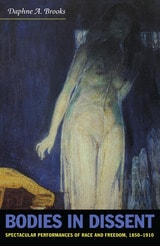
Bodies in Dissent
Spectacular Performances of Race and Freedom, 1850–1910Daphne A. Brooks
Duke University Press, 2006
Brooks pieces together reviews, letters, playbills, fiction, and biography in order to reconstruct not only the contexts of African American performance but also the reception of the stagings of “bodily insurgency” which she examines. Throughout the book, she juxtaposes unlikely texts and entertainers in order to illuminate the complicated transatlantic cultural landscape in which black performers intervened. She places Adah Isaacs Menken, a star of spectacular theatre, next to Sojourner Truth, showing how both used similar strategies of physical gesture to complicate one-dimensional notions of race and gender. She also considers Henry Box Brown’s public re-enactments of his escape from slavery, the Pan-Africanist discourse of Bert Williams’s and George Walker’s musical In Dahomey (1902–04), and the relationship between gender politics, performance, and New Negro activism in the fiction of the novelist and playwright Pauline Hopkins and the postbellum stage work of the cakewalk dancer and choreographer Aida Overton Walker. Highlighting the integral connections between performance and the construction of racial identities, Brooks provides a nuanced understanding of the vitality, complexity, and influence of black performance in the United States and throughout the black Atlantic.
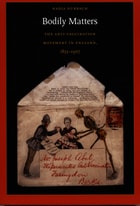
Bodily Matters
The Anti-Vaccination Movement in England, 1853–1907Nadja Durbach
Duke University Press, 2005
Analyzing historical documents on both sides of the vaccination debate, Durbach focuses on the key events and rhetorical strategies of the resistance campaign. She shows that those for and against the vaccine had very different ideas about how human bodies worked and how best to safeguard them from disease. Individuals opposed to mandatory vaccination saw their own and their children’s bodies not as potentially contagious and thus dangerous to society but rather as highly vulnerable to contamination and violation. Bodily Matters challenges the notion that resistance to vaccination can best be understood, and thus easily dismissed, as the ravings of an unscientific “lunatic fringe.” It locates the anti-vaccination movement at the very center of broad public debates in Victorian England over medical developments, the politics of class, the extent of government intervention into the private lives of its citizens, and the values of a liberal society.
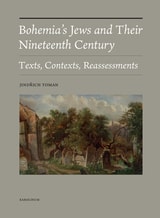
Bohemia's Jews and Their Nineteenth Century
Texts, Contexts, ReassessmentsJindrich Toman
Karolinum Press, 2023
This book on Jewish culture and literature focuses on the “quiet” decades of the nineteenth century, a scarcely written-about period of time in Bohemian Jewish history. Using a myriad of sources, including travelers’ accounts, poems, essays, short stories, guides, and newspaper articles, the volume explores Jewish expression, Jewish-Czech relations, and the changing attitudes toward Jews between the 1820s and 1880s. It offers close readings of writers like Karel Havlíćek Borovský, Ján Kollár, Siegfried Kapper, and Jan Neruda, as well as lesser-known authors and sources. Combining skillful sustained analysis, judicious argumentation, and elegant writing, the book is a truly enriching reading experience.

Bohemians
The Glamorous OutcastsElizabeth Wilson
Rutgers University Press, 2000
Since the early nineteenth century, the bohemian has been the protagonist of the story the West has wanted to hear about its artists-a story of genius, glamour, and doom. The bohemian takes on many guises: the artist dying in poverty like Modigliani or an outrageous entertainer like Josephine Baker. Elizabeth Wilson's enjoyable book is a quest for the many shifting meanings that constitute the bohemian and bohemia.
She tells unforgettable stories of the artists, intellectuals, radicals, and hangers-on who populated the salons, bars, and cafs of Paris, London, New York, Los Angeles, and San Francisco, including Djuna Barnes, Juliette Greco, Allen Ginsberg, William Burroughs, Jack Kerouac, Amiri Baraka, Andy Warhol, and Jackson Pollock. Bohemians also follows the women who contributed to the myth, including the wives and mistresses, the muses, lesbians, and independent artists. Wilson explores the bohemians' eccentric use of dress, the role of sex and erotic love, the bohemian search for excess, and the intransigent politics of many.
As a new millennium begins, Wilson shows how notions of bohemianism remain at the core of heated cultural debates about the role of art and artists in an increasingly commodified and technological world.
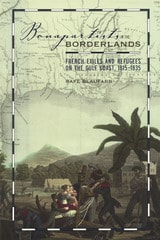
Bonapartists in the Borderlands
French Exiles and Refugees on the Gulf Coast, 1815-1835Rafe Blaufarb
University of Alabama Press, 2005
Bonapartists in the Borderlands debunks the standard account of the Vine and Olive Colony, which stresses the failure of aristocratic, luxury-loving French to tame the wilderness. Rafe Blaufarb recounts how Napoleonic exiles and French refugees from Europe and the Caribbean joined forces with Latin American insurgents, Gulf pirates, and international adventurers to seek their fortune in the Gulf borderlands. The US Congress welcomed the French and granted them a capacious tract of rich Black Belt land near Demopolis, Alabama, on the condition that they would establish a Mediterranean-style Vine and Olive colony.
Blaufard shows that it was not a lack of grit that caused the enterprise to fail. Rather, the Napoleonic officers involved in the colony sold their land shares to speculators to finance an even more perilous adventure—invading the Texas borderlands contested by Spain and the US. Their departure left the Vine and Olive colony in the hands of French refugees from the Haitian slave revolt. They soon abandoned vine cultivation and fused with the neighboring communities of Anglo-American slaveholding cotton planters and speculators.
Rafe Blaufarb examines the underlying motivations and aims that inspired this endeavor and details the nitty-gritty politics, economics, and backroom bargaining that resulted in the settlement. He employs a wide variety of local, national, and international resources: from documents held by the Alabama State Archives, Marengo County court records, and French-language newspapers published in America to material from the War Ministry Archives at Vincennes, the Diplomatic Archives at the Quai d’Orasy, and the French National Archives.

Bonds of Affection
Thoreau on Dogs and CatsWesley T. Mott
University of Massachusetts Press, 2005
Henry David Thoreau is celebrated as one of America's greatest nature writers, yet few readers are aware of the tender, perceptive, and often humorous attention he gave to the animals closest to human domestic life. Bonds of Affection: Thoreau on Dogs and Cats gathers the finest of Thoreau's own writings in which he turns his unflinching powers of observation and his characteristic philosophical wit toward our oldest animal companions.
In these pages, Thoreau emerges not merely as a solitary sojourner in the wild, but as a keen and affectionate chronicler of the relationships between people and the animals who share their lives. Whether tracking the behavior of a neighborhood dog, or meditating on the inscrutable self-possession of a cat, Thoreau reveals the depth of feeling and moral seriousness he believed we owe to all living creatures. His observations are sometimes wry, sometimes lyrical, and always charged with his conviction that an attentive life demands that we see the world through eyes other than our own.
Beautifully complemented by original engravings from celebrated artist Barry Moser and framed by a foreword from bestselling animal author Elizabeth Marshall Thomas, this elegantly produced volume is both a delight for lovers of Thoreau and an essential companion for anyone who has ever shared their home—and their heart—with a dog or a cat.
Published in cooperation with the Thoreau Society, Bonds of Affection introduces readers to a Thoreau who is at once familiar and surprising: playful and profound, grounded in the everyday, and alive to the wonder of the natural and domestic world alike.

Bonds of Enterprise
John Murray Forbes and Western Development in America's Railway AgeJohn Lauritz Larson
University of Iowa Press, 2001
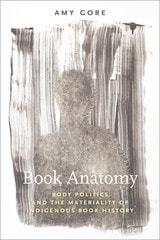
Book Anatomy
Body Politics and the Materiality of Indigenous Book HistoryAmy Gore
University of Massachusetts Press, 2023
Winner of the Beatrice Medicine Award for Scholarship in American Indian Studies
From the marginalia of their readers to the social and cultural means of their production, books bear the imprint of our humanity. Embodying the marks, traces, and scars of colonial survival, Indigenous books are contested spaces. A constellation of nontextual components surrounded Native American–authored publications of the long nineteenth century, shaping how these books were read and understood—including illustrations, typefaces, explanatory prefaces, appendices, copyright statements, author portraits, and more.
Centering Indigenous writers, Book Anatomy explores works from John Rollin Ridge, Sarah Winnemucca Hopkins, Pretty Shield, and D’Arcy McNickle published between 1854 and 1936. In examining critical moments of junction between Indigenous books and a mainstream literary marketplace, Amy Gore argues that the reprints, editions, and paratextual elements of Indigenous books matter: they embody a frontline of colonization in which Native authors battle the public perception and reception of Indigenous books, negotiate representations of Indigenous bodies, and fight for authority and ownership over their literary work.
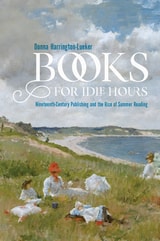
Books for Idle Hours
Nineteenth-Century Publishing and the Rise of Summer ReadingDonna Harrington-Lueker
University of Massachusetts Press, 2019
Drawing on publishing records, book reviews, readers' diaries, and popular novels of the period, Donna Harrington-Lueker explores the beginning of summer reading and the backlash against it. Countering fears about the dangers of leisurely reading—especially for young women—publishers framed summer reading not as a disreputable habit but as a respectable pastime and welcome respite. Books for Idle Hours sheds new light on an ongoing seasonal publishing tradition.
Boomtown Saloons
Archaeology And History In Virginia CityKelly J. Dixon
University of Nevada Press, 2006
The image of Old West saloons as sites of violence and raucous entertainment has been perpetuated by film and legend, but the true story of such establishments is far more complex. In Boomtown Saloons, archaeologist Kelly J. Dixon recounts the excavation of four historic saloon sites in Nevada’s Virginia City, one of the West’s most important boomtowns, and shows how the physical traces of this handful of disparate drinking places offer a new perspective on authentic life in the mining West. During the second half of the nineteenth century, the Comstock Lode’s mineral wealth attracted people from all over the world. At its peak, Virginia City had a cosmopolitan population of over 20,000 people. Like people everywhere, they sought to pass their leisure time in congenial company, often in one or another of the four saloons studied here. Dixon’s account of the role these four establishments played in the social and economic life of Virginia City offers keen insight into the businesses and people who made up the backdrop of a mining boomtown. The saloons in this study were quieter than legend would have us believe; they served relatively distinct groups and offered their customers a place of refuge, solidarity, and social contact with peers in a city where few people had longtime ties or initially any close contacts. Boomtown Saloons also offers an equally vivid portrait of the modern historical archaeologist who combines time-honored digging, reconstruction, and analysis methods with such cutting-edge technology as DNA analysis of saliva traces on a 150-year-old pipestem and chemical analysis of the residue in discarded condiment bottles. The book is illustrated with historical photographs and maps, as well as photographs of artifacts uncovered during the excavations of the four sites. Dixon’s sparkling text and thoughtful interpretation of evidence reveal an unknown aspect of daily life in one of the West’s most storied boomtowns and demonstrate that, contrary to legend, the traditional western saloon served an vital and complex social role in its community. Available in hardcover and paperback.
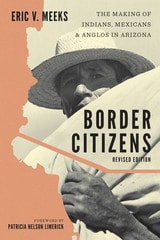
Border Citizens
The Making of Indians, Mexicans, and Anglos in ArizonaBy Eric V. Meeks; foreword by Patricia Nelson Limerick
University of Texas Press, 2007
In Border Citizens, historian Eric V. Meeks explores how the racial classification and identities of the diverse indigenous, mestizo, and Euro-American residents of Arizona’s borderlands evolved as the region was politically and economically incorporated into the United States. First published in 2007, the book examines the complex relationship between racial subordination and resistance over the course of a century. On the one hand, Meeks links the construction of multiple racial categories to the process of nation-state building and capitalist integration. On the other, he explores how the region’s diverse communities altered the blueprint drawn up by government officials and members of the Anglo majority for their assimilation or exclusion while redefining citizenship and national belonging.
The revised edition of this highly praised and influential study features dozens of new images, an introductory essay by historian Patricia Nelson Limerick, and a chapter-length afterword by the author. In his afterword, Meeks details and contextualizes Arizona’s aggressive response to undocumented immigration and ethnic studies in the decade after Border Citizens was first published, demonstrating that the broad-based movement against these measures had ramifications well beyond Arizona. He also revisits the Yaqui and Tohono O’odham nations on both sides of the Sonora-Arizona border, focusing on their efforts to retain, extend, and enrich their connections to one another in the face of increasingly stringent border enforcement.
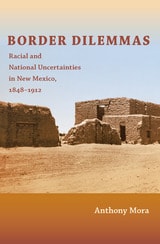
Border Dilemmas
Racial and National Uncertainties in New Mexico, 1848–1912Anthony Mora
Duke University Press, 2011
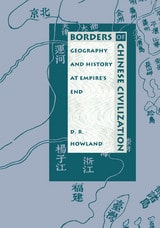
Borders of Chinese Civilization
Geography and History at Empire's EndD. R. Howland
Duke University Press, 1996
With Japan’s decision in the 1870s to modernize and westernize, China’s relationship with Japan underwent a crucial change—one that resulted in its decisive separation from Chinese civilization and, according to Howland, a destabilization of China’s worldview. His examination of the ways in which Chinese perceptions of Japan altered in the 1880s reveals the crucial choice faced by the Chinese of whether to interact with Japan as “kin,” based on geographical proximity and the existence of common cultural threads, or as a “barbarian,” an alien force molded by European influence.
By probing China’s poetic and expository modes of portraying Japan, Borders of Chinese Civilization exposes the changing world of the nineteenth century and China’s comprehension of it. This broadly appealing work will engage scholars in the fields of Asian studies, Chinese literature, history, and geography, as well as those interested in theoretical reflections on travel or modernism.
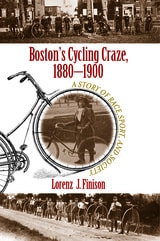
Boston's Cycling Craze, 1880-1900
A Story of Race, Sport, and SocietyLorenz J. Finison
University of Massachusetts Press, 2014
Lorenz J. Finison explores the remarkable rise of Boston cycling through the lives of several participants, including Kittie Knox, a biracial twenty-year-old seamstress who challenged the color line; Mary Sargent Hopkins, a self-proclaimed expert on women's cycling and publisher of The Wheelwoman; and Abbot Bassett, a longtime secretary of the League of American Wheelman and a vocal cycling advocate for forty years. Finison shows how these riders and others interacted on the road and in their cycling clubhouses, often constrained by issues of race, class, religion, and gender. He reveals the challenges facing these riders, whether cycling for recreation or racing, in a time of segregation, increased immigration, and debates about the rights of women.
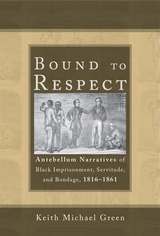
Bound to Respect
Antebellum Narratives of Black Imprisonment, Servitude, and Bondage, 1816–1861Keith Michael Green
University of Alabama Press, 2015
WINNER OF THE ELIZABETH AGEE PRIZE IN AMERICAN LITERATURE
Challenges the commonplace narrative that the African American experience of captivity in the United States is reducible to the legal institution of slavery, a status remedied through emancipation
In Bound to Respect: Antebellum Narratives of Black Imprisonment, Servitude, and Bondage, 1816–1861, Keith Michael Green examines key texts that illuminate forms of black bondage and captivity that existed within and alongside slavery. In doing so, he restores to antebellum African American autobiographical writing the fascinating heterogeneity lost if the historical experiences of African Americans are attributed to slavery alone.
The book’s title is taken from the assertion by US Supreme Court chief justice Roger B. Taney in his 1857 Dred Scott decision that blacks had no rights that whites were “bound to respect.” This allusion highlights Green’s critical assertion that the dehumanizing absurdities to which defenders of slavery resorted to justify slavery only brought into more stark relief the humanity of African Americans.
A gifted storyteller, Green examines four forms of captivity: incarceration, enslavement to Native Americans, child indentured servitude, and maritime capture. By illuminating this dense penumbra of captivity beyond the strict definitions of slavery, he presents a fluid and holistic network of images, vocabulary, narratives, and history. By demonstrating how these additional forms of confinement flourished in the era of slavery, Green shows how they persisted beyond emancipation, in such a way that freed slaves did not in fact partake of “freedom” as white Americans understood it. This gap in understanding continues to bedevil contemporary American society, and Green deftly draws persuasive connections between past and present.
A vital and convincing offering to readers of literary criticism, African American studies, and American history, Green’s Bound to Respect brings fresh and nuanced insights to this fundamental chapter in the American story.
Bourbon Democracy in Alabama, 1874–1890
Allen Johnston Going
University of Alabama Press, 1951
A definitive study of the political forces that reshaped Alabama after Reconstruction.
In Bourbon Democracy in Alabama, 1874-1890, historian Johnston Allen Going offers a seminal examination of the political transformation of Alabama during the years following Reconstruction. Focusing on the rise of Bourbon Democratic leadership, Going explores how a new political elite consolidated power, reshaped state institutions, and directed Alabama's economic and social development during a pivotal period in Southern history.
Drawing on extensive historical research, the book traces the efforts of Democratic leaders to restore political control after Reconstruction while promoting policies associated with the emerging New South. Going analyzes the complex interplay of political ideology, economic modernization, class interests, and racial dynamics that influenced governance and public life between 1874 and 1890. Through detailed accounts of elections, legislative initiatives, and political struggles, the study reveals how Alabama's leaders sought to balance progress, stability, and authority in a rapidly changing society.
A landmark contribution to both Alabama history and the broader study of the post-Reconstruction South, Bourbon Democracy in Alabama provides critical insight into the forces that shaped regional politics and helped define the course of Southern development in the late nineteenth century. Essential for understanding the origins of modern Alabama politics, this book is a valuable resource for historians, students, political scientists, genealogists, and anyone interested in Southern history and government.
Bowers Mansion
The Legacy of a Comstock FamilyTamera J. Buzick
University of Nevada Press, 2026
Boxcar Politics
The Hobo in U.S. Culture and Literature, 1869-1956John Lennon
University of Massachusetts Press, 2014
John Lennon maps the rise and demise of the political hobo from the nineteenth-century introduction of the transcontinental railroad to the Federal Aid Highway Act of 1956. Intertwining literary, historical, and theoretical representations of the hobo, he explores how riders and writers imagined alternative ways that working-class people could use mobility to create powerful dissenting voices outside of fixed hierarchal political organizations. Placing portrayals of hobos in the works of Jack London, Jim Tully, John Dos Passos, and Jack Kerouac alongside the lived reality of people hopping trains (including hobos of the IWW, the Scottsboro Boys, and those found in numerous long-forgotten memoirs), Lennon investigates how these marginalized individuals exerted collective political voices through subcultural practices.
Breadwinners
Working Women and Economic Independence, 1865-1920Lara Vapnek
University of Illinois Press, 2009
Analyzing disjunctions between middle-class and working-class women's ideas of independence, Vapnek highlights the agendas for change advanced by leaders such as Jennie Collins, Leonora O'Reilly, and Helen Campbell and organizations such as the National Consumers' League, the Women's Educational and Industrial Union, and the Women's Trade Union League. Locating households as important sites of class conflict, Breadwinners recovers the class and gender politics behind the marginalization of domestic workers from labor reform while documenting the ways in which working-class women raised their voices on their own behalf.
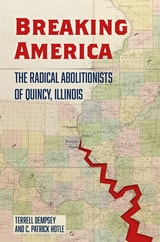
Breaking America
The Radical Abolitionists of Quincy, IllinoisTerrell Dempsey
University of Missouri Press, 2026
In this engaging new work, Terrell Dempsey and Patrick Hotle draw from newly discovered and underutilized primary sources to craft a detailed narrative history of the rise of a group of radical abolitionists in Quincy, Illinois, and the outsized, if mostly overlooked, influence they had on the dissolution of the Union.
The story begins with the 1830 arrival in Marion County, Missouri, of Dr. David Nelson, a Presbyterian minister and supporter of the American Colonization Society. After hearing a speech by Theodore B. Weld, Nelson was converted to the abolitionist cause and went on to recruit Elijah Lovejoy into the region’s nascent anti-slavery movement. Nelson’s activities resulted in the creation of an active anti-abolitionist organization in Northeast Missouri that ended up running him out of the state and across the river to Quincy, Illinois, at the same time Lovejoy sought shelter in Alton, Illinois.
In Quincy, Nelson and a group of like-minded moderate anti-slavery activists opened a manual labor school called the Mission Institute. Following the murder of Lovejoy by a pro-slavery mob, a small band of abolitionists at the Mission Institute became radicalized and decided to aid enslaved people in their quest for freedom. After three of these abolitionists were captured in Missouri and sentenced to twelve years in prison, others at the Mission Institute published a call for the Illinois Anti-Slavery Society to organize an underground railroad in Illinois. The Society officially committed to assisting enslaved people to escape slavery in May of 1842, which triggered a hostile reaction from enslavers in Missouri who went on to organize patrols, seek stricter state laws, and attempt to sabotage the underground railroad in neighboring Illinois.
In Breaking America, Dempsey and Hotle demonstrate the impact of the Quincy abolitionists on the later Dred Scott cases. The authors trace a sequence of revivals, public meetings, daring escapes, over-reactions, judicial decisions, and violence, providing a roadmap for how Missouri judicial opinion changed from “once free, always free” to “once a slave, always a slave” under Missouri Law. Breaking America is an important new addition to the history of abolitionism, the Dred Scott decision, and the eventual dissolution of the Union.
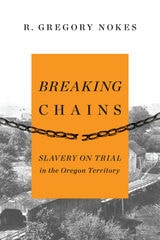
Breaking Chains
Slavery on Trial in the Oregon TerritoryR. Gregory Nokes
Oregon State University Press, 2013
In Breaking Chains, R. Gregory Nokes tells the story of the only slavery case adjudicated in Oregon’s pre-Civil War courts—Holmes v. Ford. Through the lens of this landmark case, Nokes explores the historical context of racism in Oregon and the West, reminding readers that there actually were slaves in Oregon, though relatively few in number.
Drawing on the court record, Nokes offers an intimate account of the relationship between a slave and his master from the slave’s point of view. He also explores the experiences of other slaves in early Oregon, examining attitudes toward race and revealing contradictions in the state’s history. Oregon was the only free state admitted to the union with a voter-approved constitutional clause banning African Americans and, despite the prohibition of slavery in the state, many in Oregon tolerated it and supported politicians who advocated for slavery, including Oregon’s first territorial governor.
Breaking Chains sheds light on a somber part of Oregon’s history, bringing the story of slavery in Oregon to a broader audience. The book will appeal to readers interested in Pacific Northwest history and in the history of slavery in the United States.
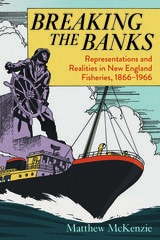
Breaking the Banks
Representations and Realities in New England Fisheries, 1866-1966Matthew McKenzie
University of Massachusetts Press, 2018
Books, films, and the media have long portrayed the Yankee fisherman's hard-scrabble existence, as he faced brutal weather on the open seas and unnecessary governmental restrictions. As McKenzie contends, this simplistic view has long betrayed commercial fisheries' sophisticated legislative campaigns in Washington, DC, as they sought federal subsidies and relief and, eventually, fewer constricting regulations. This clash between fisheries' representation and their reality still grips fishing communities today as they struggle to navigate age-old trends of fleet consolidation, stock decline, and intense competition.

Breaking the Land
The Transformation of Cotton, Tobacco, and Rice Cultures since 1880Pete Daniel
University of Illinois Press, 1985
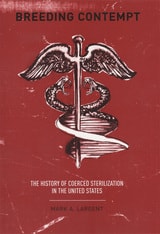
Breeding Contempt
The History of Coerced Sterilization in the United StatesMark A. Largent
Rutgers University Press, 2007
Most closely associated with the Nazis and World War II atrocities, eugenics is sometimes described as a government-orchestrated breeding program, other times as a pseudo-science, and often as the first step leading to genocide. Less frequently it is recognized as a movement having links to theUnited States. But eugenics does have a history in this country, and Mark A. Largent tells that story by exploring one of its most disturbing aspects, the compulsory sterilization of more than 64,000 Americans.
The book begins in the mid-nineteenth century, when American medical doctors began advocating the sterilization of citizens they deemed degenerate. By the turn of the twentieth century, physicians, biologists, and social scientists championed the cause, and lawmakers in two-thirds of the United States enacted laws that required the sterilization of various criminals, mental health patients, epileptics, and syphilitics. The movement lasted well into the latter half of the century, and Largent shows how even today the sentiments that motivated coerced sterilization persist as certain public figures advocate compulsory birth control—such as progesterone shots for male criminals or female welfare recipients—based on the same assumptions and motivations that had brought about thousands of coerced sterilizations decades ago.
Bridging Three Worlds
Hungarian-Jewish Americans, 1848-1914Robert Perlman
University of Massachusetts Press, 1991
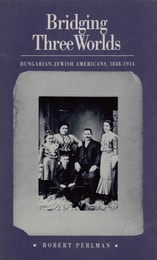
Between 1848 and 1914, approximately 100,000 Jews emigrated from Hungary to the United States. They came in two waves. The first group, catalyzed by the 1848 revolutions against the Austrian monarchy, consisted mainly of political dissidents and well educated, cosmopolitan, middle-class Jews seeking greater personal, religious, and political freedoms in the New World. The second and much larger group, which began to arrive around 1880, consisted primarily of unskilled laborers and lower-middle-class artisans and tradespeople, beckoned to America by the promise of vast economic opportunity.
In the abundant literature on Jewish immigration to the United States, virtually nothing has been written specifically about the Hungarian-Jewish experience, which differed in many respects from that of other Jewish national groups. Bridging Three Worlds offers such a chronicle, relating the immigrants’ history from their political and cultural roots in the Old Country to their acculturation as citizens in a newly adopted land. Based on primary archival materials, oral histories, and secondary sources, the book is also informed by the author’s own experiences as an American of Hungarian-Jewish origins.
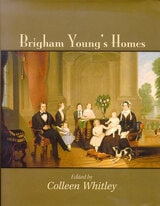
Brigham Young's Homes
Colleen K. Whitley
Utah State University Press, 2003
Brigham Young, Colonizer of the American West
Diaries and Office Journals, 1832–1871George D. Smith
Signature Books, 2019
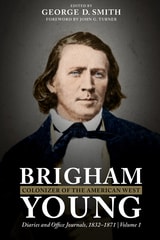
Thus, by 1877, some 400 Mormon settlements spanned the western frontier from Salt Lake City to outposts in Idaho, Nevada, Arizona, Wyoming, and California. As prophet of the LDS Church and governor of the proposed State of Deseret, Young led several campaigns for Utah statehood while defending polygamy and local sovereignty. His skillful and authoritarian leadership led historian Bernard de Voto to classify him as an “American genius,” responsible for turning Joseph Smith’s visions “into the seed of life.”
Young’s diaries and journals reveal a man dedicated to his church, defensive of his spiritual and temporal claims to authority, and determined to create a modern Zion within the Utah desert. Editor George D. Smith’s careful organization and annotation of Young’s personal writings provide insights into the mind of Mormonism’s dynamic church leader and frontier statesman.
Brigham Young, Colonizer of the American West
Diaries and Office Journals, 1832–1871: Volume 2George D. Smith
Signature Books, 2021
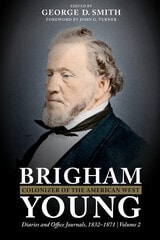
Thus, by 1877, some 400 Mormon settlements spanned the western frontier from Salt Lake City to outposts in Idaho, Nevada, Arizona, Wyoming, and California. As prophet of the LDS Church and governor of the proposed State of Deseret, Young led several campaigns for Utah statehood while defending polygamy and local sovereignty. His skillful and authoritarian leadership led historian Bernard de Voto to classify him as an “American genius,” responsible for turning Joseph Smith’s visions “into the seed of life.”
Young’s diaries and journals reveal a man dedicated to his church, defensive of his spiritual and temporal claims to authority, and determined to create a modern Zion within the Utah desert. Editor George D. Smith’s careful organization and annotation of Young’s personal writings provide insights into the mind of Mormonism’s dynamic church leader and frontier statesman.
Brigham Young, the Quorum of the Twelve, and the Latter-Day Saint Investigation of the Mountain Meadows Massacre
Arrington Lecture No. TwelveThomas G. Alexander
Utah State University Press, 2007
In this 12th volume of the Arrington Lecture Series, Thomas Alexander (Lemuel Redd Professor of Western American History, Emeritus, at Brigham Young University), asserts that Brigham Young and the LDS Church’s governing Quorum of Twelve made timely and diligent efforts to investigate the massacre and encouraged legal proceedings but were hindered by federal territorial officials and lied to by massacre participant John D. Lee, preventing Young from learning the full truth for many years.
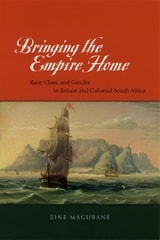
Bringing the Empire Home
Race, Class, and Gender in Britain and Colonial South AfricaZine Magubane
University of Chicago Press, 2003
Bringing the Empire Home tracks colonial images of blackness from South Africa to England and back again to answer questions such as these. Before the mid-1800s, black Africans were considered savage to the extent that their plight mirrored England's internal Others—women, the poor, and the Irish. By the 1900s, England's minority groups were being defined in relation to stereotypes of black South Africans. These stereotypes, in turn, were used to justify both new capitalist class and gender hierarchies in England and the subhuman treatment of blacks in South Africa. Bearing this in mind, Zine Magubane considers how marginalized groups in both countries responded to these racialized representations.
Revealing the often overlooked links among ideologies of race, class, and gender, Bringing the Empire Home demonstrates how much black Africans taught the English about what it meant to be white, poor, or female.
British Romanticism and Prison Reform
Jonas Cope
Bucknell University Press, 2025
In eighteenth-century Britain, criminals were routinely whipped, branded, hanged, or transported to America. Only in the last quarter of the century—with the War of American Independence and legal and sociopolitical challenges to capital punishment—did the criminal justice system change, resulting in the reformed prison, or penitentiary, meant to educate, rehabilitate, and spiritualize even hardened felons. This volume is the first to explore the relationship between historical penal reform and Romantic-era literary texts by luminaries such as Godwin, Keats, Byron, and Austen. The works examined here treat incarceration as ambiguous: prison walls oppress and reinforce the arbitrary power of legal structures but can also heighten meditation, intensify the imagination, and awaken the conscience. Jonas Cope skillfully traces the important ideological work these texts attempt: to reconcile a culture devoted to freedom with the birth of the modern prison system that presents punishment as a form of rehabilitation.
Published by Bucknell University Press. Distributed worldwide by Rutgers University Press.
Brotherly Love
Murder and the Politics of Prejudice in Nineteenth-Century Rhode IslandCharles Hoffmann
University of Massachusetts Press, 1993
Brotherly Love is a graphic reconstruction of the crime, its social and economic background, and the subsequent trials. The story reveals the antagonism between native-born Yankees, who commanded great power, and the growing number of Irish Catholic immigrants, most of whom worked in the textile mills. Indeed, the economic, political, and religious dimensions of the conflict are all evident in the trials.
The authors argue persuasively that the Gordons were victims of bigotry and circumstantial evidence, serving as convenient scapegoats to appease a community outraged over the murder of its wealthiest citizen. In telling the story of this notorious case, Brotherly Love reveals the politics of prejudice in nineteenth-century New England as played out in community and courtroom.
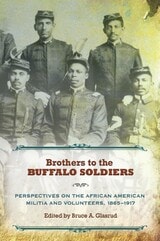
Brothers to the Buffalo Soldiers
Perspectives on the African American Militia and Volunteers, 1865-1917Bruce A. Glasrud
University of Missouri Press, 2011
Many black Americans continued to serve in times of military need. Nearly 180,000 African Americans served in units of the U.S. Colored Troops during the Civil War, and others, from states such as Massachusetts, Rhode Island, Missouri, and Kansas, participated in state militias organized to protect local populations from threats of Confederate invasion. As such, the Civil War was a turning point in the acceptance of black soldiers for national defense. By 1900, twenty-two states and the District of Columbia had accepted black men into some form of military service, usually as state militiamen—brothers to the “buffalo soldiers” of the regular army regiments, but American military men regardless.
Little has been published about them, but Brothers to the Buffalo Soldiers: Perspectives on the African American Militia and Volunteers, 1865–1919, offers insights into the varied experiences of black militia units in the post–Civil War period. The book includes eleven articles that focus either on “Black Participation in the Militia” or “Black Volunteer Units in the War with Spain.” The articles, collected and introduced by author and scholar Bruce A. Glasrud, provide an overview of the history of early black citizen-soldiers and offer criticism from prominent academics interested in that experience.
Brothers to the Buffalo Soldiers discusses a previously little-known aspect of the black military experience in U.S. history, while deliberating on the discrimination these men faced both within and outside the military. Chosen on the bases of scholarship, balance, and readability, these articles provide a rare composite picture of the black military man’s life during this period. Brothers to the Buffalo Soldiers offers both a valuable introductory text for students of military studies and a solid source of material for African American historians.
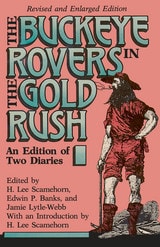
Buckeye Rovers in the Gold Rush
An Edition of Two DiariesH. Lee Scamehorn
Ohio University Press, 1989
When “California Fever” raced through southeastern Ohio in the spring of 1849, a number of residents of Athens County organized a cooperative venture for traveling overland to the mines. Known as the “Buckeye Rovers,” the company began its trip westward in early April. The Buckeye Rovers, along with thousands who traveled the overland route to California, endured numerous hardships and the seemingly constant threat of attacks from hostile Indians. On reaching their destination, the Ohioans discovered that rich deposits of gold were extremely rare, and that except for a few lucky fortune–seekers, mining required hard physical labor and yielded small rewards. They persisted nonetheless and most of the company returned to Athens in late 1851 or early 1852 with modest fortunes.
The arduous experiences of the overland trek were recorded by two Buckeye Rover diarists. The more compete account was compiled by John Banks. He wrote effusively while on the trail and throughout his stay of more than two years in the gold regions. J. Elza Armstrong, by contrast, was brief, even laconic, and his journal ended upon reaching California. The contrast between the two brings into focus the divergent personalities who were drawn to California by the lure of gold.
A nine–month segment of Bank’s diary, from February to November, 1851, had been missing at the time the story of the Buckeye Rovers was first published in 1965. This revised and enlarged edition contains the complete diaries. They offer valuable record of the Buckeyes’ adventures from the time they left home until the time they departed California for the return trip to Ohio.
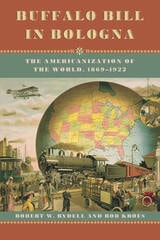
Buffalo Bill in Bologna
The Americanization of the World, 1869-1922Robert W. Rydell and Rob Kroes
University of Chicago Press, 2005
Buffalo Bill in Bologna reveals that the process of globalizing American mass culture began as early as the mid-nineteenth century. In fact, by the end of World War I, the United States already boasted an advanced network of culture industries that served to promote American values. Rydell and Kroes narrate how the circuses, amusement parks, vaudeville, mail-order catalogs, dime novels, and movies developed after the Civil War—tools central to hastening the reconstruction of the country—actually doubled as agents of American cultural diplomacy abroad. As symbols of America's version of the "good life," cultural products became a primary means for people around the world, especially in Europe, to reimagine both America and themselves in the context of America's growing global sphere of influence. Paying special attention to the role of the world's fairs, the exporting of Buffalo Bill's Wild West show to Europe, the release of The Birth of a Nation, and Woodrow Wilson's creation of the Committee on Public Information, Rydell and Kroes offer an absorbing tour through America's cultural expansion at the turn of the century. Buffalo Bill in Bologna is thus a tour de force that recasts what has been popularly understood about this period of American and global history.
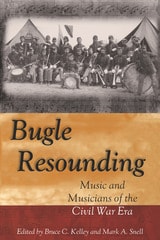
Bugle Resounding
Music and Musicians of the Civil War EraEdited by Bruce C. Kelley & Mark A. Snell
University of Missouri Press, 2004
Although numerous academic resources examine the music and musicians of the Civil War era, the research is spread across a variety of disciplines and is found in a wide array of scholarly journals, books, and papers. It is difficult to assimilate this diverse body of research, and few sources are dedicated solely to a rigorous and comprehensive investigation of the music and the musicians of this era. This anthology, which grew out of the first two National Conferences on Music of the Civil War Era, is an initial attempt to address that need.
Those conferences established the first academic setting solely devoted to exploring the effects of the Civil War on music and musicians. Bridging musicology and history, these essays represent the forefront of scholarship in music of the Civil War era. Each one makes a significant contribution to research in the music of this era and will ultimately encourage more interdisciplinary research on a subject that has relevance both for its own time and for ours. The result is a readable, understandable volume on one of the few understudied—yet fascinating—aspects of the Civil War era.
Building Antebellum New Orleans
Free People of Color and Their InfluenceBy Tara A. Dudley
University of Texas Press, 2021
2024 Spiro Kostof Book Award, Society of Architectural Historians
2022 PROSE Award in Architecture and Urban Planning
2022 Summerlee Book Prize in Nonfiction, Center for History and Culture of Southeast Texas and the Upper Gulf Coast
2022 Best Book Prize, Southeast Chapter of the Society of Architectural Historians
2022 On the Brinck Book Award, University of New Mexico School of Architecture + Planning
A significant and deeply researched examination of the free nineteenth-century Black developers who transformed the cultural and architectural legacy of New Orleans.
The Creole architecture of New Orleans is one of the city’s most-recognized features, but studies of it largely have focused on architectural typology. In Building Antebellum New Orleans, Tara A. Dudley examines the architectural activities and influence of gens de couleur libres—free people of color—in a city where the mixed-race descendants of whites and other free Blacks could own property.
Between 1820 and 1850 New Orleans became an urban metropolis and industrialized shipping center with a growing population. Amidst dramatic economic and cultural change in the mid-antebellum period, the gens de couleur libres thrived as property owners, developers, building artisans, and patrons. Dudley writes an intimate microhistory of two prominent families of Black developers, the Dollioles and Souliés, to explore how gens de couleur libres used ownership, engagement, and entrepreneurship to construct individual and group identity and stability. With deep archival research, Dudley re-creates in fine detail the material culture, business and social history, and politics of the built environment for free people of color and adds new, revelatory information to the canon on New Orleans architecture.
Building Character in the American Boy
The Boy Scouts, YMCA, and Their Forerunners, 1870-1920David Macleod
University of Wisconsin Press, 2004
Back in print; First paperback edition.
Building Domestic Liberty
Charlotte Perkins Gilman's Architectural FeminismPolly Wynn Allen
University of Massachusetts Press, 1988
Building Domestic Liberty offers a critical and admiring analysis of feminist philosopher Charlotte Perkins Gilman (1860–1935). Polly Allen examines Gilman's approach to architecture, landscape, and neighborhood design and discusses Gilman's case against prevailing household design and looks at her philosophy of world improvement.
Building Nineteenth-Century Latin America
Re-Rooted Cultures, Identities, and NationsWilliam Garrett Acree
Vanderbilt University Press, 2009
Building Romanticism
Literature and Architecture in Nineteenth-Century BritainNicole Reynolds
University of Michigan Press, 2010
Building Victorian Boston
The Architecture of Gridley J.F. BryantRoger G. Reed
University of Massachusetts Press, 2007
In Building Victorian Boston, Roger Reed focuses on representative projects by Bryant, presenting them in a chronological narrative that both illuminates the trajectory of his career and creates a portrait of the profession of architecture during a defining period of New England history. Bryant designed more major buildings in Boston from 1840 to 1880 than any other architect. He also undertook commissions throughout New
England, especially in towns linked to Boston by newly constructed railroad lines. In many ways, his practice presaged aspects of modern architectural firms. His ability to work with a variety of designers, his expertise in construction management, and his exceptional talent for self-promotion all contributed to his success. Although by the time of his death his work was no longer fashionable, newspaper accounts noted the passing of the "Famed Bostonian" and "Great Builder" whose career had had such a dramatic impact on the face of the city.
For this volume, Reed has tracked down hundreds of Bryant's drawings as well as specifications, letters, newspaper articles, published renderings, and historical photographs. These materials are amply represented in this book, the definitive study of a quintessential Victorian architect.
Building on a Borrowed Past
Place and Identity in Pipestone, MinnesotaSally J. Southwick
Ohio University Press, 2005
Why is there a national monument near a small town on the Minnesota prairie? Why do the town’s residents dress as Indians each summer and perform a historical pageant based on a Victorian-era poem? To answer such questions, Building on a Borrowed Past: Place and Identity in Pipestone, Minnesota shows what happens when one culture absorbs the heritage of another for civic advantage.
Founded in 1874, Pipestone was named for the quarries where regional tribes excavated soft stone for making pipes. George Catlin and Henry Wadsworth Longfellow described the place and its tribal history. Promotion by white residents of the quarries as central to America’s Indian heritage helped Pipestone obtain a federal Indian boarding school in the 1890s and a national monument in the 1930s. The annual “Song of Hiawatha” pageant attracted tourists after World War II. Sally J. Southwick’s prizewinning study demonstrates how average, small–town citizens contributed to the generic image of “the Indian” in American culture.
Examining oral histories, memoirs, newspapers, federal documents, civic group records, and promotional literature, Southwick focuses on the role of middle–class individuals in establishing a historical, place–based identity. Building on a Borrowed Past reveals how identities are formed through adaptation of cultural, spiritual, racial, and historical symbols.
Building the Metropolis
Architecture, Construction, and Labor in New York City, 1880–1935Alexander Wood
University of Chicago Press, 2025
Between the 1880s and the 1930s, New York City experienced explosive growth as nearly a million buildings, dozens of bridges and tunnels, hundreds of miles of subway lines, and thousands of miles of streets were erected to meet the needs of an ever-swelling population. This landscape—jagged with skyscrapers, rattling with the sound of mass transit, alive with people—made the city world-famous.
Building the Metropolis offers a revelatory look at this era of urban development by asking, “Who built New York, and how?” Focusing on the work of architects, builders, and construction workers, Alexander Wood chronicles the physical process of the city’s rapid expansion. New York’s towering buildings and busy thoroughfares aren’t just stylish or structural marvels, Wood shows, but the direct result of the many colorful personalities who worked in one of the city’s largest industries. This development boom drew on the resources of the whole community and required money, political will, creative vision, entrepreneurial drive, skilled workmanship, and hard physical labor. Wood shows this to be an even larger story as well. As cities became nodes in a regional, national, and global economy, the business of construction became an important motor of economic, political, and social development. While they held drastically different views on the course of urban growth, machine politicians, reformers, and radicals alike were all committed to city building on an epic scale.
Drawing on resources that include city archives and the records of architecture firms, construction companies, and labor unions, Building the Metropolis tells the story of New York in a way that’s epic, lively, and utterly original.
Bullets and Bacilli
The Spanish-American War and Military MedicineCirillo, Vincent J.
Rutgers University Press, 2003
Bullets and Fire
Lynching and Authority in Arkansas, 1840-1950Guy Lancaster
University of Arkansas Press, 2017
Among the topics discussed are the lynching of slaves, the Arkansas Council of the Association of Southern Women for the Prevention of Lynching, the 1927 lynching of John Carter in Little Rock, and the state’s long opposition to a federal anti-lynching law.
Throughout, the work reveals how the phenomenon of lynching—as the means by which a system of white supremacy reified itself, with its perpetrators rarely punished and its defenders never condemned—served to construct authority in Arkansas. Bullets and Fire will add depth to the growing body of literature on American lynching and integrate a deeper understanding of this violence into Arkansas history.
Business Of Jews In Louisiana, 1840–1875
Elliot Ashkenazi
University of Alabama Press, 1988
Goes beyond institutional history to concentrate on commercial and social matters
The author’s findings imply that Jewish immigrants to the South in the first half of the 19th century came from particular locales with similar social, economic, and religious backgrounds, and they chose to live in the South because of those traditions. The experience of Jews with commercial capitalism, rather than landowning, in agricultural societies, gave the Jews of Louisiana a comparable niche in America, and they participated in the commercial aspects of a regional economy based on agricultural production. Commercial and family connections with other Jewish groups facilitated their development into a settled community. In growth and decline, Jewish communities in Louisiana and elsewhere became permanent features of the landscape and influenced, and were influenced, by the areas in which they lived.
Buying Time
Debt and Mobility in the Western Indian OceanThomas F. McDow
Ohio University Press, 2018
In Buying Time, Thomas F. McDow synthesizes Indian Ocean, Middle Eastern, and East African studies as well as economic and social history to explain how, in the nineteenth century, credit, mobility, and kinship knit together a vast interconnected Indian Ocean region. That vibrant and enormously influential swath extended from the desert fringes of Arabia to Zanzibar and the Swahili coast and on to the Congo River watershed.
In the half century before European colonization, Africans and Arabs from coasts and hinterlands used newfound sources of credit to seek out opportunities, establish new outposts in distant places, and maintain families in a rapidly changing economy. They used temporizing strategies to escape drought in Oman, join ivory caravans in the African interior, and build new settlements.
The key to McDow’s analysis is a previously unstudied trove of Arabic business deeds that show complex variations on the financial transactions that underwrote the trade economy across the region. The documents list names, genealogies, statuses, and clan names of a wide variety of people—Africans, Indians, and Arabs; men and women; free and slave—who bought, sold, and mortgaged property. Through unprecedented use of these sources, McDow moves the historical analysis of the Indian Ocean beyond connected port cities to reveal the roles of previously invisible people.
By Those Who Knew Them
French Modernists Left, Right, and CenterHarvey Hill
Catholic University of America Press, 2008
By Touch Alone
Blindness and Reading in Nineteenth-Century CultureVanessa Warne
University of Michigan Press, 2025
While By Touch Alone features the writing and ideas of an understudied community of nineteenth-century blind authors, innovators, and activists, it also engages the work of sighted authors such as George Eliot and Rudyard Kipling to explore the culture-wide effects of reading by touch. The emergence of a new category of readers who did not rely on sight to read prompted sighted people to reimagine blindness and adopt more progressive attitudes toward blind people. In our own era, one characterized by the increasing digitization of our reading lives, Vanessa Warne’s exploration positions scholars and blind readers to navigate present-day developments and shape the future of their reading lives. A carefully contextualized study of how reading by touch shaped Victorian culture, By Touch Alone adds new chapters to the history of disability and reading.