Results by title
8642 books match the query '20th century' and 437 start with b
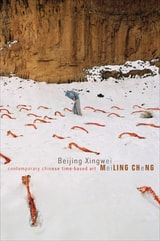
Beijing Xingwei
Contemporary Chinese Time-based ArtMeiling Cheng
Seagull Books, 2013
From cannibalism to light-calligraphy, from self-harming to animal sacrifice, from meat entwined with sex toys to a commodity-embedded ice wall, the idiosyncratic output of Chinese time-based art over the past twenty-five years has invigorated contemporary global art movements and conversation. In Beijing Xingwei, Meiling Cheng engages with such artworks created to mark China's rapid social, economical, cultural, intellectual, and environmental transformations in its post-Deng era.
Being Chinese, Becoming Chinese American
Shehong Chen
University of Illinois Press, 2002
The 1911 revolution in China sparked debates that politicized and divided Chinese communities in the United States. People in these communities affirmed traditional Chinese values and expressed their visions of a modern China, while nationalist feelings emboldened them to stand up for their rights as an integral part of American society. When Japan threatened the China's young republic, the Chinese response in the United States revealed the limits of Chinese nationalism and the emergence of a Chinese American identity.
Shehong Chen investigates how Chinese immigrants to the United States transformed themselves into Chinese Americans during the crucial period between 1911 and 1927. Chen focuses on four essential elements of a distinct Chinese American identity: support for republicanism over the restoration of monarchy; a wish to preserve Confucianism and traditional Chinese culture; support for Christianity, despite a strong anti-Christian movement in China; and opposition to the Nationalist party's alliance with the Soviet Union and cooperation with the Chinese Communist Party.
Sensitive and enlightening, Being Chinese, Becoming Chinese American documents how Chinese immigrants survived exclusion and discrimination, envisioned and maintained Chineseness, and adapted to American society.

Being German Canadian
History, Memory, GenerationsAlexander Freund
University of Manitoba Press, 2021
Being Jewish in the New Germany
Being Jewish in the New Germany, First Paperback EditionJeffrey M. Peck
Rutgers University Press, 2007
Germany today boasts the fastest growing population of Jews in Europe. The streets of Berlin abound with signs of a revival of Jewish culture, ranging from bagel shops to the sight of worshipers leaving synagogue on Saturday. With the new energy infused by Jewish immigration from Russia and changes in immigration and naturalization laws in general, Jeffrey M. Peck argues that we must now begin considering how Jews live in Germany rather than merely asking why they would choose to do so.
In Being Jewish in the New Germany, Peck explores the diversity of contemporary Jewish life and the complex struggles within the community-and among Germans in general-over history, responsibility, culture, and identity. He provides a glimpse of an emerging, if conflicted, multicultural country and examines how the development of the European Community, globalization, and the post-9/11 political climate play out in this context. With sensitive, yet critical, insight into the nation's political and social life, chapters explore issues such as the shifting ethnic/national makeup of the population, changes in political leadership, and the renaissance of Jewish art and literature. Peck also explores new forms of anti-Semitism and relations between Jews and Turks-the country's other prominent minority population.
In this surprising description of the rebirth of a community, Peck argues that there is, indeed, a vibrant and significant future for Jews in Germany. Written in clear and compelling language, this book will be of interest to the general public and scholars alike.
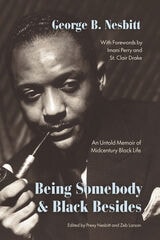
Being Somebody and Black Besides
An Untold Memoir of Midcentury Black LifeGeorge B. Nesbitt
University of Chicago Press, 2021
The late Chicagoan George Nesbitt could perhaps best be described as an ordinary man with an extraordinary gift for storytelling. In his newly uncovered memoir—written fifty years ago, yet never published—he chronicles in vivid and captivating detail the story of how his upwardly mobile Midwestern Black family lived through the tumultuous twentieth century.
Spanning three generations, Nesbitt’s tale starts in 1906 with the Great Migration and ends with the Freedom Struggle in the 1960s. He describes his parents’ journey out of the South, his struggle against racist military authorities in World War II, the promise and peril of Cold War America, the educational and professional accomplishments he strove for and achieved, the lost faith in integration, and, despite every hardship, the unwavering commitment by three generations of Black Americans to fight for a better world. Through all of it—with his sharp insights, nuance, and often humor—we see a family striving to lift themselves up in a country that is working to hold them down.
Nesbitt’s memoir includes two insightful forewords: one by John Gibbs St. Clair Drake (1911–90), a pioneer in the study of African American life, the other a contemporary rumination by noted Black studies scholar Imani Perry. A rare first-person, long-form narrative about Black life in the twentieth century, Being Somebody and Black Besides is a remarkable literary-historical time capsule that will delight modern readers.

Being a Minor Writer
Gail Gilliland
University of Iowa Press, 1994
There are countless theoretical arguments that attempt to define “major” and “minor” literatures, but this lively and deeply felt work is one of the first to speak from the authority of the experience of being minor—of being the “minor writer” who, according to the definition of “author” given by Michel Foucault, does not possess a “name.” This book, then, is an impassioned critical and ethical defense of the act of writing for purposes other than critical acclaim.
In the tradition of Horace's
Ars Poetica,Gilliland uses comments by a broad range of writers, as well as her own experience as a minor woman writer, to consider the basic Horatian questions of purpose, choice of subject matter and genre, diction, characterization, setting, and style. She points out that in the absence of major recognition, the minor writer is continually confronted by the existential question, why do I (still) write? This book offers not only a challenge to existing critical theories but an argument in favor of being—for
stillbeing, for continuing
anywaywith one's life and art
Beleaguered Poets and Leftist Critics
Stevens, Cummings, Frost, and Williams in the 1930sMilton A. Cohen
University of Alabama Press, 2011
A critical examination of modernist poetry and the demands of leftist literary theory.
Different as they were as poets, Wallace Stevens, E. E. Cummings, Robert Frost, and William Carlos Williams grappled with the highly charged literary politics of the 1930s in comparable ways. As other writers moved sharply to the Left, and as leftist critics promulgated a proletarian aesthetics, these modernist poets keenly felt the pressure of the times and politicized literary scene. All four poets saw their reputations critically challenged in these years and felt compelled to respond to the new politics, literary and national, in distinct ways, ranging from rejection to involvement.
Beleaguered Poets and Leftist Critics closely examines the dynamics of these responses: what these four poets wrote—in letters, essays, lectures, fiction (for Williams), and most importantly, in their poems; what they believed politically and aesthetically; how critics, particularly leftist critics, reviewed their work; how these poets reacted to that criticism and to the broader milieu of leftism. Each poet’s response and its subsequent impact on his poetic output is a unique case study of the conflicting demands of art and politics in a time of great social change.

Belfast
Segregation, Violence and the CityPeter Shirlow and Brendan Murtagh
Pluto Press, 2006
The book offers a vivid portrait of the human drama and brutality of the conflict in Belfast. The authors argue that the control of place remains the most important weapon in the politicization of communities and the reproduction of political violence. Segregation provides the laboratory within which sectarianism continues to grow. Examining the implications of these social divisions, the authors draw upon a wide international literature and provide insights that will be useful to students of geography, planning, politics, sociology and peace studies.
Belonging and Betrayal
How Jews Made the Art World ModernCharles Dellheim
Brandeis University Press, 2021
The story of dealers of Old Masters, champions of modern art, and victims of Nazi plunder.
Since the late 1990s, the fate of Nazi-stolen art has become a cause célèbre. In Belonging and Betrayal, Charles Dellheim turns this story on its head by revealing how certain Jewish outsiders came to acquire so many old and modern masterpieces in the first place—and what this reveals about Jews, art, and modernity. This book tells the epic story of the fortunes and misfortunes of a small number of eminent art dealers and collectors who, against the odds, played a pivotal role in the migration of works of art from Europe to the United States and in the triumph of modern art.
Beautifully written and compellingly told, this story spans both sides of the Atlantic from the late nineteenth century to the present. It is set against the backdrop of critical transformations, among them the gradual opening of European high culture, the ambiguities of Jewish acculturation, the massive sell-off of aristocratic family art collections, the emergence of different schools of modern art, the cultural impact of World War I, and the Nazi war against the Jews.
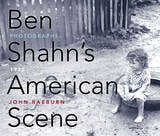
Ben Shahn's American Scene
Photographs, 1938John Raeburn
University of Illinois Press, 2010
The paintings, murals, and graphics of Ben Shahn (1898-1969) have made him one of the most heralded American artists of the twentieth century, but during the 1930s he was also among the nation's premier photographers. Much of his photographic work was sponsored by the New Deal's Farm Security Administration, where his colleagues included Dorothea Lange and Walker Evans.
Ben Shahn's American Scene: Photographs, 1938 presents one hundred superb photographs from his most ambitious FSA project, a survey of small-town life in the Depression. John Raeburn's accompanying text illuminates the thematic and formal significance of individual photographs and reveals how, taken together, they address key cultural and political issues of the years leading up to World War II. Shahn's photographs highlight conflicts between traditional values and the newer ones introduced by modernity as represented by the movies, chain stores, and the tantalizing allure of consumer goods, and they are particularly rich in observation about the changes brought about by Americans' universal reliance on the automobile. They also explore the small town's standing as the nation's symbol of democratic community and expose the discriminatory social and racial practices that subverted this ideal in 1930s America.
Bending Toward Justice
The Voting Rights Act and the Transformation of American DemocracyGary May
Duke University Press, 2015
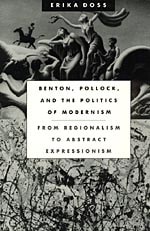
Benton, Pollock, and the Politics of Modernism
From Regionalism to Abstract ExpressionismErika Doss
University of Chicago Press, 1991
"A welcome addition to the growing body of literature that deals with the art and culture of the depression and cold war eras. It is a pioneering work that makes a valuable contribution to our understanding of a puzzling conundrum of American art—the shift from regionalism to abstract expressionism."—M. Sue Kendall, Winterthur Portfolio
"An important scholarly contribution. . . . This book will stand as a step along the way to a better understanding of the most amazing transition in the art of our tumultuous century."—James G. Rogers, Jr., Art Journal
"A valuable and interesting book that restores continuity and political context to the decades of depression and war."—Marlene Park, American Historical Review
Bergson and Russian Modernism
1900-1930Hilary L. Fink
Northwestern University Press, 2012
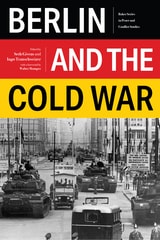
Berlin and the Cold War
Seth Givens; Ingo Trauschweizer
Ohio University Press, 2024
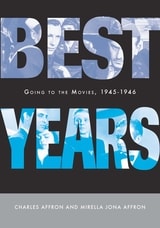
Best Years
Going to the Movies, 1945-1946Charles Affron and Mirella Jona Affron
Rutgers University Press, 2009
Best Years is a panoramic study, shining light on this critical juncture in American historyand the history of American cinemaùthe end of World War II (1945) and a year of unprecedented success in Hollywood's "Golden Age" (1946). This unique time, the last year of war and the first full year of peace, provides a rich blend of cinema genres and typesùfrom the battlefront to the home front, the peace film to the woman's film, psychological drama, and the period's provocative new style, film noir.
Best Years focuses on films that were famous, infamous, forgotten, and unforgettable. Big budget A-films, road shows, and familiar series share the spotlight. From Bergman and Grant in Notorious to Abbott and Costello in Lost in a Harem, Charles Affron and Mirella Jona Affron examine why the bond between screen and viewer was perhaps never tighter. Paying special attention to the movie-going public in key cities--Atlanta, New York, Boston, Honolulu, and Chicago--this ambitious work takes us on a cinematic journey to recapture a magical time.

Best of Companions
Henry Ford and the Protection of Birdlife in AmericaRick Simek
University of Michigan Press, 2027
Immediately following the success of the Model T, Henry Ford turned to how he could apply his newfound wealth toward protecting birdlife on his new rural acreage in Dearborn, Michigan. Best of Companions weaves Henry Ford’s personal and very public participation in bird protection into the overall national push to save disappearing North American birdlife in the early twentieth century.
Acting on his love of birds, Ford formed acquaintances and friendships with some of the most prominent North American wildlife conservation activists of the time. Michigan Audubon Society President Jefferson Butler was recruited to plan, establish, and promote an expansive, visionary bird protection project known as Henry Ford’s Bird Farm. Highlighting the economic benefit of birds, the farm modeled how farmers could use both natural and artificial means to boost populations of native insectivorous bird species on their land, reducing crop damage from insects and increasing agricultural productivity. Best of Companions takes readers on an exciting journey through Ford’s ambitious efforts to secure passage of the first federal bird protection law in the United States, to support the Migratory Bird Treaty with Canada, and to improve the lives of farmers.
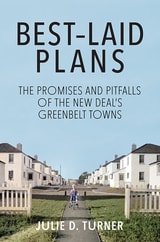
Best-Laid Plans
The Promises and Pitfalls of the New Deal Greenbelt TownsJulie D. Turner
University of Minnesota Press, 2022
In 1935, under the direction of the Resettlement Administration, the United States government embarked on a New Deal program to construct new suburban towns for the working class. Teams of architects, engineers, and city planners, along with thousands of workers, brought three such communities to life: Greenbelt, Maryland; Greendale, Wisconsin; and Greenhills, Ohio. President Franklin Roosevelt saw this as a way to create jobs. Resettlement Administration head Rexford Tugwell longed to improve the living conditions of the nation’s underclass.
In Best-Laid Plans, Julie Turner identifies where the Greenbelt Towns succeeded and where they failed. The program suffered under the burden of too many competing goals: maximum job creation at minimal cost, exquisite town planning that would provide modest residences for low-income families, progressive innovation that would serve to honor and reinforce traditional American values. Yet the Greenbelt program succeeded in one respect—providing new homes in well-planned communities that continue to welcome residents.
Town planning and suburbanization did not follow the blueprint of the Greenbelt model and instead took a turn toward the suburban sprawl we know today. The Greenbelt towns may represent an unrealistic dream, but they show an imagined way of American life that continues to appeal and hints at what might have been possible.
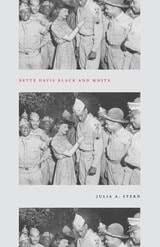
Bette Davis Black and White
Julia A. Stern
University of Chicago Press, 2021
Bette Davis was not only one of Hollywood’s brightest stars, but also one of its most outspoken advocates on matters of race. In Bette Davis Black and White, Julia A. Stern explores this largely untold facet of Davis’s brilliant career.
Bette Davis Black and White analyzes four of Davis’s best-known pictures—Jezebel (1938), The Little Foxes (1941), In This Our Life (1942), and What Ever Happened to Baby Jane? (1962)—against the history of American race relations. Stern also weaves in memories of her own experiences as a young viewer, coming into racial consciousness watching Davis’s films on television in an all-white suburb of Chicago.
Davis’s egalitarian politics and unique collaborations with her Black costars offer Stern a window into midcentury American racial fantasy and the efforts of Black performers to disrupt it. This book incorporates testimony from Davis’s Black contemporaries, including James Baldwin and C. L. R. James, as well as the African American fans who penned letters to Warner Brothers praising Davis’s work. A unique combination of history, star study, and memoir, Bette Davis Black and White allows us to contemplate cross-racial spectatorship in new ways.
Better Bankers, Better Banks
Promoting Good Business through Contractual CommitmentClaire A. Hill and Richard W. Painter
University of Chicago Press, 2015
In Better Bankers, Better Banks, Claire A. Hill and Richard W. Painter look back at the history of banking and show how the current culture of bad behavior—dramatized by the corrupt, cocaine-snorting bankers of The Wolf of Wall Street—came to be. In the early 1980s, banks went from partnerships whose partners had personal liability to corporations whose managers had no such liability and could take risks with other people’s money. A major reason bankers remain resistant to change, Hill and Painter argue, is that while banks have been faced with large fines, penalties, and legal fees—which have exceeded one hundred billion dollars since the onset of the crisis—the banks (which really means the banks’shareholders) have paid them, not the bankers themselves. The problem also extends well beyond the pursuit of profit to the issue of how success is defined within the banking industry, where highly paid bankers clamor for status and clients may regard as inevitable bankers who prioritize their own self-interest. While many solutions have been proposed, Hill and Painter show that a successful transformation of banker behavior must begin with the bankers themselves. Bankers must be personally liable from their own assets for some portion of the bank’s losses from excessive risk-taking and illegal behavior. This would instill a culture that discourages such behavior and in turn influence the sorts of behavior society celebrates or condemns.
Despite many sensible proposals seeking to reign in excessive risk-taking, the continuing trajectory of scandals suggests that we’re far from ready to avert the next crisis. Better Bankers, Better Banks is a refreshing call for bankers to return to the idea that theirs is a noble profession.
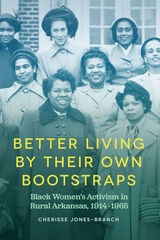
Better Living by Their Own Bootstraps
Black Women's Activism in Rural Arkansas, 1914-1965Cherisse Jones-Branch
University of Arkansas Press, 2021
The first major study to consider Black women’s activism in rural Arkansas, Better Living by Their Own Bootstraps foregrounds activists’ quest to improve Black communities through language and foodways as well as politics and community organizing. In reexamining these efforts, Cherisse Jones-Branch lifts many important figures out of obscurity, positioning them squarely within Arkansas’s agrarian history.
The Black women activists highlighted here include home demonstration agents employed by the Arkansas Agricultural Cooperative Extension Service and Jeanes Supervising Industrial Teachers, all of whom possessed an acute understanding of the difficulties that African Americans faced in rural spaces. Examining these activists through a historical lens, Jones-Branch reveals how educated, middle-class Black women worked with their less-educated rural sisters to create all-female spaces where they confronted economic, educational, public health, political, and theological concerns free from white regulation and interference.
Centered on the period between 1914 and 1965, Better Living by Their Own Bootstraps brings long-overdue attention to an important chapter in Arkansas history, spotlighting a group of Black women activists who uplifted their communities while subverting the formidable structures of white supremacy.
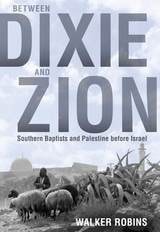
Between Dixie and Zion
Southern Baptists and Palestine before IsraelWalker Robins
University of Alabama Press, 2020
Explores the roots of evangelical Christian support for Israel through an examination of the Southern Baptist Convention
One week after the establishment of the State of Israel in 1948, delegates to the Southern Baptist Convention (SBC) repeatedly and overwhelmingly voted down resolutions congratulating fellow Southern Baptist Harry Truman on his role in Israel’s creation. From today’s perspective, this seems like a shocking result. After all, Christians—particularly the white evangelical Protestants who populate the SBC—are now the largest pro-Israel constituency in the United States. How could conservative evangelicals have been so hesitant in celebrating Israel’s birth in 1948? How did they then come to be so supportive?
Between Dixie and Zion: Southern Baptists and Palestine before Israel addresses these issues by exploring how Southern Baptists engaged what was called the “Palestine question”: whether Jews or Arabs would, or should, control the Holy Land after World War I. Walker Robins argues that, in the decades leading up to the creation of Israel, most Southern Baptists did not directly engage the Palestine question politically. Rather, they engaged it indirectly through a variety of encounters with the land, the peoples, and the politics of Palestine. Among the instrumental figures featured by Robins are tourists, foreign missionaries, Arab pastors, converts from Judaism, biblical interpreters, fundamentalist rebels, editorialists, and, of course, even a president. While all revered Palestine as the Holy Land, each approached and encountered the region according to their own priorities.
Nevertheless, Robins shows that Baptists consistently looked at the region through an Orientalist framework, broadly associating the Zionist movement with Western civilization, modernity, and progress over and against the Arabs, whom they viewed as uncivilized, premodern, and backward. He argues that such impressions were not idle—they suggested that the Zionists were bringing to fruition Baptists’ long-expressed hopes that Israel would regain the prosperity it had held in the biblical era, the Holy Land would one day be revived, and biblical prophecies preceding the return of Christ would be fulfilled.
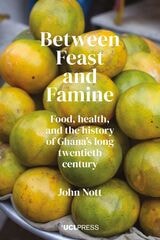
Between Feast and Famine
Food, Health, and the History of Ghana's Long Twentieth CenturyJohn Nott
University College London, 2025
Between Feast and Famine unravels the intertwined histories of food, health, and capitalism in Ghana, charting the country’s shifting nutritional landscape from colonial-era hunger crises to contemporary epidemics of obesity and diabetes. Moving between Ghana’s diverse ecological and economic zones, John Nott excavates how uneven capitalist transformation reshaped diets and childhood nutrition across the twentieth century. At the heart of this story is the evolving science of nutrition itself, from its colonial-era applications to its role in shaping modern health policies.
Using a new historical approach, Between Feast and Famine exposes how global scientific debates and local lived realities co-produced the country’s shifting nutritional conditions. A necessary contribution to African history and medical humanities, this book debunks preconceived notions about hunger and public health, suggesting crucial insights into the complex relationship between food systems and human well-being.
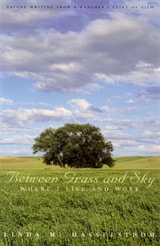
Between Grass And Sky
Where I Live And WorkLinda M. Hasselstrom
University of Nevada Press, 2005
An important collection of personal essays from one of the most widely published American environmental writers addresses the effects of ranching on the environment. Acclaimed nature writer Linda M. Hasselstrom sees herself as a rancher who writes—a definition that shapes the tone and content of her writing. Now owner of the South Dakota cattle ranch where she grew up, Hasselstrom lives in intimate contact with the natural world. "Nature is to me both home and office. Nature is my boss, manager of the branch office—or ranch office—where I toil to convert native grass into meat. . . . If I want to keep my job as well as my home, I pay attention not only to Nature's orders, but to her moods and whims." She writes knowingly of the rancher's toil and of the intelligence and dignity of the wild and domesticated creatures that share the prairie grassland she calls home. As one who knows and loves the land, Hasselstrom appreciates the concerns of environmental activists and understands that responsible ranchers can play a role in nurturing a healthy rural ecosystem. Rich in detail, humor, and pathos, these essays offer wry commentary on the scope of human folly and the even greater human potential for community and empathy. "Only people who live in the country," she writes, "could form a relationship with nature so intimate that they feel concern for one lonely duck. People who live in cities . . . only glimpse nature from high windows or speeding vehicles. Even wilderness lovers who probe deeply are only passing through. We who live on the land truly live within the land, each of our lives only one among the other inhabitants of the place." These are essays to read with wonder and delight, to relish and ponder. Available in hardcover and paperback.
Between History And Poetry
H.D. And Norman Holmes PearsonDonna Krolik Hollenberg
University of Iowa Press, 1997
Between Home and Homeland
Youth Aliyah from Nazi GermanyBrian Amkraut
University of Alabama Press, 2006
As Hitler consolidated power, Jews and their allies in Germany began efforts to leave the country. Among them was the organization, Youth Aliyah. Based on abundant archival sources and a thorough use of secondary literature, Brian Amkraut details the story of the organization from its origins through its alliances and antagonisms with other Jewish organizations, and the challenges that vexed its efforts from every side, perhaps the greatest being sheer human naiveté ("surely things will get better").
Amkraut also discusses the identity dilemma for Jews who grew up feeling German, and then had to alter their self-image in the face of growing discrimination. He highlights the internal disagreements of Jewish agencies who wrestled with myriad problems. The author explores how German Jews were ideologically heterogeneous, and details how different groups coped with increasing antagonism in a variety of ways.
To this day, Youth Aliyah is considered by Israelis as a major contributor to the foundation of a Jewish presence leading to the modern state of Israel. Between Home and Homeland is an essential account of an important episode in the history of the Holocaust and the founding of the Isreali state.
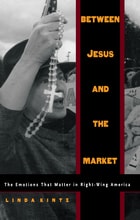
Between Jesus and the Market
The Emotions that Matter in Right-Wing AmericaLinda Kintz
Duke University Press, 1997
With texts from such organizations as the Christian Coalition, the Heritage Foundation, and Concerned Women for America, and writings by Elizabeth Dole, Newt Gingrich, Pat Robertson, and Rush Limbaugh, Kintz traces the usefulness of this activism for the secular claim that conservative political economy is, in fact, simply an expression of the deepest and most admirable elements of human nature itself. The discussion of Limbaugh shows how he draws on the skepticism of contemporary culture to create a sense of absolute truth within his own media performance—its truth guaranteed by the market. Kintz also describes how conservative interpretations of the Holy Scriptures, the U.S. Constitution, and the Declaration of Independence have been used to challenge causes such as feminism, women’s reproductive rights, and gay and lesbian rights. In addition to critiquing the intellectual and political left for underestimating the power of right-wing grassroots organizing, corporate interests, and postmodern media sophistication, Between Jesus and the Market discusses the proliferation of militia groups, Christian entrepreneurship, and the explosive growth and "selling" of the Promise Keepers.
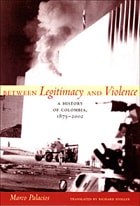
Between Legitimacy and Violence
A History of Colombia, 1875–2002Marco Palacios
Duke University Press, 2006
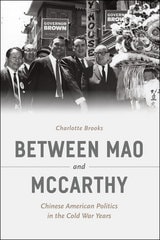
Between Mao and McCarthy
Chinese American Politics in the Cold War YearsCharlotte Brooks
University of Chicago Press, 2014
Between Mao and McCarthy looks at the divergent ways that Chinese Americans in these two cities balanced domestic and international pressures during the tense Cold War era. On both coasts, Chinese Americans sought to gain political power and defend their civil rights, yet only the San Franciscans succeeded. Forging multiracial coalitions and encouraging voting and moderate activism, they avoided the deep divisions and factionalism that consumed their counterparts in New York. Drawing on extensive research in both Chinese- and English-language sources, Charlotte Brooks uncovers the complex, diverse, and surprisingly vibrant politics of an ethnic group trying to find its voice and flex its political muscle in Cold War America.
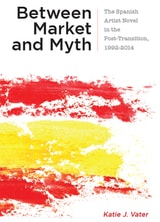
Between Market and Myth
The Spanish Artist Novel in the Post-Transition, 1992-2014Katie J. Vater
Bucknell University Press, 2020
Published by Bucknell University Press. Distributed worldwide by Rutgers University Press.
Between Mussolini and Hitler
The Jews and the Italian Authorities in France and TunisiaDaniel Carpi
University Press of New England, 2002
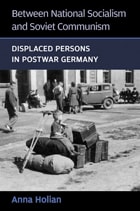
Between National Socialism and Soviet Communism
Displaced Persons in Postwar GermanyAnna Holian
University of Michigan Press, 2015
"Though its primary focus is on the immediate postwar, Between National Socialism and Soviet Communism will surely illuminate the contemporary crisis around citizenship and definitions of Germanness in the context of European Union and globalization."
---Geoff Eley, University of Michigan
In May of 1945, there were more than eight million "displaced persons" (or DPs) in Germany---recently liberated foreign workers, concentration camp prisoners, and prisoners of war from all of Nazi-occupied Europe, as well as eastern Europeans who had fled west before the advancing Red Army. Although most of them quickly returned home, it soon became clear that large numbers of eastern European DPs could or would not do so. In the aftermath of National Socialism, Germany thus ironically became a temporary home for a large population of "foreigners." Focusing on Bavaria, in the heart of the American occupation zone, Between National Socialism and Soviet Communism examines the cultural and political worlds that four groups of displaced persons---Polish, Ukrainian, Russian, and Jewish---created in Germany during the late 1940s and early 1950s. The volume investigates the development of refugee communities and how divergent interpretations of National Socialism and Soviet Communism defined these displaced groups.
Combining German and eastern European history, Anna Holian draws on a rich array of sources in cultural and political history and engages the broader literature on displacement in the fields of anthropology, sociology, political theory, and cultural studies. Her book will interest students and scholars of German, eastern European, and Jewish history; migration and refugees; and human rights.
Between Race and Ethnicity
Cape Verdean American Immigrants, 1860-1965Marilyn Halter
University of Illinois Press, 1993
Marilyn Halter combines oral history with analyses of ships' records to chart the history and adaptation patterns of the Cape Verdean Americans. Though identifying themselves in ethnic terms, Cape Verdeans found that their African-European ancestry led their new society to view them as a racial group. Halter emphasizes racial and ethnic identity formation to show how Cape Verdeans set themselves apart from the African Americans while attempting to shrug off white society's exclusionary tactics. She also contrasts rural life on the bogs of Cape Cod with New Bedford’s urban community to reveal the ways immigrants established their own social and religious groups as they strove to maintain their Crioulo customs.
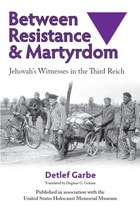
Between Resistance and Martyrdom
Jehovah's Witnesses in the Third ReichDetlef Garbe
University of Wisconsin Press, 2008
Although persecuted and banned from practicing their beliefs by the Nazi regime in 1933, the Jehovah’s Witnesses’ unified resistance has been largely forgotten. Basing his work on a wide range of sources, including documents and archives previously unconsidered as well as critical analyses of Jehovah’s Witness literature and survivor interviews, Detlef Garbe chronicles the Nazi’s relentless persecution of this religious group before and during World War II.
The English translation of this important work features a series of original photographs not published in the German edition. These striking images bring a sense of individual humanity to this story and help readers comprehend the reality of the events documented. Between Resistance and Martyrdom is an indispensable work that will introduce an English-speaking audience to this important but lesser-known part of Holocaust history.
Between Watergate and the Gulag
The French Press and Politics, 1970–1985Charles R. Eisendrath
Michigan Publishing Services, 2022
Also introduced: “surplus freedom” a novel approach for gauging self-censorship by comparing the degree of free expression a legal system permits to what publications actually exercise.
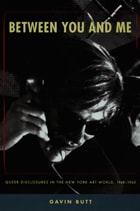
Between You and Me
Queer Disclosures in the New York Art World, 1948-1963Gavin Butt
Duke University Press, 2005
Focusing on the period from 1948 to 1963, Butt draws on the accusations and denials of homosexuality that appeared in the popular press, on early homophile publications such as One and the Mattachine Review, and on biographies, autobiographies, and interviews. In a stunning exposition of Larry Rivers’s work, he shows how Rivers incorporated gossip into his paintings, just as his friend and lover Frank O’Hara worked it into his poetry. He describes how the stories about Andy Warhol being too “swish” to be taken seriously as an artist changed following his breakthrough success, reconstructing him as an asexual dandy. Butt also speculates on the meanings surrounding a MoMA curator’s refusal in 1958 to buy Jasper Johns’s Target with Plaster Casts on the grounds that it was too scandalous for the museum to acquire. Between You and Me sheds new light on a pivotal moment in American cultural production as it signals new directions for art history.

Between Your House and Mine
The Letters of Lorine Niedecker to Cid Corman, 1960-1970Lisa Pater Faranda, ed.
Duke University Press, 1986
The early letters were written before Niedecker's marriage and at a time when the poet had "more trees for friends than people." In these letters from Black Hawk Island, Niedecker sought a community of fellow poets. The following period, the Milwaukee years, form the bulk of the collection and saw the establishment of Niedecker's identity as a poet. From the city of "point-top towers," she wrote Corman frequently about poetry, other poets, current events, and daily life. After her return in 1969 to Black Hawk Island, relieved of earlier anxieties over publication, she was confidently at work on her sequences, her most serious poetic undertaking.
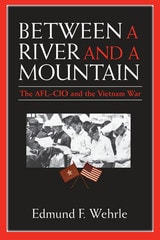
Between a River and a Mountain
The AFL-CIO and the Vietnam WarEdmund F. Wehrle
University of Michigan Press, 2010
"Stunning in its research and sophisticated in its analysis, Between a River and a Mountain is one of the best studies we have of labor and the Vietnam War."
--Robert K. Brigham, Shirley Ecker Boskey Professor of History and International Relations, Vassar College
"Skillfully blending diplomatic and labor history, Wehrle's book is a valuable contribution to the ever-widening literature on the Vietnam War."
--George Herring, University of Kentucky
"Wehrle has written a compelling and original study of the AFL-CIO, the South Vietnamese labor movement and the Vietnam War."
--Judith Stein, Professor of History, City College and Graduate School of the City University of New York
"With this important book, Edmund Wehrle gives us the first full-fledged scholarly examination of organized labor's relationship to the Vietnam War. Based on deep research in U.S. and foreign archives, and presented in clear and graceful prose, Between a River and a Mountain adds a great deal to our understanding of how the AFL-CIO approached the war and in turn was fundamentally altered by its staunch support for Americanization. Nor is it merely an American story that Wehrle tells, for he also presents fascinating information on the Vietnamese Confederation of Labor and its sometimes-strained relations with U.S. labor."
--Fredrik Logevall, Cornell University
Edmund F. Wehrle is Assistant Professor of History, Eastern Illinois University.
Between the Black Box and the White Cube
Expanded Cinema and Postwar ArtAndrew V. Uroskie
University of Chicago Press, 2014
Explaining that the postwar expanded cinema was a response to both developments, Andrew V. Uroskie argues that, rather than a formal or technological innovation, the key change for artists involved a displacement of the moving image from the familiarity of the cinematic theater to original spaces and contexts. He shows how newly available, inexpensive film and video technology enabled artists such as Nam June Paik, Robert Whitman, Stan VanDerBeek, Robert Breer, and especially Andy Warhol to become filmmakers. Through their efforts to explore a fresh way of experiencing the moving image, these artists sought to reimagine the nature and possibilities of art in a post-cinematic age and helped to develop a novel space between the “black box” of the movie theater and the “white cube” of the art gallery. Packed with over one hundred illustrations, Between the Black Box and the White Cube is a compelling look at a seminal moment in the cultural life of the moving image and its emergence in contemporary art.
Between the Brown and the Red
Nationalism, Catholicism, and Communism in Twentieth-Century Poland—The Politics of Boleslaw PiaseckiMikolaj Stanislaw Kunicki
Ohio University Press, 2012
Between the Brown and the Red captures the multifaceted nature of church-state relations in communist Poland, relations that oscillated between mutual confrontation, accommodation, and dialogue. Ironically, under communism the bond between religion and nation in Poland grew stronger. This happened in spite of the fact that the government deployed nationalist themes in order to portray itself as more Polish than communist. Between the Brown and the Red also introduces one of the most fascinating figures in the history of twentieth-century Poland and the communist world.
In this study of the complex relationships between nationalism, communism, authoritarianism, and religion in twentieth-century Poland, Mikołaj Kunicki shows the ways in which the country’s communist rulers tried to adapt communism to local traditions, particularly ethnocentric nationalism and Catholicism. Focusing on the political career of Bolesław Piasecki, a Polish nationalist politician who began his surprising but illuminating journey as a fascist before the Second World War and ended it as a procommunist activist, Kunicki demonstrates that Polish communists reinforced an ethnocentric self-definition of Polishness and—as Piasecki’s case demonstrates—thereby prolonged the existence of Poland’s nationalist Right.
Between the Heartbeats
Poetry and Prose by NursesCortney Davis
University of Iowa Press, 1995
Between the Lines
South Asians and Postcolonialityedited by Deepika Bahri and Mary Vasudeva
Temple University Press, 1996
This ground-breaking collection of new interviews, critical essays, and commentary explores South Asian identity and culture. Sensitive to the false homogeneity implied by "South Asian," "diaspora," "postcolonial," and "Asian American," the contributors attempt to unpack these terms. By examining the social, economic, and historical particularities of people who live "between the lines"—on and between borders—they reinstate questions of power and privilege, agency and resistance. As South Asians living in the United States and Canada, each to some degree must reflect on the interaction of the personal "I," the collective "we," and the world beyond.
The South Asian scholars gathered together in this volume speak from a variety of theoretical perspectives; in the essays and interviews that cross the boundaries of conventional academic disciplines, they engage in intense, sometimes contentious, debate.
Contributors: Meena Alexander, Gauri Viswanathan, Gayatri Chakravorty Spivak, Amritjit Singh, M. G. Vassanji, Sohail Inayatullah, Ranita Chatterjee, Benita Mehta, Sanjoy Majumder, Mahasveta Barua, Sukeshi Kamra, Samir Dayal, Pushpa Naidu Parekh, Indrani Mitra, Huma Ibrahim, Amitava Kumar, Shantanu DuttaAhmed, Uma Parameswaran.
In the series Asian American History and Culture, edited by Sucheng Chan, David Palumbo-Liu, Michael Omi, K. Scott Wong, and Linda Trinh Võ.
Bevan
Creator of the NHSFrancis Beckett and Clare Beckett
Haus Publishing, 2023
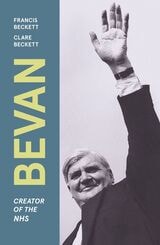
The creation of the National Health Service was the most significant of the many reforms of the post-war Labour government in the UK. The man responsible was Aneurin “Nye” Bevan. The son of a Welsh miner, he became a local trade union leader at only nineteen. In 1929, he was elected as a Labour MP. Bevan believed the war was Britain’s opportunity to create a new society, a position he maintained throughout the conflict. When the war ended in 1945, the landslide Labour victory gave him the chance to make this vision a reality. Known for his impassioned oratory, Bevan’s fundamental belief that the new NHS should be freely available to all was ultimately at odds with a government struggling to balance the books. He resigned in 1951 over the introduction of charges for prescriptions and glasses. With the NHS requiring an ever-increasing share of national income, this updated edition considers Bevan’s legacy as the future of the health service he created is fought over as never before.
Beyond Berlin
Twelve German Cities Confront the Nazi PastGavriel D. Rosenfeld and Paul B. Jaskot, Editors
University of Michigan Press, 2015
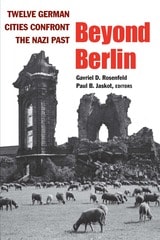
Beyond Berlin breaks new ground in the ongoing effort to understand how memorials, buildings, and other spaces have figured in Germany's confrontation with its Nazi past. The contributors challenge reigning views of Germany's postwar memory work by examining how specific urban centers apart from the nation's capital have wrestled with their respective Nazi legacies. A wide range of West and East German cities is profiled in the volume: prominent metropolises like Hamburg, dynamic regional centers like Dresden, gritty industrial cities like Wolfsburg, and idyllic rural towns like Quedlinburg. In employing historical, art historical, anthropological, and geographical methodologies to examine these and other important urban centers, the volume's case studies shed new light upon the complex ways in which the confrontation with the Nazi past has directly shaped the German urban landscape since the end of the Second World War.
"Beyond Berlin is one of the most fascinating, deeply probing collections ever published on Germany's ongoing confrontation with its Nazi past. Its editors, Gavriel Rosenfeld and Paul Jaskot, have taken the exploration of Germany's urban memorial landscape to its highest level yet."
---James E. Young, Professor and Chair, Department of Judaic and Near Eastern Studies, University of Massachusetts Amherst, and author of The Texture of Memory and At Memory's Edge
"This is a top-notch collection of essays that positions itself in the populated field of memory studies by bringing together original contributions representing the best of new scholarship on architecture, urban design, monuments, and memory in East and West Germany. Taken together, the essays remind readers that the Nazi past is always present when German architects, urban planners, and politicians make decisions to tear down, rebuild, restore, and memorialize."
---S. Jonathan Wiesen, Department of History, Southern Illinois University, Carbondale
Beyond Cannery Row
Sicilian Women, Immigration, and Community in Monterey, California, 1915-99Carol Lynn McKibben
University of Illinois Press, 2005
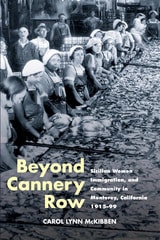
McKibben's analysis of gender and gender roles shows that it was the women in this community who had the insight, the power, and the purpose to respond and even prosper amid changing economic conditions. Vividly evoking the immigrants' everyday experiences through first-person accounts and detailed description, McKibben demonstrates that the cannery work done by Sicilian immigrant women was crucial in terms of the identity formation and community development. These changes allowed their families to survive the challenges of political conflicts over citizenship in World War II and intermarriage with outsiders throughout the migration experience. The women formed voluntary associations and celebrated festas that effectively linked them with each other and with their home villages in Sicily. Continuous migration created a strong sense of transnationalism among Sicilians in Monterey, which has enabled them to continue as a viable ethnic community today.
Beyond Cheering and Bashing
New Perspectives on The Closing of the American MindWilliam K. Buckley
University of Wisconsin Press, 1992
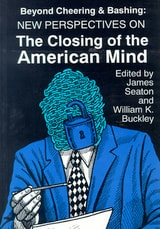
The debate over the central issue confronted in The Closing of the American Mind—the role of the university and the liberal arts in the United States—has become increasingly urgent and contentious. The goal of this collection of essays is to see what we can learn about the dilemmas confronting American culture through consideration of both The Closing of the American Mind and the debate it aroused.

Beyond Glasnost
The Post-Totalitarian MindJeffrey C. Goldfarb
University of Chicago Press, 1992
Beyond Human
Vital Materialisms in the Andean Avant-GardesDaly, Tara
Bucknell University Press, 2019
Published by Bucknell University Press. Distributed worldwide by Rutgers University Press.
Beyond Ideology
Politics, Principles, and Partisanship in the U. S. SenateFrances E. Lee
University of Chicago Press, 2009
The congressional agenda, Frances Lee contends, includes many issues about which liberals and conservatives generally agree. Even over these matters, though, Democratic and Republican senators tend to fight with each other. What explains this discord? Beyond Ideology argues that many partisan battles are rooted in competition for power rather than disagreement over the rightful role of government.
The first book to systematically distinguish Senate disputes centering on ideological questions from the large proportion of them that do not, this volume foregrounds the role of power struggle in partisan conflict. Presidential leadership, for example, inherently polarizes legislators who can influence public opinion of the president and his party by how they handle his agenda. Senators also exploit good government measures and floor debate to embarrass opponents and burnish their own party’s image—even when the issues involved are broadly supported or low-stakes. Moreover, Lee contends, the congressional agenda itself amplifies conflict by increasingly focusing on issues that reliably differentiate the parties. With the new president pledging to stem the tide of partisan polarization, Beyond Ideology provides a timely taxonomy of exactly what stands in his way.
Beyond Individualism
Portraying Collective Selfhood in Latin American Literature and ArtLois Parkinson Zamora
University of Chicago Press, 2025
Beyond Individualism examines the portrayal of collective identities over two centuries in Latin American literature and visual art. Lois Parkinson Zamora shows that many authors and artists are less concerned with singular selves than with selves-in-relation: less with individual autonomy than with communal affiliation. Their works—sometimes situated under the labels Neobaroque, magical realism, Surrealism, Expressionism, and idealism—resist the kind of psychological realism typical of European and North American novels, moving instead toward a wholly new kind of fiction.
Zamora calls this new Latin American form “archetypal realism” because its characters represent entities larger than themselves. They may embody entire communities, cultures, families, religious orders, or ideal planets. Through deft readings of collective characters in fiction by Gabriel García Márquez, Isabel Allende, Jorge Luis Borges, and more alongside the art of Diego Rivera, Remedios Varo, and Xul Solar, Zamora reveals a modernity based not on Enlightenment conceptions of selfhood but on community, collectivity, and kinship.
Beyond Innocence, or the Altersroman in Modern Fiction
Linda A. Westervelt
University of Missouri Press, 1997
In this groundbreaking work, Linda A. Westervelt defines an important yet previously unidentified and therefore unnamed type of novel, the altersroman, or age novel. Fictions focusing on a protagonist's confrontation with mortality toward the end of middle age are likely to become ever more prominent in a Western world in which the average age of the population increases and more people reach late middle age and old age.
Working from a diverse sample of modern literature, Westervelt analyzes the variety of responses to the life evaluation. Some characters achieve a level of affirmation that allows renewal, redirection, or simply peace, while others confront feelings of disgust or despair that so little time is left them. Her altersromane are books about seeking wisdom, though not everyone of this age becomes wise. The use of the term altersroman highlights the fact that the altersroman is a classification comparable to but also clearly distinguishable from the bildungsroman, wherein characters make the transition from youth to adulthood. Westervelt contrasts her older protagonists' characteristics with the equivalent characteristics in the bildungsroman through an examination of Don Quixote, part 2, as well as six American novels: The Ambassadors, by Henry James; The Professor's House, by Willa Cather; The Mansion, by William Faulkner; The Angle of Repose, by Wallace Stegner; A Book of Common Prayer, by Joan Didion; and Jazz, by Toni Morrison. These seven works, though remarkably different, share the common features of the altersroman. Westervelt articulates the traits clearly, rests them on the psychological literature, and then shows in depth how the characteristics of the altersroman can enrich and more deeply inform our reading of a significant subset of modern literature that previously went unheralded. Readers can use Westervelt's analysis to identify altersromane in literature other than their own, and she begins this process by identifying exemplars written in other languages.
Beyond Innocence, or the Altersroman in Modern Fiction introduces readers to the altersroman as a tool for classification and analysis and demonstrates the power and utility of that tool. It offers a meaningful and enriching complement to the more established category of the bildungsroman.