Results by title
8812 books match the query 'Political Science' and 358 start with b

Between Rebels and Relief
Negotiating Humanitarian Access in the Democratic Republic of the CongoMyfanwy James
University of Michigan Press, 2027
Between Rebels and Relief follows the frontline humanitarians who negotiate access with rebel groups in North Kivu, in the eastern Democratic Republic of the Congo, to foreground the work of local aid workers who are the backbone of humanitarian operations. Myfanwy James examines how global endeavors are built on the personal networks, knowledge, and skills of local personnel who are rarely given credit. Based on ethnographic research on Médecins Sans Frontières (Doctors Without Borders), James uncovers the brokerage, translation, and creative identity work that keeps medical relief operations running, and the crucial role of locally hired staff in navigating violent political terrains and building trust with armed groups.
Humanitarian agencies draw upon the personal profiles of different staff who learn to position themselves strategically for different audiences, casting and recasting themselves as a form of tactical agency in uncertain violent terrains. Identities are put to work—they become tools, influencing who can wield power, who can gain trust, and who is at particular risk of violence. Yet this produces a central paradox: To uphold a universalist mandate, humanitarian organizations leverage and reproduce the very borders between people—of race, gender, ethnicity, and personal history—that their egalitarian values seek to transcend.
Between a River and a Mountain
The AFL-CIO and the Vietnam WarEdmund F. Wehrle
University of Michigan Press, 2010
"Stunning in its research and sophisticated in its analysis, Between a River and a Mountain is one of the best studies we have of labor and the Vietnam War."
--Robert K. Brigham, Shirley Ecker Boskey Professor of History and International Relations, Vassar College
"Skillfully blending diplomatic and labor history, Wehrle's book is a valuable contribution to the ever-widening literature on the Vietnam War."
--George Herring, University of Kentucky
"Wehrle has written a compelling and original study of the AFL-CIO, the South Vietnamese labor movement and the Vietnam War."
--Judith Stein, Professor of History, City College and Graduate School of the City University of New York
"With this important book, Edmund Wehrle gives us the first full-fledged scholarly examination of organized labor's relationship to the Vietnam War. Based on deep research in U.S. and foreign archives, and presented in clear and graceful prose, Between a River and a Mountain adds a great deal to our understanding of how the AFL-CIO approached the war and in turn was fundamentally altered by its staunch support for Americanization. Nor is it merely an American story that Wehrle tells, for he also presents fascinating information on the Vietnamese Confederation of Labor and its sometimes-strained relations with U.S. labor."
--Fredrik Logevall, Cornell University
Edmund F. Wehrle is Assistant Professor of History, Eastern Illinois University.
Between the Brown and the Red
Nationalism, Catholicism, and Communism in Twentieth-Century Poland—The Politics of Boleslaw PiaseckiMikolaj Stanislaw Kunicki
Ohio University Press, 2012
Between the Brown and the Red captures the multifaceted nature of church-state relations in communist Poland, relations that oscillated between mutual confrontation, accommodation, and dialogue. Ironically, under communism the bond between religion and nation in Poland grew stronger. This happened in spite of the fact that the government deployed nationalist themes in order to portray itself as more Polish than communist. Between the Brown and the Red also introduces one of the most fascinating figures in the history of twentieth-century Poland and the communist world.
In this study of the complex relationships between nationalism, communism, authoritarianism, and religion in twentieth-century Poland, Mikołaj Kunicki shows the ways in which the country’s communist rulers tried to adapt communism to local traditions, particularly ethnocentric nationalism and Catholicism. Focusing on the political career of Bolesław Piasecki, a Polish nationalist politician who began his surprising but illuminating journey as a fascist before the Second World War and ended it as a procommunist activist, Kunicki demonstrates that Polish communists reinforced an ethnocentric self-definition of Polishness and—as Piasecki’s case demonstrates—thereby prolonged the existence of Poland’s nationalist Right.
Between the Sword and the Wall
The Santos Peace Negotiations with the Revolutionary Armed Forces of ColombiaHarvey F. Kline
University of Alabama Press, 2020
Chronicles the peace process negotiations between Colombian president Juan Manuel Santos and the Marxist Revolutionary Armed Forces of Colombia
In Between the Sword and the Wall: The Santos Peace Negotiations with the Revolutionary Armed Forces of Colombia, Harvey Kline, a noted expert on contemporary Colombian politics, brings to a close his multivolume chronicle of the incessant violence that has devastated Colombia’s population, politics, and military for decades. This, his newest work on the subject, recounts and analyzes the negotiations between Colombian president Juan Manuel Santos and the Marxist Revolutionary Armed Forces of Colombia (FARC), which ended with a peace agreement in 2016.
The FARC insurgency began in 1964, and every Colombian president after 1980 unsuccessfully tried to negotiate a peace agreement with the group. Kline analyzes how the Santos administration was ultimately able to negotiate peace with the FARC. The agreement failed to receive the approval of the Colombian people in an October 2016 plebiscite, but a renegotiated version was later approved by the congress in the same year. Afterward, more than 7,000 rebels turned over their weapons to the UN mission in Colombia. The former combatants were then to be judged by a special court empowered to punish but not imprison those who had violated human rights. Throughout the book, Kline emphasizes the dual nature of the Santos negotiations, first with the FARC and second with the democratic opposition to the agreement led by former president Álvaro Uribe Vélez.
Kline provides readers with a well-researched analysis based on a variety of resources, including media articles and primary documents from the government, international organizations, and the FARC. He also conducted extensive interviews with twenty-eight government officials and Colombian experts from all ideological persuasions.
Beyond Adversary Democracy
Jane J. Mansbridge
University of Chicago Press, 1983
"Sociologists recurrently complain about how seldom it is that we produce books that combine serious theorizing about important issues of public policy with original and sensitive field research. Several rounds of enthusiastic applause, then, are due Jane Mansbridge . . . for having produced a dense and well written book whose subject is nothing less ambitious than the theory of democracy and its problems of equality, solidarity, and consensus. Beyond Adversary Democracy, however, is not simply a work of political theory; Mansbridge explores her abstract subject matter by close studies (using ethnographic, documentary, and questionnaire methods) of two small actual democracies operating at their most elemental American levels (1) a New England town meeting ("Selby," Vermont) and (2) an urban crisis center ("Helpline"), whose 41 employees shared a New Left-Counterculture belief in participatory democracy and consensual decision-making. [Mansbridge] is a force to contend with. It is in our common interest that she be widely read."—Bennett M. Berger, Contemporary Sociology
Beyond Belief
India and the Politics of Postcolonial NationalismSrirupa Roy
Duke University Press, 2007
Roy considers several different ways that identification with the Indian nation-state was produced and consolidated during the 1950s and 1960s. She looks at how the Films Division of India, a state-owned documentary and newsreel production agency, allowed national audiences to “see the state”; how the “unity in diversity” formation of nationhood was reinforced in commemorations of India’s annual Republic Day; and how the government produced a policy discourse claiming that scientific development was the ultimate national need and the most pressing priority for the state to address. She also analyzes the fate of the steel towns—industrial townships built to house the workers of nationalized steel plants—which were upheld as the exemplary national spaces of the new India. By prioritizing the role of actual manifestations of and encounters with the state, Roy moves beyond theories of nationalism and state formation based on collective belief.

Beyond Boundaries
C.L.R. James and Postnational StudiesEdited by Christopher Gair
Pluto Press, 2006
Invaluable for students of post-colonial studies, the book examines points where James crosses with other theorists, such as Lacan and Gramsci. Racial identity and cultural politics are key themes in his work, not to mention his unique writings on cricket. Contributors including Donald E Pease, Nicole King, Christopher Gair and Anthony Bogues illuminate the key themes in James's writing, and put forward the idea that the breath of James's thinking can be identified as the beginning of 'post-national' studies.
Christopher Gair is a lecturer in the Department of American and Canadian Studies, University of Birmingham. He is the author of Complicity and Resistance in Jack London¹ s Novels (Edwin Mullen Press, 1997), of The American Counterculture (forthcoming, Edinburgh University Press, 2006), and of numerous essays on American literature and culture. He is the editor of the journal Symbiosis.
Beyond Britannia
Reshaping UK Foreign PolicySimon McDonald
Haus Publishing, 2023
What should the future of British foreign policy look like? For too long, successive governments have shied away from acknowledging uncomfortable truths about the decline of Britain’s military capabilities. As we approach the middle years of the twenty-first century, a new set of urgent and daunting challenges lie ahead, including climate change, technological development, the rise of AI, and a growing threat from China. The need for us to reconcile ourselves with our position in the world has never been more acute. In Beyond Britannia: Reshaping UK Foreign Policy, Simon McDonald persuasively argues that the United Kingdom’s significant soft-power strengths can be harnessed to expand its international influence. Such a shift will only be possible, he says, if we first acknowledge the challenges of Brexit and the need to reduce our unrealistic hard-power ambitions. Excellence in areas that other countries care about will keep the United Kingdom internationally relevant in the second half of the century in a way that nostalgia for a lost pre-eminence will not.
Beyond Britannia
Reshaping UK Foreign PolicySimon McDonald
Haus Publishing, 2023
What should the future of British foreign policy look like? For too long, successive governments have shied away from acknowledging uncomfortable truths about the decline of Britain’s military capabilities. As we approach the middle years of the twenty-first century, a new set of urgent and daunting challenges lie ahead, including climate change, technological development, the rise of AI, and a growing threat from China. The need for us to reconcile ourselves with our position in the world has never been more acute. In Beyond Britannia: Reshaping UK Foreign Policy, Simon McDonald persuasively argues that the United Kingdom’s significant soft-power strengths can be harnessed to expand its international influence. Such a shift will only be possible, he says, if we first acknowledge the challenges of Brexit and the need to reduce our unrealistic hard-power ambitions. Excellence in areas that other countries care about will keep the United Kingdom internationally relevant in the second half of the century in a way that nostalgia for a lost pre-eminence will not.
Beyond Busing
Reflections on Urban Segregation, the Courts, and Equal OpportunityPaul R. Dimond
University of Michigan Press, 2005
A compelling insider's account of the fight for educational desegregation, from one of its most dedicated and outspoken heroes. A new afterword explains the author's controversial belief that the moment for litigating educational equality has passed, clear-sightedly critiquing his own courtroom strategies and the courts' responses, before closing with an assessment of the economic and social changes that he feels have already moved us "beyond busing."
"An extraordinarily informative and thoughtful book describing the process of bringing Brown [v. Board of Education] North and the impact this process had upon national attitudes toward desegregation."
--Drew S. Days III, Yale Law Journal
"An original analysis of a tough subject. A must-read for all who care about opportunity for all our children."
--Donna E. Shalala, President, University of Miami
"Paul Dimond remains a passionate and caring voice for inner-city students, whether in his advocacy of school desegregation, school choice plans, or school finance reform. He illuminates these issues as one who participated in the major education cases and as a perceptive scholar."
--Mark Yudof, Chancellor, The University of Texas System
"A must-read for anyone who wants to understand America's continued failure to give inner-city children a quality education or to do something about it!"
--Sheryll Cashin, Author of The Failures of Integration: How Race and Class Are Undermining the American Dream
"Dimond is particularly good at relating his slice of legal history to the broader developments of the 1970s, and his occasional remarks about trial tactics are amusing and instructive. Dimond's
honesty about both his successes and failures makes his book required reading for civil rights lawyers."
--Lawrence T. Gresser, Michigan Law Review
"A fascinating first-hand account of 1970s northern school desegregation decisions."
--Neal E. Devins, American Bar Foundation Research Journal
"Dimond reminds the liberal reader of the promise that lies in the empowerment of ordinary families to choose their own schools."
--John E. Coons, Professor of Law, Emeritus, University of California, Berkeley
Paul R. Dimond is counsel to Miller, Canfield, Paddock and Stone, Michigan's largest law firm; chairman of McKinley, a national commercial real estate investment and management firm; and chairman or member of the board of trustees of numerous education, community, and civic organizations. He spent four years as President Clinton's Special Assistant for Economic Policy.
Beyond Confrontation
Learning Conflict Resolution in the Post-Cold War EraJohn A. Vasquez, Sanford Jaffe, James Turner Johnson, and Linda Stamato, Editors
University of Michigan Press, 1996
Beyond Decent Work
The Cultural Political Economy of Labour Struggles in IndonesiaFelix Hauf
Campus Verlag, 2016
Beyond Disaster
Building Collective Futures in Puerto RicoMelissa L. Rosario
Northwestern University Press, 2025
An alternative view of Puerto Rico’s past, present, and future
How do we map the pathways to liberation where we have been taught to see only trauma, suffering, and lack? Melissa L. Rosario offers an alternative view of Puerto Rico, America’s oldest colony, removing readers from the framework of crisis to consider the deeper legacies of its current impasse. Beyond Disaster: Building Collective Futures in Puerto Rico is an intimate portrait, weaving insights from the author’s own life, research, and organizing work as a scholar in the diaspora who rematriated. Rosario bridges the genres of social history and memoir to unsettle the meaning of resistance and freedom, underscoring the deep wounds of colonialism while still uplifting the profound possibilities of embodied alternatives.
Beyond Disaster critiques the framework of debt and crisis by examining the psychological, emotional, and spiritual effects of colonialism. Rosario highlights key examples of organizing efforts to defend land and education against total enclosure, protecting life amid loss. This book offers a series of microhistories, vignettes, and prose poetry to foreground the daily practices necessary to anchor the ecological and political landscapes of our collective future.
Beyond Discrimination
Racial Inequality in a Post-Racist EraFredrick C. Harris
Russell Sage Foundation, 2013
Beyond Displacement
Campesinos, Refugees, and Collective Action in the Salvadoran Civil WarMolly Todd
University of Wisconsin Press, 2010
During the civil war that wracked El Salvador from the mid-1970s to the early 1990s, the Salvadoran military tried to stamp out dissidence and insurgency through an aggressive campaign of crop-burning, kidnapping, rape, killing, torture, and gruesome bodily mutilations. Even as human rights violations drew world attention, repression and war displaced more than a quarter of El Salvador’s population, both inside the country and beyond its borders. Beyond Displacement examines how the peasant campesinos of war-torn northern El Salvador responded to violence by taking to the hills. Molly Todd demonstrates that their flight was not hasty and chaotic, but was a deliberate strategy that grew out of a longer history of collective organization, mobilization, and self-defense.
Beyond Gated Politics
Reflections for the Possibility of DemocracyRomand Coles
University of Minnesota Press, 2005
In Beyond Gated Politics, political theorist and grassroots activist Romand Coles argues that the survival of democracy depends on recognizing the failings of disengaged liberal democracy—the exclusions and subjugations that accompany every democratic “we,” for example—and experimenting with more radical modes of democratic theory and action. Among those brought into the conversation are John Howard Yoder, John Rawls, Alisdair MacIntyre, Jacques Derrida, Jean-Luc Nancy, Gloria Anzaldúa, and Audre Lorde.
Coles, whose work is deeply informed by his own experiences as an activist, pays close attention to the actual practice of democracy with particular interest in emerging social movements. In doing so, he not only moves beyond the paradigms of political liberalism, deliberative democracy, and communitarian republicanism, but also cultivates multidimensional modes of public discourse that reflect and sustain the creative tension at the heart of democratic life and responsibility.
Romand Coles is professor of political theory at Duke University. His previous books include Rethinking Generosity: Critical Theory and the Politics of Caritas and Self/Power/Other: Political Theory and Dialogical Ethics.

Beyond Glasnost
The Post-Totalitarian MindJeffrey C. Goldfarb
University of Chicago Press, 1992

Beyond Homelessness
Frames Of ReferenceBenedict Giamo
University of Iowa Press, 1992
Homelessness is a haunting social problem that has, by all definitions, outgrown society's conventional solutions. Through their interviews with nine knowledgeable observers who range across the humanities, social and medical sciences, and human services, Giamo and Grunberg examines the nature and conditions of this ongoing crisis. No longer contained by traditional urban skid rows or state mental hospitals, homeless individuals now confront "normal" society face to face—and this "normal" society is at a loss for how to respond. The enormity of the problem has resulted in a stagnation of viable ideas, creating an industry with an endless litany of root cause and quick fix. But as these dialogues point out, there is no one root cause for the fact of homelessness. These timely, penetrating exhanges challenge established misconceptions of this problem.
Beyond Ideology
Politics, Principles, and Partisanship in the U. S. SenateFrances E. Lee
University of Chicago Press, 2009
The congressional agenda, Frances Lee contends, includes many issues about which liberals and conservatives generally agree. Even over these matters, though, Democratic and Republican senators tend to fight with each other. What explains this discord? Beyond Ideology argues that many partisan battles are rooted in competition for power rather than disagreement over the rightful role of government.
The first book to systematically distinguish Senate disputes centering on ideological questions from the large proportion of them that do not, this volume foregrounds the role of power struggle in partisan conflict. Presidential leadership, for example, inherently polarizes legislators who can influence public opinion of the president and his party by how they handle his agenda. Senators also exploit good government measures and floor debate to embarrass opponents and burnish their own party’s image—even when the issues involved are broadly supported or low-stakes. Moreover, Lee contends, the congressional agenda itself amplifies conflict by increasingly focusing on issues that reliably differentiate the parties. With the new president pledging to stem the tide of partisan polarization, Beyond Ideology provides a timely taxonomy of exactly what stands in his way.

Beyond Inhabitation
Housing and Ordinary Desire at the EdgeMichele Lancione and AbdouMaliq Simone
Duke University Press, 2027
Beyond International Intervention
Politics of Improvement in SerbiaKatarina Kušic
University of Michigan Press, 2025
By engaging with subjects, the book not only enhances our understanding of intervention, but also uncovers the limitations of the concept. Katarina Kušić argues that the concept limits what we can observe and theorize, and it prevents researchers from engaging with the people living in spaces of intervention as coeval political subjects. As an alternative, she proposes to foreground improvement over “intervention.” This reorientation enables researchers to trace hierarchies beyond the local/international dichotomy, expands fields of visibility beyond those prescribed by interventions themselves, and seriously considers the contradictions at the heart of liberalism.
Beyond Left, Right, and Center
The Politics of Gender and Ethnicity in Contemporary GermanyChristina Xydias
Temple University Press, 2024
Christina Xydias shows that some right-leaning parties advocate for women’s rights and interests, while left- and right-leaning parties can be equally indifferent to lack of representation for women from marginalized groups. These findings follow from analyses of election results, transcripts from debates and speeches, and personal interviews, as well as from a close reading of intertwined military and citizenship policies that illustrate how women’s and ethnic minority groups’ rights are constructed.
Beyond Left, Right, and Center concludes with an analysis of women’s representation across OECD countries, showing that right-leaning parties are more likely to support women’s rights and interests in societies that are more egalitarian.
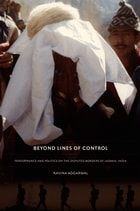
Beyond Lines of Control
Performance and Politics on the Disputed Borders of Ladakh, IndiaRavina Aggarwal
Duke University Press, 2004
Aggarwal brings the insights of performance studies and the growing field of the anthropology of international borders to bear on her extensive fieldwork in Ladakh. She examines how social and religious boundaries are created on the Ladakhi frontier, how they are influenced by directives of the nation-state, and how they are shaped into political struggles for regional control that are legitimized through discourses of religious purity, patriotism, and development. She demonstrates in lively detail the ways that these struggles are enacted in particular cultural performances such as national holidays, festivals, rites of passage ceremonies, films, and archery games. By placing cultural performances and political movements in Ladakh center stage, Aggarwal rewrites the standard plot of nation and border along the Line of Control.
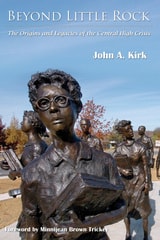
Beyond Little Rock
The Origins and Legacies of the Central High CrisisJohn A. Kirk
University of Arkansas Press, 2007
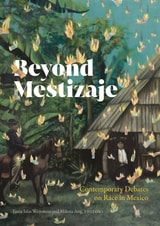
Beyond Mestizaje
Contemporary Debates on Race in MexicoTania Islas Weinstein and Milena Ang, editors
Amherst College Press, 2024
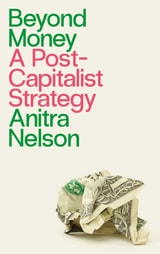
Beyond Money
A Postcapitalist StrategyAnitra Nelson
Pluto Press, 2022
What would a world without money look like? This book is a lively thought experiment that deepens our understanding of how money is the driver of political power, environmental destruction and social inequality today, arguing that it has to be abolished rather than repurposed to achieve a postcapitalist future.
Grounded in historical debates about money, Anitra Nelson draws on a spectrum of political and economic thought and activism, including feminism, ecoanarchism, degrowth, permaculture, autonomism, Marxism and ecosocialism. Looking to Indigenous rights activism and the defense of commons, an international network of activists engaged in a fight for a money-free society emerges.
Beyond Money shows that, by organizing around post-money versions of the future, activists have a hope of creating a world that embodies their radical values and visions.
Beyond Money
A Postcapitalist StrategyAnitra Nelson
Pluto Press, 2022
'A fascinating portal into arguments about why we need to get beyond money' - Harry Cleaver
What would a world without money look like? This book is a lively thought experiment that deepens our understanding of how money is the driver of political power, environmental destruction and social inequality today, arguing that it has to be abolished rather than repurposed to achieve a postcapitalist future.
Grounded in historical debates about money, Anitra Nelson draws on a spectrum of political and economic thought and activism, including feminism, ecoanarchism, degrowth, permaculture, autonomism, Marxism and ecosocialism. Looking to Indigenous rights activism and the defense of commons, an international network of activists engaged in a fight for a money-free society emerges.
Beyond Money shows that, by organizing around post-money versions of the future, activists have a hope of creating a world that embodies their radical values and visions.
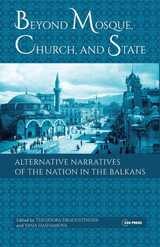
Beyond Mosque, Church, and State
Alternative Narratives of the Nation in the BalkansYana Hashamova
Central European University Press, 2016
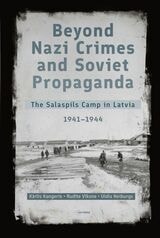
Beyond Nazi Crimes and Soviet Propaganda
The Salaspils Camp in Latvia, 1941-1944Karlis Kangeris
Central European University Press, 2027
The Salaspils camp near Riga, which was operated during the Nazi occupation of Latvia, has long been the subject ofcontrovery. Around 23,000 people were imprisoned there: half were political prisoners, labor resisters and convicted soldiers, the rest prisoners from special operations against civilians in Belarus, Russia and the Latgale region of Latvia. The death toll in the camp, including the number of Jews who died during construction, is well over 3,000 people.
Despite the relatively small size of this camp, it became a model for Russian remembrance policy. Soviet propaganda claimed that up to 100,000 prisoners were killed there, charged that children were used to extract blood, and greatly exaggerated the extent of the persecution of imprisoned lawbreakers and political dissidents . Salaspils became a myth in Russian-speaking society in Latvia that served to reinforce Soviet narratives of the “Great Patriotic War.”
The three authors drew on sources from the archives of Latvia, Germany and Russia and critically analyzed oral testimonies and earlier research to create a comprehensive account of the Salaspils camp in Nazi-occupied Latvia. Their book furthers the understanding of processes of deformation of collective memory and the techniques of memory politics from the Cold War to the present.
Beyond Populism
Angry Politics and the Twilight of NeoliberalismJeff Maskovsky
West Virginia University Press, 2020
Across the world, politics is lurching to the right, ethnic nationalism is on the rise, and people are furious. Beyond Populism critically examines the new destructive projects of resentment that have surfaced in the political spaces opened by neoliberalism’s failures, particularly since the financial collapse of 2008. It contextualizes the recent history of the Global North—notably Brexit and the Trump election—among wider comparative politics, with chapters on India, Colombia, Eastern Europe, the Philippines, Ethiopia, and other parts of the globe marked by populist insurgencies.
The essays collected here explore how global, regional, national, and local structures of power produce angry politics. They go beyond conventional academic debates about populism to explore the different kinds of anger that shape politics today and to make legible the multiplicity of forces, antagonisms, conflicts, and emergent political forms that mark the present. By examining the politics of anger, Beyond Populism also considers what is needed to transform anger from a reactionary to an emancipatory force.
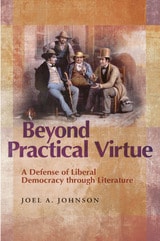
Beyond Practical Virtue
A Defense of Liberal Democracy through LiteratureJoel A. Johnson
University of Missouri Press, 2007
Why hasn’t democracy been embraced worldwide as the best form of government?
Aesthetic critics of democracy such as Carlyle and Nietzsche have argued that modern democracy, by removing the hierarchical institutions that once elevated society’s character, turns citizens into bland, mediocre souls. Joel A. Johnson now offers a rebuttal to these critics, drawing surprising inspiration from American literary classics.
Addressing the question from a new perspective, Johnson takes a fresh look at the worth of liberal democracy in these uncertain times and tackles head-on the thorny question of cultural development. Examining the novels of James Fenimore Cooper, Mark Twain, and William Dean Howells, he shows that through their fiction we can gain a better appreciation of the rich detail of everyday life, making the debate relevant to contemporary discussions of liberal democracy.
Johnson focuses on an issue that liberals have inadequately addressed: whether people tend to develop fully as individuals under liberal democracy when such a regime does little formally to encourage their development. He argues that, though the liberal fear of state-guided culture is well founded, it should not prevent us from evaluating liberalism’s effect on individual flourishing. By extending the debate over the worthiness of liberal democracy to include democracy’s effect on individual development, he contends that the democratic experience is much fuller than the aristocratic one and thus expands the faculties of its citizens.
Critics of American democracy such as John Rawls have sought to transform it into a social or egalitarian democracy in the European style. Johnson shows that neither the debate between Rawls and his communitarian critics nor the ongoing discussion of the globalization of American values adequately addresses the fundamental critique of democratic culture advanced by the aesthetic critics. Johnson’s cogent analysis reaches out to those readers who are ready for a more comprehensive evaluation of liberal democracy, offering new insight into the relationship between the state and the individual while blazing new trails in the intersection of politics and literature.
Beyond Progress
An Interpretive Odyssey to the FutureHugh De Santis
University of Chicago Press, 1996
Explaining that we have arrived at a great historic divide, De Santis asserts that the old modern order is giving way to an age of "mutualism." He draws on world history and the study of international relations to explore the emerging future, in which new forms of social and political identity and regional associations and alignments will be needed to solve global problems. Demonstrating that mutualism will require a dramatic change in the way states, international institutions, corporations, and local communities interact, De Santis argues that this transformation will be especially difficult for the United States, which will have to abandon its exceptionalist identity and rejoin a world it can no longer escape.
Beyond Recognition
Transgender Antidiscrimination Law, Rhetoric, and Ethical ResponsibilityCollins, Laura Jane
University of Alabama Press, 2026
A bold and original analysis of how the complexity of legal struggles over transgender rights is shaped not only by politics but by a deeper cultural anxiety about the meaning of sex itself.
Beyond Recognition: Transgender Antidiscrimination Law, Rhetoric, and Ethical Responsibility is a timely analysis that challenges the idea of transgender antidiscrimination law as a simple matter of inclusion or exclusion. Far from treating the law as a straightforward recognition project, Laura Jane Collins employs a rhetorically responsive approach that reveals how legal systems both reflect and shape our deepest uncertainties about sex, identity, and justice.
Through close readings of Title VII case law, state-level legislation such as California’s Fair Employment and Housing Act, and legislative debates surrounding bathroom access and trans rights, Collins exposes the deep-seated anxieties driving contemporary legal debates. While courts, policymakers, and advocates struggle to construct legal protections, the very act of defining sex within the law exposes law’s limitations.
Rather than condemning the law’s failures or romanticizing its liberatory potential, Collins calls for a more self-reflective, ethically engaged response. She argues that our demand for legal clarity often conceals a broader discomfort with ambiguity—and that the law’s so-called shortcomings may in fact reflect our own refusal to confront the complexity of sex as a category and system of power.
A vital contribution to scholarship in law and rhetoric, gender studies, and critical legal theory, Beyond Recognition invites a deeper reckoning with both legal frameworks and personal responsibility. It offers a compelling perspective on the evolving landscape of transgender rights and the cultural anxieties that continue to shape it.
Beyond Repair?
Mayan Women’s Protagonism in the Aftermath of Genocidal HarmAlison Crosby
Rutgers University Press, 2019
Honorable Mention, 2020 CALACS Book Prize
Beyond Repair? explores Mayan women’s agency in the search for redress for harm suffered during the genocidal violence perpetrated by the Guatemalan state in the early 1980s at the height of the thirty-six-year armed conflict. The book draws on eight years of feminist participatory action research conducted with fifty-four Q’eqchi’, Kaqchikel, Chuj, and Mam women who are seeking truth, justice, and reparation for the violence they experienced during the war, and the women’s rights activists, lawyers, psychologists, Mayan rights activists, and researchers who have accompanied them as intermediaries for over a decade. Alison Crosby and M. Brinton Lykes use the concept of “protagonism” to deconstruct dominant psychological discursive constructions of women as “victims,” “survivors,” “selves,” “individuals,” and/or “subjects.” They argue that at different moments Mayan women have been actively engaged as protagonists in constructivist and discursive performances through which they have narrated new, mobile meanings of “Mayan woman,” repositioning themselves at the interstices of multiple communities and in their pursuit of redress for harm suffered.
Beyond Representation in Contemporary Caribbean Art
Space, Politics, and the Public SphereCarlos Garrido Castellano
Rutgers University Press, 2019
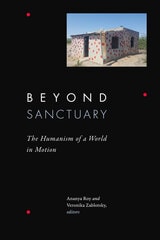
Beyond Sanctuary
The Humanism of a World in MotionAnanya Roy and Veronika Zablotsky, editors
Duke University Press, 2025
Contributors. Leisy Abrego, Damon Azali-Rojas, Amy Sara Carroll, Sharad Chari, Nicholas De Genova, Ricardo Dominguez, Lorgia García-Peña, Sarah Haley, Gaye Theresa Johnson, Moon-Kie Jung, Maria Kaika, Saree Makdisi, Kyle T. Mays, Ananya Roy, Charles Sepulveda, SA Smythe, Vanessa E. Thompson, Charalampos Tsavdaroglou, João H. Costa Vargas, Rinaldo Walcott, Veronika Zablotsky, Maite Zubiaurre
Beyond September 11
An Anthology of DissentEdited by Phil Scraton
Pluto Press, 2002
This anthology includes some of the world's leading commentators - Noam Chomsky, Robert Fisk, Naomi Klein, John Pilger, Paul Foot and A.Sivanandan. It presents accessible, detailed and often deeply personal accounts of the aftermath, the bombing of Afghanistan and the dubious claims for its legality. From investigative journalists to critical academics, human rights lawyers and anti-racist campaigners, the contributors are united in their opposition to military intervention in Afghanistan and beyond and to the attack on civil liberties in the US, the UK and Europe.
From the US and Canada, Herman and Julia Schwendinger, Jonathan Farley, Tony Platt, Cecilia O'Leary, Christian Parenti and Michael Mandel are among critical academics who assess the validity, lawfulness and political consequences of the Bush/Blair agenda. European based commentators include Martti Gronfors and Thomas Mathiesen.
Examining the the context and rhetoric of US vengeance -- ennobled by the symbolic title 'Enduring Freedom' -- they challenge political and popular definitions, constructions,pathologisation and reporting of terrorism. In questioning the representation of war as 'just', the anthology focuses on civilian deaths in Afghanistan, evidence of US/allied atrocities, violations of prisoners' rights and US determination to escalate military offensives, regardless of global destabilisation.
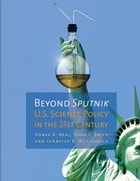
Beyond Sputnik
U.S. Science Policy in the Twenty-First CenturyHomer A. Neal, Tobin L. Smith, and Jennifer B. McCormick
University of Michigan Press, 2008
Science and technology are responsible for almost every advance in our modern quality of life. Yet science isn't just about laboratories, telescopes and particle accelerators. Public policy exerts a huge impact on how the scientific community conducts its work. Beyond Sputnik is a comprehensive survey of the field for use as an introductory textbook in courses and a reference guide for legislators, scientists, journalists, and advocates seeking to understand the science policy-making process. Detailed case studies---on topics from cloning and stem cell research to homeland security and science education---offer readers the opportunity to study real instances of policymaking at work. Authors and experts Homer A. Neal, Tobin L. Smith, and Jennifer B. McCormick propose practical ways to implement sound public policy in science and technology and highlight how these policies will guide the results of scientific discovery for years to come.
Homer A. Neal is the Samuel A. Goudsmit Distinguished University Professor of Physics, Interim President Emeritus, and Vice President for Research Emeritus at the University of Michigan, and is a former member of the U.S. National Science Board.
Tobin L. Smith is Associate Vice President for Federal Relations at the Association of American Universities. He was formerly Assistant Director of the University of Michigan and MIT Washington, DC, offices.
Jennifer B. McCormick is an Assistant Professor of Biomedical Ethics in the Division of General Internal Medicine at the Mayo College of Medicine in Rochester, Minnesota, and is the Associate Director of the Research Ethics Resource, part of the Mayo Clinic's NIH Clinical Translational Science Award research programs.
GO BEYOND SPUTNIK ONLINE--Visit www.science-policy.net for the latest news, teaching resources, learning guides, and internship opportunities in the 21st-Century field of science policy.
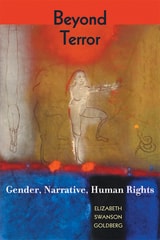
Beyond Terror
Gender, Narrative, Human RightsElizabeth Swanson Goldberg
Rutgers University Press, 2007
In traditional narrative contexts-legal, psychoanalytic, and documentary-the ethics of representing violations of human rights are widely acknowledged. But what are the principles that guide the creation and dissemination of historically based fictional narratives? Are such representations capable of shaping, changing, or even effectively depicting "real" human atrocities? How do existing ideas about gender influence the way these narratives are written and perceived?
In Beyond Terror , Elizabeth Swanson Goldberg argues that after human rights violations have occurred, the realm of representation-actual and fictional-is precisely the ground upon which struggles for justice and peace are waged in legal, emotional, and cultural terms. Moving beyond the myriad of fictional accounts that have portrayed the carnage of World War II, the Holocaust, and the Vietnam War, Goldberg focuses on emerging narratives about recent abuses, including those in South Africa, Rwanda, and Iraq.
Through the lens of literary, feminist, and human rights theory, this important book examines the meaning and influence of films such as Cry Freedom, Three Kings, and Salvador , and novels such as Gil Courtemanche's A Sunday at the Pool in Kigali , Pat Barker's Double Vision , and Edwidge Danticat's The Farming of Bones .
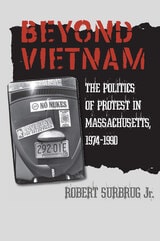
Beyond Vietnam
The Politics of Protest in Massachusetts, 1974-1990Robert Surbrug
University of Massachusetts Press, 2009
Narratives of the 1960s typically describe an ascending arc of political activism that peaked in 1968, then began a precipitous descent as the revolutionary dreams of the New Left failed to come to fruition. The May 1970 killings at Kent State often stand as an epitaph to a decade of protest, after which the principal story becomes the resurgence of the right.
In Beyond Vietnam: The Politics of Protest in Massachusetts, 1974–1990, Robert Surbrug challenges this prevailing paradigm by examining three protest movements that were direct descendants of Vietnam-era activism: the movement against nuclear energy; the nuclear weapons freeze movement; and the Central American solidarity movement. Drawing lessons from the successes and failures of the preceding era, these movements had a significant impact on the liberal wing of the Democratic Party, which itself had been undergoing major transformations in the wake of the 1960s.
By focusing on one state—Massachusetts—Surbrug is able to illuminate the interaction between the activist left and mainstream liberalism, showing how each influenced the other and how together they helped shape the politics of the 1970s and 1980s. During these years, Massachusetts emerged as a center of opposition to nuclear power, the continuing Cold War arms race, and Ronald Reagan's interventionist policies in Central America. The state's role in national policy was greatly enhanced by prominent political figures such as Senator Edward Kennedy, Speaker of the House Thomas “Tip” O'Neill, presidential candidate Governor Michael Dukakis, Vietnam veteran Senator John Kerry, and moderate Republican Silvio Conte.
What Beyond Vietnam shows is that the rise of the right in the aftermath of the 1960s was by no means a unilateral ascendancy. Instead it involved a bifurcation of American politics in which an increasingly strong conservative movement was vigorously contested by an activist left and a reinvigorated mainstream liberalism.

Beyond Wolves
The Politics Of Wolf Recovery And ManagementMartin A. Nie
University of Minnesota Press, 2003
Looks at the next stages of the controversy over wolf recovery
Since 1995, when the U.S. Fish and Wildlife Service released Canadian gray wolves into Yellowstone National Park as part of its wolf recovery program, reintroduction has been widely challenged in public forums and sensationalized in the media. This conflict has pitted western ranchers and property rights activists against environmental groups, highlighting starkly contrasting political perspectives. In this informed account, Martin A. Nie examines not only the future of wolf recovery but also the issues that will define debates around the politics of wildlife management, animal rights issues, and other flash points. The result is a revelatory look at the way the democratic process works when the subject is an environmental hot-button issue.
Examining the wolf recovery program from a policy-making perspective, Nie looks at programs in Alaska, the Lake Superior region, the Northern Rockies, the Southwest, and New England and upstate New York. He analyzes the social, political, and cultural backdrop in the areas in which wolves have been reintroduced and explores such contentious issues as the role of science in public policy; the struggle between wilderness protection, resource management, and private property; and the use of stakeholders in environmental conflicts.For Nie, the debate over wolf recovery is above all a value-based political conflict that should take place in a more inclusive, participatory, and representative democratic arena. Wolves, Nie writes, are an important indicator species both biologically and politically, and in Beyond Wolves, he tells an important story of wolves and people, place and politics, that resonates far beyond the fate of America’s most misunderstood inhabitants.
Beyond a Boundary
50th Anniversary EditionC. L .R. James
Duke University Press, 2013
Named one of the Top 50 Sports Books of All Time by Sports Illustrated
"Beyond a Boundary . . . should find its place on the team with Izaak Walton, Ivan Turgenev, A. J. Liebling, and Ernest Hemingway."—Derek Walcott, The New York Times Book Review
"As a player, James the writer was able to see in cricket a metaphor for art and politics, the collective experience providing a focus for group effort and individual performance. . . . [In] his scintillating memoir of his life in cricket, Beyond a Boundary (1963), James devoted some of his finest pages to this theme."—Edward Said, The Washington Post
"A work of double reverence—for the resilient, elegant ritualism of cricket and for the black people of the world."—Whitney Balliett, The New Yorker
"Beyond a Boundary is a book of remarkable richness and force, which vastly expands our understanding of sports as an element of popular culture in the Western and colonial world."—Mark Naison, The Nation
"Everything James has done has had the mark of originality, of his own flexible, sensitive, and deeply cultured intelligence. He conveys not a rigid doctrine but a delight and curiosity in all the manifestations of life, and the clue to everything lies in his proper appreciation of the game of cricket."—E. P. Thompson, author of The Making of the English Working Class
"Beyond a Boundary is . . . first and foremost an autobiography of a living legend—probably the greatest social theorist of our times."—Manning Marable, Journal of Sport & Social Issues
"The great triumph of Beyond a Boundary is its ability to rise above genre and in its very form explore the complex nature of colonial West Indian society."—Caryl Phillips, The New Republic
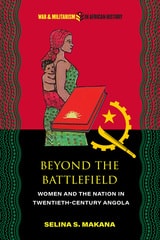
Beyond the Battlefield
Women and the Nation in Twentieth-Century AngolaSelina S. Makana
Ohio University Press, 0
Beyond the Battlefield offers a critical reappraisal of Angola’s nationalist history by centering the experiences and political agency of women during the country’s transition from Portuguese colonial rule to independence. Challenging dominant masculinist narratives that equate anticolonial resistance with armed combat, this study introduces maternalist nationalism as a theoretical framework to illuminate how women engaged in nation building through often-overlooked forms of labor and activism.
While men were largely visible on the battlefield, women fought a parallel struggle on the home front—mobilizing care work, reproductive labor, and political engagement in ways that were essential to the liberation movement and the postindependence state. Drawing on archival sources and women’s testimonies, Makana explores how patriotic motherhood—a concept defined as the fusion of nationalist politics with gendered expectations of women’s roles—enabled women to see themselves as vital contributors to the nation’s future.
This study contributes to scholarship in African history, gender studies, and postcolonial theory by offering a nuanced account of the intersections among militarism, nationalism, and gender. It invites readers to reconsider the frameworks through which political subjectivity and historical memory are constructed. Beyond the Battlefield is an essential resource for scholars and students interested in the gendered dimensions of colonialism, war, and state formation in modern Africa.
Beyond the Boomerang
From Transnational Advocacy Networks to Transcalar Advocacy in International PoliticsEdited by Christopher L. Pallas and Elizabeth A. Bloodgood
University of Alabama Press, 2022
From Networks to Scales: Rethinking Advocacy Power in Global Politics.
Margaret E. Keck and Kathryn Sikkink introduced the boomerang theory in their 1998 book, Activists beyond Borders: Advocacy Networks in International Politics. It remains one of the first broadly applicable theories for why groups of NGOs and interested individuals form transnational advocacy networks. Since its publication, however, the empirical conditions that prompted their theory have changed. The types of actors involved in transnational advocacy have diversified. Northern NGOs have lost power and influence and have been restricted in their access to southern states. Southern NGOs have developed the capacity to undertake advocacy on their own and often built closer relationships with their own governments. The architecture of global governance has likewise changed, providing new avenues of access and influence for southern voices.
In Beyond the Boomerang: From Transnational Advocacy Networks to Transcalar Advocacy in International Politics, editors Christopher L. Pallas and Elizabeth A. Bloodgood offer cutting-edge scholarship that synthesizes a new theoretical framework to develop a coherent, integrated picture of the current dynamics in global advocacy. This new theory of transcalar advocacy focuses on advocacy activities and policy impacts that transcend different levels or scales of political action. In transcalar advocacy, all NGOs–northern and southern–are treated as strategic actors, choosing the targets, scales of advocacy, and partnerships that best suit their capacities and goals. The case studies in the volume develop the empirical grounding of this theory using data from Latin America, Africa, Europe, and Asia, with several chapters featuring cross-national comparison. The chapters highlight the wide variety of actors involved in advocacy work, including NGOs, social movements, international institutions, governments, and businesses. Contributors use both qualitative and quantitative methodologies and bring to bear insights from political science, international relations, and sociology. The case studies also include diverse issue areas, from women’s rights to environmental protection, sustainable agriculture, health policy, and democracy promotion.
Beyond the Boycott
Labor Rights, Human Rights, and Transnational ActivismGay W. Seidman
Russell Sage Foundation, 2007
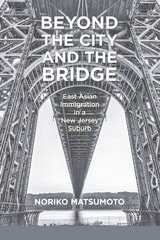
Beyond the City and the Bridge
East Asian Immigration in a New Jersey SuburbMatsumoto, Noriko
Rutgers University Press, 2018
Winner of the Richard P. McCormick Prize from the New Jersey Historical Association
Honorable Mention, 2019 American Sociological Association Book Award - Asia/Asian American Section
In recent decades, the American suburbs have become an important site for immigrant settlement. Beyond the City and the Bridge presents a case study of Fort Lee, Bergen County, on the west side of the George Washington Bridge connecting Manhattan and New Jersey. Since the 1970s, successive waves of immigrants from East Asia have transformed this formerly white community into one of the most diverse suburbs in the greater New York region. Fort Lee today has one of the largest concentrations of East Asians of any suburb on the East Coast, with Chinese, Japanese, and Koreans forming distinct communities while influencing the structure and everyday life of the borough. Noriko Matsumoto explores the rise of this multiethnic suburb—the complex processes of assimilation and reproduction of ethnicities, the changing social relationships, and the conditions under which such transformations have occurred.
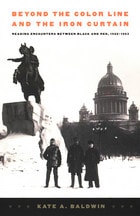
Beyond the Color Line and the Iron Curtain
Reading Encounters between Black and Red, 1922-1963Kate A. Baldwin
Duke University Press, 2002
Langston Hughes, W. E. B. Du Bois, Claude McKay, and Paul Robeson each lived or traveled extensively in the Soviet Union between the 1920s and the 1960s, and each reflected on Communism and Soviet life in works that have been largely unavailable, overlooked, or understudied. Kate A. Baldwin takes up these writings, as well as considerable material from Soviet sources—including articles in Pravda and Ogonek, political cartoons, Russian translations of unpublished manuscripts now lost, and mistranslations of major texts—to consider how these writers influenced and were influenced by both Soviet and American culture. Her work demonstrates how the construction of a new Soviet citizen attracted African Americans to the Soviet Union, where they could explore a national identity putatively free of class, gender, and racial biases. While Hughes and McKay later renounced their affiliations with the Soviet Union, Baldwin shows how, in different ways, both Hughes and McKay, as well as Du Bois and Robeson, used their encounters with the U. S. S. R. and Soviet models to rethink the exclusionary practices of citizenship and national belonging in the United States, and to move toward an internationalism that was a dynamic mix of antiracism, anticolonialism, social democracy, and international socialism.
Recovering what Baldwin terms the "Soviet archive of Black America," this book forces a rereading of some of the most important African American writers and of the transnational circuits of black modernism.
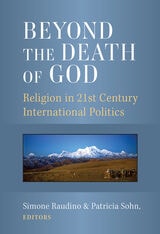
Beyond the Death of God
Religion in 21st Century International PoliticsSimone Raudino and Patricia Sohn, Editors
University of Michigan Press, 2022
This volume offers a nuanced picture with specific instances of religion and politics in Muslim, Jewish, Christian, Buddhist, and Hindu contexts, broadly presenting the phenomenon of religion and politics via country and thematic case studies. Qualitative, quantitative, material, philosophical, and theological analyses draw upon social theory to show how (and why) religion matters deeply in each time and place.
The authors and contributors demonstrate that religion is a significant force that drives societies and polities around the world, and that a radical change in the Western understanding of value-driven global politics is needed. Beyond the Death of God offers new, local voices to Western audiences—through essays that suggest the need for an appreciation of Divinity as a quintessence holding a significant place in the hearts, minds, social orders, and political organization of polities around the world.

Beyond the European Left
Ideology and Political Action in the Belgian EcologyHerbert Kitschelt and Staf Hellemans
Duke University Press, 1990
The authors employ a new research methodology—surveying party militants—that is better adapted to the study of micropolitics than are expert interviews. Herbert Kitschelt and Staf Hallemans show that European Green party activists express an egalitarian and libertarian vision of a desirable social order that builds on, but radically transforms, ideas of the traditional socialist European left. The authors then examine the debates and disagreements among militants on political objectives and the consequences of conflicting views for party organization and strategy. Their findings illuminate the unique dynamics of left-libertarian politics in a number of Western European countries with obvious relevance to current developments in Eastern Europe.

Beyond the Gender Gap in Japan
Gill Steel, Editor
University of Michigan Press, 2019