Results by title
4127 books match the query 'Science' and 162 start with b
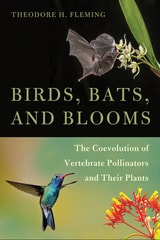
Birds, Bats, and Blooms
The Coevolution of Vertebrate Pollinators and Their PlantsTheodore H. Fleming
University of Arizona Press, 2024
Vertebrate pollinators like bats and birds are keystone species of the Sonoran Desert. Biologist Theodore H. Fleming uses these species—found in the desert around his home—to address two big questions dealing with the evolution of life on Earth: How did these animals evolve, and how did they coevolve with their food plants?
A deeply thoughtful and researched dive into evolutionary history, Birds, Bats, and Blooms offers an engaging trip across evolutionary trajectories as it discusses nectar-feeding birds and bats and their coevolution as pollinators with flowering plants. The primary focus is on New World birds such as hummingbirds and their chiropteran counterparts (nectar-feeding bats in the family Phyllostomidae). It also discusses their Old World ecological counterparts, including sunbirds, honeyeaters, lorikeets, and nectar-feeding bats in the Pteropodidae family. Fleming also addresses the conservation status of these beautiful animals.
Through engaging prose, Fleming pulls together the most recent research in evolutionary biology and pairs it with accounts of his personal interactions with bats and birds. His account includes fourteen color photographs taken by the author during his research trips around the world.
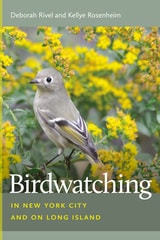
Birdwatching in New York City and on Long Island
Deborah Rivel and Kellye Rosenheim
University Press of New England, 2016
This easy-to-use guide gives seasonal information for both popular birding sites and those off the beaten path. Precise directions to the best viewing locations within the region’s diverse habitats enable birdwatchers to efficiently explore urban and wild birding hotspots. Over 500 species of birds can be seen in New York City’s five boroughs and on Long Island, one of the most densely populated and urbanized regions in North America, which also happens to be situated directly on the Atlantic Flyway. In this fragmented environment of scarce resources, birds concentrate on what’s available. This means that high numbers of birds are found in small spaces. In fact, Central Park alone attracts over 225 species of birds, which birders from around the world flock to see during spring and fall migration. Beyond Central Park, the five boroughs and Long Island have numerous wildlife refuges of extraordinary scenic beauty where resident and migratory birds inhabit forests, wetlands, grasslands, and beaches. These special places present an opportunity to see a wide array of songbirds, endangered nesting shorebirds, raptors, and an unprecedented number and variety of waterfowl. Including the latest information on the seasonal status and distribution of more than 400 species, with 39 maps and over 50 photographs, this full-color guide features information essential to planning a birding visit. It will become the go-to book for both the region’s longtime birders and those exploring the area for the first time.
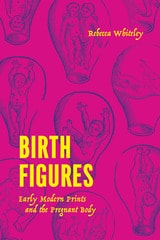
Birth Figures
Early Modern Prints and the Pregnant BodyRebecca Whiteley
University of Chicago Press, 2023
Birth figures are printed images of the pregnant womb, always shown in series, that depict the variety of ways in which a fetus can present for birth. Historian Rebecca Whiteley coined the term and here offers the first systematic analysis of the images’ creation, use, and impact. Whiteley reveals their origins in ancient medicine and explores their inclusion in many medieval gynecological manuscripts, focusing on their explosion in printed midwifery and surgical books in Western Europe from the mid-sixteenth to the mid-eighteenth century. During this period, birth figures formed a key part of the visual culture of medicine and midwifery and were widely produced. They reflected and shaped how the pregnant body was known and treated. And by providing crucial bodily knowledge to midwives and surgeons, birth figures were also deeply entangled with wider cultural preoccupations with generation and creativity, female power and agency, knowledge and its dissemination, and even the condition of the human in the universe.
Birth Figures studies how different kinds of people understood childbirth and engaged with midwifery manuals, from learned physicians to midwives to illiterate listeners. Rich and detailed, this vital history reveals the importance of birth figures in how midwifery was practiced and in how people, both medical professionals and lay readers, envisioned and understood the mysterious state of pregnancy.
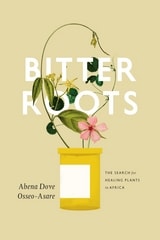
Bitter Roots
The Search for Healing Plants in AfricaAbena Dove Osseo-Asare
University of Chicago Press, 2013

Black Ecologies of Zone A
More-Than-Human Relations on New York's Colonial ShorelineAyasha Guerin
Duke University Press, 2027
Black Environmentalisms
Cajetan Iheka and Jonathan Howard, editors
Duke University Press, 2027

Black Holes and Relativistic Stars
Edited by Robert M. Wald
University of Chicago Press, 1998
Volume contributors: Valeria Ferrari, John L. Friedman, James B. Hartle, Stephen W. Hawking, Gary T. Horowitz, Werner Israel, Roger Penrose, Martin J. Rees, Rafael D. Sorkin, Saul A. Teukolsky, Kip S. Thorne, and Robert M. Wald.
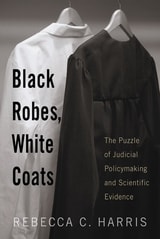
Black Robes, White Coats
The Puzzle of Judicial Policymaking and Scientific EvidenceRebecca C. Harris
Rutgers University Press, 2008
Combining political analysis, scientific reasoning, and an in-depth study of specific state supreme court cases, Black Robes, White Coats is an interdisciplinary examination of the tradition of "gatekeeping," the practice of deciding the admissibility of novel scientific evidence. Rebecca Harris systematically examines judicial policymaking in three areas forensic DNA, polygraphs, and psychological syndrome evidence to answer the question: Why is scientific evidence treated differently among various jurisdictions? These decisions have important implications for evaluating our judicial system and its ability to accurately develop scientific policy.
While the interaction of these professions occurs because the white coats often develop and ascertain knowledge deemed very useful to the black robes, Harris concludes that the black robes are well positioned to render appropriate rulings and determine the acceptability of harnessing a particular science for legal purposes.
First book to systematically gather and analyze judicial decisions on scientific admissibility
Analyzes several key cases including Arizona v. Bible and Kansas v. Marks
Includes examples of evidence in three appendices: forensic DNA, polygraph evidence, and syndrome evidence
Presents an original model of the gatekeeping process
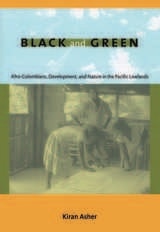
Black and Green
Afro-Colombians, Development, and Nature in the Pacific LowlandsKiran Asher
Duke University Press, 2009
The Pacific region had yet to be overrun by drug traffickers, guerrillas, and paramilitary forces in the early 1990s. It was better known as the largest area of black culture in the country (90 percent of the region’s population is Afro-Colombian) and as a supplier of natural resources, including timber, gold, platinum, and silver. Colombia’s Law 70, passed in 1993, promised ethnic and cultural rights, collective land ownership, and socioeconomic development to Afro-Colombian communities. At the same time that various constituencies sought to interpret and implement Law 70, the state was moving ahead with large-scale development initiatives intended to modernize the economically backward coastal lowlands. Meanwhile national and international conservation organizations were attempting to protect the region’s rich biodiversity. Asher explores this juxtaposition of black rights, economic development, and conservation—and the tensions it catalyzed. She analyzes the meanings attached to “culture,” “nature,” and “development” by the Colombian state and Afro-Colombian social movements, including women’s groups. In so doing, she shows that the appropriation of development and conservation discourses by the social movements had a paradoxical effect. It legitimized the presence of state, development, and conservation agencies in the Pacific region even as it influenced those agencies’ visions and plans.

Black-Body Theory and the Quantum Discontinuity, 1894-1912
Thomas S. Kuhn
University of Chicago Press, 1987
"Every scientist should have this book."—Paul Davies, New Scientist
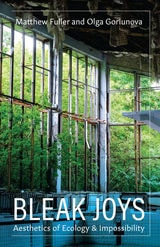
Bleak Joys
Aesthetics of Ecology and ImpossibilityMatthew Fuller
University of Minnesota Press, 2019
A philosophical and cultural distillation of the bleak joys in today’s ambivalent ecologies and patterns of life
Bleak Joys develops an understanding of complex entities and processes—from plant roots to forests to ecological damage and its calculation—as aesthetic. It is also a book about “bad” things, such as anguish and devastation, which relate to the ecological and technical but are also constitutive of politics, the ethical, and the formation of subjects.
Avidly interdisciplinary, Bleak Joys draws on scientific work in plant sciences, computing, and cybernetics, as well as mathematics, literature, and art in ways that are not merely illustrative of but foundational to our understanding of ecological aesthetics and the condition in which the posthumanities are being forged. It places the sensory world of plants next to the generalized and nonlinear infrastructure of irresolvability—the economics of indifference up against the question of how to make a home on Planet Earth in a condition of damaged ecologies. Crosscutting chapters on devastation, anguish, irresolvability, luck, plant, and home create a vivid and multifaceted approach that is as remarkable for its humor as for its scholarly complexity.
Engaging with Deleuze, Guattari, and Bakhtin, among others, Bleak Joys captures the modes of crises that constitute our present ecological and political condition, and reckons with the means by which they are not simply aesthetically known but aesthetically manifest.
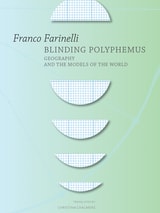
Blinding Polyphemus
Geography and the Models of the WorldFranco Farinelli
Seagull Books, 2016
Following the lessons of nineteenth-century critical German geography, this is a manual of geography without any map. To indicate where things are means already responding, in implicit and unreflective ways, to prior questions about their nature. Blinding Polyphemus not only takes account of the present state of the Earth and of human geography, it redefines the principal models we possess for the description of the world: the map, above all, as well as the landscape, subject, place, city, and space.
Blood Relations
Transfusion and the Making of Human GeneticsJenny Bangham
University of Chicago Press, 2020
Blood Ties
A Story of Falconry and FatherhoodBen Crane
University of Chicago Press, 2020
In this artful and moving memoir, we follow Crane on his remarkable journey of flight and return. Traveling from the United Kingdom to Pakistan, we learn first about the history and practice of falconry, a beautiful and brutal partnership between humans and birds that has persisted for thousands of years. And as Crane’s personal story unfolds, we come to understand how he found solace and insight through his relationships with these animals. “I saw that my feelings toward nature, and birds of prey in particular, ran in parallel with my feelings for my son,” Crane writes. “I worked out that they were, in fact, two sides of the same coin—the deep love of one could, with gentle observation, inform and unlock the deep love for the other. . . . Perhaps this then is the central theme of my story.”
Many of us rely upon animal companions to provide a sense of joy, compassion, and empathy. But as Blood Ties teaches us, our relationships with the creatures among us can also transform us, illuminating what it means both to be human and to be part of the greater wild—what it means to be alive.
Blood and Homeland
Eugenics and Racial Nationalism in Central and Southeast Europe, 1900-1940Paul J. Weindling
Central European University Press, 2007
Bloody Numbers
The Early Atlantic Slave Trade and the Invention of Modern CorporealityPablo F. Gómez
University of Chicago Press, 2026
Upends current thinking about how early modern people started to conceptualize human beings in terms of populations.
Bloody Numbers is a provocative account of the violent world of the sixteenth- and seventeenth-century South Atlantic slave-trading societies, where traders, financiers, officials, surgeons, notaries, ship captains, and others began thinking about human bodies as aggregate populations understood through numbers: measurements, averages, and calculations of risk and value assessed through the tabulation of heights, weights, tumors, scars, and other characteristics. Pablo F. Gómez explores how figures within the world of slave trading used this model for understanding human bodies to generalize about behavior and disease in ways that foreshadowed the work of modern epidemiologists and public health officials—though they employed their calculations with the aim of protecting their financial interests rather than of caring for enslaved people. The ruthlessness inherent in these practices became ingrained in the modern corporeal mathematics that emerged from the early slave trade and diffused through its vast political, financial, logistical, and intellectual networks.
A pathbreaking work, Bloody Numbers reveals the historical actions that rendered populations quantifiable. In doing so, it shows that confronting these origins is essential to understanding the violent political, legal, economic, and scientific practices that ascribe numbers to our own bodies.
Bloomsbury Scientists
Science and Art in the Wake of DarwinMichael Boulter
University College London, 2017

Blueberry Culture
Paul Eck
Rutgers University Press, 1967
Bodies in the Bog and the Archaeological Imagination
Karin Sanders
University of Chicago Press, 2009
Body by Darwin
How Evolution Shapes Our Health and Transforms MedicineJeremy Taylor
University of Chicago Press, 2015
In Body by Darwin, Taylor examines the evolutionary origins of some of our most common and serious health issues. To begin, he looks at the hygiene hypothesis, which argues that our obsession with anti-bacterial cleanliness, particularly at a young age, may be making us more vulnerable to autoimmune and allergic diseases. He also discusses diseases of the eye, the medical consequences of bipedalism as they relate to all those aches and pains in our backs and knees, the rise of Alzheimer’s disease, and how cancers become so malignant that they kill us despite the toxic chemotherapy we throw at them. Taylor explains why it helps to think about heart disease in relation to the demands of an ever-growing, dense, muscular pump that requires increasing amounts of nutrients, and he discusses how walking upright and giving birth to ever larger babies led to a problematic compromise in the design of the female spine and pelvis. Throughout, he not only explores the impact of evolution on human form and function, but he integrates science with stories from actual patients and doctors, closely examining the implications for our health.
As Taylor shows, evolutionary medicine allows us think about the human body and its adaptations in a completely new and productive way. By exploring how our body’s performance is shaped by its past, Body by Darwin draws powerful connections between our ancient human history and the future of potential medical advances that can harness this knowledge.
Bogs of the Northeast
Charles W. Johnson
University Press of New England, 1985
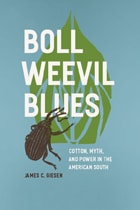
Boll Weevil Blues
Cotton, Myth, and Power in the American SouthJames C. Giesen
University of Chicago Press, 2011
Between the 1890s and the early 1920s, the boll weevil slowly ate its way across the Cotton South from Texas to the Atlantic Ocean. At the turn of the century, some Texas counties were reporting crop losses of over 70 percent, as were areas of Louisiana, Arkansas, and Mississippi. By the time the boll weevil reached the limits of the cotton belt, it had destroyed much of the region’s chief cash crop—tens of billions of pounds of cotton, worth nearly a trillion dollars.
As staggering as these numbers may seem, James C. Giesen demonstrates that it was the very idea of the boll weevil and the struggle over its meanings that most profoundly changed the South—as different groups, from policymakers to blues singers, projected onto this natural disaster the consequences they feared and the outcomes they sought. Giesen asks how the myth of the boll weevil’s lasting impact helped obscure the real problems of the region—those caused not by insects, but by landowning patterns, antiquated credit systems, white supremacist ideology, and declining soil fertility. Boll Weevil Blues brings together these cultural, environmental, and agricultural narratives in a novel and important way that allows us to reconsider the making of the modern American South.
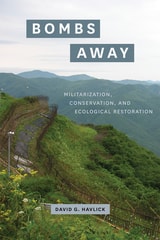
Bombs Away
Militarization, Conservation, and Ecological RestorationDavid G. Havlick
University of Chicago Press, 2018
Looking at particular international sites of transition—from Indiana’s Big Oaks National Wildlife Refuge to Cold War remnants along the former Iron Curtain—Havlick argues that these new frontiers of conservation must accomplish seemingly antithetical aims: rebuilding and protecting ecosystems, or restoring life, while also commemorating the historical and cultural legacies of warfare and militarization. Developing these ideas further, he shows that despite the ecological devastation often wrought by military testing and training, these activities need not be inconsistent with environmental goals, and in some cases can even complement them—a concept he calls ecological militarization. A profound, clear explication of landscapes both fraught and fecund, marked by death but also reservoirs of life, Bombs Away shows us how “military activities, conservation goals, and ecological restoration efforts are made to work together to create new kinds of places and new conceptions of place.”
Bonebeds
Genesis, Analysis, and Paleobiological SignificanceEdited by Raymond R. Rogers, David A. Eberth, and Anthony R. Fiorillo
University of Chicago Press, 2007
Thirteen respected researchers combine their experiences in Bonebeds, providing readers with workable definitions, theoretical frameworks, and a compendium of modern techniques in bonebed data collection and analysis. By addressing the historical, theoretical, and practical aspects of bonebed research, this edited volume—the first of its kind—provides the background and methods that students and professionals need to explore and understand these fantastic records of ancient life and death.
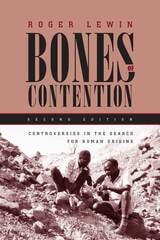
Bones of Contention
Controversies in the Search for Human OriginsRoger Lewin
University of Chicago Press, 1997
in many ways, remains contentious.
"[An] un-put-downable book."—John Gribbon, Times Educational Supplement
"Not just another 'stones and bones' account of human evolution. It is Lewin's thesis, amply demonstrated, that paleoanthropology is the most subjective of sciences because it engages the emotions of virtually everyone; and since the evidence is scrappy, interpretation is everything. . . . A splendid, stirring, and eye-opening account, to be devoured."—Kirkus Reviews, starred review
"[Lewin shows] 'how very unscientific the process of scientific inquiry can be.'. . . Bones of Contention is . . . serious intellectual history."—Edward Dolnick, Wall Street Journal
"[Lewin] documents his thesis in persuasive detail. . . . The reader is carried along by the power of Mr. Lewin's reporting."—Robert Wright, New York Times Book Review
Bones, Clones, and Biomes
The History and Geography of Recent Neotropical MammalsEdited by Bruce D. Patterson and Leonora P. Costa
University of Chicago Press, 2012
As explorers and scientists have known for decades, the Neotropics harbor a fantastic array of our planet’s mammalian diversity, from capybaras and capuchins to maned wolves and mouse opossums to sloths and sakis. This biological bounty can be attributed partly to the striking diversity of Neotropical landscapes and climates and partly to a series of continental connections that permitted intermittent faunal exchanges with Africa, Antarctica, Australia, and North America. Thus, to comprehend the development of modern Neotropical mammal faunas requires not only mastery of the Neotropics’ substantial diversity, but also knowledge of mammalian lineages and landscapes dating back to the Mesozoic.
Bones, Clones, and Biomes offers just that—an exploration of the development and relationships of the modern mammal fauna through a series of studies that encompass the last 100 million years and both Central and South America. This work serves as a complement to more taxonomically driven works, providing for readers the long geologic and biogeographic contexts that undergird the abundance and diversity of Neotropical mammals. Rather than documenting diversity or distribution, this collection traverses the patterns that the distributions and relationships across mammal species convey, bringing together for the first time geology, paleobiology, systematics, mammalogy, and biogeography. Of critical importance is the book’s utility for current conservation and management programs, part of a rapidly rising conservation paleobiology initiative.
Books of Secrets
Natural Philosophy in England, 1550-1600Allison Kavey
University of Illinois Press, 2007
Books of the Body
Anatomical Ritual and Renaissance LearningAndrea Carlino
University of Chicago Press, 1999
In Books of the Body, Andrea Carlino explores the nature and causes of this intellectual inertia. On the one hand, anatomical practice was constrained by a reverence for classical texts and the belief that the study of anatomy was more properly part of natural philosophy than of medicine. On the other hand, cultural resistance to dissection and dismemberment of the human body, as well as moral and social norms that governed access to cadavers and the ritual of their public display in the anatomy theater, also delayed anatomy's development.
A fascinating history of both Renaissance anatomists and the bodies they dissected, this book will interest anyone studying Renaissance science, medicine, art, religion, and society.
Boomtown
Runaway Globalisation on the Queensland CoastThomas Hylland Eriksen
Pluto Press, 2018
Capturing Gladstone at the peak of its accelerated growth in 2013–14, Thomas Hylland Eriksen dissects here the boomtown phenomenon in all its profound ambivalence. Based on ethnographic fieldwork, the book examines local identity, family life, infrastructure, and local services and explores the tensions and resentments surrounding migrant workers.
Writ large in Boomtown are the clashes of scale at the heart of the town’s contradictions, where the logic of big industry and the state compete with those of the individual and the local community and ecology, crystallizing the current crisis of political legitimacy that is unfurling all over the world.

Borderscapes
Hidden Geographies and Politics at Territory’s EdgePrem Kumar Rajaram
University of Minnesota Press, 2007
Connecting critical issues of state sovereignty with empirical concerns, Borderscapes interrogates the limits of political space. The essays in this volume analyze everyday procedures, such as the classifying of migrants and refugees, security in European and American detention centers, and the DNA sampling of migrants in Thailand, showing the border as a moral construct rich with panic, danger, and patriotism.
Conceptualizing such places as immigration detention camps and refugee camps as areas of political contestation, this work forcefully argues that borders and migration are, ultimately, inextricable from questions of justice and its limits.
Contributors: Didier Bigo, Institut d’Études Politiques, Paris; Karin Dean; Elspeth Guild, U of Nijmegen; Emma Haddad; Alexander Horstmann, U of Münster; Alice M. Nah, National U of Singapore; Suvendrini Perera, Curtin U of Technology, Australia; James D. Sidaway, U of Plymouth, UK; Nevzat Soguk, U of Hawai‘i; Decha Tangseefa, Thammasat U, Bangkok; Mika Toyota, National U of Singapore.
Prem Kumar Rajaram is assistant professor of sociology and social anthropology at the Central European University, Budapest, Hungary.
Carl Grundy-Warr is senior lecturer of geography at the National University of Singapore.
Born This Way
Science, Citizenship, and Inequality in the American LGBTQ+ MovementJoanna Wuest
University of Chicago Press, 2023
The story of how a biologically driven understanding of gender and sexuality became central to US LGBTQ+ political and legal advocacy.
Across protests and courtrooms, LGBTQ+ advocates argue that sexual and gender identities are innate. Oppositely, conservatives incite panic over “groomers” and a contagious “gender ideology” that corrupts susceptible children. Yet, as this debate rages on, the history of what first compelled the hunt for homosexuality’s biological origin story may hold answers for the queer rights movement’s future.
Born This Way tells the story of how a biologically based understanding of gender and sexuality became central to LGBTQ+ advocacy. Starting in the 1950s, activists sought out mental health experts to combat the pathologizing of homosexuality. As Joanna Wuest shows, these relationships were forged in subsequent decades alongside two broader, concurrent developments: the rise of an interest-group model of rights advocacy and an explosion of biogenetic and bio-based psychological research. The result is essential reading to fully understand LGBTQ+ activism today and how clashes over science remain crucial to equal rights struggles.
Born This Way
Science, Citizenship, and Inequality in the American LGBTQ+ MovementJoanna Wuest
University of Chicago Press, 2023
This is an auto-narrated audiobook version of this book.
The story of how a biologically driven understanding of gender and sexuality became central to US LGBTQ+ political and legal advocacy.
Across protests and courtrooms, LGBTQ+ advocates argue that sexual and gender identities are innate. Oppositely, conservatives incite panic over “groomers” and a contagious “gender ideology” that corrupts susceptible children. Yet, as this debate rages on, the history of what first compelled the hunt for homosexuality’s biological origin story may hold answers for the queer rights movement’s future.
Born This Way tells the story of how a biologically based understanding of gender and sexuality became central to LGBTQ+ advocacy. Starting in the 1950s, activists sought out mental health experts to combat the pathologizing of homosexuality. As Joanna Wuest shows, these relationships were forged in subsequent decades alongside two broader, concurrent developments: the rise of an interest-group model of rights advocacy and an explosion of biogenetic and bio-based psychological research. The result is essential reading to fully understand LGBTQ+ activism today and how clashes over science remain crucial to equal rights struggles.
Borrowed Knowledge
Chaos Theory and the Challenge of Learning across DisciplinesStephen H. Kellert
University of Chicago Press, 2008
Using the recent explosion in the use (and abuse) of chaos theory, Borrowed Knowledge and the Challenge of Learning across Disciplines examines the relationship between science and other disciplines as well as the place of scientific knowledge within our broader culture. Stephen H. Kellert’s detailed investigation of the myriad uses of chaos theory reveals serious problems that can arise in the interchange between science and other knowledge-making pursuits, as well as opportunities for constructive interchange. By engaging with recent debates about interdisciplinary research, Kellert contributes a theoretical vocabulary and a set of critical frameworks for the rigorous examination of borrowing.
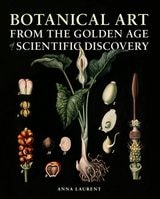
Botanical Art from the Golden Age of Scientific Discovery
Anna Laurent
University of Chicago Press, 2016
This beautifully illustrated oversized book gives the humble wall chart its due, reproducing more than two hundred of them in dazzling full color. Each wall chart is accompanied by captions that offer accessible information about the species featured, the scientists and botanical illustrators who created it, and any particularly interesting or innovative features the chart displays. And gardeners will be pleased to discover useful information about plant anatomy and morphology and species differences. We see lilies and tulips, gourds, aquatic plants, legumes, poisonous plants, and carnivorous plants, all presented in exquisite, larger-than-life detail.
A unique fusion of art, science, and education, the wall charts gathered here offer a glimpse into a wonderful scientific heritage and are sure to thrill naturalists, gardeners, and artists alike.
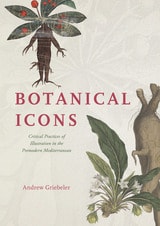
Botanical Icons
Critical Practices of Illustration in the Premodern MediterraneanAndrew Griebeler
University of Chicago Press, 2024
This book traces the history of botanical illustration in the Mediterranean from antiquity to the early modern period. By examining Greek, Latin, and Arabic botanical inquiry in this early era, Andrew Griebeler shows how diverse and sophisticated modes of plant depiction emerged and ultimately gave rise to practices now recognized as central to modern botanical illustration. The author draws on centuries of remarkable and varied documentation from across Europe and the Mediterranean.
Lavishly illustrated, Botanical Icons marshals ample evidence for a dynamic and critical tradition of botanical inquiry and nature observation in the late antique and medieval Mediterranean. The author reveals that many of the critical practices characteristic of modern botanical illustrations began in premodern manuscript culture. Consequently, he demonstrates that the distinctions between pre- and early modern botanical illustration center more on the advent of print, the expansion of collections and documentation, and the narrowing of the range of accepted forms of illustration than on the invention of critical and observational practices exclusive to modernity.
Griebeler’s emphasis on continuity, intercultural collaboration, and the gradual transformation of Mediterranean traditions of critical botanical illustration persuasively counters previously prevalent narratives of rupture and Western European exceptionalism in the histories of art and science.
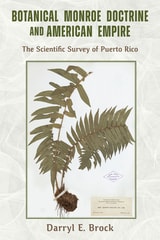
Botanical Monroe Doctrine and American Empire
The Scientific Survey of Puerto RicoDarryl E. Brock
University of Alabama Press, 2026
Explores how a US-led natural history survey of Puerto Rico served American Empire while yet catalyzing Boricua cultural nationalism
In Botanical Monroe Doctrine and American Empire, Darryl E. Brock examines the history, influence, and legacy of an ambitious effort to conduct a “physical and natural history survey of Porto [Puerto] Rico.” As founder of The New York Botanical Garden, Nathaniel Lord Britton advanced a botanical Monroe Doctrine that sought to counter British and European scientific influence in the Americas by establishing American authority over the naming and classification of species. Although initially aligned with imperial and “civilizing” aims, the Scientific Survey of Puerto Rico ultimately contributed to modernization, professionalization, and cultural preservation on the island. Its work in Taíno archaeology and jíbaro folklore helped lay the foundation for today’s Caguana Indigenous Ceremonial Park and reinforced currents of Boricua cultural nationalism. The survey also intersected with broader political and economic developments, influencing areas from bilingual education to New Deal administration in Puerto Rico.
Sponsored by the New York Academy of Sciences, the survey was conducted by The New York Botanical Garden in partnership with the American Museum of Natural History and the Yale Peabody Museum, with the final report issued in 1970. Puerto Rican scientists and intellectuals, including mycologist and future University of Puerto Rico chancellor Carlos Chardón, actively contributed to the project. Expanding to the Virgin Islands, the survey encompassed nearly two dozen expeditions, collected more than 10,000 plant specimens, and identified thirty-eight new species. Its nineteen published volumes remain among the most comprehensive multidisciplinary scientific studies of any tropical region. Brock’s groundbreaking work is essential reading for those interested in the history of science, Puerto Rico, and American empire.
Bountiful Deserts
Sustaining Indigenous Worlds in Northern New SpainCynthia Radding
University of Arizona Press, 2022
Common understandings drawn from biblical references, literature, and art portray deserts as barren places that are far from God and spiritual sustenance. In our own time, attention focuses on the rigors of climate change in arid lands and the perils of the desert in the northern Mexican borderlands for migrants seeking shelter and a new life.
Bountiful Deserts foregrounds the knowledge of Indigenous peoples in the arid lands of northwestern Mexico, for whom the desert was anything but barren or empty. Instead, they nurtured and harvested the desert as a bountiful and sacred space. Drawing together historical texts and oral testimonies, archaeology, and natural history, author Cynthia Radding develops the relationships between people and plants and the ways that Indigenous people sustained their worlds before European contact through the changes set in motion by Spanish encounters, highlighting the long process of colonial conflicts and adaptations over more than two centuries. This work reveals the spiritual power of deserts by weaving together the cultural practices of historical peoples and contemporary living communities, centered especially on the Yaqui/Yoeme and Mayo/Yoreme.
Radding uses the tools of history, anthropology, geography, and ecology to paint an expansive picture of Indigenous worlds before and during colonial encounters. She re-creates the Indigenous worlds in both their spiritual and material realms, bringing together the analytical dimension of scientific research and the wisdom of oral traditions in its exploration of different kinds of knowledge about the natural world.
Published in cooperation with the William P. Clements Center for Southwest Studies, Southern Methodist University
Break Up the Anthropocene
Steve Mentz
University of Minnesota Press, 2019
Takes the singular eco-catastrophic “Age of Man” and redefines this epoch
We live in a new world: the Anthropocene. The Age of Man is defined in many ways, and most dramatically through climate change, mass extinction, and human marks in the geological record. Ideas of the Anthropocene spill out from the geophysical sciences into the humanities, social sciences, the arts, and mainstream debates—but it’s hard to know what the new coinage really means. Break Up the Anthropocene argues that this age should subvert imperial masculinity and industrial conquest by opening up the plural possibilities of Anthropocene debates of resilience, adaptation, and the struggle for environmental justice.
Forerunners: Ideas First
Short books of thought-in-process scholarship, where intense analysis, questioning, and speculation take the lead
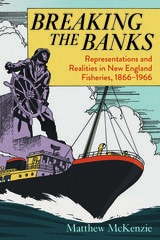
Breaking the Banks
Representations and Realities in New England Fisheries, 1866-1966Matthew McKenzie
University of Massachusetts Press, 2018
Books, films, and the media have long portrayed the Yankee fisherman's hard-scrabble existence, as he faced brutal weather on the open seas and unnecessary governmental restrictions. As McKenzie contends, this simplistic view has long betrayed commercial fisheries' sophisticated legislative campaigns in Washington, DC, as they sought federal subsidies and relief and, eventually, fewer constricting regulations. This clash between fisheries' representation and their reality still grips fishing communities today as they struggle to navigate age-old trends of fleet consolidation, stock decline, and intense competition.

Breeding Bio Insecurity
How U.S. Biodefense Is Exporting Fear, Globalizing Risk, and Making Us All Less SecureLynn C. Klotz and Edward J. Sylvester
University of Chicago Press, 2009
In the years since the 9/11 attacks—and the subsequent lethal anthrax letters—the United States has spent billions of dollars on measures to defend the population against the threat of biological weapons. But as Lynn C. Klotz and Edward J. Sylvester argue forcefully in Breeding Bio Insecurity, all that money and effort hasn’t made us any safer—in fact, it has made us more vulnerable.
Breeding Bio Insecurity reveals the mistakes made to this point and lays out the necessary steps to set us on the path toward true biosecurity. The fundamental problem with the current approach, according to the authors, is the danger caused by the sheer size and secrecy of our biodefense effort. Thousands of scientists spread throughout hundreds of locations are now working with lethal bioweapons agents—but their inability to make their work public causes suspicion among our enemies and allies alike, even as the enormous number of laboratories greatly multiplies the inherent risk of deadly accidents or theft. Meanwhile, vital public health needs go unmet because of this new biodefense focus. True biosecurity, the authors argue, will require a multipronged effort based in an understanding of the complexity of the issue, guided by scientific ethics, and watched over by a vigilant citizenry attentive to the difference between fear mongering and true analysis of risk.
An impassioned warning that never loses sight of political and scientific reality, Breeding Bio Insecurity is a crucial first step toward meeting the evolving threats of the twenty-first century.
Breeding Contempt
The History of Coerced Sterilization in the United StatesMark A. Largent
Rutgers University Press, 2007
Most closely associated with the Nazis and World War II atrocities, eugenics is sometimes described as a government-orchestrated breeding program, other times as a pseudo-science, and often as the first step leading to genocide. Less frequently it is recognized as a movement having links to theUnited States. But eugenics does have a history in this country, and Mark A. Largent tells that story by exploring one of its most disturbing aspects, the compulsory sterilization of more than 64,000 Americans.
The book begins in the mid-nineteenth century, when American medical doctors began advocating the sterilization of citizens they deemed degenerate. By the turn of the twentieth century, physicians, biologists, and social scientists championed the cause, and lawmakers in two-thirds of the United States enacted laws that required the sterilization of various criminals, mental health patients, epileptics, and syphilitics. The movement lasted well into the latter half of the century, and Largent shows how even today the sentiments that motivated coerced sterilization persist as certain public figures advocate compulsory birth control—such as progesterone shots for male criminals or female welfare recipients—based on the same assumptions and motivations that had brought about thousands of coerced sterilizations decades ago.
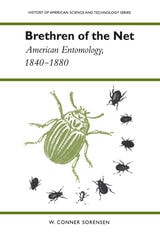
Brethren of the Net
American Entomology, 1840-1880W. Conner Sorensen
University of Alabama Press, 1995
Draws together information from diverse sources to illuminate an important chapter in the history of American science
Sorensen asks how it came about that, within the span of forty years, the American entomological community developed from a few gentlemen naturalists with primary links to Europe to a thriving scientific community exercising world leadership in entomological science. He investigates the relationship between American and European entomology, the background of American entomologists, the implications of entomological theory, and the specific links between 19th-century American society and the rapid institutional growth and advances in theoretical and applied entomology.
By the 1880s the entomologists constituted the largest single group of American zoologists and the largest group of ecologists in the world. While rooted in the British natural history tradition, these individuals developed a distinctive American style of entomological investigation. Inspired by the concept of the balance of nature, they excelled in field investigations of North American insects with special emphasis on insect pests that threatened crop production in a market-oriented agriculture. During this period, entomologists described over ten times as many North American insect species as had been previously named, and they consolidated their findings in definitive collections. Employing evolutionary theory, they contributed to the growing understanding of insect migration, mimicry, seasonal dimorphism, and the symbiotic relationship of plant and animal species. Americans also led in the revision of insect taxonomy according to the new principles. Their employment of entomological findings in the practical control of agricultural pests set new standards worldwide. Initially ridiculed as eccentric bug hunters, American entomologists eventually achieved stature as agricultural advisers and as investigators into the origin and nature of life.
Based primarily on the correspondence of American entomologists, Brethren of the Net draws together information from diverse sources to illuminate an important chapter in the history of American science.
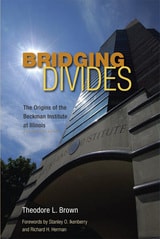
Bridging Divides
The Origins of the Beckman Institute at IllinoisTheodore L. Brown. Forewords by Stanley O. Ikenberry and Richard H. Herman.
University of Illinois Press, 2009
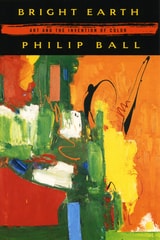
Bright Earth
Art and the Invention of ColorPhilip Ball
University of Chicago Press, 2003
Finalist for the 2002 National Book Critics Circle Award.
Brilliance in Exile
The Diaspora of Hungarian Scientists from John von Neumann to Katalin KarikóIstván Hargittai
Central European University Press, 2023
By addressing the enigma of the exceptional success of Hungarian emigrant scientists and telling their life stories, Brilliance in Exile combines scholarly analysis with fascinating portrayals of uncommon personalities. István and Balazs Hargittai discuss the conditions that led to five different waves of emigration of scientists from the early twentieth century to the present. Although these exodes were driven by a broad variety of personal motivations, the attraction of an open society with inclusiveness, tolerance, and – needless to say – better circumstances for working and living, was the chief force drawing them abroad.
While emigration from East to West is a general phenomenon, this book explains why and how the emigration of Hungarian scientists is distinctive. The high number of Nobel Prizes among this group is only one indicator. Multicultural tolerance, a quickly emerging, considerably Jewish, urban middle class, and a very effective secondary school system were positive legacies of the Austro-Hungarian Monarchy. Multiple generations, shaped by these conditions, suffered from the increasingly exclusionist, intolerant, antisemitic, and economically stagnating environment, and chose to go elsewhere. “I would rather have roots than wings, but if I cannot have roots, I shall use wings," explained Leo Szilard, one of the fathers of the Atom Bomb.
Bristlecone Pine in the White Mountains of California
Growth and Ring-Width CharacteristicsHarold C. Fritts
University of Arizona Press, 1969
Papers of the Laboratory of Tree-Ring Research, No. 4
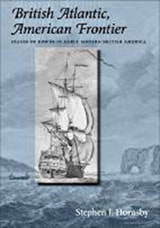
British Atlantic, American Frontier
Spaces of Power in Early Modern British AmericaStephen J. Hornsby
University Press of New England, 2004
British Literature and Technology, 1600-1830
Kristin M. Girten
Bucknell University Press, 2023
Enlightenment-era writers had not yet come to take technology for granted, but nonetheless were—as we are today—both attracted to and repelled by its potential. This volume registers the deep history of such ambivalence, examining technology’s influence on Enlightenment British literature, as well as the impact of literature on conceptions of, attitudes toward, and implementations of technology. Offering a counterbalance to the abundance of studies on literature and science in seventeenth- and eighteenth-century Britain, this volume’s focus encompasses approaches to literary history that help us understand technologies like the steam engine and the telegraph along with representations of technology in literature such as the “political machine.” Contributors ultimately show how literature across genres provided important sites for Enlightenment readers to recognize themselves as “chimeras”—“hybrids of machine and organism”—and to explore the modern self as “a creature of social reality as well as a creature of fiction.”

British Television
The formative yearsRussell Burns
The Institution of Engineering and Technology, 1986
British Weather and the Climate of Enlightenment
Jan Golinski
University of Chicago Press, 2007
Enlightenment inquiries into the weather sought to impose order on a force that had the power to alter human life and social conditions. British Weather and the Climate of Enlightenment reveals how a new sense of the national climate emerged in the eighteenth century from the systematic recording of the weather, and how it was deployed in discussions of the health and welfare of the population. Enlightened intellectuals hailed climate’s role in the development of civilization but acknowledged that human existence depended on natural forces that would never submit to rational control.
Reading the Enlightenment through the ideas, beliefs, and practices concerning the weather, Jan Golinski aims to reshape our understanding of the movement and its legacy for modern environmental thinking. With its combination of cultural history and the history of science, British Weather and the Climate of Enlightenment counters the claim that Enlightenment progress set humans against nature, instead revealing that intellectuals of the age drew characteristically modern conclusions about the inextricability of nature and culture.