Results by title
8642 books match the query '20th Century' and 437 start with b

Beyond Left and Right
Insurgency and the EstablishmentDavid A. Horowitz
University of Illinois Press, 1997
Beyond Left and Right is a sweeping overview of political insurgency in the United States from the 1880s to the present. It is at once a stunning synthesis, drawing on a large number of scholarly works, and an ambitious and original piece of research. The book ranges over diverse individuals and groups that have attacked the established order, from the left and the right, from the Populists of the 1890s to Ross Perot and the religious right of our times, dealing along the way with non-interventionists, Klans, monetary radicals, McCarthyites, Birchers, and Reaganites, among many others.
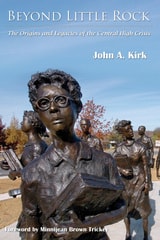
Beyond Little Rock
The Origins and Legacies of the Central High CrisisJohn A. Kirk
University of Arkansas Press, 2007
Beyond Progress
An Interpretive Odyssey to the FutureHugh De Santis
University of Chicago Press, 1996
Explaining that we have arrived at a great historic divide, De Santis asserts that the old modern order is giving way to an age of "mutualism." He draws on world history and the study of international relations to explore the emerging future, in which new forms of social and political identity and regional associations and alignments will be needed to solve global problems. Demonstrating that mutualism will require a dramatic change in the way states, international institutions, corporations, and local communities interact, De Santis argues that this transformation will be especially difficult for the United States, which will have to abandon its exceptionalist identity and rejoin a world it can no longer escape.
Beyond Respectability
The Intellectual Thought of Race WomenBrittney C. Cooper
University of Illinois Press, 2017
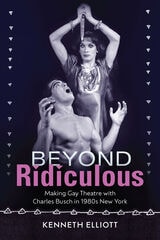
Beyond Ridiculous
Making Gay Theatre with Charles Busch in 1980s New YorkKenneth Elliott
University of Iowa Press, 2023
In Beyond Ridiculous, Elliott narrates in first-person the company’s Cinderella tale of fun, heartbreak, and dishy drama. At the center of the book is a young Charles Busch, an unforgettable personality fighting to be seen, be heard, and express his unique style as a writer-performer in plays such as Psycho Beach Party and The Lady in Question. The tragedy of AIDS among treasured friends in the company, the struggle for mainstream acceptance of LGBTQ+ theatre during the reign of President Ronald Reagan, and the exploration of new ways of being a gay theatre artist make the book a bittersweet and joyous ride.
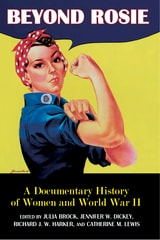
Beyond Rosie
A Documentary History of Women and World War IIJulia Brock
University of Arkansas Press, 2015
Beyond Rosie offers readers an opportunity to see the numerous contributions they made to the fight against the Axis powers and how American women’s roles changed during the war. The primary documents (newspapers, propaganda posters, cartoons, excerpts from oral histories and memoirs, speeches, photographs, and editorials) collected here represent cultural, political, economic, and social perspectives on the diverse roles women played during World War II.
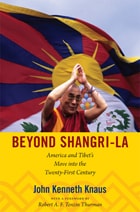
Beyond Shangri-La
America and Tibet's Move into the Twenty-First CenturyJohn Kenneth Knaus
Duke University Press, 2012
Since the late 1950s, the rugged resolve of the Dalai Lama and his people and the growing respect for their efforts to free their homeland from Chinese occupation have made Tibet's political and cultural status a pressing issue in international affairs. So has the realization by nations, including the United States, that their geopolitical interests would best be served by the defeat of the Chinese and the achievement of Tibetan self-determination. Beyond Shangri-La provides unique insight into the efforts of the U.S. government and committed U.S. citizens to support a free Tibet.

Beyond Text
Theater and Performance in Print After 1900Jennifer Buckley
University of Michigan Press, 2019
Winner of the 2020 Outstanding Book Award from the Association for Theatre in Higher Education
Taking up the work of prominent theater and performance artists, Beyond Text reveals the audacity and beauty of avant-garde performance in print. With extended analyses of the works of Edward Gordon Craig, German expressionist Lothar Schreyer, the Living Theatre, Carolee Schneemann, and Guillermo Gómez-Peña, the book shows how live performance and print aesthetically revived one another during a period in which both were supposed to be in a state of terminal cultural decline. While the European and American avant-gardes did indeed dismiss the dramatic author, they also adopted print as a theatrical medium, altering the status, form, and function of text and image in ways that continue to impact both the performing arts and the book arts.
Beyond Text participates in the ongoing critical effort to unsettle conventional historical and theoretical accounts of text-performance relations, which have too often been figured in binary, chronological (“from page to stage”), or hierarchical terms. Across five case studies spanning twelve decades, Beyond Text demonstrates that print—as noun and verb—has been integral to the practices of modern and contemporary theater and performance artists.
Beyond The Barricades
Nicaragua and the Struggle for the Sandinista Press, 1979–1998Adam Jones
Ohio University Press, 2002
Throughout the 1980s, Barricada, the official daily newspaper of the ruling Sandinista Front, played the standard role of a party organ, seeking the mobilize the Nicaraguan public to support the revolutionary agenda. Beyond the Barricades, however, reveals a story that is both more intriguing and much more complex. Even during this period of sweeping transformation and outside military siege, another, more professional agenda also motivated Barricada’s journalists and editors.
When the Sandinistas unexpectedly fell from power in the 1990 elections, Barricada gained a substantial degree of autonomy that allowed it to explore a more balanced and nuanced journalism “in the national interest.” This new orientation, however, ran afoul of more orthodox party leaders, who gradually gained the upper hand in the bitter internal struggle that wracked the Sandinista Front in the early 1990s. The paper closed its doors in January 1998.
Adam Jones’s outstanding study offers an unprecedented behin-the-scenes looks at Barricada’s two decades of evolution and dissolution. It also presents an intimate portrait of a key revolutionary institution and the memorable individuals who were a part of it.
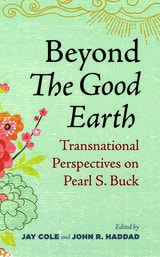
Beyond The Good Earth
Transnational Perspectives on Pearl S. BuckJay Cole
West Virginia University Press, 2019
How well do we really know Pearl S. Buck? Many think of Buck solely as the Nobel laureate and Pulitzer Prize–winning author of The Good Earth, the novel that explained China to Americans in the 1930s. But Buck was more than a novelist and interpreter of China. As the essays in Beyond The Good Earth show, she possessed other passions and projects, some of which are just now coming into focus.
Who knew, for example, that Buck imagined and helped define multiculturalism long before it became a widely known concept? Or that she founded an adoption agency to locate homes for biracial children from Asia? Indeed, few are aware that she advocated successfully for a genocide convention after World War II and was ahead of her time in envisioning a place for human rights in American foreign policy. Buck’s literary works, often dismissed as simple portrayals of Chinese life, carried a surprising degree of innovation as she experimented with the styles and strategies of modernist artists.
In Beyond The Good Earth, scholars and writers from the United States and China explore these and other often overlooked topics from the life of Pearl S. Buck, positioning her career in the context of recent scholarship on transnational humanitarian activism, women’s rights activism, and civil rights activism.
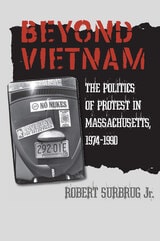
Beyond Vietnam
The Politics of Protest in Massachusetts, 1974-1990Robert Surbrug
University of Massachusetts Press, 2009
Narratives of the 1960s typically describe an ascending arc of political activism that peaked in 1968, then began a precipitous descent as the revolutionary dreams of the New Left failed to come to fruition. The May 1970 killings at Kent State often stand as an epitaph to a decade of protest, after which the principal story becomes the resurgence of the right.
In Beyond Vietnam: The Politics of Protest in Massachusetts, 1974–1990, Robert Surbrug challenges this prevailing paradigm by examining three protest movements that were direct descendants of Vietnam-era activism: the movement against nuclear energy; the nuclear weapons freeze movement; and the Central American solidarity movement. Drawing lessons from the successes and failures of the preceding era, these movements had a significant impact on the liberal wing of the Democratic Party, which itself had been undergoing major transformations in the wake of the 1960s.
By focusing on one state—Massachusetts—Surbrug is able to illuminate the interaction between the activist left and mainstream liberalism, showing how each influenced the other and how together they helped shape the politics of the 1970s and 1980s. During these years, Massachusetts emerged as a center of opposition to nuclear power, the continuing Cold War arms race, and Ronald Reagan's interventionist policies in Central America. The state's role in national policy was greatly enhanced by prominent political figures such as Senator Edward Kennedy, Speaker of the House Thomas “Tip” O'Neill, presidential candidate Governor Michael Dukakis, Vietnam veteran Senator John Kerry, and moderate Republican Silvio Conte.
What Beyond Vietnam shows is that the rise of the right in the aftermath of the 1960s was by no means a unilateral ascendancy. Instead it involved a bifurcation of American politics in which an increasingly strong conservative movement was vigorously contested by an activist left and a reinvigorated mainstream liberalism.

Beyond the Archipelago
Selected PoemsMuhammad Haji Salleh
Ohio University Press, 1994
A collections of 70 poems from one of Malaya’s leading poets, that depict longing, loneliness, modernization, and insights in Malaysian culture.
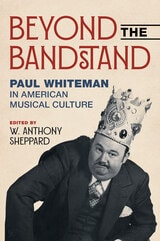
Beyond the Bandstand
Paul Whiteman in American Musical CultureEdited by W. Anthony Sheppard
University of Illinois Press, 2024
The most successful bandleader of the 1920s, Paul Whiteman was an entertainment icon who played a major role in the mainstreaming of jazz. Whiteman and his band premiered Gershwin’s Rhapsody in Blue. Duke Ellington acknowledged his achievements. His astonishing ear for talent vaulted a who’s who of artists toward prominence. But Whiteman’s oversized presence eclipsed Black jazz musicians while his middlebrow music prompted later generations to jettison him from jazz history.
W. Anthony Sheppard’s collection of essays confronts the racial implications of Whiteman’s career. The contributors explore Whiteman’s broad impact on popular culture, tracking his work and influence in American marketing, animated films, the Black press, Hollywood, and the music publication industry, and following him behind the scenes with arrangers, into grand concert halls, across the Atlantic, into the courtroom, and on television.
Multifaceted and cutting-edge, Beyond the Bandstand explores the racial politics and artistic questions surrounding a controversial figure in popular music.
Contributors: Ryan Raul Bañagale, Stephanie Doktor, John Howland, Katherine M. Leo, Sarah Caissie Provost, W. Anthony Sheppard, Catherine Tackley, Elijah Wald, and Christi Jay Wells
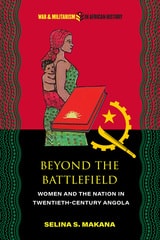
Beyond the Battlefield
Women and the Nation in Twentieth-Century AngolaSelina S. Makana
Ohio University Press, 0
Beyond the Battlefield offers a critical reappraisal of Angola’s nationalist history by centering the experiences and political agency of women during the country’s transition from Portuguese colonial rule to independence. Challenging dominant masculinist narratives that equate anticolonial resistance with armed combat, this study introduces maternalist nationalism as a theoretical framework to illuminate how women engaged in nation building through often-overlooked forms of labor and activism.
While men were largely visible on the battlefield, women fought a parallel struggle on the home front—mobilizing care work, reproductive labor, and political engagement in ways that were essential to the liberation movement and the postindependence state. Drawing on archival sources and women’s testimonies, Makana explores how patriotic motherhood—a concept defined as the fusion of nationalist politics with gendered expectations of women’s roles—enabled women to see themselves as vital contributors to the nation’s future.
This study contributes to scholarship in African history, gender studies, and postcolonial theory by offering a nuanced account of the intersections among militarism, nationalism, and gender. It invites readers to reconsider the frameworks through which political subjectivity and historical memory are constructed. Beyond the Battlefield is an essential resource for scholars and students interested in the gendered dimensions of colonialism, war, and state formation in modern Africa.
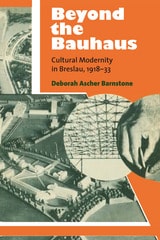
Beyond the Bauhaus
Cultural Modernity in Breslau, 1918-33Deborah Ascher Barnstone
University of Michigan Press, 2016
This richly illustrated volume is the first book in English to address this history, constituting an invaluable addition to the literature on the Weimar period. Its readership includes scholars of German history, art, architecture, urban design, planning, collecting, and exhibition history; of the avant-garde, and of the development of arts academies and arts pedagogy.
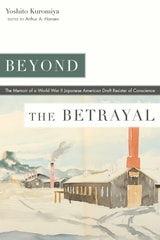
Beyond the Betrayal
The Memoir of a World War II Japanese American Draft Resister of Conscienceby Yoshito Kuromiya edited by ArthurA.Hansen
University Press of Colorado, 2022
Of the 300 Japanese Americans who resisted the military draft on the grounds that the US government had deprived them of their fundamental rights as US citizens, Kuromiya alone has produced an autobiographical volume that explores the short- and long-term causes and consequences of this fateful wartime decision. In his exquisitely written and powerfully documented testament he speaks truth to power, making evident why he is eminently qualified to convey the plight of the Nisei draft resisters. He perceptively reframes the wartime and postwar experiences of the larger Japanese American community, commonly said to have suffered in the spirit of shikata ga nai—enduring that which cannot be changed—and emerged with dignity.
Beyond the Betrayal makes abundantly clear that the unjustly imprisoned Nisei could and did exercise their patriotism even when they refused to serve in the military in the name of civil liberties and social justice. Kuromiya’s account, initially privately circulated only to family and friends, is an invaluable and insightful addition to the Nikkei historical record.
Beyond the Binary
Reconstructing Cultural Identity In a Multicultural ContextEdited by Timothy B. Powell
Rutgers University Press, 1999
"Beyond the Binary offers a coherently presented collection of uniformly strong essays that speak to what is perhaps the most widely discussed, contested and conflicted topic in the study of US culture. It joins the growing body of work that seeks to move beyond identity politics and racial essentialism to formulate racial identity as a more complex series of social, cultural and political gestures." -Priscilla Wald, author of Constituting Americans: Cultural Anxiety and Narrative Form and Constituting Americans
Cultural studies have reached a theoretical impasse. As scholars continue to topple the previously entrenched concept of Eurocentrism, this field has fragmented into works covering many separate cultural enclaves. In the first wave of this "post-Eurocentric" scholarship, a binary model ensued, using the designations of "Self" and "Other:" i.e., black/white, gay/straight. This model, however, also has found disfavor. As a result, recent scholarship has focused on a single group studied in isolation.
What is needed is a new critical phase of reconstruction that will bring discussion of these disparate cultural enclaves back into a more organized, critical sphere. Researchers must have the necessary conceptual tools so they can study the ways in which cultures overlap, intersect, or else violently conflict with one another.
Beyond the Binary: Reconstructing Cultural Identity in a Multicultural Context addresses this theoretical impasse by proposing new critical models that fully engage the dilemmas posed by multiculturalism. Rather than becoming entangled in the polarizing rhetoric of the culture wars, these essays are firmly grounded in the lived perplexities of specific historical moments. One piece, for example, considers the cultural identity of "freaks" exhibited in P. T. Barnum's circus, the contested place of hemophiliacs within Queer Nation, and "white" working-class musicians who proudly proclaim themselves to be "black lesbians."
Beyond the Binary is meant to be read in its entirety as a many-voiced narrative dedicated to bringing the divisions within cultural studies back into contact with one another. By doing so, Powell ushers in a new era of multicultural analysis that recognizes the historical existence of racism, yet also acknowledges the dynamic fluidity of cultural identity.
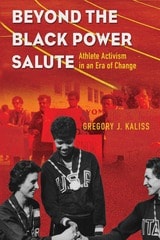
Beyond the Black Power Salute
Athlete Activism in an Era of ChangeGregory J. Kaliss
University of Illinois Press, 2023
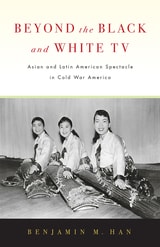
Beyond the Black and White TV
Asian and Latin American Spectacle in Cold War AmericaBenjamin M. Han
Rutgers University Press, 2020
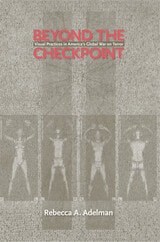
Beyond the Checkpoint
Visual Practices in America's Global War on TerrorRebecca A. Adelman
University of Massachusetts Press, 2014
Tracing the connections between citizenship and spectatorship, and moving beyond the close reading of visual representations, this book focuses on the institutions and actors that create, monitor, and regulate the visual landscape of the GWOT. Adelman looks around and through common images to follow the complex patterns of practice by which institutions and audiences engage them in various contexts. In the process, she proposes a new methodology for studying visual cultures of conflict, and related phenomena like violence, terror, and suffering that are notoriously difficult to represent.
Attending to previously unanalyzed dimensions of this conflict, this book illustrates the complexity of GWOT visual culture and the variegated experiences of citizenship that result as Americans navigate this terrain.
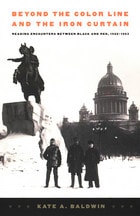
Beyond the Color Line and the Iron Curtain
Reading Encounters between Black and Red, 1922-1963Kate A. Baldwin
Duke University Press, 2002
Langston Hughes, W. E. B. Du Bois, Claude McKay, and Paul Robeson each lived or traveled extensively in the Soviet Union between the 1920s and the 1960s, and each reflected on Communism and Soviet life in works that have been largely unavailable, overlooked, or understudied. Kate A. Baldwin takes up these writings, as well as considerable material from Soviet sources—including articles in Pravda and Ogonek, political cartoons, Russian translations of unpublished manuscripts now lost, and mistranslations of major texts—to consider how these writers influenced and were influenced by both Soviet and American culture. Her work demonstrates how the construction of a new Soviet citizen attracted African Americans to the Soviet Union, where they could explore a national identity putatively free of class, gender, and racial biases. While Hughes and McKay later renounced their affiliations with the Soviet Union, Baldwin shows how, in different ways, both Hughes and McKay, as well as Du Bois and Robeson, used their encounters with the U. S. S. R. and Soviet models to rethink the exclusionary practices of citizenship and national belonging in the United States, and to move toward an internationalism that was a dynamic mix of antiracism, anticolonialism, social democracy, and international socialism.
Recovering what Baldwin terms the "Soviet archive of Black America," this book forces a rereading of some of the most important African American writers and of the transnational circuits of black modernism.

Beyond the Field
How Soccer Built Community in the United StatesBrian D. Bunk
University of Illinois Press, 2025
Played by both migrants and native-born Americans, soccer created communities across the United States. Brian D. Bunk ranges from Pawtucket to Honolulu as he illuminates the deep and diverse origins of the American sport.
Soccer took root as immigration, urbanization, and industrialization triggered immense changes across society. Matches built local pride as teams battled rival neighborhoods and towns. Teammates and supporters shared meals, raised money for fallen players, and attended each other’s weddings and funerals. If sometimes damaged by economic depression or shattered by war, clubs often bounced back to provide a steadying, resilient force in their towns. Bunk follows the story from the 1880s through World War I by profiling the struggles and joys of players while also tracing the overlooked impact of people of African, Chinese, Hawaiian, Jewish, and Filipino descent on American soccer culture.
Engaging and rich in detail, Beyond the Field draws on extensive original research to expand our idea of the people and places that formed the American game.
Beyond the Frontier
The Midwestern Voice in American Historical WritingDavid S. Brown
University of Chicago Press, 2009
As the world went to war in 1941, Time magazine founder Henry Luce coined a term for what was rapidly becoming the establishment view of America’s role in the world: the twentieth century, he argued, was the American Century. Many of the nation’s most eminent historians—nearly all of them from the East Coast—agreed with this vision and its endorsement of the vigorous use of power and persuasion to direct world affairs. But an important concentration of midwestern historians actively dissented. With Beyond the Frontier, David S. Brown tells their little-known story of opposition.
Raised in a cultural landscape that combined agrarian provincialism with reform-minded progressivism, these historians—among them Charles Beard, William Appleman Williams, and Christopher Lasch—argued strenuously against the imperial presidencies, interventionist foreign policies, and Keynesian capitalism that swiftly shaped cold war America. Casting a skeptical eye on the burgeoning military-industrial complex and its domestic counterpart, the welfare state, they warned that both components of the liberal internationalist vision jeopardized the individualistic, republican ethos that had long lain at the heart of American democracy.
Drawing on interviews, personal papers, and correspondence of the imoprtant players in the debate, Brown has written a fascinating follow-up to his critically acclaimed biography of Richard Hofstadter. Illuminating key ideas that link midwestern writers from Frederick Jackson Turner all the way to William Cronon and Thomas Frank, Beyond the Frontier is intellectual history at its best: grounded in real lives and focused on issues that remain salient—and unresolved—even today.
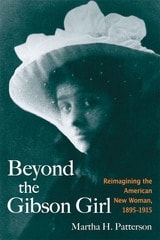
Beyond the Gibson Girl
Reimagining the American New Woman, 1895-1915Martha H. Patterson
University of Illinois Press, 2005
Challenging monolithic images of the New Woman as white, well-educated, and politically progressive, this study focuses on important regional, ethnic, and sociopolitical differences in the use of the New Woman trope at the turn of the twentieth century. Using Charles Dana Gibson's "Gibson Girls" as a point of departure, Martha H. Patterson explores how writers such as Pauline Hopkins, Margaret Murray Washington, Sui Sin Far, Mary Johnston, Edith Wharton, Ellen Glasgow, and Willa Cather challenged and redeployed the New Woman image in light of other “new” conceptions: the "New Negro Woman," the "New Ethics," the "New South," and the "New China."
As she appears in these writers' works, the New Woman both promises and threatens to effect sociopolitical change as a consumer, an instigator of evolutionary and economic development, and (for writers of color) an icon of successful assimilation into dominant Anglo-American culture. Examining a diverse array of cultural products, Patterson shows how the seemingly celebratory term of the New Woman becomes a trope not only of progressive reform, consumer power, transgressive femininity, modern energy, and modern cure, but also of racial and ethnic taxonomies, social Darwinist struggle, imperialist ambition, assimilationist pressures, and modern decay.
Beyond the Latino World War II Hero
The Social and Political Legacy of a GenerationEdited by Maggie Rivas-Rodríguez and Emilio Zamora
University of Texas Press, 2009
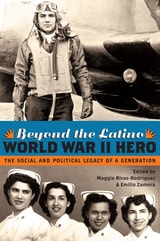
Maggie Rivas-Rodríguez 's edited volume Mexican Americans & World War II brought pivotal stories from the shadows, contributing to the growing acknowledgment of Mexican American patriotism as a meaningful force within the Greatest Generation. In this latest anthology, Rivas-Rodríguez and historian Emilio Zamora team up with scholars from various disciplines to add new insights. Beyond the Latino World War II Hero focuses on home-front issues and government relations, delving into new arenas of research and incorporating stirring oral histories.
These recollections highlight realities such as post-traumatic stress disorder and its effects on veterans' families, as well as Mexican American women of this era, whose fighting spirit inspired their daughters to participate in Chicana/o activism of the 1960s and 1970s. Other topics include the importance of radio as a powerful medium during the war and postwar periods, the participation of Mexican nationals in World War II, and intergovernmental negotiations involving Mexico and Puerto Rico. Addressing the complexity of the Latino war experience, such as the tandem between the frontline and the disruption of the agricultural migrant stream on the home front, the authors and contributors unite diverse perspectives to harness the rich resources of an invaluable oral history.

Beyond the Mask
Gordon Craig, Movement, and the ActorIrene Eynat-Confino
Southern Illinois University Press, 1987
Eynat-Confino goes beyond the usual consideration of Craig’s purported theories of the actor, scenery, and the scene painter to get at the heart of Craig’s idea of theater.
She draws not only on the research of contemporary Craig scholars but on material hitherto unavailable—his writings and daybooks and the writings of friends. She ties Craig’s encounter with Isadora Duncan to a decisive modification in his notion of movement. To have an instrument more controllable than the actor, he invented the über-marionette, a giant puppet. Craig also invented the “Scene,” a kinetic stage, the “screens” that brought him worldwide fame were simply an adaptation of this concept.
Eynat-Confino argues that a scenario Craig wrote in 1905, here published for the first time, reveals a theosophical system like that of Blake, a system that was the main force motivating Craig’s artistic quest. In her final chapter, she carefully examines the psychological, aesthetic, and circumstantial factors that kept Craig from completing his work to bring “friendliness—humor—love—ease—peace” to the world.
Beyond the Page
Poetry and Performance in Spanish AmericaJill S. Kuhnheim
University of Arizona Press, 2014
Jill S. Kuhnheim, looking at poetry and performance in Spanish America over time, has organized the book to begin with the early twentieth century and arrive at the present day. She includes noteworthy poets and artists such as José Martí, Luis Palés Matos, Eusebia Cosme, Nicomedes Santa Cruz, Pablo Neruda, César Vallejo, and Nicolás Guillén, as well as very recent artists whose performance work is not as well known. Offering fresh historical material and analysis, the author illuminates the relationship between popular and elite cultural activity in Spanish America and reshapes our awareness of the cultural work poetry has done in the past and may do in the future, particularly given the wide array of technological possibilities. The author takes a broad view of American cultural production and creates a dialogue with events and criticism from the United States as well as from Spanish American traditions.
Oral and written elements in poetry are complementary, says Kuhnheim, not in opposition, and they may reach different audiences. As poetry enjoys a revival with modern media, performance is part of the new platform it spans, widening the kind of audience and expanding potential meanings.
Beyond the Page will appeal to readers with an interest in poetry and performance, and in how poetry circulates beyond the page. With an international perspective and dynamic synthesis, the book offers an innovative methodology and theoretical model for humanists beyond the immediate field, reaching out to readers interested in the intersection between poetry and identity or the juncture of popular-elite and oral-written cultures.
Beyond the Pale
Dutch Extreme Violence in the Indonesian War of Independence, 1945-1949Kon. Inst. v. Taal-, Land- en Volkenkunde (KITLV)
Amsterdam University Press, 2022
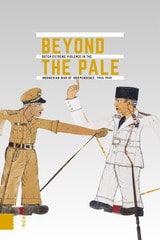
In 2005, the Dutch government declared that the Netherlands should never have waged the war. The government’s 1969 position on the violence used by the Dutch armed forces during the war remained unchanged, however: although there had been ‘excesses’, on the whole the armed forces had behaved ‘correctly’. As the indications of Dutch extreme violence mounted, this official position proved increasingly difficult to maintain. In 2016, the Dutch government therefore decided to fund a broad study on the dynamics of the violence. The most important conclusions of that research programme are summarized in this book. The authors show that the Dutch armed forces used extreme violence on a structural basis, and that this was concealed both at the time and for many years after the war by the Dutch government and by society more broadly. All of this – like the entire colonial history – is at odds with the rose-tinted self-image of the Netherlands.
Beyond the Quagmire
New Interpretations of the Vietnam WarGeoffrey W. Jensen
University of North Texas Press, 2019
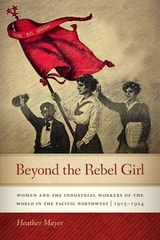
Beyond the Rebel Girl
Women and the Industrial Workers of the World in the Pacific Northwest, 1905-1924Heather Mayer
Oregon State University Press, 2018
In Beyond the Rebel Girl, historian Heather Mayer questions the well-worn vision of Wobblies as young, single, male, itinerant workers. While such workers formed a large portion of the membership, they weren’t the whole picture. In small towns across the Northwest, and in the larger cities of Seattle, Portland, and Spokane, women played an integral role in Wobbly life. Single women, but also families—husband and wife Wobbly teams—played important roles in some of the biggest fights for justice. IWW halls in these Northwest cities often functioned as community centers, with family-friendly events and entertainment.
Women were drawn to the IWW for its radical vision, inclusionary policies, birth control advocacy, and emphasis on freedom of choice in marriage. The IWW also offered women an avenue for activism that wasn’t focused primarily on the fight for suffrage. Beyond the Rebel Girl deepens our understanding of how the IWW functioned and how the union supported women in their fight for birth control, sexual emancipation, and better labor conditions, all while facing persecution at the local, state, and federal levels.
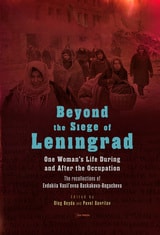
Beyond the Siege of Leningrad
One Woman’s Life during and after the Occupation: The Recollections of Evdokiia Vasil’evna Baskakova-BogachevaPavel Gavrilov
Central European University Press, 2024
This memoir about the experiences of German occupation during the siege of Leningrad (now Saint Petersburg) was written by Moscow-born Evdokiia Vasil’evna Baskakova-Bogacheva (1888–1976), an émigré in Australia, at the age of eighty-one. The text had been forgotten in the Museum of Russian Culture in San Francisco since 1970 until the editors of this volume discovered it.
In the memoirs, after accounting on her youth spent against the background of the First World War and of the two Russian revolutions of 1917, Evdokiia describes the inferno of the Nazi occupation as experienced in a suburb of Leningrad in 1941-43. She survived for nearly two years almost on the front line, within a few kilometers of the blockade ring. As a medical practitioner, she became useful for the occupational authorities and the ever-shrinking town population, until her family was evacuated to the west in October 1943. Besides hunger, discord, disease, the hunt for food and firewood, along with violence and death, Evdokiia’s account deals with various forms of cooperation between Soviet citizens and the new authorities.
All the events she recalls can be confirmed through other sources. The introduction and the detailed notes to the text help the reader to locate Evdokiia’s recollections in time and place, and situate them in their historical context.
Beyond the Sovereign Self
Aesthetic Autonomy from the Avant-Garde to Socially Engaged ArtGrant H. Kester
Duke University Press, 2024

Beyond the Subtitle
Remapping European Art CinemaMark Betz
University of Minnesota Press, 2009
A provocative rethinking of national cinema, authorship, and the discipline of film studies
Examining European art films of the 1950s and 1960s, Mark Betz argues that it is time for film analysis to move beyond prevailing New Wave historiography, mired in outdated notions of nationalism and dragged down by decades of auteurist criticism. Focusing on the cinemas of France and Italy, Betz reveals how the flowering of European art films in the postwar era is inseparable from the complex historical and political frameworks of the time.
Remapping the practices and paradigms of film history, Beyond the Subtitle calls into question the concept of national cinema and explores the largely neglected subjects of subtitling, dubbing, and art film coproductions. Betz also analyzes the iconic figure of the “wandering woman,” or flanêuse, who appears in many of the films under consideration, in light of the postwar boom, modernization, and decolonization. Finally, he rescues the omnibus films to show the need for a new film studies approach. Beyond the Subtitle demonstrates how the geopolitical and institutional contexts that gave rise to these films and to academic film studies should be incorporated into future analysis in order to gain new insight into debates on race, gender, and imperialism.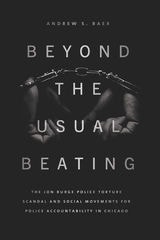
Beyond the Usual Beating
The Jon Burge Police Torture Scandal and Social Movements for Police Accountability in ChicagoAndrew S. Baer
University of Chicago Press, 2020
A story of institutionalized police brutality and how Chicago's public outcry led to long-lasting criminal justice reforms.
The malign and long-lasting influence of Chicago police commander Jon Burge cannot be overestimated, particularly as fresh examples of local and national criminal-justice abuse continue to surface with dismaying frequency. Burge’s decades-long tenure on the Chicago police force was marked by racist and barbaric interrogation methods, including psychological torture, burnings, and mock executions—techniques that went far “beyond the usual beating.” After being exposed in 1989, he became a symbol of police brutality and the unequal treatment of nonwhite people, and the persistent outcry against him led to reforms such as the abolition of the death penalty in Illinois.
But Burge hardly developed or operated in a vacuum, as Andrew S. Baer explores to stark effect here. He identifies the darkness of the Burge era as a product of local social forces, arising from a specific milieu beyond the nationwide racialized reactionary fever of the 1960s and 1970s. Similarly, the popular resistance movements that rallied in his wake actually predated Burge’s exposure but cohered with unexpected power due to the galvanizing focus on his crimes and abuses. For more than thirty years, a shifting coalition including torture survivors, their families, civil rights attorneys, and journalists helped to corroborate allegations of violence, free the wrongfully convicted, have Burge fired and incarcerated, and win passage of a municipal reparations package, among other victories. Beyond the Usual Beating reveals that though the Burge scandal underscores the relationship between personal bigotry and structural racism in the criminal justice system, it also shows how ordinary people held perpetrators accountable in the face of intransigent local power.
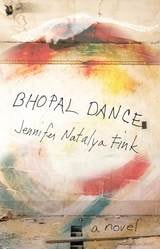
Bhopal Dance
A NovelJennifer Natalya Fink, Foreword by Mary Caponegro
University of Alabama Press, 2018
An imaginative, erotic rethinking of Bhopal’s disaster—and perhaps our own
On the night of December 2, in the midst of the Reaganomic era, an explosion at an American-owned factory in Bhopal, India, released untold amounts of toxic gas on uncounted numbers of people, creating a human and environmental disaster of insurmountable proportions. Known as the Bhopal disaster, it once dominated international headlines, and is now barely remembered.
Yet Bhopal remains emblematic of all the many quickly forgotten disasters that followed, and of the permanent state of globalized disaster in which we now dwell. What does it mean when corporations instead of states control not only the means to create environmental disasters, but also the tools to bury them? How does one revolt against these unelected entities? How do our most private desires get shaped by this stateless horror? Jennifer Natalya Fink’s Bhopal Dance is an epic and epochal tale of such a horror and its buried consequences.
At the center of the novel is Cordelia, an owlish woman with a ménage of lovers, who leads a revolutionary Canadian political movement catalyzed by the Bhopal disaster, only to end up imprisoned with just a toilet to talk to. Who she hallucinates is her father. Who is her father. Who is the State. Who may be her mother. Or her twin/lover. Cordelia is a remarkable bird in her own right, and ‘owlishness’ is a feathery conceit deployed in both the book’s form and content, a way of exploring queer possibilities for altering the terms of one’s imprisonment. For setting corporatized corporeality alight. Ablaze. Pets and punk rock, dentists and dyslexia, Shakespeare and salsa: they all dance together here.
Bible Believers
Fundamentalists in the Modern WorldNancy Tatom Ammerman
Rutgers University Press, 1987
Bible believer (also Bible-believer,Bible-believing Christian,Bible-believing Church) is a self-description by conservative Christians to differentiate their teachings from others who see non- or extrabiblical tradition as higher or equal in authority.
In normal usage, "Bible believer" means an individual or organisation that believes the Christian Bible is true in some significant way. However, this combination of words is given a unique meaning in fundamentalist Protestant circles, where it is equated with the belief that the Christian Bible "contains no theological contradictions, historical discrepancies, or other such 'errors'", otherwise known as biblical inerrancy.
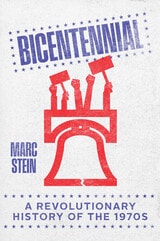
Bicentennial
A Revolutionary History of the 1970sMarc Stein
University of Chicago Press, 2026
“Utterly illuminating. . . . Just a really revelatory book.”—Jill Lepore, The New York Times, The “Book Review” Podcast • “As historian Stein traces in Bicentennial, a national birthday can launch a much broader, more inclusive, and ambitious national project.”—Rebecca Brenner Graham, The New Republic • “A comprehensive and critical look at the Spirit of 1976.”—Library Journal
As the United States marks its semiquincentennial in 2026, renowned historian Marc Stein looks back at the politics of another landmark celebration during a time of striking similarities and surprising differences: the US bicentennial in 1976.
In the aftermath of Vietnam and Watergate, the bicentennial sparked an extraordinary national conversation about the country’s past, present, and future. As patriots, planners, profiteers, and protesters argued about how to commemorate the national birthday, they collectively reimagined the promises and perils of democracy during a transformational decade.
From award-winning historian Marc Stein, Bicentennial: A Revolutionary History of the 1970s is an original, illuminating, and insightful study of that era. While focusing on festivities and fights in Philadelphia, the nation’s birthplace, the book also explores the many proposed and abandoned celebrations that percolated up around the country. It tells a broadly democratic story of both the “official” bicentennial and counter-bicentennial activism, offering revolutionary perspectives on national politics, social movements, and popular culture. From the queer courtship of President Richard Nixon and Philadelphia Mayor Frank Rizzo to parades and protests with millions of participants, and from a deadly outbreak of Legionnaires’ disease at Philadelphia’s most prestigious hotel to the establishment of groundbreaking African American, ethnic, and Jewish museums, the bicentennial reveals a kaleidoscope of American peculiarities, problems, and possibilities.
The lasting influence of 1976 on one of the nation’s great urban centers and the United States as a whole is undeniable. As the nation—once again enmeshed in political and social upheaval—marks its two-hundred-fiftieth birthday in 2026, there is no better time to look back at its two-hundredth and marvel at what has changed, and what has not.
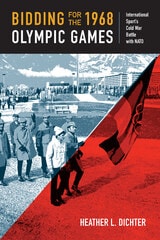
Bidding for the 1968 Olympic Games
International Sport's Cold War Battle with NATOHeather L. Dichter
University of Massachusetts Press, 2021
During the Cold War, political tensions associated with the division of Germany came to influence the world of competitive sport. In the 1950s, West Germany and its NATO allies refused to recognize the communist East German state and barred its national teams from sporting competitions. The construction of the Berlin Wall in 1961 further exacerbated these pressures, with East German teams denied travel to several world championships. These tensions would only intensify in the run-up to the 1968 Olympics.
In Bidding for the 1968 Olympic Games, Heather L. Dichter considers how NATO and its member states used sport as a diplomatic arena during the height of the Cold War, and how international sport responded to political interference. Drawing on archival materials from NATO, foreign ministries, domestic and international sport functionaries, and newspapers, Dichter examines controversies surrounding the 1968 Summer and Winter Olympic Games, particularly the bidding process between countries to host the events. As she demonstrates, during the Cold War sport and politics became so intertwined that they had the power to fundamentally transform each other.
Biennial Boom
Making Contemporary Art GlobalPaloma Checa-Gismero
Duke University Press, 2024
Big Bosses
A Working Girl’s Memoir of Jazz Age AmericaAlthea McDowell Altemus
University of Chicago Press, 2016
Beginning with her employment as a private secretary to James Deering of International Harvester, whom she describes as “probably the world’s oldest and wealthiest bachelor playboy,” Altemus tells us much about high society during the time, taking us inside Deering’s glamorous Miami estate, Vizcaya, an Italianate mansion worthy of Gatsby himself. Later, we meet her other notable employers, including Samuel Insull, president of Chicago Edison; New York banker S. W. Straus; and real estate developer Fred F. French. We cinch up our trenchcoats and head out sleuthing in Chicago, hired by the wife of a big boss to find out how he spends his evenings (with, it turns out, a mistress hidden in an apartment within his office, no less). Altemus was also a struggling single mother, a fact she had to keep secret from her employers, and she reveals the difficulties of being a working woman at the time through glimpses into women’s apartments, their friendships, and the dangers—sexual and otherwise—that she and others faced. Throughout, Altemus entertains with a tart and self-aware voice that combines the knowledge of an insider with the wit and clarity of someone on the fringe.
Anchored by extensive annotation and an afterword from historian Robin F. Bachin, which contextualizes Altemus’s narrative, Big Bosses provides a one-of-a-kind peek inside the excitement, extravagances, and the challenges of being a working woman roaring through the ’20s.

Big Box USA
The Environmental Impact of America’s Biggest Retail StoresBart Elmore
University of Wyoming Press, 2023
The rise of big box retail since the 1960s has transformed environments on both local and global scales. Almost everyone has explored the aisles of big box stores. The allure of “everyday low prices” and brightly colored products of every kind connect shoppers with a global marketplace. Contributors join a growing conversation between business and environmental history, addressing the ways American retail institutions have affected physical and cultural ecologies around the world. Essays on Walmart, Target, Cabela’s, REI, and Bass Pro Shops assess the “bigness” of these superstores from “smokestacks to coat racks” and contend that their ecological impacts are not limited to the footprints of parking lots and manufacturing but also play a didactic role in educating consumers about their relationships with the environment.
A model for historians seeking to bring business and environmental histories together in their analyses of merchant capital’s role in the landscapes of everyday life and how it has remade human relationships with nature, Big Box USA is a must-read for students and scholars of the environment, business, sustainability, retail professionals, and a general audience.
Big Ears
Listening for Gender in Jazz StudiesNichole T. Rustin and Sherrie Tucker, eds.
Duke University Press, 2008
Scholars of music, ethnomusicology, American studies, literature, anthropology, and cultural studies approach the question of gender in jazz from multiple perspectives. One contributor scrutinizes the tendency of jazz historiography to treat singing as subordinate to the predominantly male domain of instrumental music, while another reflects on her doubly inappropriate position as a female trumpet player and a white jazz musician and scholar. Other essays explore the composer George Russell’s Lydian Chromatic Concept as a critique of mid-twentieth-century discourses of embodiment, madness, and black masculinity; performances of “female hysteria” by Les Diaboliques, a feminist improvising trio; and the BBC radio broadcasts of Ivy Benson and Her Ladies’ Dance Orchestra during the Second World War. By incorporating gender analysis into jazz studies, Big Ears transforms ideas of who counts as a subject of study and even of what counts as jazz.
Contributors: Christina Baade, Jayna Brown, Farah Jasmine Griffin, Monica Hairston, Kristin McGee, Tracy McMullen, Ingrid Monson, Lara Pellegrinelli, Eric Porter, Nichole T. Rustin, Ursel Schlicht, Julie Dawn Smith, Jeffrey Taylor, Sherrie Tucker, João H. Costa Vargas
Big House on the Prairie
Rise of the Rural Ghetto and Prison ProliferationJohn M. Eason
University of Chicago Press, 2017
In 2007, John M. Eason moved his family to Forrest City, Arkansas, in search of answers to key questions about this trend: Why is America building so many prisons? Why now? And why in rural areas? Eason quickly learned that rural demand for prisons is complicated. Towns like Forrest City choose to build prisons not simply in hopes of landing jobs or economic wellbeing, but also to protect and improve their reputations. For some rural leaders, fostering a prison in their town is a means of achieving order in a rapidly changing world. Taking us into the decision-making meetings and tracking the impact of prisons on economic development, poverty, and race, Eason demonstrates how groups of elite whites and black leaders share power. Situating prisons within dynamic shifts that rural economies are undergoing and showing how racially diverse communities lobby for prison construction, Big House on the Prairie is a remarkable glimpse into the ways a prison economy takes shape and operates.
Big Sister
Feminism, Conservatism, and Conspiracy in the HeartlandErin M. Kempker
University of Illinois Press, 2018
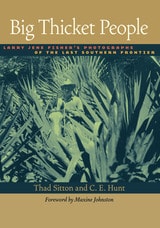
Big Thicket People
Larry Jene Fisher's Photographs of the Last Southern FrontierBy Thad Sitton and C.E. Hunt
University of Texas Press, 2008
Living off the land—hunting, fishing, and farming, along with a range of specialized crafts that provided barter or cash income—was a way of life that persisted well into the twentieth century in the Big Thicket of southeast Texas. Before this way of life ended with World War II, professional photographer Larry Jene Fisher spent a decade between the 1930s and 1940s photographing Big Thicket people living and working in the old ways. His photographs, the only known collection on this subject, constitute an irreplaceable record of lifeways that first took root in the southeastern woodlands of the colonial United States and eventually spread all across the Southern frontier.
Big Thicket People presents Fisher's photographs in suites that document a wide slice of Big Thicket life-people, dogs, camps, deer hunts, farming, syrup mills, rooter hogs and stock raising, railroad tie making, barrel stave making, chimney building, peckerwood sawmills, logging, turpentining, town life, church services and picnics, funerals and golden weddings, and dances and other amusements. Accompanying each suite of images is a cultural essay by Thad Sitton, who also introduces the book with a historical overview of life in the Big Thicket. C. E. Hunt provides an informative biography of Larry Jene Fisher.

Bigfoot
The Life and Times of a LegendJoshua Blu Buhs
University of Chicago Press, 2009
Last August, two men in rural Georgia announced that they had killed Bigfoot. The claim drew instant, feverish attention, leading to more than 1,000 news stories worldwide—despite the fact that nearly everyone knew it was a hoax. Though Bigfoot may not exist, there’s no denying Bigfoot mania.
With Bigfoot, Joshua Blu Buhs traces the wild and wooly story of America’s favorite homegrown monster. He begins with nineteenth-century accounts of wildmen roaming the forests of America, treks to the Himalayas to reckon with the Abominable Snowman, then takes us to northern California in 1958, when reports of a hairy hominid loping through remote woodlands marked Bigfoot’s emergence as a modern marvel. Buhs delves deeply into the trove of lore and misinformation that has sprung up around Bigfoot in the ensuing half century. We meet charlatans, pseudo-scientists, and dedicated hunters of the beast—and with Buhs as our guide, the focus is always less on evaluating their claims than on understanding why Bigfoot has inspired all this drama and devotion in the first place. What does our fascination with this monster say about our modern relationship to wilderness, individuality, class, consumerism, and the media?
Writing with a scientist’s skepticism but an enthusiast’s deep engagement, Buhs invests the story of Bigfoot with the detail and power of a novel, offering the definitive take on this elusive beast.
Bill Clinton on Stump, State, and Stage
The Rhetorical Road to the White HouseStephen A. Smith
University of Arkansas Press, 1994
Bill and Hillary
The Politics of the PersonalWilliam H. Chafe
Duke University Press, 2012

Billion-Dollar Fish
The Untold Story of Alaska PollockKevin M. Bailey
University of Chicago Press, 2013
In Billion-Dollar Fish, Kevin M. Bailey combines his years of firsthand pollock research with a remarkable talent for storytelling to offer the first natural history of Alaska pollock. Crucial to understanding the pollock fishery, he shows, is recognizing what aspects of its natural history make pollock so very desirable to fish, while at the same time making it resilient, yet highly vulnerable to overfishing. Bailey delves into the science, politics, and economics surrounding Alaska pollock in the Bering Sea, detailing the development of the fishery, the various political machinations that have led to its current management, and, perhaps most important, its impending demise. He approaches his subject from multiple angles, bringing in the perspectives of fishermen, politicians, environmentalists, and biologists, and drawing on revealing interviews with players who range from Greenpeace activists to fishing industry lawyers.
Seamlessly weaving the biology and ecology of pollock with the history and politics of the fishery, as well as Bailey’s own often raucous tales about life at sea, Billion-Dollar Fish is a book for every person interested in the troubled relationship between fish and humans, from the depths of the sea to the dinner plate.
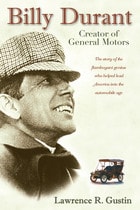
Billy Durant
Creator of General MotorsLawrence R. Gustin
University of Michigan Press, 2012
Praise for the first edition:
"A fascinating book [and] a sympathetic look at the man who glued General Motors together and in the process made Flint one of the great industrial centers of America."
---Detroit Free Press
"It is refreshing to report that Billy Durant is one of the best researched books dealing with an automotive giant."
---Antique Automobile
"Billy Durant fills in a masterly way the only important void remaining concerning the work of the motorcar pioneers."
---Richard Crabb, author of Birth of a Giant: The Men and Incidents That Gave America the Motorcar
What explains Billy Durant's powerful influence on the auto industry during its early days? And why, given Durant's impact, has he been nearly forgotten for decades?
In search of answers to these questions, Lawrence Gustin interviewed Durant's widow, who provided a wealth of previously unpublished autobiographical notes, letters, and personal papers. Gustin also interviewed two of Durant's personal secretaries and others who had known and worked with the man who created General Motors. The result is the amazing account of the mastermind behind what would become, as the twentieth century progressed, the world's largest company.