Results by title
3745 books match the query 'Europe' and 155 start with b
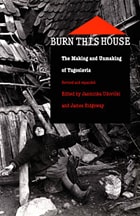
Burn This House
The Making and Unmaking of YugoslaviaJasminka Udovicki and James Ridgeway, eds.
Duke University Press, 2000
The contributors show that, contrary to descriptions by the Western media, the roots of the warring lie not in ancient Balkan hatreds but rather in a specific set of sociopolitical circumstances that occurred after the death of Tito and culminated at the end of the Cold War. In bringing together these essays, Serbian-born sociologist Jasminka Udovicki and Village Voice Washington correspondent James Ridgeway provide essential historical background for understanding the turmoil in Croatia, Bosnia, and Kosovo and expose the catalytic role played by the propaganda of a powerful few on all sides of what eventually became labeled an ethnic dispute.
Burn This House offers a poignant, informative, and fully up-to-date explication of the continuing Balkan tragedy.
Contributors. Sven Balas, Milan Milosevi´c Branka Prpa-Jovanovi´c, James Ridgeway, Stipe Sikavica, Ejub Stitkovac, Mirko Tepavac, Ivan Torov, Jasminka Udovicki, Susan Woodward
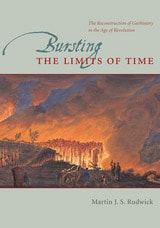
Bursting the Limits of Time
The Reconstruction of Geohistory in the Age of RevolutionMartin J. S. Rudwick
University of Chicago Press, 2005
In 1650, Archbishop James Ussher of Armagh joined the long-running theological debate on the age of the earth by famously announcing that creation had occurred on October 23, 4004 B.C. Although widely challenged during the Enlightenment, this belief in a six-thousand-year-old planet was only laid to rest during a revolution of discovery in the late eighteenth and early nineteenth centuries. In this relatively brief period, geologists reconstructed the immensely long history of the earth-and the relatively recent arrival of human life. Highlighting a discovery that radically altered existing perceptions of a human's place in the universe as much as the theories of Copernicus, Darwin, and Freud did, Bursting the Limits of Time is a herculean effort by one of the world's foremost experts on the history of geology and paleontology to sketch this historicization of the natural world in the age of revolution.
Addressing this intellectual revolution for the first time, Rudwick examines the ideas and practices of earth scientists throughout the Western world to show how the story of what we now call "deep time" was pieced together. He explores who was responsible for the discovery of the earth's history, refutes the concept of a rift between science and religion in dating the earth, and details how the study of the history of the earth helped define a new branch of science called geology. Rooting his analysis in a detailed study of primary sources, Rudwick emphasizes the lasting importance of field- and museum-based research of the eighteenth and nineteenth centuries.
Bursting the Limits of Time, the culmination of more than three decades of research, is the first detailed account of this monumental phase in the history of science.
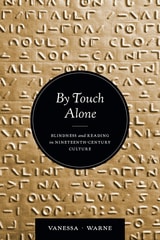
By Touch Alone
Blindness and Reading in Nineteenth-Century CultureVanessa Warne
University of Michigan Press, 2025
While By Touch Alone features the writing and ideas of an understudied community of nineteenth-century blind authors, innovators, and activists, it also engages the work of sighted authors such as George Eliot and Rudyard Kipling to explore the culture-wide effects of reading by touch. The emergence of a new category of readers who did not rely on sight to read prompted sighted people to reimagine blindness and adopt more progressive attitudes toward blind people. In our own era, one characterized by the increasing digitization of our reading lives, Vanessa Warne’s exploration positions scholars and blind readers to navigate present-day developments and shape the future of their reading lives. A carefully contextualized study of how reading by touch shaped Victorian culture, By Touch Alone adds new chapters to the history of disability and reading.
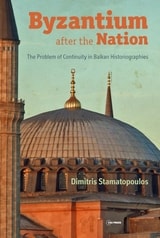
Byzantium after the Nation
The Problem of Continuity in Balkan HistoriographiesDimitris Stamatopoulos
Central European University Press, 2023
Stamatopoulos undertakes the first systematic comparison of the dominant ethnic historiographic models and divergences elaborated by Greek, Bulgarian, Serbian, Albanian, Romanian, Turkish, and Russian intellectuals with reference to the ambiguous inheritance of Byzantium. The title alludes to the seminal work of Nicolae Iorga in the 1930s, Byzantium after Byzantium, that argued for the continuity between the Byzantine and the Ottoman empires. Rival Balkan nationalisms engaged in a “war of interpretation” as to the nature of Byzantium, assuming different positions of adoption or rejection of its imperial model and leading to various schemes of continuity in each national historiographic canon.
Stamatopoulos discusses what Byzantium represented for nineteenth-, and twentieth-century scholars and how their perceptions related to their treatment of the imperial model: whether a different perception of the medieval Byzantine period prevailed in the Greek national center as opposed to Constantinople; how nineteenth-century Balkan nationalists and Russian scholars used Byzantium to invent their own medieval period (and, by extension, their own antiquity); and finally, whether there exist continuities or discontinuities in these modes of making ideological use of the past.
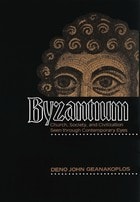
Byzantium
Church, Society, and Civilization Seen through Contemporary EyesDeno John Geanakoplos
University of Chicago Press, 1984
Byzantium is much more than a sourcebook. The running commentary reflects the most recent scholarly research in Byzantine studies and places each translated source in its precise historical context. Through the use of both primary sources and commentary, Geanakoplos has represented in all its richness and complexity one of the world's great civilizations. There is no comparable book on Byzantine history and civilization in any language.