Results by title
5159 books match the query 'Biography' and 297 start with b

Brave Are My People
Indian Heroes Not ForgottenFrank Waters
Ohio University Press, 1998
Pontiac, Sequoyah, Geronimo, Sitting Bull, Chief Joseph, and Chief Seattle. These legendary names are familiar even to the uninitiated in Native American history, yet the life stories of these great spiritual leaders have been largely unknown.
In this, his last book, internationally celebrated author Frank Waters makes vivid the poignant, humorous, and tragic stories of these neglected and heroic Native Americans. From the brilliant tactical abilities of famed warriors to the eloquent oratory of indigenous philosophers, poets, and statesmen, the profiles in Brave Are My People help correct this error of omission.
Now in paperback, Brave Are My People represents a major contribution to Water’s remarkable literary work.
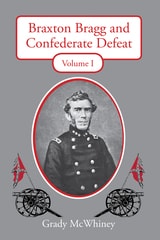
Braxton Bragg and Confederate Defeat
Volume 1Grady McWhiney
University of Alabama Press, 1991
McWhiney intended this work – first published in 1969 – to be the first of two volumes covering the life of the Confederacy’s most problematic general. This reprint edition is issued along with Braxton Bragg and Confederate Defeat, Volume II by Judith Lee Hallock. McWhiney’s work carries Bragg through the defeat at Murfreesboro in January 1863, and Hallock’s book continues through the staff appointment in Richmond and Bragg’s final days as a private citizen.
Bread
A Memoir of HungerLisa Knopp
University of Missouri Press, 2025
When she was 54, Lisa Knopp’s weight dropped to a number on the scale that she hadn’t seen since seventh grade. The severe food restricting that left her thin and sick when she was 15 and 25 had returned. This time, she was determined to understand the causes of her malady and how she could heal from a condition that is caused by a tangle of genetic, biological, familial, psychological, cultural, and spiritual factors. This compelling memoir, at once a food and illness narrative, explores the forces that cause eating disorders and disordered eating, including the link between those conditions in women, middle-aged and older, and the fear of aging and ageism.
Winner of the 2017 Nebraska Book Award for Memoir
2017 Choice Outstanding Academic Title

Break Point
Two Minnesota Athletes and the Road to Title IXSheri Brenden
University of Minnesota Press, 2022
How two teenage girls in Minnesota jump-started a revolution in high school athletics
Peggy Brenden, a senior, played tennis. Toni St. Pierre, a junior, was a cross country runner and skier. All these two talented teenagers wanted was a chance to compete on their high school sports teams. But in Minnesota in 1972 the only way on the field with the boys ran through a federal court—so that was where the girls went. Break Point tells the story, for the first time, of how two teenagers took on the unequal system of high school athletics, setting a legal precedent for schools nationwide before the passage of Title IX.
As Peggy’s younger sister, author Sheri Brenden is uniquely positioned to convey the human drama of the case, the stakes, and the consequences for two young women facing the legal machinery of the state, in court and in school. In an account that begins with Peggy painstakingly typing her appeal to the Minnesota Civil Liberties Union and concludes with a long view of what Brenden v. Independent School District 742 set in motion, Sheri Brenden summons the salient details of this landmark case as it makes its way through the courts. Peggy and Toni, coaches, administrators, and experts testify before Judge Miles Lord, whose decision, upheld in a precedent-setting appeal, would change these girls’ lives and open up athletic opportunities for innumerable others.
Grounded in newspaper coverage, court records, and interviews, Brenden’s deeply researched, scrupulously reported book is at heart the story of two talented teenage girls whose pluck and determination—and, often, heartache—led to a victory much greater than any high school championship.
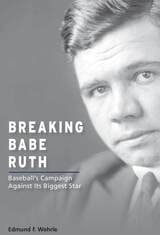
Breaking Babe Ruth
Baseball's Campaign Against Its Biggest StarEdmund F. Wehrle
University of Missouri Press, 2025
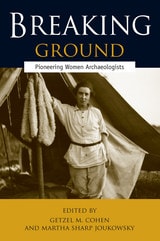
Breaking Ground
Pioneering Women ArchaeologistsGetzel M. Cohen and Martha Sharp Joukowsky, Editors
University of Michigan Press, 2004
-Claire Lyons, The Getty Museum
"Behind these pioneering women lie a wide range of fascinating and inspiring life stories. Though each of their tales is unique, they were all formidable scholars whose important contributions changed the field of archaeology. Kudos to the authors for making their stories and accomplishments known to us all!"
-Jodi Magness, University of North Carolina, Chapel Hill
This book presents twelve fascinating women whose contributions to the development and progress of Old World archaeology---in an area ranging from Italy to Mesopotamia---have been immeasurable. Each essay in this collection examines the life of a pioneer archaeologist in the early days of the discipline, tracing her path from education in the classics to travel and exploration and eventual international recognition in the field of archaeology. The lives of these women may serve as models both for those interested in gender studies and the history of archaeology because in fact, they broke ground both as women and as archaeologists.
The interest inherent in these biographies will reach well beyond defined disciplines and subdisciplines, for the life of each of these exciting and accomplished individuals is an adventure story in itself
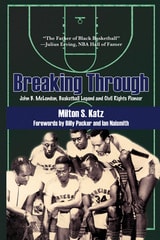
Breaking Through
John B. McLendon, Basketball Legend and Civil Rights PioneerMilton S. Katz
University of Arkansas Press, 2007
Winner, William Rockhill Nelson Award
John B. McLendon was the last living protégé of basketball’s inventor, Dr. James Naismith, and one of the “top ten basketball coaches of the century” in Billy Packer’s opinion. McLendon’s amazing records in college and pro basketball earned him a spot in the Basketball Hall of Fame (the first black coach to be inducted), and his coaching philosophy has had a huge influence on basketball coaches. Breaking Through is also a powerful and inspirational story about segregation and a champion’s struggle for equality in 1940s and 50s America.
Black Magic, ESPN’s Peabody Award–winning documentary about players and coaches who attended historically black colleges and universities, covers many of the events in McLendon’s life that Katz writes about in his book.
John McLendon was elected to the Naismith Memorial Basketball Hall of Fame in 2016.

Breaking the Barnyard Barrier
A Woman Veterinarian Paves the WayLinda Rhodes
University of Nevada Press, 2026
In Breaking the Barnyard Barrier, Linda Rhodes tells the story of how a woman, through grit and tears, made her way in a man’s world and blazed a path that prevailed against career stereotypes.
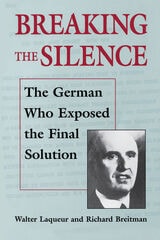
Breaking the Silence
The German Who Exposed the Final Solution.Walter Laqueur and Richard Breitman
Brandeis University Press, 1994

Breakout
Profiles in African RhythmGary Stewart
University of Chicago Press, 1992
Amid Africa's deepening economic and political crises of the last two decades, African musicians who developed these genres faced the need to cross cultural boundaries, or "break out," and achieve a hit in the international marketplace. Challenging conventional assumptions, Gary Stewart demonstrates for the first time the true dimensions of this struggle to create music that will qualify as both an authentic cultural expression and an export commodity. From accounts of the outrageous Fela, who snipes at African leaders and recounts his days with Isis in ancient Egypt, to S. E. Rogie, who lurches from the pinnacle of stardom in West Africa to delivering pizzas in California, to Olatunji, who finds new life with the Grateful Dead, these are the stories of Africans straddling traditional life and an encroaching modernity—and also the stories of third world musicians surmounting political and economic chaos at home and carrying their music to a world dominated by Western cultural and economic power.
Brian W. Aldiss
Paul Kincaid
University of Illinois Press, 2022
Paul Kincaid explores the many contradictions that underlay the distinctive qualities of Aldiss’s writing. Wartime experiences in Asia and the alienation that arose upon his return to the cold austerity of postwar Britain inspired themes and imagery that Aldiss drew upon throughout his career. He wrote of prolific nature overwhelming humanity, believed war was madness even though it provided him with the happiest period of his life, and found parallels in the static lives of Indian peasants and hidebound English society. As Kincaid shows, contradictions created tensions that fueled the metaphorical underpinnings of Aldiss's work and shaped not only his long career but the evolution of postwar British science fiction.
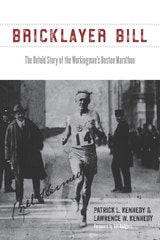
Bricklayer Bill
The Untold Story of the Workingman's Boston MarathonPatrick L. Kennedy and Lawrence W. Kennedy
University of Massachusetts Press, 2017
Two weeks after the United States officially entered World War I, Irish American “Bricklayer Bill” Kennedy won the Boston Marathon wearing his stars-and-stripes bandana, rallying the crowd of patriotic spectators. Kennedy became an American hero and, with outrageous stories of his riding the rails and sleeping on pool tables, a racing legend whose name has since appeared in almost every book written on the Boston Marathon.
When journalist Patrick Kennedy and historian Lawrence Kennedy unearthed their uncle's unpublished memoir, they discovered a colorful character who lived a tumultuous life, beyond his multiple marathons. The bricklayer survived typhoid fever, a five-story fall, auto and train accidents, World War action, Depression-era bankruptcy, decades of back-breaking work, and his own tendency to tipple. In many ways, Bill typified the colorful, newly emerging culture and working-class ethic of competitive long-distance running before it became a professionalized sport. Bricklayer Bill takes us back to another time, when bricklayers, plumbers, and printers could take the stage as star athletes.

Bridger
By Bobby Bridger
University of Texas Press, 2009
Renowned for A Ballad of the West, his epic trilogy about the American West from the era of mountain man Jim Bridger to the closing of the frontier, Bobby Bridger has had a career in show business that spans the rockabilly-to-"Music City, USA" era in Nashville, the cosmic cowboy scene in Austin, the flowering of folk music, and even Broadway theater. His multifaceted talents have found expression in singing, acting, writing, painting, and sculpting. In this engrossing account of the personal and artistic journey that led him to create a new American art form, the epic ballad, Bridger touches on almost every major musical, entertainment, and cultural movement of the second half of the twentieth century, with a cast of characters that reads like a "Who's Who" of American popular culture.
Bridger's story begins in a small town in northeast Louisiana, where he first experienced the twin attractions of painting and music. He recounts his early efforts to become a successful Nashville singer-songwriter and his growing awareness that the commercial music business would never support his evolving desire to become a historical balladeer. Bridger recalls how his interest in folk music and folk ballads fired his ambition to tell the story of the American West. He movingly describes how this dream eventually became A Ballad of the West, an epic trilogy about Jim Bridger, the Lakota Sioux, and Buffalo Bill that has taken form in an acclaimed cycle of songs, a one-man show, books, full-cast stage performances, and other media.
Included in the book is a DVD that offers songs from A Ballad of the West and a sample from the forthcoming documentary Quest of an Epic Balladeer, based on Bobby Bridger's life and work.
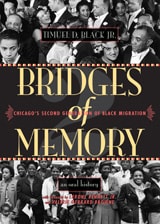
Bridges of Memory Volume 2
Chicago's Second Generation of Black MigrationTimuel Black
Northwestern University Press, 2008
In the second volume of Bridges of Memory, historian Timuel D. Black Jr. continues his conversations with African-Americans who migrated to Chicago from the South in search of economic, social, and cultural opportunities. With his trademark gift for interviewing, Black-himself the son of first-generation migrants to Chicago-guides these individual discussions with ease, resulting in first-person narratives that are informative and entertaining.
Picking up where the first book left off, volume 2 introduces the reader to more members of the first wave of migration and also members of the second generation, the children of those who came in the first wave. In telling their stories, the interviewees paint a vivid picture of the thriving and tight-knit Chicago community formerly known as the Black Belt—today's historic Bronzeville neighborhood. They bring to life the role of family, religion, business, music, and, most of all, the hopes, dreams, and perseverance that enabled a group of people to establish a successful community within a larger society that seemed determined to keep them from success. The experiences of these diverse and vivid personalities often illustrate the role that racial prejudice has played in shaping the specific arcs of their lives. But personal histories such as these are not just chronicles of frustration and despair; more important these narratives reveal an unwavering dedication to breaking the color line and a tireless pursuit of their right to the promise of America.
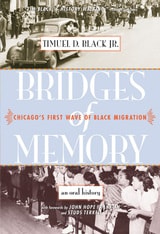
Bridges of Memory
Chicago's First Wave of Black MigrationTimuel D. Black Jr.
Northwestern University Press, 2005
Co-published with the DuSable Museum of African American History
Recipient of 2007 The Hyde Park Historical Society Paul Cornell Award
A collection of interviews with African Americans who came to Chicago from the South. In their first great migration to Chicago that began during World War I, African Americans came from the South seeking a better life--and fleeing a Jim Crow system of racial prejudice, discrimination, and segregation. What they found was much less than what they'd hoped for, but it was much better than what they'd come from--and in the process they set in motion vast changes not only in Chicago but also in the whole fabric of American society. This book, the first of three volumes, revisits this momentous chapter in American history with those who lived it.
Oral history of the first order, Bridges of Memory lets us hear the voices of those who left social, political, and economic oppression for political freedom and opportunity such as they'd never known--and for new forms of prejudice and segregation. These children and grandchildren of ex-slaves found work in the stockyards and steel mills of Chicago, settled and started small businesses in the "Black Belt" on the South Side, and brought forth the jazz, blues, and gospel music that the city is now known for. Historian Timuel D. Black, Jr., himself the son of first-generation migrants to Chicago, interviews a wide cross-section of African Americans whose remarks and reflections touch on issues ranging from fascism to Jim Crow segregation to the origin of the blues. Their recollections comprise a vivid record of a neighborhood, a city, a society, and a people undergoing dramatic and unprecedented changes.

Bridging Two Eras
The Autobiography of Emily Newell Blair, 1877-1951Emily Newell Blair, Edited & Intro by Virginia Jeans Laas
University of Missouri Press, 1999
First written in 1937 and never before published, Bridging Two Eras is the fascinating autobiography of Emily Newell Blair, a remarkable woman who successfully reconciled a productive public life with the traditional values of a housewife and mother.
Because Blair's life essentially spanned two eras, from the end of the nineteenth century through the middle of the twentieth, she thought of herself as a bridge builder. A dedicated feminist, she wanted her autobiography to help women understand what life was like during that transition time. She had moved from being a conventional, middle-class, midwestern wife and mother to becoming an acclaimed author, a nationally known feminist, and vice chairman of the Democratic National Committee only two years after women gained the right to vote. She felt that her story could encourage women to take their rightful places in public life.
Bridging Two Eras is divided into two parts. Book I is a charming evocation of life in southwest Missouri in the closing decades of the nineteenth century. It offers great insight into family relationships, class structure, and social attitudes typical of much of small-town America. Book II addresses Blair's public career and follows her progress as professional writer, suffrage activist, and partisan politician. Included are acute judgments of leading political figures, fascinating vignettes of the suffrage movement, an insider's view of the workings of the national Democratic Party in the 1920s and 1930s, and a valuable outlook on Missouri politics during the first third of the twentieth century.
Perceptive and introspective, Blair captivates her readers as she traces her own evolution. With candor, she explains her conflicts between family and career, acknowledging the difficulties and tensions she faced in pursuing a public life. Delightfully written, Bridging Two Eras provides valuable insight into all the possibilities, as well as the limitations, life then held for an American woman.
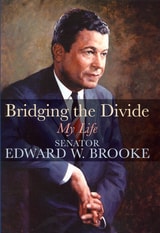
Bridging the Divide
My LifeEdward W. Brooke
Rutgers University Press, 2006
President Lyndon Johnson never understood it. Neither did President Richard Nixon. How could a black man, a Republican no less, be elected to the United States Senate from liberal, Democratic Massachusetts-a state with an African American population of only 2 percent?
The mystery of Senator Edward Brooke's meteoric rise from Boston lawyer to Massachusetts attorney general to the first popularly elected African American U.S. senator with some of the highest favorable ratings of any Massachusetts politician confounded many of the best political minds of the day. After winning a name for himself as the first black man to be elected a state's attorney general, as a crime fighter, and as the organizer of the Boston Strangler Task Force, this articulate and charismatic man burst on the national scene in 1966 when he ran for the Senate.
In two terms in the Senate during some of the most racially tormented years of the twentieth century, Brooke, through tact, personality, charm, and determination, became a highly regarded member of "the most exclusive club in the world." The only African American senator ever to be elected to a second term, Brooke established a reputation for independent thinking and challenged the powerbrokers and presidents of the day in defense of the poor and disenfranchised.
In this autobiography, Brooke details the challenges that confronted African American men of his generation and reveals his desire to be measured not as a black man in a white society but as an individual in a multiracial society. Chided by some in the white community as being "too black to be white" and in the black community as "too white to be black," Brooke sought only to represent the people of Massachusetts and the national interest.
His story encompasses the turbulent post-World War II years, from the gains of the civil rights movement, through the riotous 1960s, to the dark days of Watergate, with stories of his relationships with the Kennedys, Martin Luther King Jr., Lyndon Johnson, Richard Nixon, Henry Kissinger, Colin Powell, and future senator Hillary Clinton. Brooke also speaks candidly of his personal struggles, including his bitter divorce from his first wife and, most recently, his fight against cancer.
A dramatic, compelling, and inspirational account, Brooke's life story demonstrates the triumph of the human spirit, offering lessons about politics, life, reconciliation, and love.
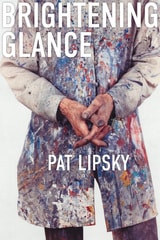
Brightening Glance
Art and LifePat Lipsky
University of Iowa Press, 2025
Brightening Glance offers a stunningly self-revealing portrait of the struggles and sacrifices, joys and excitement inherent in a modern painter’s life, and captures the evergreen allure of New York’s art world between 1970 and 2010. In stripped down, elegant prose, Lipsky summons a New York that no longer exists and ponders why we love (and hate) the art world. Ultimately, it’s a story of a contemporary woman, a mother, and a painter, who dares a career in a field where only a handful of women have succeeded.
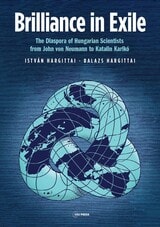
Brilliance in Exile
The Diaspora of Hungarian Scientists from John von Neumann to Katalin KarikóIstván Hargittai
Central European University Press, 2023
By addressing the enigma of the exceptional success of Hungarian emigrant scientists and telling their life stories, Brilliance in Exile combines scholarly analysis with fascinating portrayals of uncommon personalities. István and Balazs Hargittai discuss the conditions that led to five different waves of emigration of scientists from the early twentieth century to the present. Although these exodes were driven by a broad variety of personal motivations, the attraction of an open society with inclusiveness, tolerance, and – needless to say – better circumstances for working and living, was the chief force drawing them abroad.
While emigration from East to West is a general phenomenon, this book explains why and how the emigration of Hungarian scientists is distinctive. The high number of Nobel Prizes among this group is only one indicator. Multicultural tolerance, a quickly emerging, considerably Jewish, urban middle class, and a very effective secondary school system were positive legacies of the Austro-Hungarian Monarchy. Multiple generations, shaped by these conditions, suffered from the increasingly exclusionist, intolerant, antisemitic, and economically stagnating environment, and chose to go elsewhere. “I would rather have roots than wings, but if I cannot have roots, I shall use wings," explained Leo Szilard, one of the fathers of the Atom Bomb.
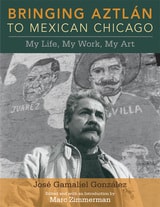
Bringing Aztlan to Mexican Chicago
My Life, My Work, My ArtJose Gamaliel Gonzalez, Edited and with an Introduction by Marc Zimmerman
University of Illinois Press, 2010
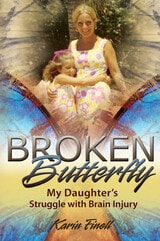
Broken Butterfly
My Daughter's Struggle with Brain InjuryKarin Finell
University of Missouri Press, 2012
“It all began with the bite of a mosquito. Yes, with a bite of this pesky, but seemingly so innocuous little insect that had been sucking her blood. Not just one, but hundreds had punctured her arms and legs with red marks which later swelled to small welts. Who would ever have thought that our family's life would become derailed, that its tightly woven fabric would eventually fray and break—all from the bite of a mosquito?”

Broken Pieces
Michael Gorman
American Library Association, 2011

Bronislava Nijinska
Early MemoirsIrina Nijinska, Jean Rawlinson, eds. and trans.
Duke University Press, 1992
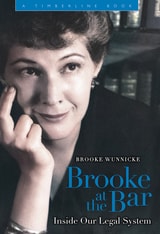
Brooke at the Bar
Inside Our Legal SystemBrooke Wunnicke
University Press of Colorado, 2023
Brooke shares vignettes of her early life—California in the Great Depression, college at Stanford, law school in Colorado during World War II, and the 1946 opening of her Cheyenne law office, a precedent for women in law. She vividly describes memorable and amusing experiences with clients, witnesses, lawyers, juries, and judges and explains some significant cases. She recounts important and dynamic events from her twelve years as Denver’s chief appellate deputy district attorney, an era during which she was an inestimable mentor to many young lawyers who became prominent in the private and public sectors.
Brooke passionately believed “the law has been and will continue to be civilization’s hope.” In her book’s final part, she demystifies many legal terms and procedures and describes the parts of a civil jury trial—including information for jurors and witnesses—and provides an enthusiastic and clear refresher on the US Constitution and Bill of Rights.
Brooke at the Bar is a unique and historically important contribution that will be of interest to general readers, scholars, and students interested in US law, political science, government, women’s history, twentieth-century western history, civil rights, and legal communities, including those in Wyoming and Colorado, where Brooke was “at the Bar.”
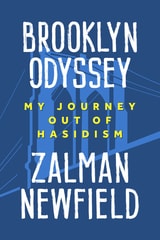
Brooklyn Odyssey
My Journey out of HasidismZalman Newfield
Temple University Press, 2026
Growing up in Crown Heights, Brooklyn as a member of the Chabad-Lubavitch Hasidic Orthodox Jewish community, Zalman Newfield was raised in an atmosphere of strict gender segregation, rigorous religious education, and nearly all-consuming ritual practices. Trained to be a Lubavitch emissary, he traveled around the world doing Jewish outreach to help usher in the messianic redemption. However, after exposure to the wider world, he abandoned the faith of his youth.
Brooklyn Odyssey is Newfield’s poignant and hopeful memoir about exiting Orthodoxy. He recounts asserting his individuality and taking the radical step of shaving his beard. Reflective about his upbringing, Newfield is open to and curious about a world beyond Brooklyn while also maintaining his profound bond with his family and Jewish tradition. He writes candidly about his emotional, intellectual, and social experiences in and out of the Lubavitch community.
From pivotal moments of devastation, including the illness and death of his younger brother and of his revered spiritual leader Rabbi Menachem Mendel Schneerson, to moments of joyful resolve, including the decision to pursue a doctorate and marry a non-Orthodox Jew, Newfield takes readers on his moving and impactful journey.
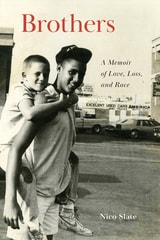
Brothers
A Memoir of Love, Loss, and RaceNico Slate
Temple University Press, 2023
Brothers is Nico Slate’s poignant memoir about Peter Slate, aka XL, a Black rapper and screenwriter whose life was tragically cut short. Nico and Peter shared the same White American mother but had different fathers. Nico’s was White; Peter’s was Black. Growing up in California in the 1980s and 1990s, Nico often forgot about their racial differences until one night in March 1994 when Peter was attacked by a White man in a nightclub in Los Angeles.
Nico began writing Brothers with the hope that investigating the attack would bring him closer to Peter. He could not understand that night, however, without grappling with the many ways race had long separated him from his brother.
This is a memoir of loss—the loss of a life and the loss at the heart of our racial divide—but it is also a memoir of love. The love between Nico and Peter permeates every page of Brothers. This achingly beautiful memoir presents one family’s resilience on the fault lines of race in contemporary America.
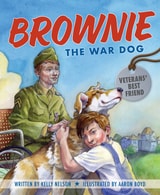
Brownie the War Dog
Veterans’ Best FriendKelly Nelson
Wisconsin Historical Society Press, 2024
During World War II, families all over the country volunteered their pet dogs to serve in the Dogs for Defense Program. This beautifully illustrated picture book tells the true story of a family and their beloved dog, Brownie, who served alongside the troops and returned home to become a companion to wounded vets.
At first Brownie's boy, Oren, isn’t sure he wants to send his boisterous best friend to war. But with the help of his parents, Oren decides that Brownie could do a lot of good. Brownie serves faithfully on the frontlines until an injury sends him home from the Pacific islands. His family welcomes him back with open arms. But Brownie is not content sitting around at home—he needs a job. He begins to accompany Oren's mother to the Veterans Home in King, Wisconsin, where she works. There, Brownie finds a way to serve his fellow veterans just as he served his fellow soldiers.
Lovingly illustrated by Aaron Boyd, this heartwarming story gives poignant new meaning to the phrase "man's best friend" and will be a favorite for children and their grownups.
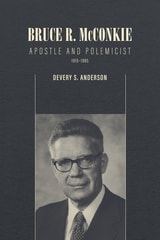
Bruce R. McConkie
Apostle and Polemicist, 1915–1985Anderson, Devery S.
Signature Books, 2024
Although he served as an apostle in the Church of Jesus Christ of Latter-day Saints for only twelve and a half years, Bruce R. McConkie’s twenty-six years’ service in the First Council of Seventy had already made him a household name within the church. Called to full-time church service at age thirty-one, McConkie quickly gained a reputation as a theologian and doctrinal teacher. He became a prolific writer, and his controversial book, Mormon Doctrine, remained a bestseller for decades. His writing style, dogmatic approach, and quickness to reprimand others he believed in error made him many enemies, while others endeared themselves to him because of those very traits.
McConkie the man was far more complex than the serious and focused general authority most church members saw and heard at the pulpit. Those who knew him best experienced his profound sense of humor. His passion for jogging, rock hounding, and jewelry making occupied much of his free time. Those who witnessed his final address delivered days before his death felt compassion toward him, no matter how they had always viewed him as a writer, speaker, or leader. Truly, to understand Bruce R. McConkie one must look closely at the entire picture.
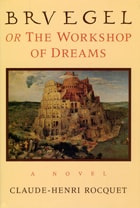
Bruegel, or the Workshop of Dreams
A NovelClaude-Henri Rocquet
University of Chicago Press, 1991
Bruno
Conversations with a Brazilian Drug DealerRobert Gay
Duke University Press, 2015
Bub
Essays from Just North of NashvilleDrew Bratcher
University of Iowa Press, 2022
Seamlessly blending memoir and arts criticism and aiming at both the heart and the head, this is a book about listening closely to stories and songs, about leaving home in order to find home, and about how the melodies and memories absorbed along the way become “a living music that advances and prevails upon us at formative moments, corralling chaos into the simple, liberating stockade of verse, chorus, verse.”
Buckminster Fuller
Anthology for the MillenniumEdited by Thomas T. K. Zung
Southern Illinois University Press, 2014
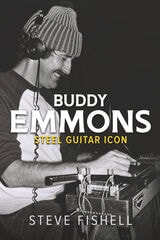
Buddy Emmons
Steel Guitar IconSteve Fishell
University of Illinois Press, 2022
The acknowledged maestro of the pedal steel guitar, Buddy Emmons lent his unparalleled virtuosity to over five decades of hit recordings and set standards that remain the benchmark for musicians today.
Steve Fishell’s merger of biography and memoir draws extensively on in-depth interviews with Emmons and the artist's autobiographical writings. Emmons went from playing strip clubs to a Grand Ole Opry debut with Little Jimmy Dickens at age 18. His restless experimentation led to work with Ernest Tubb and Ray Price--and established him in a career that saw him play alongside a who’s who of American music. Fishell weaves in stories and anecdotes from Willie Nelson, Brenda Lee, Linda Ronstadt, Pat Martino, and many others to provide a fascinating musical and personal portrait of an innovator whose peerless playing and countless recordings recognized no boundaries.
A one-of-a-kind life story, Buddy Emmons expands our view of a groundbreaking artist and his impact on country music, jazz, and beyond.
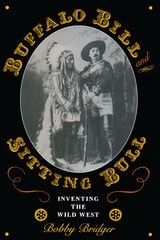
Buffalo Bill and Sitting Bull
Inventing the Wild WestBy Bobby Bridger
University of Texas Press, 2002
Army scout, buffalo hunter, Indian fighter, and impresario of the world-renowned "Wild West Show," William F. "Buffalo Bill" Cody lived the real American West and also helped create the "West of the imagination." Born in 1846, he took part in the great westward migration, hunted the buffalo, and made friends among the Plains Indians, who gave him the name Pahaska (long hair). But as the frontier closed and his role in "winning the West" passed into legend, Buffalo Bill found himself becoming the symbol of the destruction of the buffalo and the American Indian. Deeply dismayed, he spent the rest of his life working to save the remaining buffalo and to preserve Plains Indian culture through his Wild West shows.
This biography of William Cody focuses on his lifelong relationship with Plains Indians, a vital part of his life story that, surprisingly, has been seldom told. Bobby Bridger draws on many historical accounts and Cody's own memoirs to show how deeply intertwined Cody's life was with the Plains Indians. In particular, he demonstrates that the Lakota and Cheyenne were active cocreators of the Wild West shows, which helped them preserve the spiritual essence of their culture in the reservation era while also imparting something of it to white society in America and Europe. This dual story of Buffalo Bill and the Plains Indians clearly reveals how one West was lost, and another born, within the lifetime of one remarkable man.
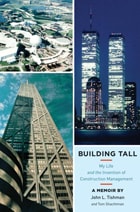
Building Tall
My Life and the Invention of Construction ManagementJohn L. Tishman and Tom Shachtman
University of Michigan Press, 2011
"John Tishman is a true pioneer in the Construction Management industry. Through his CM leadership, some of America's most well-known buildings have been brought to successful completion."
---Bruce D'Agostino, president and chief executive, Construction Management Association of America
"Building Tall will provide readers with insights into John Tishman's career as a visionary engineer, landmark builder, and great businessman. Responsible for some of the construction world's most magnificent projects, John is one of the preeminent alumni in the history of Michigan Engineering. His perspectives have helped me throughout my time as dean, and his impact will influence generations of Construction Management professionals and students."
---David C. Munson, Jr., Robert J. Vlasic Dean of Engineering, University of Michigan
In this memoir, University of Michigan graduate John L. Tishman recounts the experiences and rationale that led him to create the entirely new profession now recognized and practiced as Construction Management. It evolved from his work as the construction lead of the "owner/builder" firm Tishman Realty and Construction, and his personal role as hands-on Construction Manager in the building of an astonishing array of what were at the time the world's tallest and most complex projects. These include
- The world's first three 100-story towers---the original "twin towers" of the World Trade Center in Manhattan and the Hancock Tower in Chicago.
- The Epcot Center at Disney World.
- The Renaissance Center in Detroit.
- New York's Madison Square Garden.
Tishman interweaves the stories behind the construction of these and many other important buildings and projects with personal reminiscences of his dealings with Henry Ford, Jr., Disney's Michael Eisner, casino magnate Steve Wynn, and many others into a practical history of the field of Construction Management, which he pioneered.
This book will be of interest not only to a general public interested in the stories and personalities behind many of the most iconic construction projects of the post–World War II period in the United States but to students of engineering and architecture and members of the new field of Construction Management.
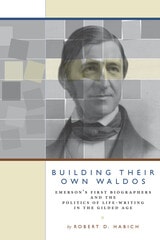
Building Their Own Waldos
Emerson’s First Biographers and the Politics of Life-Writing in the Gilded AgeRobert D. Habich
University of Iowa Press, 2011
@font-face { font-family: "Calibri";}p.MsoNormal, li.MsoNormal, div.MsoNormal { margin: 0in 0in 0.0001pt; font-size: 12pt; font-family: "Times New Roman"; }h4 { margin: 12pt 0in 3pt; page-break-after: avoid; font-size: 14pt; font-family: "Times New Roman"; }span.Heading4Char { font-family: Calibri; font-weight: bold; }div.Section1 { page: Section1; }
By the end of the nineteenth century, Ralph Waldo Emerson was well on his way to becoming the “Wisest American” and the “Sage of Concord,” a literary celebrity and a national icon. With that fame came what Robert Habich describes as a blandly sanctified version of Emerson held widely by the reading public. Building Their Own Waldos sets out to understand the dilemma faced by Emerson’s early biographers: how to represent a figure whose subversive individualism had been eclipsed by his celebrity, making him less a representative of his age than a caricature of it.Drawing on never-before-published letters, diaries, drafts, business records, and private documents, Habich Emerson’s First Biographers explores the making of a cultural hero through the stories of Emerson’s first biographers—George Willis Cooke, a minister most recently from Indianapolis who considered himself a disciple; the English reformer and newspaper mogul Alexander Ireland, a friend for half a century; Moncure D. Conway, a Southern abolitionist then residing in London, who called Emerson his “spiritual father and intellectual teacher”; the poet and medical professor Oliver Wendell Holmes, with Emerson a member of Boston’s gathering of literary elite, the Saturday Club; James Elliot Cabot, the family’s authorized biographer, an architect and amateur philosopher with unlimited access to Emerson’s unpublished papers; and Emerson’s son Edward, a physician and painter whose father had passed over him as literary executor in favor of Cabot.
Just as their biographies reveal a complex, socially engaged Emerson, so too do the biographers’ own stories illustrate the real-world perils, challenges, and motives of life-writing in the late nineteenth century, when biographers were routinely vilified as ghoulish and disreputable and biography as a genre underwent a profound redefinition. Building Their Own Waldos is at once a revealing look at Emerson’s constructed reputation, a case study in the rewards and dangers of Victorian life-writing, and the story of six authors struggling amidst personal misfortunes and shifting expectations to capture the elusive character of America’s “representative man,” as they knew him and as they needed him to be.
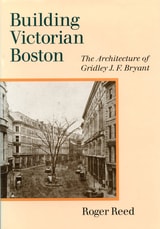
Building Victorian Boston
The Architecture of Gridley J.F. BryantRoger G. Reed
University of Massachusetts Press, 2007
In Building Victorian Boston, Roger Reed focuses on representative projects by Bryant, presenting them in a chronological narrative that both illuminates the trajectory of his career and creates a portrait of the profession of architecture during a defining period of New England history. Bryant designed more major buildings in Boston from 1840 to 1880 than any other architect. He also undertook commissions throughout New
England, especially in towns linked to Boston by newly constructed railroad lines. In many ways, his practice presaged aspects of modern architectural firms. His ability to work with a variety of designers, his expertise in construction management, and his exceptional talent for self-promotion all contributed to his success. Although by the time of his death his work was no longer fashionable, newspaper accounts noted the passing of the "Famed Bostonian" and "Great Builder" whose career had had such a dramatic impact on the face of the city.
For this volume, Reed has tracked down hundreds of Bryant's drawings as well as specifications, letters, newspaper articles, published renderings, and historical photographs. These materials are amply represented in this book, the definitive study of a quintessential Victorian architect.
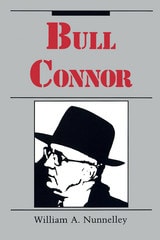
Bull Connor
William A. Nunnelley
University of Alabama Press, 1990
Nunnelley’s biography covers Connor’s early life as a sportscaster, his years as a nearly pathological police chief, and his reign as president of a corrupt public service commission.While providing the first published biographical study of Connor, Bull also traces the evolution of the civil rights movement in Birmingham. The book amplifies traditional one-dimensional accounts through the use of such primary sources a s Connor FBI files gained from a Freedom of Information request, Connor papers discovered in an old fire station about to be demolished, files from a law firm which represented Connor, interviews, and newspaper files. Connor’s racist image remains intact, but a more complete portrait of the controversial commissioner emerges.
Eugene “Bull” Connor gained infamy during the spring of 1963 as the heavy-handed Birmingham police commissioner who turned power hoses and police dogs on the black demonstrators led by Martin Luther King, Jr. Bull Connor and Birmingham symbolized hard-line Southern racism. Connor’s actions received national and international media coverage, which dramatized the plight of black people in segregated areas, giving the civil rights movement much-needed attention. After viewing television reports of the fire-hose and police-dogs episode, President John Kennedy said, “The civil rights movement should thank God for Bull Connor. He helped is as much as Abraham Lincoln.”
Bull Connor was an unlikely catalyst for the civil rights movement. Rather than forestalling integration, his response to the 1963 demonstrations hastened the demise of the dual society of which he became a symbol. Within weeks of King’s much-publicized Birmingham campaign, Congress took the first steps toward enacting the most sweeping civil rights legislation in American history. Birmingham was a turning point in the civil rights struggle, and Connor was the movement’s perfect adversary.
Buried in Shades of Night
Contested Voices, Indian Captivity, and the Legacy of King Philip's WarBilly J. Stratton, Foreword by Frances Washburn, Afterword by George E. Tinker
University of Arizona Press, 2013
In this groundbreaking new book, Billy J. Stratton offers a critical examination of the narrative of Mary Rowlandson. Although it has long been thought that the book’s preface was written by the influential Puritan minister Increase Mather, Stratton’s research suggests that Mather was also deeply involved in the production of the narrative itself, which bears strong traces of a literary form that was already well established in Europe. As Stratton notes, the portrayal of Indian people as animalistic “savages” and of Rowlandson’s solace in Biblical exegesis served as a convenient alibi for the colonial aspirations of the Puritan leadership.
Stratton calls into question much that has been accepted as fact by scholars and historians over the last century, and re-centers the focus on the marginalized perspective of Native American people, including those whose land had been occupied by the Puritan settlers. In doing so, Stratton demands a careful reconsideration of the role that the captivity narrative—which was instrumental in shaping conceptions of “frontier warfare”—has played in the development of both American literary history and national identity.
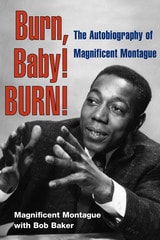
Burn, Baby! BURN!
The Autobiography of Magnificent MontagueMagnificent Montague with Bob Baker
University of Illinois Press, 2009
Like many black disc jockeys of his day, Montague played a role in his community beyond simply spreading the music of James Brown, Otis Redding, Aretha Franklin, and other prominent artists. Montague served as an unofficial spokesman for his black listeners, reflecting their beliefs and acting as a sounding board for their concerns.
Montague was based in Los Angeles in 1965 when the Watts rioters seized on his incendiary slogan, turning the shout of musical appreciation into a rallying cry for racial violence. In Burn, Baby! BURN! Montague recalls these tumultuous times, including the personal struggle he faced over whether to remain true to his listeners or bend to political pressure and stop shouting his suddenly controversial slogan.
Since the mid-1950s Montague had also expressed his passion for African American culture by becoming a zealous collector of artifacts of black history. He has built a monumental collection, taking time out from his collecting to become only the second African American to build his own radio station literally from the ground up.
A compelling account of a rich and varied life, Burn, Baby! BURN! gives an insider's view of half a century of black history, told with on-the-air zest by the DJ/historian who was there to see it unfold.
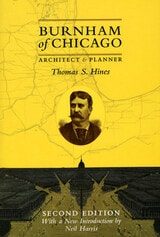
Burnham of Chicago
Architect and Planner, Second EditionThomas S. Hines
University of Chicago Press, 2008
“In every sense this is the definitive biography.”—Harry Weese, Chicago Tribune
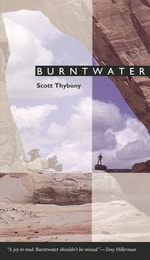
Burntwater
Scott Thybony
University of Arizona Press, 1997
This book takes the backroads, crossing the Colorado Plateau from the headwaters of the Virgin River to the mouth of the Dirty Devil, from the badlands below Twin Angels to a remote mesa in Bandelier. As the miles go by and the stories unfold, there is a growing sense of mystery, of words not spoken, of messages carried on the wind. Reaching the Shrine of the Stone Lions, the writer recounts a near-fatal descent into the Grand Canyon where he finds a way to reconnect with the beauty of life. There his journey ends with an emotional punch that goes straight to the mind and the heart.
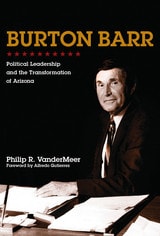
Burton Barr
Political Leadership and the Transformation of ArizonaPhilip R. VanderMeer, Foreword by Alfredo Gutierrez
University of Arizona Press, 2014
Considered perhaps the most influential person in Arizona’s political development, Burton Barr represented north central Phoenix in the Arizona House of Representatives for the twenty-two years from 1964 to 1986. As the Republican House Majority Leader for twenty of those years, he left his fingerprints on every major piece of legislation during those decades, covering such issues as air pollution, health care for indigents, school aid, the tax code, prison reform, child care, groundwater management, and freeway funding.
Burton Barr’s political life unfolded during the very time his state and region shifted from being outliers to trendsetters. His choices in policy making and his leadership style were both an outcome and a creator of his sociopolitical environment. Arizona politics in the 1960s and ’70s was a rich brew of key elements, a time when the economy was being transformed, the nature and distribution of populations shifted, partisan politics were in flux, and the very lifeblood of the West—water—was being contested under increasing pressures of usage and depletion.
How Barr successfully responded to those challenges is the story of Arizona’s development during those years. At the heart of it, Barr’s political life and personality are inextricably bound up with the life of the West.
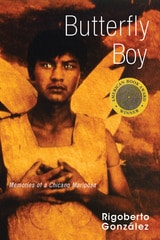
Butterfly Boy
Memories of a Chicano MariposaRigoberto Gonzalez
University of Wisconsin Press, 2011
Winner of the American Book Award
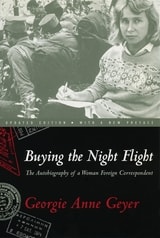
Buying the Night Flight
The Autobiography of a Woman Foreign CorrespondentGeorgie Anne Geyer
University of Chicago Press, 2001
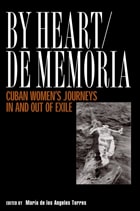
By Heart De Memoria
Cuban Women'S Journeys In/Out Of ExileMaria De Los Angeles Torre
Temple University Press, 2003
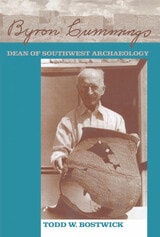
Byron Cummings
Dean of Southwest ArchaeologyTodd W. Bostwick
University of Arizona Press, 2006
This book presents the first comprehensive examination of Cummings’ life, offering readers a greater understanding of his trailblazing work. Todd Bostwick elucidates Cummings’ many intellectual and cultural contributions, investigates the controversies in which he was embroiled, and describes his battles to wrest control of Arizona archaeology from eastern institutions that had long dominated Southwest archaeology.
Cummings saw the Southwest as an American wilderness where the story of cultural development revealed by the archaeologist and anthropologist was as important as it was in Europe. Bostwick’s meticulous account of his life reflects his great reverence for the region and pays tribute to a man whose dedication, mentoring, and friendship have forever sealed his place as The Dean.