Results by title
8642 books match the query '20th Century' and 437 start with b
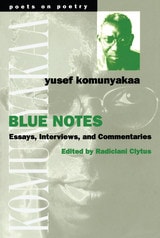
Blue Notes
Essays, Interviews, and CommentariesYusef Komunyakaa
University of Michigan Press, 2000
As editor Radiclani Clytus makes clear in the volume's introductory essay, although Komunyakaa's poetry has its roots in the stylistic innovations of early twentieth-century American modernists, his writing often reflects his understanding that a "black" experience should not particularize the presentation of one's art. This volume, according to the editor, is an attempt to understand Komunyakaa's critical eclecticism within the context of his own words.
Yusef Komunyakaa's books of poetry include I Apologize for the Eyes in My Head, Magic City, Thieves of Paradise, and Neon Vernacular, for which he received the Pulitzer Prize and the Kingsley Tufts Poetry Award in 1994.
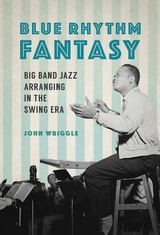
Blue Rhythm Fantasy
Big Band Jazz Arranging in the Swing EraJohn Wriggle
University of Illinois Press, 2016
Blue Rhythm Fantasy traces the extraordinary career of arranger Chappie Willet--a collaborator of Louis Armstrong, Cab Calloway, Duke Ellington, Gene Krupa, and many others--to revisit legendary Swing Era venues and performers from Harlem to Times Square. Wriggle's insightful music analyses of big band arranging techniques explore representations of cultural modernism, discourses on art and commercialism, conceptions of race and cultural identity, music industry marketing strategies, and stage entertainment variety genres.
Drawing on archives, obscure recordings, untapped sources in the African American press, and interviews with participants, Blue Rhythm Fantasy is a long-overdue study of the arranger during this dynamic era of American music history.
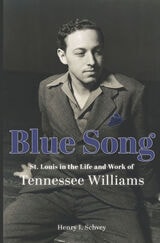
Blue Song
St. Louis in the Life and Work of Tennessee WilliamsHenry I. Schvey
University of Missouri Press, 2022
The question of this paradox lies at the heart of this book, an attempt not so much to correct the record about Williams’s well-chronicled dislike of the city, but rather to reveal how the city was absolutely indispensable to his formation and development both as a person and artist. Unlike the prevailing scholarly narrative that suggests that Williams discovered himself artistically and sexually in the deep South and New Orleans, Blue Song reveals that Williams remained emotionally tethered to St. Louis for a host of reasons for the rest of his life.
Blue Studios
Poetry and Its Cultural WorkRachel Blau DuPlessis
University of Alabama Press, 2006

Blue
A History of Postpartum Depression in AmericaRachel Louise Moran
University of Chicago Press, 2024
New motherhood is often seen as a joyful moment in a woman’s life; for some women, it is also their lowest moment. For much of the twentieth century, popular and medical voices blamed women who had emotional and mental distress after childbirth for their own suffering. By the end of the century, though, women with postpartum mental illnesses sought to take charge of this narrative. In Blue: A History of Postpartum Depression in America, Rachel Louise Moran explores the history of the naming and mainstreaming of postpartum depression. Coalitions of maverick psychiatrists, psychologists, and women who themselves had survived substantial postpartum distress fought to legitimize and normalize women’s experiences. They argued that postpartum depression is an objective and real illness and fought to avoid it being politicized alongside other fraught medical and political battles over women’s health.
Based on insightful oral histories and in-depth archival research, Blue reveals a secret history of American motherhood, women’s political activism, and the rise of postpartum depression advocacy amid an often-censorious conservative culture. By breaking new ground with the first book-length history of postpartum mental illness in the twentieth century, Moran brings mothers’ battles with postpartum depression out of the shadows and into the light.

Blueprint for Disaster
The Unraveling of Chicago Public HousingD. Bradford Hunt
University of Chicago Press, 2009
Now considered a dysfunctional mess, Chicago’s public housing projects once had long waiting lists of would-be residents hoping to leave the slums behind. So what went wrong? To answer this complicated question, D. Bradford Hunt traces public housing’s history in Chicago from its New Deal roots through current mayor Richard M. Daley’s Plan for Transformation. In the process, he chronicles the Chicago Housing Authority’s own transformation from the city’s most progressive government agency to its largest slumlord.
Challenging explanations that attribute the projects’ decline primarily to racial discrimination and real estate interests, Hunt argues that well-intentioned but misguided policy decisions—ranging from design choices to maintenance contracts—also paved the road to failure. Moreover, administrators who fully understood the potential drawbacks did not try to halt such deeply flawed projects as Cabrini-Green and the Robert Taylor Homes. These massive high-rise complexes housed unprecedented numbers of children but relatively few adults, engendering disorder that pushed out the working class and, consequently, the rents needed to maintain the buildings. The resulting combination of fiscal crisis, managerial incompetence, and social unrest plunged the CHA into a quagmire from which it is still struggling to emerge.
Blueprint for Disaster, then,is an urgent reminder of the havoc poorly conceived policy can wreak on our most vulnerable citizens.
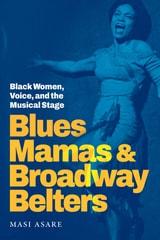
Blues Mamas and Broadway Belters
Black Women, Voice, and the Musical StageMasi Asare
Duke University Press, 2024
Blues Unlimited
Essential Interviews from the Original Blues MagazineEdited by Bill Greensmith, Mike Rowe, and Mark Camarigg
University of Illinois Press, 2015

Blues in the Blood
Julien Delmaire
Seagull Books, 2023
Blues in the Blood is an ode to the spring of 1932 in the Mississippi delta, when stifling heat crushed the countryside and threatened the harvest, pervasive injustice ruled the day, and ghostly riders of the Ku Klux Klan spread terror. A panoramic historical and musical portrait, Blues in the Blood follows a poor young Black couple who believe their love for each other will save them from this devastation. Julien Delmaire introduces us to a gallery of figures: Blacks, Whites, Native Americans, mulattos, landowners, itinerant bluesmen, preachers, witches, corrupt politicians, prisoners, bootleggers, and Legba, the voodoo god, “master of crossroads,” who, like an otherworldly detective, watches over people’s destinies. As the story unfolds, a world is reborn: the delta, the birthplace of the blues, in which oppressed women and men rediscover the voices and rhythms of their humanity.
Blues of a Lifetime
Autobiography of Cornell WoolrichEdited by Mark T. Bassett
University of Wisconsin Press, 1991

Bob Bilyeu Camblin
An Iconoclast in Houston's Emerging Art SceneSandra Jensen Rowland
University of North Texas Press, 2020
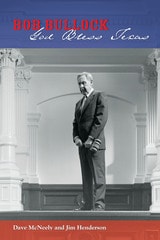
Bob Bullock
God Bless TexasBy Dave McNeely and Jim Henderson
University of Texas Press, 2008
Renowned for his fierce devotion to the people of Texas—as well as his equally fierce rages and unpredictable temper—Bob Bullock was the most powerful political figure in Texas at the end of the twentieth century. First elected to the Texas House of Representatives in 1956, Bullock held several key statewide posts before capturing the lieutenant governor's office in 1990. Though nominally the state's number two official, Bullock in fact became Texas's top power broker, wielding tremendous influence over the legislative agenda and state budget through the 1990s while also mentoring and supporting a future president—George W. Bush.
In this lively, yet thoroughly researched biography, award-winning journalists Dave McNeely and Jim Henderson craft a well-rounded portrait of Bob Bullock, underscoring both his political adroitness and his personal demons. They trace Bullock's rise through state government as Assistant Attorney General, Secretary of State, State Comptroller, and Lieutenant Governor, showing how he increased the power of every office he held. The authors spotlight Bullock's substantial achievements, which included hiring an unprecedented number of women and minorities, instituting a performance review to increase the efficiency of state agencies, restructuring the public school funding system, and creating the state's first water conservation and management plan.

Bodies and Ruins
Imagining the Bombing of Germany, 1945 to the PresentDavid F. Crew
University of Michigan Press, 2017
Bodies and Ruins examines a range of local publications that carried photographic images of German cities destroyed in the air war, images that soon entered the visual memory of World War II. Despite its obvious importance, historians have paid very little attention to the visual representation of the bombing war. This book follows the search for what were considered to be the “right” stories and the “right” pictures of the bombing war in local publications and picture books from 1945 to the present, and is intended for historians as well as general readers interested in World War II, the Allied bombing of German cities, the Holocaust, the history of memory and photographic/visual history.

Bodies at War
Genealogies of Militarism in Chicana Literature and CultureBelinda Linn Rincón
University of Arizona Press, 2017
Bodies at War examines the rise of neoliberal militarism from the early 1970s to the present and its transformation of political, economic, and social relations. It charts neoliberal militarism’s impact on democratic practices, economic policies, notions of citizenship, race relations, and gender norms by focusing on how these changes affect the Chicana/o community and, more specifically, on how it shapes and is shaped by Chicana bodies. The book raises important questions about the cultural legacies of war and the gendering of violence—topics that reach across multiple disciplinary fields of inquiry, including cultural and media studies. It draws attention to the relationship between war and society, to neoliberal militarism’s destructive social impact, and to the future of Latina soldiering. Through Chicana art, activism, and writing, Rincón offers a visionary foundation for an antiwar feminist politic.
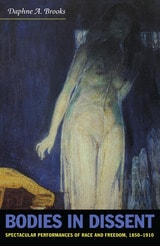
Bodies in Dissent
Spectacular Performances of Race and Freedom, 1850–1910Daphne A. Brooks
Duke University Press, 2006
Brooks pieces together reviews, letters, playbills, fiction, and biography in order to reconstruct not only the contexts of African American performance but also the reception of the stagings of “bodily insurgency” which she examines. Throughout the book, she juxtaposes unlikely texts and entertainers in order to illuminate the complicated transatlantic cultural landscape in which black performers intervened. She places Adah Isaacs Menken, a star of spectacular theatre, next to Sojourner Truth, showing how both used similar strategies of physical gesture to complicate one-dimensional notions of race and gender. She also considers Henry Box Brown’s public re-enactments of his escape from slavery, the Pan-Africanist discourse of Bert Williams’s and George Walker’s musical In Dahomey (1902–04), and the relationship between gender politics, performance, and New Negro activism in the fiction of the novelist and playwright Pauline Hopkins and the postbellum stage work of the cakewalk dancer and choreographer Aida Overton Walker. Highlighting the integral connections between performance and the construction of racial identities, Brooks provides a nuanced understanding of the vitality, complexity, and influence of black performance in the United States and throughout the black Atlantic.

Bodies of Knowledge
Sexuality, Reproduction, and Women's Health in the Second WaveWendy Kline
University of Chicago Press, 2010
Throughout the 1970s and ’80s, women argued that unless they gained access to information about their own bodies, there would be no equality. In Bodies of Knowledge, Wendy Kline considers the ways in which ordinary women worked to position the female body at the center of women’s liberation.
As Kline shows, the struggle to attain this knowledge unified women but also divided them—according to race, class, sexuality, or level of professionalization. Each of the five chapters of Bodies of Knowledge examines a distinct moment or setting of the women’s movement in order to give life to the ideas, expectations, and pitfalls encountered by the advocates of women’s health: the making of Our Bodies, Ourselves (1973); the conflicts surrounding the training and practice of women’s pelvic exams; the emergence of abortion as a feminist issue; the battles over contraceptive regulation at the 1983 Depo-Provera FDA hearings; and the rise of the profession of midwifery. Including an epilogue that considers the experiences of the daughters of 1970s feminists, Bodies of Knowledge is an important contribution to the study of the bodies—that marked the lives—of feminism’s second wave.
Bodies of Knowledge
The Medicalization of Reproduction in GreeceEugenia Georges
Vanderbilt University Press, 2008
Recipient of the 2006 Norman L. and Roselea J. Goldberg Prize for the best project in the area of medicine.
The author, a second-generation Greek American, returned to Greece with her young daughter to do fieldwork over the course of a decade. Focusing on Rhodes, an island that blends continuity with the past and rapid social change in often unexpected ways, she interviewed over a hundred women, doctors, and midwives about issues of reproduction.
The result is a detailed portrait of how a longstanding system of "local" gynecological and obstetrical knowledge under the control of women was rapidly displaced in the the period following World War II, and how the technologically-intensive biomedical model that took its place in turn assumed its own distinctive signature.
Bodies of Knowledge is a vivid ethnographic study of how a presumably globalizing and homogenizing process like medicalization can be reshaped as women and medical experts alike selectively accept or reject new practices and technologies. Georges found, for example, that women in Rhodes have enthusiastically embraced some new technologies, like fetal imaging during pregnancy, but rejected others, like medical contraception. They are also avid consumers of popular childbirth manuals.
This book is the recipient of the 2006 Norman L. and Roselea J. Goldberg Prize for the best project in the area of medicine.
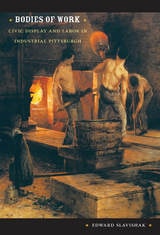
Bodies of Work
Civic Display and Labor in Industrial PittsburghEdward Slavishak
Duke University Press, 2008
Slavishak focuses on the workers whose bodies came to epitomize Pittsburgh, the men engaged in the arduous physical labor demanded by the city’s metals, glass, and coal industries. At the same time, he emphasizes how conceptions of Pittsburgh as quintessentially male limited representations of women in the industrial workplace. The threat of injury or violence loomed large for industrial workers at the turn of the twentieth century, and it recurs throughout Bodies of Work: in the marketing of artificial limbs, statistical assessments of the physical toll of industrial capitalism, clashes between labor and management, the introduction of workplace safety procedures, and the development of a statewide workmen’s compensation system.
Bodies on the Line
Performance and the Sixties Poetry ReadingRaphael Allison
University of Iowa Press, 2014
By comparing these two dominant styles of reading, Allison argues that attention to sixties poetry readings reveals poets struggling between the kind of immediacy and presence that readings suggested and a private retreat from such performance-based publicity, one centered on the text itself. Recordings of Robert Frost, Charles Olson, Gwendolyn Brooks, Larry Eigner, and William Carlos Williams—all of whom emphasized voice, breath, and spoken language and who were inveterate professional readers in the sixties—expose this struggle in often surprising ways. In deconstructing assertions about the role and importance of the poetry reading during this period, Allison reveals just how dramatic, political, and contentious poetry readings could be. By discussing how to "hear" as well as "read" poetry, Bodies on the Line offers startling new vantage points from which to understand American poetry since the 1960s as both performance and text.
Bodily Desire, Desired Bodies
Gender and Desire in Early Twentieth-Century German and Austrian Novels and PaintingsEsther K. Bauer
Northwestern University Press, 2014
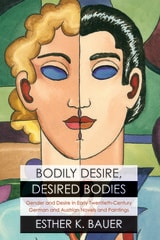
Bodily Desire, Desired Bodies examines the diverse ways that literary works and paintings can be read as screens onto which new images of masculinity and femininity are cast. Esther Bauer focuses on German and Austrian writers and artists from the 1910s and 1920s —specifically authors Franz Kafka, Vicki Baum, and Thomas Mann, and painters Otto Dix, Christian Schad, and Egon Schiele—who gave spectacular expression to shifting trends in male and female social roles and the organization of physical desire and the sexual body.
Bauer’s comparative approach reveals the ways in which artists and writers echoed one another in undermining the gender duality and highlighting sexuality and the body. As she points out, as sites of negotiation and innovation, these works reconfigured bodies of desire against prevailing notions of sexual difference and physical attraction and thus became instruments of social transformation.

Body Love
The Amazing Career of Bernarr MacfaddenWilliam R. Hunt
University of Wisconsin Press, 1989
Bernarr Macfadden (1868–1955) entertained and instructed Americans for decades. He championed physical exercise, fasting, and diet reform and was the relentless scourge of established doctors. He presented his views in Physical Culture, a popular magazine featuring photographs of strong men and healthy women and articles promoting the healthy life. While some critics derided him as a health nut, no one could dispute his genius as a magazine publisher. He established the world’s greatest magazine publishing empire through the innovation of such popular publications as True Story, the first confession magazine; True Detective; and many others.
Body and Nation
The Global Realm of U.S. Body Politics in the Twentieth CenturyEmily S. Rosenberg and Shanon Fitzpatrick, eds.
Duke University Press, 2014
Contributors. Frank Costigliola, Janet M. Davis, Shanon Fitzpatrick, Paul A. Kramer, Shirley Jennifer Lim, Mary Ting Yi Lui, Natalia Molina, Brenda Gayle Plummer, Emily S. Rosenberg, Kristina Shull, Annessa C. Stagner, Marilyn B. Young
Body and Soul
The Black Panther Party and the Fight against Medical DiscriminationAlondra Nelson
University of Minnesota Press, 2013
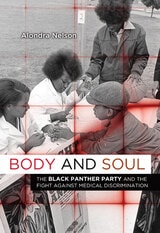
Between its founding in 1966 and its formal end in 1980, the Black Panther Party blazed a distinctive trail in American political culture. The Black Panthers are most often remembered for their revolutionary rhetoric and militant action. Here Alondra Nelson deftly recovers an indispensable but lesser-known aspect of the organization’s broader struggle for social justice: health care. The Black Panther Party’s health activism—its network of free health clinics, its campaign to raise awareness about genetic disease, and its challenges to medical discrimination—was an expression of its founding political philosophy and also a recognition that poor blacks were both underserved by mainstream medicine and overexposed to its harms.
Drawing on extensive historical research as well as interviews with former members of the Black Panther Party, Nelson argues that the Party’s focus on health care was both practical and ideological. Building on a long tradition of medical self-sufficiency among African Americans, the Panthers’ People’s Free Medical Clinics administered basic preventive care, tested for lead poisoning and hypertension, and helped with housing, employment, and social services. In 1971, the party launched a campaign to address sickle-cell anemia. In addition to establishing screening programs and educational outreach efforts, it exposed the racial biases of the medical system that had largely ignored sickle-cell anemia, a disease that predominantly affected people of African descent.
The Black Panther Party’s understanding of health as a basic human right and its engagement with the social implications of genetics anticipated current debates about the politics of health and race. That legacy—and that struggle—continues today in the commitment of health activists and the fight for universal health care.
Body of Writing
Figuring Desire in Spanish American LiteratureRené Prieto
Duke University Press, 2000
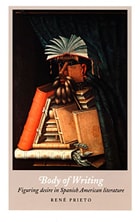
Healthy, invalid, lustful, and confined bodies—as portrayed by Julio Cortázar, Guillermo Cabrera Infante, Gabriel García Márquez, Severo Sarduy, Rosario Castellanos, and Tununa Mercado—become evidence for Roland Barthes’s contention that works of fiction are “anagrams of the body.” Claiming that an author’s intentions can be uncovered by analyzing “the topography of a text,” Prieto pays particular attention not to the actions or plots of these writers’ fiction but rather to their settings and characterizations. In the belief that bodily traces left on the page reveal the motivating force behind a writer’s creative act, he explores such fictional themes as camouflage, deterioration, defilement, entrapment, and subordination. Along the way, Prieto reaches unexpected conclusions regarding topics that include the relationship of the female body to power, male and female transgressive impulses, and the connection between aggression, the idealization of women, and anal eroticism in men.
This study of how authors’ longings and fears become embodied in literature will interest students and scholars of literary and psychoanalytic criticism, gender studies, and twentieth-century and Latin American literature.
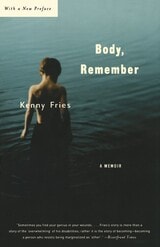
Body, Remember
A MemoirKenny Fries
University of Wisconsin Press, 2003
In this poetic, introspective memoir, Kenny Fries illustrates his intersecting identities as gay, Jewish, and disabled. While learning about the history of his body through medical records and his physical scars, Fries discovers just how deeply the memories and psychic scars run. As he reflects on his relationships with his family, his compassionate doctor, the brother who resented his disability, and the men who taught him to love, he confronts the challenges of his life. Body, Remember is a story about connection, a redemptive and passionate testimony to one man’s search for the sources of identity and difference.
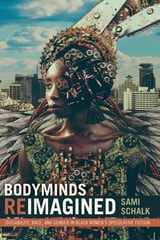
Bodyminds Reimagined
(Dis)ability, Race, and Gender in Black Women's Speculative FictionSami Schalk
Duke University Press, 2018

Boeing B-47 Stratojet
the cold war jet bomberNico Braas
Amsterdam University Press, 2023

Bohemians
The Glamorous OutcastsElizabeth Wilson
Rutgers University Press, 2000
Since the early nineteenth century, the bohemian has been the protagonist of the story the West has wanted to hear about its artists-a story of genius, glamour, and doom. The bohemian takes on many guises: the artist dying in poverty like Modigliani or an outrageous entertainer like Josephine Baker. Elizabeth Wilson's enjoyable book is a quest for the many shifting meanings that constitute the bohemian and bohemia.
She tells unforgettable stories of the artists, intellectuals, radicals, and hangers-on who populated the salons, bars, and cafs of Paris, London, New York, Los Angeles, and San Francisco, including Djuna Barnes, Juliette Greco, Allen Ginsberg, William Burroughs, Jack Kerouac, Amiri Baraka, Andy Warhol, and Jackson Pollock. Bohemians also follows the women who contributed to the myth, including the wives and mistresses, the muses, lesbians, and independent artists. Wilson explores the bohemians' eccentric use of dress, the role of sex and erotic love, the bohemian search for excess, and the intransigent politics of many.
As a new millennium begins, Wilson shows how notions of bohemianism remain at the core of heated cultural debates about the role of art and artists in an increasingly commodified and technological world.
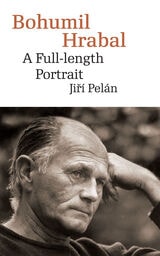
Bohumil Hrabal
A Full-Length PortraitJirí Pelán
Karolinum Press, 2019
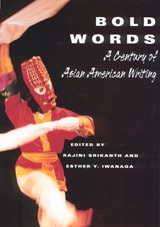
Bold Words
A Century of Asian American WritingEdited by Rajini Srikanth
Rutgers University Press, 2001
Bolivia's Radical Tradition
Permanent Revolution in the AndesS. Sándor John
University of Arizona Press, 2012
Boll Weevil Blues
Cotton, Myth, and Power in the American SouthJames C. Giesen
University of Chicago Press, 2011
Between the 1890s and the early 1920s, the boll weevil slowly ate its way across the Cotton South from Texas to the Atlantic Ocean. At the turn of the century, some Texas counties were reporting crop losses of over 70 percent, as were areas of Louisiana, Arkansas, and Mississippi. By the time the boll weevil reached the limits of the cotton belt, it had destroyed much of the region’s chief cash crop—tens of billions of pounds of cotton, worth nearly a trillion dollars.
As staggering as these numbers may seem, James C. Giesen demonstrates that it was the very idea of the boll weevil and the struggle over its meanings that most profoundly changed the South—as different groups, from policymakers to blues singers, projected onto this natural disaster the consequences they feared and the outcomes they sought. Giesen asks how the myth of the boll weevil’s lasting impact helped obscure the real problems of the region—those caused not by insects, but by landowning patterns, antiquated credit systems, white supremacist ideology, and declining soil fertility. Boll Weevil Blues brings together these cultural, environmental, and agricultural narratives in a novel and important way that allows us to reconsider the making of the modern American South.

Bombay Modern
Arun Kolatkar and Bilingual Literary CultureAnjali Nerlekar
Northwestern University Press, 2016
Bombay Modern uncovers an alternative and provincial modernism through poetry, a genre that is marginal to postcolonial studies, and through bilingual scholarship across English and Marathi texts, a methodology that is currently peripheral at best to both modernist studies and postcolonial literary criticism in India. Eschewing any attempt to define an overarching or universal modernism, Bombay Modern delimits its sphere of study to "Bombay" and to the "post-1960" (the sathottari period) in an attempt to examine at close range the specific way in which this poetry redeployed the regional, the national, and the international to create a very tangible yet transient local.

Book Anatomy
Body Politics and the Materiality of Indigenous Book HistoryAmy Gore
University of Massachusetts Press, 2023
Winner of the Beatrice Medicine Award for Scholarship in American Indian Studies
From the marginalia of their readers to the social and cultural means of their production, books bear the imprint of our humanity. Embodying the marks, traces, and scars of colonial survival, Indigenous books are contested spaces. A constellation of nontextual components surrounded Native American–authored publications of the long nineteenth century, shaping how these books were read and understood—including illustrations, typefaces, explanatory prefaces, appendices, copyright statements, author portraits, and more.
Centering Indigenous writers, Book Anatomy explores works from John Rollin Ridge, Sarah Winnemucca Hopkins, Pretty Shield, and D’Arcy McNickle published between 1854 and 1936. In examining critical moments of junction between Indigenous books and a mainstream literary marketplace, Amy Gore argues that the reprints, editions, and paratextual elements of Indigenous books matter: they embody a frontline of colonization in which Native authors battle the public perception and reception of Indigenous books, negotiate representations of Indigenous bodies, and fight for authority and ownership over their literary work.
Book Reports
A Music Critic on His First Love, Which Was ReadingRobert Christgau
Duke University Press, 2019

Bookchin
A Critical AppraisalDamian F. White
Pluto Press, 2008
This is the first comprehensive overview of the work of Murray Bookchin, the left-libertarian social theorist and political ecologist who is widely regarded as the visionary precursor of anti-corporate politics.
Bookchin's writing spans fifty years and engages with a wide variety of issues: from ecology to urban planning, from environmental ethics to debates about radical democracy. Weaving insights from Hegel and Marx, Kropotkin and Mumford, Bookchin presents a critical theory whose central utopian message is 'things could be other than they are'.
This accessible introduction maps the evolution of Bookchin’s project. It traces his controversial engagements with Marxism, anarchism, critical theory, postmodernism and eco-centric thought. It evaluates his attempt to develop a social ecology. Finally, it considers how his thinking relates to current debates in social theory and environmentalism, critical theory and philosophy, political ecology and urban theory.
Offering a clear account of Bookchin's key themes, this book provides a critical but sympathetic account of the strengths and weaknesses of Bookchin's writing.
Booker T. Washington in American Memory
Kenneth M. Hamilton
University of Illinois Press, 2017

Books Like Sapphires
From the Library of Congress Judaica CollectionAnn Brener
Brandeis University Press, 2024
Books Like Sapphires showcases a wide range of Hebraic treasures from the storied collection at the Library of Congress, many of them for the first time. Tracing the history of Judaica collecting in the twentieth-century United States, the book illuminates varied works, telling their stories alongside vibrant color images. These include a unique manuscript about a betrothal scandal in Renaissance Crete, an illustrated Esther Scroll, a poem from 1477 celebrating the new technology of printing, amusing rhymed couplets in sixteenth-century Padua, and the Washington Haggadah. This book also tells the story of the patrons and collectors, first among them Jacob Schiff, as well as archivists and curators, who made the storied Judaica archive at the Library of Congress the precious resource that it is today.

Books against Tyranny
Catalan Publishers under FrancoLaura Vilardell
Vanderbilt University Press, 2022
Author Laura Vilardell examines documents including firsthand witness accounts, correspondence, memoirs, censorship files, newspapers, original interviews, and unpublished material housed in various Spanish archives. As such, Books against Tyranny opens up the field and serves as an informative tool for scholars of Franco's Spain, Catalan social movements, and censorship more generally.

Books, Maps, and Politics
A Cultural History of the Library of Congress, 1783-1861Carl Ostrowski
University of Massachusetts Press, 2004
The author explores the relationship between the Library and the period's expanding print culture. He identifies the books that legislators required to be placed in the Library and establishes how these volumes were used. His analysis of the earliest printed catalogs of the Library reveals that law, politics, economics, geography, and history were the subjects most assiduously collected. These books provided government officials with practical guidance in domestic legislation and foreign affairs, including disputes with European powers over territorial boundaries.
Ostrowski also discusses a number of secondary functions of the Library, one of which was to provide reading material for the entertainment and instruction of government officials and their families. As a result, the richness of America's burgeoning literary culture from the 1830s to the 1860s was amply represented on the Library's shelves. For those with access to its Capitol rooms, the Library served an important social function, providing a space for interaction and the display and appreciation of American works of art.
Ostrowski skillfully demonstrates that the history of the Library of Congress offers a lens through which we can view changing American attitudes toward books, literature, and the relationship between the federal government and the world of arts and letters.

Bookwomen
Creating an Empire in Children’s Book Publishing, 1919–1939Jacalyn Eddy
University of Wisconsin Press, 2006
The most comprehensive account of the women who, as librarians, editors, and founders of the Horn Book, shaped the modern children's book industry between 1919 and 1939. The lives of Anne Carroll Moore, Alice Jordan, Louise Seaman Bechtel, May Massee, Bertha Mahony Miller, and Elinor Whitney Field open up for readers the world of female professionalization. What emerges is a vivid illustration of some of the cultural debates of the time, including concerns about "good reading" for children and about women's negotiations between domesticity and participation in the paid labor force and the costs and payoffs of professional life.
Published in collaboration among the University of Wisconsin Press, the Center for the History of Print Culture in Modern America (a joint program of the University of Wisconsin–Madison and the Wisconsin Historical Society), and the University of Wisconsin–Madison General Library System Office of Scholarly Communication.

Boomer Girls
Poems by Women from the Baby Boom GenerationPamela Gemin
University of Iowa Press, 1999
Where were you between Betty Crocker and Gloria Steinem? With that question in mind poets Pamela Gemin and Paula Sergi began collecting the poems in Boomer Girls, an anthology of coming-of-age poems written by women born between 1945 and 1964, give or take a few years on either side. The answers to that question fill this volume with the energy, passion, heartbreak, and giddiness of women's lives from childhood to adolescence to middle age.
The poems in Boomer Girls are by unknown, emerging, and established writers, women who participated in the second wave of feminism. From Sandra Cisneros' "My Wicked Wicked Ways" to Barbara Crooker's "Nearing Menopause, I Run into Elvis at Shoprite," from Wendy Mnookin's "Polio Summer" to Kyoko Mori's "Barbie Says Math Is Hard," these poems call for us to celebrate (in the words of poet Diane Seuss-Brakeman) "glances, romances, beauty and guilt, regret, remorse, rebates and rejuvenations."
Boomer Girls share a common culture, bound by their generation's political history, by pop icons like Barbie—that pedestaled Boomer Girl who's just turned forty—and by the music that's never stopped playing: Janis Joplin, Marvin Gaye, Jimi Hendrix, the Ronettes, Van Morrison, Patsy Cline, John Lennon. The Boomer poets in this feisty anthology speak with diverse voices and embody a wide range of experiences, yet their generation's universal images—the hula hoops, TV shows, finned automobiles, and other household gods of their youth—unite them in ways both hilarious and tender.
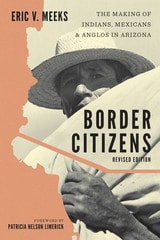
Border Citizens
The Making of Indians, Mexicans, and Anglos in ArizonaBy Eric V. Meeks; foreword by Patricia Nelson Limerick
University of Texas Press, 2007
In Border Citizens, historian Eric V. Meeks explores how the racial classification and identities of the diverse indigenous, mestizo, and Euro-American residents of Arizona’s borderlands evolved as the region was politically and economically incorporated into the United States. First published in 2007, the book examines the complex relationship between racial subordination and resistance over the course of a century. On the one hand, Meeks links the construction of multiple racial categories to the process of nation-state building and capitalist integration. On the other, he explores how the region’s diverse communities altered the blueprint drawn up by government officials and members of the Anglo majority for their assimilation or exclusion while redefining citizenship and national belonging.
The revised edition of this highly praised and influential study features dozens of new images, an introductory essay by historian Patricia Nelson Limerick, and a chapter-length afterword by the author. In his afterword, Meeks details and contextualizes Arizona’s aggressive response to undocumented immigration and ethnic studies in the decade after Border Citizens was first published, demonstrating that the broad-based movement against these measures had ramifications well beyond Arizona. He also revisits the Yaqui and Tohono O’odham nations on both sides of the Sonora-Arizona border, focusing on their efforts to retain, extend, and enrich their connections to one another in the face of increasingly stringent border enforcement.

Border Crossings
An Introduction to East German ProseThomas C. Fox
University of Michigan Press, 1993

Border Killers
Neoliberalism, Necropolitics, and Mexican MasculinityElizabeth Villalobos
University of Arizona Press, 2024
Villalobos focuses on representations of “border killers” in literature, film, and theater. The author develops a metaphor of “maquilization” to describe the mass-production of masculine violence as a result of neoliberalism. The author demonstrates that the killer is an interchangeable cog in a societal factory of violence whose work is to produce dead bodies. By turning to cultural narratives, Villalobos seeks to counter the sensationalistic and stereotyped media depictions of border residents as criminals. The cultural works she examines instead indict the Mexican state and the global economic system for producing agents of violence.
Focusing on both Mexico’s northern and southern borders, Border Killers uses Achille Mbembe’s concept of necropolitics and various theories of masculinity to argue that contemporary Mexico is home to a form of necropolitical masculinity that has flourished in the neoliberal era and made the exercise of death both profitable and necessary for the functioning of Mexico’s state-cartel-corporate governance matrix.

Border Renaissance
The Texas Centennial and the Emergence of Mexican American LiteratureBy John Morán González
University of Texas Press, 2009
The Texas Centennial of 1936, commemorated by statewide celebrations of independence from Mexico, proved to be a powerful catalyst for the formation of a distinctly Mexican American identity. Confronted by a media frenzy that vilified "Meskins" as the antithesis of Texan liberty, Mexican Americans created literary responses that critiqued these racialized representations while forging a new bilingual, bicultural community within the United States. The development of a modern Tejana identity, controversies surrounding bicultural nationalism, and other conflictual aspects of the transformation from mexicano to Mexican American are explored in this study. Capturing this fascinating aesthetic and political rebirth, Border Renaissance presents innovative readings of important novels by María Elena Zamora O'Shea, Américo Paredes, and Jovita González. In addition, the previously overlooked literary texts by members of the League of United Latin American Citizens (LULAC) are given their first detailed consideration in this compelling work of intellectual and literary history.
Drawing on extensive archival research in the English and Spanish languages, John Morán González revisits the 1930s as a crucial decade for the vibrant Mexican American reclamation of Texas history. Border Renaissance pays tribute to this vital turning point in the Mexican American struggle for civil rights.

Border Water
The Politics of U.S.-Mexico Transboundary Water Management, 1945–2015Stephen Paul Mumme
University of Arizona Press, 2023
The international boundary between the United States and Mexico spans more than 1,900 miles. Along much of this international border, water is what separates one country from the other. Border Water provides a historical account of the development of governance related to transboundary and border water resources between the United States and Mexico in the last seventy years.
This work examines the phases and pivot points in the development of U.S.-Mexico border water resources and reviews the theoretical approaches and explanation that impart a better understanding of these events. Author Stephen Paul Mumme, a leading expert in water policy and border studies, describes three important periods in the chronology of transboundary water management. First, Mumme examines the 1944 Water Treaty, the establishment of the International Boundary and Water Commission (IBWC) in 1945, and early transborder politics between the two governments. Next, he describes the early 1970s and the rise of environmentalism. In this period, pollution and salinization of the Colorado River Delta come into focus. Mumme shows how new actors, now including environmentalists and municipalities, broadened and strengthened the treaty’s applications in transboundary water management. The third period of transborder interaction described covers the opening and restricting of borders due to NAFTA and then 9/11.
Border Water places transboundary water management in the frame of the larger binational relationship, offering a comprehensive history of transnational water management between the United States and Mexico. As we move into the next century of transnational water management, this important work offers critical insights into lessons learned and charts a path for the future.

Border Writing
The Multidimensional TextD. Emily HicksForeword by Neil Larsen
University of Minnesota Press, 1991
Border Writing was first published in 1991. Minnesota Archive Editions uses digital technology to make long-unavailable books once again accessible, and are published unaltered from the original University of Minnesota Press editions.
Until recently, literary theory has been grounded in the histories of English, French, German, and Spanish literature. The terms and models for the production of literature and its function in culture and society were decided in Western Europe, and any deviations were immediately marginalized. This Eurocentric view has been widely attached by postmodern, feminist, and postcolonial political practices.
Drawing on a variety of critical and theoretical sources, D. Emily Hicks employs the concept of border writing to consider the complexities of contemporary Latin American writing. With its emphasis on the multiplicity of languages and the problems of translation, border writing connotes a perspective that is no longer determined by neat distinctions. Hicks combines Deleuze and Guattari's notion of "deterritorialization" (the geographic, linguistic, or cultural displacement from one's own country, language, or native culture) with a holographic metaphor in provocative readings of Latin America writers, including Gabriel Garcia Marquez, Luisa Valenzuela, and Julio Cortazar. The result is a volume that forces the reader to consider the development of literature in terms of strategies and tactics that contribute to the production of meaning in culturally complex and politically repressive societies.
D. Emily Hicks is associate professor of English and comparative literature and a member of the Latin American studies faculty at San Diego State University. Neil Larsen is associate professor of Spanish and Latin American literature at Northeastern University and the author of Modernism and Hegemony: A Materialist Critique of Aesthetic Agencies (Minnesota, 1990).

Bordering on War
A Social and Political History of KhuzestanShaherzad Ahmadi
University of Texas Press, 2024
A study of transnational identity, migration, and state loyalties told through the social and political history of Iran’s Khuzestan province.
In 1980, Saddam Hussein’s Ba‘athist forces invaded Khuzestan, one of the oldest and richest provinces in Iran, triggering the Iran-Iraq War. Shaherzad Ahmadi’s Bordering on War examines the social history of Khuzestan and sheds light on how border dwellers, provincial leaders, and migrants in the region shaped Iran and Iraq's history before, during, and after the war.
Drawing from a rich collection of Persian- and Arabic-language archival sources—rarely used by western scholars due to restrictions in Iran—Ahmadi’s research focuses on Arab Iranians and argues that Iranian border dwellers and migrants formed local, non-national loyalties, thereby eschewing bureaucratic pressures to confine loyalties to a single nation-state. The transnational character and ethnically diverse composition of Khuzestan, especially in the oil-rich towns on the southwestern border, led many, including Iraq’s Ba‘ath Party, to question the national belonging of Arab Iranians. Bordering on War contributes to a wider discussion about the ability of individuals and communities to exert agency through migration, trade, education, and other activities.
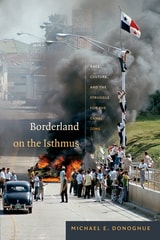
Borderland on the Isthmus
Race, Culture, and the Struggle for the Canal ZoneMichael E. Donoghue
Duke University Press, 2014