Results by title
482 books match the query '17th century' and 38 start with c

Canonical States, Canonical Stages
Oedipus, Othering, and Seventeenth-Century DramaMitchell Greenberg
University of Minnesota Press, 1994
Canonical States, Canonical Stages was first published in 1994. Minnesota Archive Editions uses digital technology to make long-unavailable books once again accessible, and are published unaltered from the original University of Minnesota Press editions.
In the crucible of seventeenth-century Europe, a new kind of subjectivity formed, private and interior. Perversely, the new private subject made its most spectacular appearance on the public stage-an appearance that, as Mitchell Greenberg amply demonstrates, also marked the emergence of absolutism in Europe. What these two phenomena had to do with one another, and how they were elaborated in the theater of the seventeenth century, is the subject of Greenberg's book, a masterful critical work that relates the dramatic construction of modern subjectivity and absolutist culture to the formation of the Western literary canon.
In particular, Canonical States, Canonical Stages shows how the Oedipus myth, reinterpreted on various stages at the end of the Renaissance, served the purposes of the emerging culture by replaying the founding moment of absolute rule. Working with models of genealogical criticism, psychoanalysis, and a certain Continental feminism, Greenberg reads plays by Shakespeare, Lope de Vega, Calderón, Corneille, and Racine to show how, as symptomatic texts staged within the confines of familial scenarios, they combine a dynamics of politics with a conflicting "private" desire shown to be inimical to the dominant ideology. This analysis reveals how scenarios of sacrifice and transcendence are brought into play to normalize and naturalize inchoate and threatening forces of social change by appealing to preexisting cultural models such as the myth of Oedipus. A fascinating integration of texts from political theory, psychoanalysis, history, and literature, Canonical States, Canonical Stages offers a powerful interpretation of the interrelated representation of subjectivity and absolutism on the seventeenth-century stage.Winner of the 1995 MLA Aldo and Jeanne Scaglione Prize for Comparative Literary Studies
Mitchell Greenberg is chair of the Department of French and Italian at Miami University in Ohio. He is the author of, among other books, Subjectivity and Subjugation in Seventeenth-Century Drama and Prose: The Family Romance of French Classicism (1992).
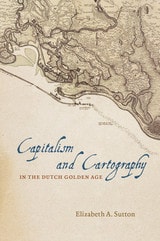
Capitalism and Cartography in the Dutch Golden Age
Elizabeth A. Sutton
University of Chicago Press, 2015
Building her exploration around the central figure of Claes Jansz Vischer, an Amsterdam-based publisher closely tied to the Dutch West India Company, Sutton shows how printed maps of Dutch Atlantic territories helped rationalize the Dutch Republic’s global expansion. Maps of land reclamation projects in the Netherlands, as well as the Dutch territories of New Netherland (now New York) and New Holland (Dutch Brazil), reveal how print media were used both to increase investment and to project a common narrative of national unity. Maps of this era showed those boundaries, commodities, and topographical details that publishers and the Dutch West India Company merchants and governing Dutch elite deemed significant to their agenda. In the process, Sutton argues, they perpetuated and promoted modern state capitalism.
Carnal Rhetoric
Milton’s Iconoclasm and the Poetics of DesireLana Cable
Duke University Press, 1995
Cable traces the development of Milton’s iconoclastic poetics from its roots in the antiprelatical tracts, through the divorce tracts and Areopagitica, to its fullest dramatic representation in Eikonoklastes and Samson Agonistes. Arguing that, like every creative act, metaphor is by nature a radical and self-transgressing agent of change, she explores the site where metaphoric language and imaginative desire merge. Examining the demands Milton places on metaphor, particularly his emphasis on language as a vehicle for mortal redemption, Cable demonstrates the ways in which metaphor acts for him as that creative and radical agent of change. In the process, she reveals Milton’s engagement, at the deepest levels of linguistic creativity, with the early modern commitment to an imaginative and historic remaking of the world.
An insightful and synthetic book, Carnal Rhetoric will appeal to scholars of English literature, Milton, and the Renaissance, as well as to those with an interest in the theory of affective stylistics as it pertains to reader-response criticism, semantics, epistemology, and the philosophy and psychology of language.
Cartesian Poetics
The Art of ThinkingAndrea Gadberry
University of Chicago Press, 2020
Gadberry’s approach to seventeenth-century writings poses questions urgent for the twenty-first. Bringing literature and philosophy into rich dialogue, Gadberry centers close reading as a method uniquely equipped to manage skepticism, tolerate critical ambivalence, and detect feeling in philosophy. Helping us read classic moments of philosophical argumentation in a new light, this elegant study also expands outward to redefine thinking in light of its poetic formations.

Catholics, Anglicans, and Puritans
Seventeenth-Century EssaysHugh Trevor-Roper
University of Chicago Press, 1988
The opening essay, a skillful work of historical detection, investigates the strange career of Nicholas Hill. In "Laudianism and Political Power," Trevor-Roper returns to the subject of his first, now classic, book. He analyzes the real significance of the ecclesiastical movement associated with Archbishop Laud and speculates on what might have happened if the Stuarts had not abandoned it. "James Ussher, Archbishop of Armagh" deals with a key figure in the intellectual and religious life of his time. A long essay on "The Great Tew Circle" reinstates Lord Falkland as an important influence on the continuity of ideas through the English revolution. The final essay reassesses the political ideology of Milton.
English intellectual history, as Trevor-Roper constructs it here for the seventeenth century, is conditioned by its social and political context. Always engaging and fresh, these essays deal with currently interesting historical topics and up-to-date controversies.

Cervantes in Transit
Studies in Honor of Francisco Layna RanzPaul Michael Johnson
University of Delaware Press, 2027
Cervantes in Transit explores how Cervantes’s texts embody movement, transformation, and boundary-crossing across multiple dimensions. Theorizing Cervantes as a figure at once of transit and in transit, the volume argues that the diverse and often disparate array of Cervantine interpretations is not simply a byproduct of modernity, but an inherent component of the author’s own writing. Cervantes transgressed boundaries of all sorts—mixing genres, blurring fiction and reality, and moving characters into paratextual spaces. The concept of transit encompasses both physical movement between places and fundamental change or metamorphosis, reflecting how Cervantes’s writing has traveled through temporal, geographical, and conceptual spaces while continuously transforming. The volume’s thirteen chapters explore five thematic clusters: “Impressions” examines material book history and paratextual borders; “Identities” analyzes racial, religious, gender, and class transgressions; “Ironies” considers humor as a boundary-crossing mode; “Influences” traces Cervantes’s engagement with literary traditions; and “Itineraries” maps geographical circulation and global networks.
Challenges to Traditional Authority
Plays by French Women Authors, 1650-1700Françoise Pascal, Mary-Catherine Desjardins, Antoinette Deshoulières, and Catherine Durand
Iter Press, 2015
Christian Humanism in Shakespeare
A Study in Religion and LiteratureLee Oser
Catholic University of America Press, 2022
Church and People in Interregnum Britain
Edited by Fiona McCall
University of London Press, 2021
Citizen-Saints
Shakespeare and Political TheologyJulia Reinhard Lupton
University of Chicago Press, 2005
Among the many questions Julia Reinhard Lupton attempts to answer under the rubric of the citizen-saint are: how did states of emergency, acts of sovereign exception, and Messianic anticipations lead to new forms of religious and political law? What styles of universality were implied by the abject state of the pure creature, at sea in a creation abandoned by its creator? And how did circumcision operate as both a marker of ethnicity and a means of conversion and civic naturalization?
Written with clarity and grace, Citizen-Saints will be of enormous interest to students of English literature, religion, and early modern culture.

Civic Charity in a Golden Age
ORPHAN CARE IN EARLY MODERN AMSTERDAMAnne E. C. McCants
University of Illinois Press, 1997
can see the start of profound social and economic changes in early modern
Amsterdam, Civic Charity in a Golden Age explores the connections
between the developing capitalist economy, the functioning of the government,
and the provision of charitable services to orphans in Amsterdam during
the seventeenth and eighteenth centuries, the period of the city's greatest
prosperity and subsequent decline.
Anne McCants skillfully interprets details of the orphanage's expenditures,
especially for food; its population; the work records of those who were
reared there; and the careers of the regents who oversaw it. The establishment
of the orphanage itself was called for by the changing economic needs
of rapidly expanding commercial centers and the potential instability
of a government that depended on taxes from a large, politically powerless
segment of the population.
Classical Rhetoric in English Poetry
Brian Vickers
Southern Illinois University Press, 1989
Back in print after 17 years, this is a concise history of rhetoric as it relates to structure, genre, and style, with special reference to English literature and literary criticism from Ancient Greece to the end of the 18th century.
The core of the book is a quite original argument that the figures of rhetoric were not mere mechanical devices, were not, as many believed, a "nuisance, a quite sterile appendage to rhetoric to which (unaccountably) teachers, pupils, and writers all over the world devoted much labor for over 2,000 years." Rather, Vickers demonstrates, rhetoric was a stylized representation of language and human feelings.
Vickers supplements his argument through analyses of the rhetorical and emotional structure of four Renaissance poems. He also defines 16 of the most common figures of rhetoric, citing examples from the classics, the Bible, and major English poets from Chaucer to Pope.
Climate and the Making of Worlds
Toward a Geohistorical PoeticsTobias Menely
University of Chicago Press, 2021
In this book, Tobias Menely develops a materialist ecocriticism, tracking the imprint of the planetary across a long literary history of poetic rewritings and critical readings which continually engage with the climate as a condition of human world making. Menely’s central archive is English poetry written between John Milton’s Paradise Lost (1667) and Charlotte Smith’s “Beachy Head” (1807)—a momentous century and a half during which Britain, emerging from a crisis intensified by the Little Ice Age, established the largest empire in world history and instigated the Industrial Revolution. Incorporating new sciences into ancient literary genres, these ambitious poems aspired to encompass what the eighteenth-century author James Thomson called the “system . . . entire.” Thus they offer a unique record of geohistory, Britain’s epochal transition from an agrarian society, buffeted by climate shocks, to a modern coal-powered nation. Climate and the Making of Worlds is a bracing and sophisticated contribution to ecocriticism, the energy humanities, and the prehistory of the Anthropocene.
Closet Devotions
Richard Rambuss
Duke University Press, 1998
Through startling rereadings of works ranging from the devotional verse of the metaphysical poets (Donne, Herbert, Crashaw, and Traherne) to photographer Andres Serrano’s controversial “Piss Christ,” from Renaissance religious iconography to contemporary gay porn, Rambuss uncovers the highly charged erotic imagery that suffuses religious devotional art and literature. And he explores one of Christian culture’s most guarded (and literal) closets—the prayer closet itself, a privileged space where the vectors of same-sex desire can travel privately between the worshiper and his or her God.
Elegantly written and theoretically astute, Closet Devotions illuminates the ways in which sacred Christian devotion is homoeroticized, a phenomenon that until now has gone unexplored in current scholarship on religion, the body, and its passions. This book will attract readers across a wide array of disciplines, including gay and lesbian studies, literary theory and criticism, Renaissance studies, and religion.
Clothed Villainy
Acting White in Early Modern DramaJamie Paris
University of Alabama Press, 2026
Examines how centuries-old stagecraft shaped modern racial politics—and why the performance of whiteness still commands the spotlight.
From Shakespearean blackface to the alt-right’s khaki-clad protests, Clothed Villainy: Acting White in in Early Modern Drama by Jamie Paris confronts the uncomfortable truths of racial performance across centuries. Paris argues that whiteness is not a fixed identity but a precarious and performative construct—shaped and sustained through actions, appearances, and cultural scripts.
Drawing on critical race theory, performance studies, and Indigenous scholarship, Clothed Villainy traces how racial scripts—whether “playing Black,” “playing Indian,” or especially “playing white”—have been used to uphold white supremacy and erase marginalized identities. By examining the costuming and characterization of white actors portraying Black villains on the early modern stage, Paris reveals how these theatrical traditions continue to echo in contemporary racial politics.
Written with bold clarity and personal insight, this book opens space for reimagining race, history, and identity through a more critical and inclusive lens. Clothed Villainy is essential reading for scholars, students, and anyone seeking to understand the deep-rooted performance of race in society and how we might reimagine it for a more equitable future.
Colonial Cataclysms
Climate, Landscape, and Memory in Mexico’s Little Ice AgeBradley Skopyk
University of Arizona Press, 2020
The contiguous river basins that flowed in Tlaxcala and San Juan Teotihuacan formed part of the agricultural heart of central Mexico. As the colonial project rose to a crescendo in the sixteenth and seventeenth centuries, the Indigenous farmers of central Mexico faced long-term problems standard historical treatments had attributed to drought and soil degradation set off by Old World agriculture. Instead, Bradley Skopyk argues that a global climate event called the Little Ice Age brought cold temperatures and elevated rainfall to the watersheds of Tlaxcala and Teotihuacan. With the climatic shift came cataclysmic changes: great floods, human adaptations to these deluges, and then silted wetlands and massive soil erosion.
This book chases water and soil across the colonial Mexican landscape, through the fields and towns of New Spain’s Native subjects, and in and out of some of the strongest climate anomalies of the last thousand or more years. The pursuit identifies and explains the making of two unique ecological crises, the product of the interplay between climatic and anthropogenic processes. It charts how Native farmers responded to the challenges posed by these ecological rifts with creative use of plants and animals from the Old and New Worlds, environmental engineering, and conflict within and beyond the courts. With a new reading of the colonial climate and by paying close attention to land, water, and agrarian ecologies forged by farmers, Skopyk argues that colonial cataclysms—forged during a critical conjuncture of truly unprecedented proportions, a crucible of human and natural forces—unhinged the customary ways in which humans organized, thought about, and used the Mexican environment.
This book inserts climate, earth, water, and ecology as significant forces shaping colonial affairs and challenges us to rethink both the environmental consequences of Spanish imperialism and the role of Indigenous peoples in shaping them.
Colonial Search For A Southern Eden
Louis B. Wright
University of Alabama Press, 2008
European imperialists began to dream of other kinds of wealth besides gold in the New World
The Colonial Search for a Southern Eden compiles three insightful lectures delivered by renowned historian Louis B. Wright at the Dancy Foundation in 1951. Wright explores the 17th‑century English colonial vision for the American South—not as a gold rush, but as a fertile terrain primed for economic prosperity through well‑planned plantations and commercial crops.
Across its concise 75 pages, Wright charts the transformation of settlers’ aspirations—from hopes of quick wealth to cultivated visions of tobacco, silk, sugar, and cotton plantations meant to create a utopian "Southern Eden". These were carefully cultivated not just for their profitability but to establish structured, enduring societies complementary to English economic goals.
Wright—a Guggenheim Fellow, Benjamin Franklin Medalist, and former director of the Folger Shakespeare Library—brings scholarly precision and elegant prose to this study, making it accessible to both historians and general readers. Publishers and reviewers have praised it as “extremely interesting and well written,” highlighting its focused yet comprehensive interpretation of colonial Southern motivations and their long-term implications. This work stands as a pivotal contribution to early American economic and colonial history—offering a nuanced understanding of how idealistic and ideological goals shaped plantation culture and southern development in the Atlantic colonies.
With its concise structure and authoritative voice, The Colonial Search for a Southern Eden is ideal for historians, students, and enthusiasts seeking to understand the ideological underpinnings of colonial Southern society.
Coming To
Consciousness and Natality in Early Modern EnglandTimothy M. Harrison
University of Chicago Press, 2020
Common Prayer
The Language of Public Devotion in Early Modern EnglandRamie Targoff
University of Chicago Press, 2001
Through readings of William Shakespeare's Hamlet, Richard Hooker's Lawes of Ecclesiastical Politie, Philip Sidney's Apology for Poetry and his translations of the Psalms, John Donne's sermons and poems, and George Herbert's The Temple, Targoff uncovers the period's pervasive and often surprising interest in cultivating public and formalized models of worship. At the heart of this study lies an original and daring approach to understanding the origins of devotional poetry; Targoff shows how the projects of composing eloquent verse and improving liturgical worship come to be deeply intertwined. New literary practices, then, became a powerful means of forging common prayer, or controlling private and otherwise unmanageable expressions of faith.
Common Understandings, Poetic Confusion
Playhouses and Playgoers in Elizabethan EnglandWilliam N. West
University of Chicago Press, 2021
What if going to a play in Elizabethan England was more like attending a football match than a Broadway show—or playing in one? In Common Understandings, Poetic Confusion, William N. West proposes a new account of the kind of participatory entertainment expected by the actors and the audience during the careers of Shakespeare and his contemporaries. West finds surprising descriptions of these theatrical experiences in the figurative language of early modern players and playgoers—including understanding, confusion, occupation, eating, and fighting. Such words and ways of speaking are still in use today, but their earlier meanings, like that of theater itself, are subtly, importantly different from our own. Playing was not confined to the actors on the stage but filled the playhouse, embracing audiences and performers in collaborative experiences that did not belong to any one alone but to the assembled, various crowd. What emerged in playing was a kind of thinking and feeling distributed across persons and times that were otherwise distinct. Thrown apples, smashed bottles of beer, and lumbering bears—these and more gave verbal shape to the physical interactions between players and playgoers, creating circuits of exchange, production, and consumption.
Comparative Essays on the Poetry and Prose of John Donne and George Herbert
Combined LightsRussell M. Hillier
University of Delaware Press, 2022
Conquering the American Wilderness
The Triumph of European Warfare in the Colonial NortheastGuy Chet
University of Massachusetts Press, 2003
A study of military tactics and strategy before the War of Independence, this book reexamines the conquest of the North American wilderness and its native peoples by colonial settlers. Historians have long believed that the peculiar conditions of the New World, coupled with the success of Indians tactics, forced the colonists to abandon traditional European methods of warfare and to develop a new “American” style of combat. By combining firearms with guerrilla-like native tactics, colonial commanders were able not only to subdue their Indian adversaries but eventually to prevail against more conventionally trained British forces during the American Revolution. Yet upon closer scrutiny, this common understanding of early American warfare turns out to be more myth than reality.
As Guy Chet reveals, clashes between colonial and Indian forces during the seventeenth and eighteenth centuries did not lead to a reevaluation and transformation of conventional military doctrine. On the contrary, the poor performance of the settlers during King Philip's War (1675–76) and King William's War (1689–1697) prompted colonial magistrates to address the shortcomings of their military forces through a greater reliance on British troops and imperial administrators. Thus, as the eighteenth century wore on, growing military success in the New England colonies reflected an increasing degree of British planning, administration, participation, and command. The colonies' military and political leadership, Chet argues, never rejected the time-tested principles of European warfare, and even during the American War of Independence, the republic's military leadership looked to Europe for guidance in the art of combat.
Constructing European Historical Narratives in the Early Modern World
Edited by Hilary J. Bernstein, Fabien Montcher, and Megan Armstrong
Iter Press, 2025
Exploring the art of crafting historical narratives during the early modern period, Constructing European Historical Narratives in the Early Modern World reflects on the social and political implications of the diversification of research methods and writing practices associated with historical writing. It does so by considering the global and local situatedness of historical narratives from the perspective of both their makers and publics while interrogating the extent of the hegemony that a composite European world acquired over the elaboration of historical narratives.
The contributions to this volume take into account historical texts ranging from those most concerned with the self—revealing questions of personal or familial agency and identity—to those in which groups of writers collaborated to produce engaged narratives, to those focused on broader, disembodied concepts, such as language development and geographical features, using a significant mixture of textual references and personal experience. This volume deliberately mixes studies from numerous parts of Europe and its colonial outposts and juxtaposes writings by published scholars with the manuscript testimonies of occasional memorialists.
Consuming Anxieties
Alcohol, Tobacco, and Trade in British Satire, 1660-1751Dayne C. Riley
Bucknell University Press, 2024
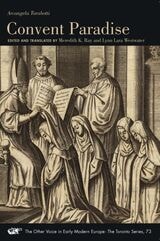
Convent Paradise
Arcangela Tarabotti
Iter Press, 2020
The Other Voice in Early Modern Europe - The Toronto Series volume 73
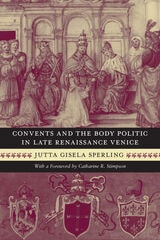
Convents and the Body Politic in Late Renaissance Venice
Jutta Gisela Sperling
University of Chicago Press, 2000
Sperling explains how women were not allowed to marry beneath their social status while men could, especially if their brides were wealthy. Faced with a shortage of suitable partners, patrician women were forced to offer themselves as "a gift not only to God, but to their fatherland," as Patriarch Giovanni Tiepolo told the Senate of Venice in 1619. Noting the declining birth rate among patrician women, Sperling explores the paradox of a marriage system that preserved the nobility at the price of its physical extinction. And on a more individual level, she tells the fascinating stories of these women. Some became scholars or advocates of women's rights, some took lovers, and others escaped only to survive as servants, prostitutes, or thieves.
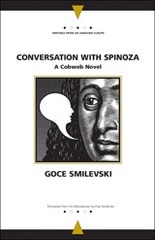
Conversation with Spinoza
A Cobweb NovelGoce Smilevski
Northwestern University Press, 2006
Smilevski's novel brings the thinker Spinoza and his inner life into conversation with the outer, all-too-real facts of his life and his day--from his connection to the Jewish community of Amsterdam, his excommunication in 1656, and the emergence of his philosophical system to his troubling feelings for his fourteen-year-old Latin teacher Clara Maria van den Enden and later his disciple Johannes Casearius. From this conversation there emerges a compelling and complex portrait of the life of an idea--and of a man who tries to live that idea.
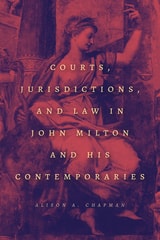
Courts, Jurisdictions, and Law in John Milton and His Contemporaries
Alison A. Chapman
University of Chicago Press, 2020
Surveying Milton’s early pamphlets, divorce tracts, late political tracts, and major prose works in comparison with the writings and cases of some of Milton’s contemporaries—including George Herbert, John Donne, Ben Jonson, and John Bunyan—Chapman reveals the variety and nuance in Milton’s juridical toolkit and his subtle use of competing legal traditions in pursuit of justice.
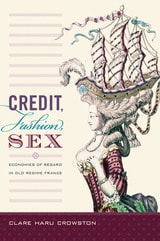
Credit, Fashion, Sex
Economies of Regard in Old Regime FranceClare Haru Crowston
Duke University Press, 2013
Credit economies constituted "economies of regard" in which reputation depended on embodied performances of credibility. Crowston explores the role of fashionable appearances and sexual desire in leveraging credit and reconstructs women's vigorous participation in its gray markets. The scandalous relationship between Queen Marie Antoinette and fashion merchant Rose Bertin epitomizes the vertical loyalties and deep social divides of the credit regime and its increasingly urgent political stakes.
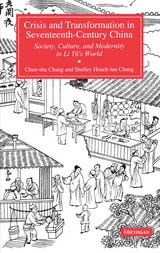
Crisis and Transformation in Seventeenth-Century China
Society, Culture, and Modernity in Li Yu's WorldChun-shu Chang and Shelley Hsueh-lun Chang
University of Michigan Press, 1998
The main thread of the book follows the life and works of a remarkable figure of the period, Li Yü (1611-80), whose vast array of accomplishments and experiences mirror seventeenth-century China in all its complexity and excitement. Li Yü's China was a world of unprecedented changes in almost all spheres of life. A thriving commercial and industrial economy, stupendous population growth, and the emergence of a new age of science and technology were accompanied by intense urbanization, radical views on money, wealth, and luxury, liberal attitudes toward sexuality, and developments that would change the nature of the literary and intellectual world. The Changs' exhaustive exploration of Chinese historical and literary sources of the sixteenth and seventeenth centuries is combined with a selective application of interpretive insights and analytic techniques from the major theoretical schools.
An important resource for scholars in history, literature, and Asian studies, Crisis and Transformation extends its appeal to those interested in the history of science, issues of gender and social transformation, and popular culture movements.
Chun-shu Chang is Professor of History, University of Michigan, and Honorary Professor of Chinese History, China. Shelley Hsueh-lun Chang is Visiting Associate Professor of History and Research Associate, Center for Chinese Studies, University of Michigan.
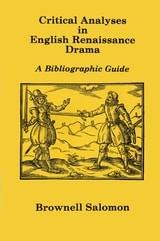
Critical Analyses in English Renaissance Drama
A Bibliographic GuideBrownell Salomon
University of Wisconsin Press, 1979
This bibliographic guide directs the reader to a prize selection of the best modern, analytical studies of every play, anonymous play, masque, pageant, and "entertainment" written by more than two dozen contemporaries of Shakespeare in the years between 1580 and 1642. Together with Shakespeare's plays, these works comprise the most illustrious body of drama in the English language.
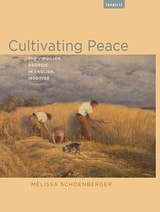
Cultivating Peace
The Virgilian Georgic in English, 1650-1750Schoenberger, Melissa
Bucknell University Press, 2019
Published by Bucknell University Press. Distributed worldwide by Rutgers University Press.
Cultural Aesthetics
Renaissance Literature and the Practice of Social OrnamentPatricia Fumerton
University of Chicago Press, 1991
Culture and Language at Crossed Purposes
The Unsettled Records of American SettlementJerome McGann
University of Chicago Press, 2022
Classic American literature, Jerome McGann argues, is haunted by the betrayal of seventeenth- and eighteenth-century Indian treaties—“a stunned memory preserved in the negative spaces of the treaty records.” A noted scholar of the “textual conditions” of literature, McGann investigates canonical works from the colonial period, including the Arbella sermon and key writings of William Bradford, John Winthrop, Anne Bradstreet, Cotton Mather’s Magnalia, Benjamin Franklin’s celebrated treaty folios and Autobiography, and Thomas Jefferson’s Notes on the State of Virginia. These are highly practical, purpose-driven works—the record of Enlightenment dreams put to the severe test of dangerous conditions. McGann suggests that the treaty-makers never doubted the unsettled character of what they were prosecuting, and a similar conflicted ethos pervades these works. Like the treaty records, they deliberately test themselves against stringent measures of truth and accomplishment and show a distinctive consciousness of their limits and failures. McGann’s book is ultimately a reminder of the public importance of truth and memory—the vocational commitments of humanist scholars and educators.
Cultures of Print
Essays in the History of the BookDavid D. Hall
University of Massachusetts Press, 1996
David D. Hall examines the interchange between popular and learned cultures and the practices of reading and writing. His writings deal with change and continuity, exploring the possibility of a reading revolution and arguing for the long duration of a Protestant vernacular tradition. A newly written essay on book culture in the early Chesapeake describes a system of scribal publication. The pieces reflect Hall's belief that the better we understand the production and consumption of books, the closer we come to a social history of culture.
Curious and Modern Inventions
Instrumental Music as Discovery in Galileo's ItalyRebecca Cypess
University of Chicago Press, 2016
Rebecca Cypess shows that early modern thinkers were fascinated with instrumental technologies. The telescope, the clock, the pen, the lute—these were vital instruments for leading thinkers of the age, from Galileo Galilei to Giambattista Marino. No longer used merely to remake an object or repeat a process already known, instruments were increasingly seen as tools for open-ended inquiry that would lead to new knowledge. Engaging with themes from the history of science, literature, and the visual arts, this study reveals the intimate connections between instrumental music and the scientific and artisanal tools that served to mediate between individuals and the world around them.
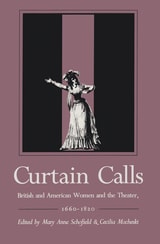
Curtain Calls
British and American Women and the Theater, 1660–1820Mary A. Schofield
Ohio University Press, 1991
“I here and there o’heard a Coxcomb cry,
Ah, rot—’tis a Woman’s Comedy.”
Thus Aphra Behn ushers in a new era for women in the British Theatre (Sir Patient Fancy, 1678). In the hundred years that were to follow—and exactly those years that Curtain Calls examines—women truly took the theater world by storm.
For each woman who chose a career in the theater world of the eighteenth century, there is a unique tale of struggle, insult, success, good or bad fortune, disaster, seduction, or fame. Whether acting, writing, reviewing, or stage managing, women played a major, if frequently unacknowledged, role in the history of the theater from the late seventeenth through the early nineteenth centuries. From Alpha Behn’s earliest plays through the glorious celebrity of Sara Siddons, women molded the taste of the age and carved out in the theater one of the few available opportunities for independence and renown.
Not all the women who tried succeeded, of course, and even the best faced opposition as they challenged the male stronghold of playwriting and theater managing. Curtain Calls maps the new territory as these pioneering women staked it for their own; it chronicles their lives, their triumphs, and their losses.
We begin with Aphra Behn, whose first play was staged in 1670, and conclude in the early decades of the nineteenth century with Inchbald and Siddons. The one hundred and fifty years encompassed by their lives contain the careers of dozens of lesser–known women, a network, as Dr. Johnson would have it, encompassing both talent and tribulation.
Contributors include: Edward Langhans, Linda R. Payne, Pat Rogers, Maureen e. Mulvihill, Deborah Payne, Betty Rizzo, Ellen Donkin, Frances M. Kavenik, Jessica Munns, nancy Cotton, Edna L. Steevs, Doreen Saar, Jean B. Kern, Katherine M. Rogers, Constance Clark, William J. Burling, Judith Phillips Stanton, Douglas Butler, Rose Zimbardo, and the editors.
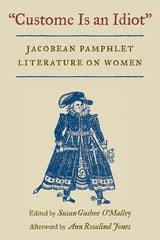
Custome Is an Idiot
JACOBEAN PAMPHLET LITERATURE ON WOMENEdited by Susan Gushee O'Malley
University of Illinois Press, 2004
During the early seventeenth century a fierce debate raged in British intellectual society regarding the role of women, how much is ordained by God, and how much is merely custom. The pamphlets that circulated at the time reveal a great deal about the terms of the debate, and these six constitute a significant body of primary literature, allowing the contending voices to be heard anew.
Included here are two pamphlets about gossips by Samuel Rowlands, William Heale's treatise against wife-beating, Christopher Newstead's argument for the superiority of women, and Hic Mulier and Haec Vir, two pamphlets that address the theme of cross-dressing. Introductions by Susan Gushee O'Malley place each pamphlet in a wider context, and detailed annotations shed light on the individual texts.