Results by title
187 books match the query '1951-' and 12 start with c
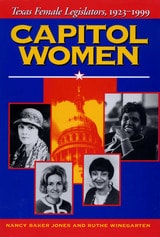
Capitol Women
Texas Female Legislators, 1923-1999By Nancy Baker Jones and Ruthe Winegarten
University of Texas Press, 2000
Along with bar rooms and bordellos, there has hardly been a more male-focused institution in Texas history than the Texas Legislature. Yet the eighty-six women who have served there have made a mark on the institution through the legislation they have passed, much of which addresses their concerns as citizens who have been inadequately represented by male lawmakers.
This first complete record of the women of the Texas Legislature places such well-known figures as Kay Bailey Hutchison, Sissy Farenthold, Barbara Jordan, Irma Rangel, Eddie Bernice Johnson, Susan Combs, and Judith Zaffirini in the context of their times and among the women and men with whom they served. Drawing on years of primary research and interviews, Nancy Baker Jones and Ruthe Winegarten offer concise biographies and profiles of all eighty-six women who have served or currently hold office in the Texas Legislature.
The biographies describe the women lawmakers' lives, campaign strategies, and legislative successes and defeats. Four introductory essays provide historical and cultural context for the biographies, which are arranged chronologically to give a sense of the passage of time, of relationships among and between women, and of the issues of their eras.
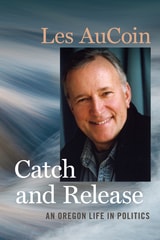
Catch and Release
An Oregon Life in PoliticsLes AuCoin
Oregon State University Press, 2019
In this compelling collection of life stories, AuCoin traces his unlikely rise from a fatherless childhood in Central Oregon to the top ranks of national power. Then came a painful defeat in one of the most controversial races in US Senate history, against incumbent Bob Packwood.
A fly fisher, AuCoin uses “catch and release” as a metaphor for succeeding and letting go of loss with dignity and equanimity. His memories are in turn funny, suspenseful, and revealing. AuCoin takes us to the Kremlin, pre-industrial China, the Arctic National Wildlife Refuge, and into the tortuous politics of the Northwest spotted owl crisis. He interacted with world figures like Mikhail Gorbachev, Ronald Reagan, House Speakers Tip O’Neill and Jim Wright, and Oregon legends Tom McCall and Mark Hatfield. Closer to home, AuCoin allied himself with activists like Sidney Lasseigne of the Newport Fishermen’s Wives.
Catch and Release offers readers a revealing glimpse behind the scenes of congressional life, as lived by the 535 souls who inhabit the US House and Senate—including the author, who assesses his own strengths and foibles with humility and candor.
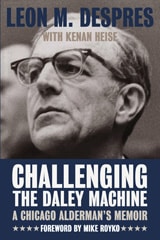
Challenging the Daley Machine
A Chicago Alderman's MemoirLeon M. Despres
Northwestern University Press, 2005
Winner, 2007 The Hyde Park Historical Society Paul Cornell Award
Political war stories from a thorn in the side of Chicago's famous Boss
In 1955, south-sider Leon Despres was elected to the Chicago City Council-the same year that Paddy Bauler famously uttered that "Chicago ain't ready for reform." Ready or not, Chicago got twenty years of reform efforts from Despres, one of the few independents in the council and the most liberal alderman in the city. His demand to cut out the corrupt sale of city driveway permits made him enemies from the very beginning. Over the years his crusades to ban discrimination, preserve Chicago landmark buildings, and gain equality for African-Americans-when Daley-beholden African-American council members refused to help-threw wrench after wrench into the Machine. And, not incidentally, changed the city.
But Challenging the Daley Machine is more than a memoir. It's a historical portrait of the way things were done under the Boss, when changing times and a changing city forced the Machine to confront the problems Despres championed. His battles against the seemingly monolithic Machine are also an inspiration to anyone who is facing long odds, but is convinced he/she is on the side of right.
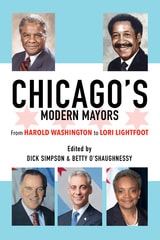
Chicago’s Modern Mayors
From Harold Washington to Lori LightfootEdited by Dick Simpson and Betty O'Shaughnessy
University of Illinois Press, 2024
Chicago’s transformation into a global city began at City Hall. Dick Simpson and Betty O’Shaughnessy edit in-depth analyses of the five mayors that guided the city through this transition beginning with Harold Washington’s 1983 election: Washington, Eugene Sawyer, Richard M. Daley, Rahm Emmanuel, and Lori Lightfoot. Though the respected political science, sociologist, and journalist contributors approach their subjects from distinct perspectives, each essay addresses three essential issues: how and why each mayor won the office; whether the City Council of their time acted as a rubber stamp or independent body; and the ways the unique qualities of each mayor’s administration and accomplishments influenced their legacy.
Filled with expert analysis and valuable insights, Chicago’s Modern Mayors illuminates a time of transition and change and considers the politicians who--for better and worse--shaped the Chicago of today.
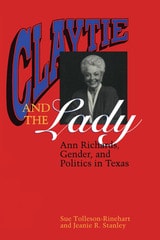
Claytie and the Lady
Ann Richards, Gender, and Politics in TexasBy Sue Tolleson-Rinehart and Jeanie R. Stanley
University of Texas Press, 1994
It was like a remake of The Cowboy and the Lady, except that this time they weren't friends. The 1990 Texas governor's race pitted Republican Clayton Williams, a politically conservative rancher and oil millionaire, against Democrat Ann Richards, an experienced progressive politician noted for her toughness and quick wit. Their differences offered voters a choice not only of policies and programs but also of stereotypes and myths of men's and women's proper roles.
Claytie and the Lady is the first in-depth look at how gender affected the 1990 governor's race. The authors' analysis reveals that Ann Richards' victory was a result of a unique combination of characteristics. She was simultaneously tough enough to convince voters that she could lead and feminine enough to put them at ease. At the same time, she remained committed to the progressive and women's issues that had won her the early support of feminists and progressives. The authors also show how Clayton Williams' appeal to the Texas cowboy myth backfired when he broke the cowboy code of chivalry to women.
The authors set their discussion within the historical context of twentieth-century Texas politics and the theoretical context of gender politics in order to pose a number of thought-provoking questions about the effects of women's participation in political life. Interviews with key players in the 1990 election, including Governor Ann Richards, add a lively and insightful counterpoint to the text.

Cold Anger
A Story of Faith and Power PoliticsMary Beth Rogers
University of North Texas Press, 1990
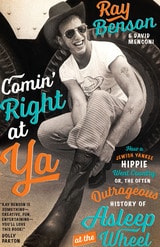
Comin' Right at Ya
How a Jewish Yankee Hippie Went Country, or, the Often Outrageous History of Asleep at the WheelBy Ray Benson, and David Menconi
University of Texas Press, 2015
A who’s who of American popular music fills this lively memoir, in which Ray Benson recalls how a Philadelphia Jewish hippie and his bandmates in Asleep at the Wheel turned on generations of rock and country fans to Bob Wills–style Western swing.
A six-foot-seven-inch Jewish hippie from Philadelphia starts a Western swing band in 1970, when country fans hate hippies and Western swing. It sounds like a joke but—more than forty years, twenty-five albums, and ten Grammy Awards later—Asleep at the Wheel is still drawing crowds around the world. The roster of musicians who’ve shared a stage with the Wheel is a who’s who of American popular music—Van Morrison, Willie Nelson, Dolly Parton, Emmylou Harris, George Strait, Vince Gill, Lyle Lovett, and so many more. And the bandleader who’s brought them all together is the hippie that claimed Bob Wills’s boots: Ray Benson.
In this hugely entertaining memoir, Benson looks back over his life and wild ride with Asleep at the Wheel from the band’s beginning in Paw Paw, West Virginia, through its many years as a Texas institution. He vividly recalls spending decades in a touring band, with all the inevitable ups and downs and changes in personnel, and describes the making of classic albums such as Willie and the Wheel and Tribute to the Music of Bob Wills and the Texas Playboys. The ultimate music industry insider, Benson explains better than anyone else how the Wheel got rock hipsters and die-hard country fans to love groovy new-old Western swing. Decades later, they still do.
Contentious City
The Politics of Recovery in New York CityJohn Mollenkopf
Russell Sage Foundation, 2005
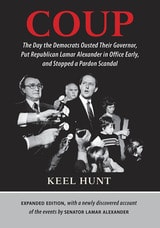
Coup
The Day the Democrats Ousted Their Governor, Put Republican Lamar Alexander in Office Early, and Stopped a Pardon ScandalKeel Hunt
Vanderbilt University Press, 2017
On January 17, 1979, driven by new information that some of the worst criminals in the state's penitentiaries were about to be released (and fears that James Earl Ray might be one of them), a small bipartisan group chose to take charge. Senior Democratic leaders, friends of the sitting governor, together with the Republican governor-elect Lamar Alexander (now US Senator from Tennessee), agreed to oust Blanton from office before another night fell. It was a maneuver unique in American political history.
Expanded edition, with a newly discovered account of the events by Senator Lamar Alexander:
"In December 2015 something unexpected happened. Keel [Hunt] delivered to my Nashville office a brown three-ring binder. He had only recently discovered it in a box that had been in storage for thirty years." —Senator Lamar Alexander
This binder contained the forgotten typescript, written in 1985, of Alexander's recollections of the events leading up to his early inauguration on January 17, 1979. In this expanded edition of Coup, the Senator's 22,000-word text has been added as a lost footnote to Hunt's definitive account.
From the foreword by John L. Seigenthaler:
"The individual stories of those government officials involved in the coup—each account unique, but all of them intersecting—were scattered like disconnected pieces of a jigsaw puzzle on the table of history until the author conceived this book. Perhaps because it happened so quickly, and without major disagreement, protest, or dissent, this truly historic moment has been buried in the public mind. In unearthing the drama in gripping detail, Keel Hunt assures that the 'dark day' will be remembered as a bright one in which conflicted politicians came together in the public interest."
Crossing the Aisle
How Bipartisanship Brought Tennessee to the Twenty-First Century and Could Save AmericaKeel Hunt
Vanderbilt University Press, 2018
The Tennessee story, as the Pulitzer Prize–winning author Jon Meacham observes in his foreword to this book, offers striking examples of bipartisan cooperation on many policy fronts—and a mode of governing that provides lessons for America in this frustrating era of partisan stalemate.
For more on Crossing the Aisle and author Keel Hunt, visit KeelHunt.com.
Crossing the Barriers
The Autobiography of Allan H. SpearAllan H. Spear
University of Minnesota Press, 2010
Spear's memoirs are fascinating and moving: in early chapters on his childhood and college years, he writes with great introspection about his growing self-awareness of being gay. Later he writes about his development as an intellectual, particularly as a white man fighting to win legitimacy for the study of African-American history and culture. During his time at the University of Minnesota, Spear became deeply involved with the Minnesota Democratic-Farmer-Labor Party (DFL) and the antiwar movement. At the same time, Spear became increasingly active in the emerging gay rights movement and began the process of coming out to his friends and colleagues.
After a failed run for the Minnesota House in 1968, Spear was elected to the Minnesota Senate in 1972 and served as Senate president from 1993-2000. In 1993, he was instrumental in the passage of the Minnesota Human Rights Act, which protected LGBT people from discrimination in housing, education, and employment-an achievement he considered one of the finest of his career. A skilled parliamentarian, he remained a progressive leader in the legislature until his retirement in 2000.
Spear passed away on October 11, 2008, leaving his memoir slightly incomplete. A stirring afterword by John Milton completes the story of Spear's life, chronicling the recognition of his accomplishments as a politician and activist during his final years.
Cultivating Justice in the Garden State
My Life in the Colorful World of New Jersey PoliticsRaymond Lesniak
Rutgers University Press, 2022
He recounts the many causes he championed in his forty years as a state legislator, from the landmark Environmental Cleanup Responsibility Act to bills concerning animal protections, marriage equality, women’s reproductive rights, and the abolition of the death penalty. He also delves into his experiences on the national stage as a key advisor for Bill Clinton and Al Gore’s presidential campaigns. With refreshing candor, Lesniak describes both his greatest achievements and his moments of failure, including his unsuccessful 2017 gubernatorial run.
Cultivating Justice in the Garden State is both a gripping American success story and a must-read for anyone seeking to understand the inner workings of our political system. It offers an insider’s perspective on the past fifty years of New Jersey politics, while presenting a compelling message about what leaders and citizens can do to improve the state’s future.