Results by title
53 books match the query '1970-' and 4 start with c
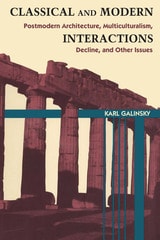
Classical and Modern Interactions
Postmodern Architecture, Multiculturalism, Decline, and Other IssuesBy Karl Galinsky
University of Texas Press, 1992
Postmodernism, multiculturalism, the alleged decline of the United States, deconstruction, leadership, and values—these topics have been at the forefront of contemporary intellectual and cultural debate and are likely to remain so for the near future. Participants in the debate can usefully enlarge the perspective to a comparison between the Greco-Roman world and contemporary society. In this thought-provoking work, a noted classics scholar tests the ancient-modern comparison, showing what it can add to the contemporary debates and what its limitations are.
Writing for intellectually adventurous readers, Galinsky explores Greece and Rome as multicultural societies, debates the merits of classicism in postmodern architecture, discusses the reign of Augustus in terms of modern leadership theories, and investigates the modern obsession with finding parallels between the supposed "decline and fall" of Rome and the "decay" of U.S. society.
Within these discussions, Galinsky shows the continuing vitality of the classical tradition in the contemporary world. The Greek and Roman civilizations have provided us not only with models for conscious adaptation but also points for radical departures. This ability to change and innovate from classical models is crucial, Galinsky maintains. It creates a reciprocal process whereby contemporary issues are projected into the past while aspects of the ancient world are redefined in terms of current approaches.
These essays result in a balanced assessment and stimulating restatement of some major issues in both contemporary U.S. society and the Greco-Roman world. The book, which speaks to a wide interdisciplinary audience, is based on a series of lectures that Galinsky gave as a national visiting scholar for Phi Beta Kappa. It concludes with a discussion of the role of classical studies in the United States today.

Collective Action
A Bad Subjects AnthologyEdited by Megan Shaw Prelinger and Joel Schalit
Pluto Press, 2004
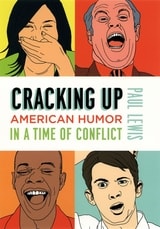
Cracking Up
American Humor in a Time of ConflictPaul Lewis
University of Chicago Press, 2006
What do Jon Stewart, Freddy Krueger, Patch Adams, and George W. Bush have in common? As Paul Lewis shows in Cracking Up, they are all among the ranks of joke tellers who aim to do much more than simply amuse. Exploring topics that range from the sadistic mockery of Abu Ghraib prison guards to New Age platitudes about the healing power of laughter, from jokes used to ridicule the possibility of global climate change to the heartwarming performances of hospital clowns, Lewis demonstrates that over the past thirty years American humor has become increasingly purposeful and embattled.
Navigating this contentious world of controversial, manipulative, and disturbing laughter, Cracking Up argues that the good news about American humor in our time—that it is delightful, relaxing, and distracting—is also the bad news. In a culture that both enjoys and quarrels about jokes, humor expresses our most nurturing and hurtful impulses, informs and misinforms us, and exposes as well as covers up the shortcomings of our leaders. Wondering what’s so funny about a culture determined to laugh at problems it prefers not to face, Lewis reveals connections between such seemingly unrelated jokers as Norman Cousins, Hannibal Lecter, Rush Limbaugh, Garry Trudeau, Jay Leno, Ronald Reagan, Beavis and Butt-Head, and Bill Clinton. The result is a surprising, alarming, and at times hilarious argument that will appeal to anyone interested in the ways humor is changing our cultural and political landscapes.
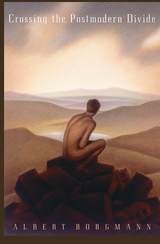
Crossing the Postmodern Divide
Albert Borgmann
University of Chicago Press, 1993
"[This] thoughtful book is the first remotely realistic map out of the post modern labyrinth."—Joseph Coates, The Chicago Tribune
"Rather astoundingly large-minded vision of the nature of humanity, civilization and science."—Kirkus Reviews