Results by title
57 books match the query 'AIDS & HIV' and 4 start with c
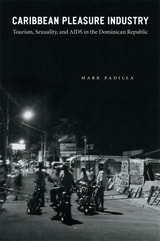
Caribbean Pleasure Industry
Tourism, Sexuality, and AIDS in the Dominican RepublicMark Padilla
University of Chicago Press, 2007
In recent years, the economy of the Caribbean has become almost completely dependent on international tourism. And today one of the chief ways that foreign visitors there seek pleasure is through prostitution. While much has been written on the female sex workers who service these tourists, Caribbean Pleasure Industry shifts the focus onto the men. Drawing on his groundbreaking ethnographic research in the Dominican Republic, Mark Padilla discovers a complex world where the global political and economic impact of tourism has led to shifting sexual identities, growing economic pressures, and new challenges for HIV prevention. In fluid prose, Padilla analyzes men who have sex with male tourists, yet identify themselves as “normal” heterosexual men and struggle to maintain this status within their relationships with wives and girlfriends. Padilla’s exceptional ability to describe the experiences of these men will interest anthropologists, but his examination of bisexuality and tourism as much-neglected factors in the HIV/AIDS epidemic makes this book essential to anyone concerned with health and sexuality in the Caribbean or beyond.
Confronting AIDS through Literature
The Responsibilities of RepresentationEdited by Judith Laurence Pastore
University of Illinois Press, 1993
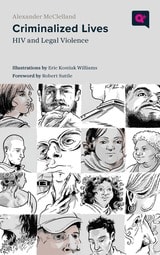
Criminalized Lives
HIV and Legal ViolenceAlexander McClelland
Rutgers University Press, 2024
Canada has been known as a hot spot for HIV criminalization where the act of not disclosing one’s HIV-positive status to sex partners has historically been regarded as a serious criminal offence. Criminalized Lives describes how this approach has disproportionately harmed the poor, Black and Indigenous people, gay men, and women in Canada. In this book, people who have been criminally accused of not disclosing their HIV-positive status, detail the many complexities of disclosure, and the violence that results from being criminalized.
Accompanied by portraits from artist Eric Kostiuk Williams, the profiles examine whether the criminal legal system is really prepared to handle the nuances and ethical dilemmas faced everyday by people living with HIV. By offering personal stories of people who have faced criminalization first-hand, Alexander McClelland questions common assumptions about HIV, the role of punishment, and the violence that results from the criminal legal system’s legacy of categorizing people as either victims or perpetrators.
Note: A regrettable error appears on page 22. The number 240 should be 206 when referring to the number of people prosecuted in relation to allegations of HIV nondisclosure. This will be fixed in future reprints.
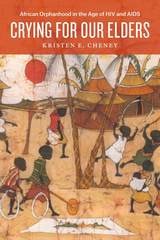
Crying for Our Elders
African Orphanhood in the Age of HIV and AIDSKristen E. Cheney
University of Chicago Press, 2017
Through ethnographic fieldwork and collaborative research with children in Uganda, Cheney traces how the “best interest” principle that governs children’s’ rights can stigmatize orphans and leave children in the post-antiretroviral era even more vulnerable to exploitation. She details the dramatic effects this has on traditional family support and child protection and stresses child empowerment over pity. Crying for Our Elders advances current discussions on humanitarianism, children’s studies, orphanhood, and kinship. By exploring the unique experience of AIDS orphanhood through the eyes of children, caregivers, and policymakers, Cheney shows that despite the extreme challenges of growing up in the era of HIV/AIDS, the post-ARV generation still holds out hope for the future.