Results by title
471 books match the query 'Aesthetics' and 16 start with c
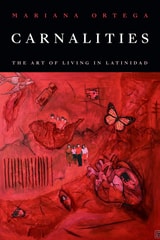
Carnalities
The Art of Living in LatinidadMariana Ortega
Duke University Press, 2025
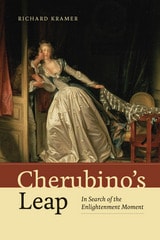
Cherubino's Leap
In Search of the Enlightenment MomentRichard Kramer
University of Chicago Press, 2016
In Cherubino’s Leap, Richard Kramer unmasks such prismatic moments in iconic music from the Enlightenment, from the “chromatic” moment—the single tone that disturbs the thrust of a diatonic musical discourse—and its deployment in seminal instrumental works by Emanuel Bach, Haydn, and Mozart; on to the poetic moment, taking the odes of Klopstock, in their finely wrought prosody, as a challenge to the problem of strophic song; and finally to the grand stage of opera, to the intense moment of recognition in Gluck’s Iphigénie en Tauride and the exquisitely introverted phrase that complicates Cherubino’s daring moment of escape in Mozart’s Figaro. Finally, the tears of the disconsolate Konstanze in Mozart’s Die Entführung aus dem Serail provoke a reflection on the tragic aspect of Mozart’s operatic women. Throughout, other players from literature and the arts—Diderot, Goethe, Lessing among them—enrich the landscape of this bold journey through the Enlightenment imagination.
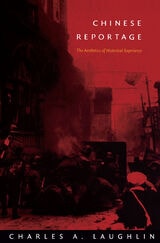
Chinese Reportage
The Aesthetics of Historical ExperienceCharles A. Laughlin
Duke University Press, 2002
Laughlin traces the roots of reportage (or baogao wenxue) to the travel literature of the Qing Dynasty but shows that its flourishing was part of the growth of Chinese communism in the twentieth century. In a modern Asian context critical of capitalism and imperialism, reportage offered the promise of radicalizing writers through a new method of literary practice and the hope that this kind of writing could in turn contribute to social revolution and China’s national self-realization. Chinese Reportage explores the wide range of social engagement depicted in this literature: witnessing historic events unfolding on city streets; experiencing brutal working conditions in 1930s Shanghai factories; struggling in the battlefields and trenches of the war of resistance against Japan, the civil war, and the Korean war; and participating in revolutionary rural, social, and economic transformation. Laughlin’s close readings emphasize the literary construction of social space over that of character and narrative structure, a method that brings out the critique of individualism and humanism underlying the genre’s aesthetics.
Chinese Reportage recaptures a critical aspect of leftist culture in China with far-reaching implications for historians and sociologists as well as literary scholars.
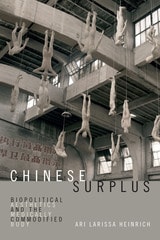
Chinese Surplus
Biopolitical Aesthetics and the Medically Commodified BodyAri Larissa Heinrich
Duke University Press, 2018
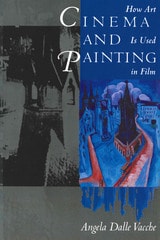
Cinema and Painting
How Art Is Used in FilmBy Angela Dalle Vacche
University of Texas Press, 1996
The visual image is the common denominator of cinema and painting, and indeed many filmmakers have used the imagery of paintings to shape or enrich the meaning of their films. In this discerning new approach to cinema studies, Angela Dalle Vacche discusses how the use of pictorial sources in film enables eight filmmakers to comment on the interplay between the arts, on the dialectic of word and image, on the relationship between artistic creativity and sexual difference, and on the tension between tradition and modernity.
Specifically, Dalle Vacche explores Jean-Luc Godard's iconophobia (Pierrot Le Fou) and Andrei Tarkovsky's iconophilia (Andrei Rubleov), Kenji Mizoguchi's split allegiances between East and West (Five Women around Utamaro), Michelangelo Antonioni's melodramatic sensibility (Red Desert), Eric Rohmer's project to convey interiority through images (The Marquise of O), F. W. Murnau's debt to Romantic landscape painting (Nosferatu), Vincente Minnelli's affinities with American Abstract Expressionism (An American in Paris), and Alain Cavalier's use of still life and the close-up to explore the realms of mysticism and femininity (Thérèse).
While addressing issues of influence and intentionality, Dalle Vacche concludes that intertextuality is central to an appreciation of the dialogical nature of the filmic medium, which, in appropriating or rejecting art history, defines itself in relation to national traditions and broadly shared visual cultures.
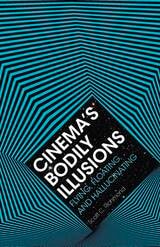
Cinema's Bodily Illusions
Flying, Floating, and HallucinatingScott C. Richmond
University of Minnesota Press, 2016
Do contemporary big-budget blockbuster films like Gravity move something in us that is fundamentally the same as what avant-garde and experimental films have done for more than a century? In a powerful challenge to mainstream film theory, Cinema’s Bodily Illusions demonstrates that this is the case.
Scott C. Richmond bridges genres and periods by focusing, most palpably, on cinema’s power to evoke illusions: feeling like you’re flying through space, experiencing 3D without glasses, or even hallucinating. He argues that cinema is, first and foremost, a technology to modulate perception. He presents a theory of cinema as a proprioceptive technology: cinema becomes art by modulating viewers’ embodied sense of space. It works primarily not at the level of the intellect but at the level of the body. Richmond develops his theory through examples of direct perceptual illusion in cinema: hallucinatory flicker phenomena in Tony Conrad’s The Flicker, eerie depth effects in Marcel Duchamp’s Anémic Cinéma, the illusion of bodily movement through onscreen space in Stanley Kubrick’s 2001, Godfrey Reggio’s Koyaanisqatsi, and Alfonso Cuarón’s Gravity. In doing so he combines insights from Maurice Merleau-Ponty’s phenomenology of perception and James J. Gibson’s ecological approach to perception. The result is his distinctive ecological phenomenology, which allows us to refocus on the cinema’s perceptual, rather than representational, power.
Arguing against modernist habits of mind in film theory and aesthetics, and the attendant proclamations of cinema’s death or irrelevance, Richmond demonstrates that cinema’s proprioceptive aesthetics make it an urgent site of contemporary inquiry.
Cinematic Body
Steven Shaviro
University of Minnesota Press, 1993
In The Cinematic Body, Steven Shaviro proposes a radical new approach to film viewing. Moving between Jerry Lewis and Andy Warhol, between Fassbinder’s gay sex icons and George Romero’s flesh-eating zombies, The Cinematic Body cuts across disciplinary boundaries and seeks to engage new currents in critical thought.
Shaviro radically critiques the Lacanian model currently popular in film theory and film studies, arguing against that model’s obsessive emphasis on the phallus, castration anxiety, sadistic master, ideology, and the structure of the signifier. In this groundbreaking volume, Shaviro effectively communicates a sense of the inescapable ambivalence and intensities of contemporary culture, ultimately affirming a thoroughly postmodern sensibility.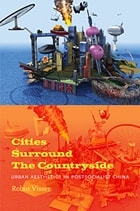
Cities Surround The Countryside
Urban Aesthetics in Postsocialist ChinaRobin Visser
Duke University Press, 2010
In the 1980s, writers, filmmakers, and artists began to probe the contradictions in China’s urbanization policies and rhetoric. Powerful neorealist fiction, cinema, documentaries, paintings, photographs, performances, and installations contrasted forms of glittering urban renewal with the government’s inattention to a livable urban infrastructure. Narratives and images depicting the melancholy urban subject came to illustrate ethical quandaries raised by urban life. Visser relates her analysis of this art to major transformations in urban planning under global neoliberalism, to the development of cultural studies in the Chinese academy, and to ways that specific cities, particularly Beijing and Shanghai, figure in the cultural imagination. Despite the environmental and cultural destruction caused by China’s neoliberal policies, Visser argues for the emergence of a new urban self-awareness, one that offers creative resolutions for the dilemmas of urbanism through new forms of intellectual engagement in society and nascent forms of civic governance.
Cognition of the Literary Work of Art
Roman Ingarden
Northwestern University Press, 1973
Collecting Lives
Critical Data Narrative as Modernist Aesthetic in Early Twentieth-Century U.S. LiteraturesElizabeth Rodrigues
University of Michigan Press, 2022
On a near-daily basis, data is being used to narrate our lives. Categorizing algorithms draw from amassed personal data to assign narrative destinies to individuals at crucial junctures, simultaneously predicting and shaping the paths of our lives. Data is commonly assumed to bring us closer to objectivity, but the narrative paths these algorithms assign seem, more often than not, to replicate biases about who an individual is and could become.
While the social effects of such algorithmic logics seem new and newly urgent to consider, Collecting Lives looks to the late nineteenth and early twentieth century US to provide an instructive prehistory to the underlying question of the relationship between data, life, and narrative. Rodrigues contextualizes the application of data collection to human selfhood in the late nineteenth and early twentieth century US in order to uncover a modernist aesthetic of data that offers an alternative to the algorithmic logic pervading our sense of data’s revelatory potential. Examining the work of W. E. B. Du Bois, Henry Adams, Gertrude Stein, and Ida B. Wells-Barnett, Rodrigues asks how each of these authors draw from their work in sociology, history, psychology, and journalism to formulate a critical data aesthetic as they attempt to answer questions of identity around race, gender, and nation both in their research and their life writing. These data-driven modernists not only tell different life stories with data, they tell life stories differently because of data.

Color Harmonies
Augusto Garau
University of Chicago Press, 1993
Garau, a painter who teaches the psychology of form, pays particular attention to the way colors behave when organized in patterns. His theory of color combination addresses two principal compositional elements: the relations between figure and ground and the phenomenon of transparency.
Garau meticulously analyzes the use of color in paintings by masters such as Cézanne, Picasso, and Matisse to show how his theory applies to actual works of art. Containing many full-color examples, his introduction to the workings of color relations is of great practical use to art historians and critics, artists, interior decorators, fashion and set designers, and anyone who works with color to display information or convey emotions.
"In an area of the psychology of art where reliable guidance is still so hard to come by, [Garau's] well-supported contributions to the theory of color composition ought to be welcomed by practitioners and scholars alike."—from the Foreword by Rudolf Arnheim

Composed Theatre
Aesthetics, Practices, ProcessesEdited by Matthias Rebstock and David Roesner
Intellect Books, 2012
A unique contribution to an emerging field, Composed Theatre explores musical strategies of organization as viable alternative means of organizing theatrical work. In addition to insightful essays by a stellar group of international contributors, this volume also includes interviews with important practitioners, shedding light on historical and theoretical aspects of composed theatre.
Conserving Active Matter
Edited by Peter N. Miller and Soon Kai Poh
Bard Graduate Center, 2022
This volume brings together the findings from a five-year research project that seeks to reimagine the relationship between conservation knowledge and the humanistic study of the material world. The project, “Cultures of Conservation,” was supported by the Andrew W. Mellon Foundation and included events, seminars, and an artist-in-residence.
The effort to conserve things amid change is part of the human struggle with the nature of matter. For as long as people have made things and kept things, they have also cared for and repaired them. Today, conservators use a variety of tools and categories developed over the last one hundred and fifty years to do this work, but in the coming decades, new kinds of materials and a new scale of change will pose unprecedented challenges. Looking ahead to this moment from the perspectives of history, philosophy, materials science, and anthropology, this volume explores new possibilities for both conservation and the humanities in the rethinking of active matter.
Contemplation Of The World
Figures of Community StyleMichel Maffesoli
University of Minnesota Press, 1996
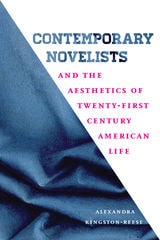
Contemporary Novelists and the Aesthetics of Twenty-First Century American Life
Alexandra Kingston-Reese
University of Iowa Press, 2020
Contemporary Novelists and the Aesthetics of Twenty-First Century American Life gives us a new way to view contemporary art novels, asking the key question: How do contemporary writers imagine aesthetic experience? Examining the works of some of the most popular names in contemporary fiction and art criticism, including Zadie Smith, Teju Cole, Siri Hustvedt, Ben Lerner, Rachel Kushner, and others, Alexandra Kingston-Reese finds that contemporary art novels are seeking to reconcile the negative feelings of contemporary life through a concerted critical realignment in understanding artistic sensibility, literary form, and the function of the aesthetic.
Kingston-Reese reveals how contemporary writers refract and problematize aesthetic experience, illuminating an uneasiness with failure: firstly, about the failure of aesthetic experiences to solve and save; and secondly, the literary inability to articulate the emotional dissonance caused by aesthetic experiences now.
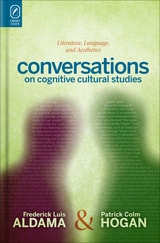
Conversations on Cognitive Cultural Studies
Literature, Language, and AestheticsFrederick Luis Aldama and Patrick Colm Hogan
The Ohio State University Press, 2014
With clarity and learning, Aldama and Hogan consider five central topics at the intersection of literature and cognitive science. They begin with the fundamental question of the nature of the self. From here, they turn to language, communication, and thought before moving on to the central issue of the structure and operation of narrative. The book concludes with thought-provoking explorations of aesthetics and politics. Illustrating their arguments with work that ranges from graphic fiction and popular cinema to William Faulkner and Bertolt Brecht, Aldama and Hogan leave the reader with a clear sense of what cognitive cultural studies have already achieved and the significant promise the discipline holds for the future.