Results by title
187 books match the query 'African American women' and 10 start with c
Caroline Quarlls and the Underground Railroad
Julia Pferdehirt
Wisconsin Historical Society Press, 2008

Changing Our Own Words
Cheryl A. Wall
Rutgers University Press, 1991
Claiming Union Widowhood
Race, Respectability, and Poverty in the Post-Emancipation SouthBrandi Clay Brimmer
Duke University Press, 2020
Colored Amazons
Crime, Violence, and Black Women in the City of Brotherly Love, 1880–1910Kali N. Gross
Duke University Press, 2006
Gross draws on prison records, trial transcripts, news accounts, and rare mug shot photographs. Providing an overview of Philadelphia’s black women criminals, she describes the women’s work, housing, and leisure activities and their social position in relation to the city’s native-born whites, European immigrants, and elite and middle-class African Americans. She relates how news accounts exaggerated black female crime, trading in sensationalistic portraits of threatening “colored Amazons,” and she considers criminologists’ interpretations of the women’s criminal acts, interpretations largely based on notions of hereditary criminality. Ultimately, Gross contends that the history of black female criminals is in many ways a history of the rift between the political rhetoric of democracy and the legal and social realities of those marginalized by its shortcomings.
Colored No More
Reinventing Black Womanhood in Washington, D.C.Treva B. Lindsey
University of Illinois Press, 2017
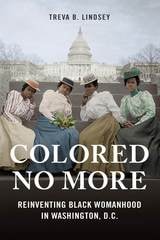
Treva B. Lindsey presents New Negro womanhood as a multidimensional space that included race women, blues women, mothers, white collar professionals, beauticians, fortune tellers, sex workers, same-gender couples, artists, activists, and innovators. Drawing from these differing but interconnected African American women's spaces, Lindsey excavates a multifaceted urban and cultural history of struggle toward a vision of equality that could emerge and sustain itself. Upward mobility to equal citizenship for African American women encompassed challenging racial, gender, class, and sexuality status quos. Lindsey maps the intersection of these challenges and their place at the core of New Negro womanhood.
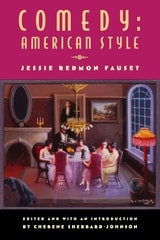
Comedy
American Style: Jessie Redmon FausetSherrard-Johnson, Cherene
Rutgers University Press, 2009
Cherene Sherrard-Johnson's introduction places this literary classic in both the new modernist and transatlantic contexts and will be embraced by those interested in earlytwentieth-century women writers, novels about passing, the Harlem Renaissance, the black/white divide, and diaspora studies. Selected essays and poems penned by Fauset are also included, among them "Yarrow Revisited" and "Oriflamme," which help highlight the full canon of her extraordinary contribution to literature and provide contextual background to the novel.
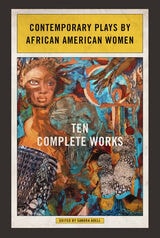
Contemporary Plays by African American Women
Ten Complete WorksEdited by Sandra Adell
University of Illinois Press, 2015
Selections: Blue Door, by Tanya Barfield; Levee James, by S. M. Shephard-Massat; Hoodoo Love, by Katori Hall; Carnaval, by Nikkole Salter; Single Black Female, by Lisa B. Thompson; Fabulation, or The Re-Education of Undine, by Lynn Nottage; BlackTop Sky, by Christina Anderson; Voyeurs de Venus, by Lydia Diamond; Fedra, by J. Nicole Brooks; and Uppa Creek: A Modern Anachronistic Parody in the Minstrel Tradition, by Keli Garrett.
Continually Working
Black Women, Community Intellectualism, and Economic Justice in Postwar MilwaukeeCrystal Marie Moten
Vanderbilt University Press, 2023
Moten emphasizes the ways in which Black women transformed the urban landscape by simultaneously occupying spaces from which they had been historically excluded and creating their own spaces. Black women refused to be marginalized within the historically white and middle‑class Milwaukee Young Women's Christian Association (MYWCA), an association whose mission centered on supporting women in urban areas. Black women forged interracial relationships within this organization and made it, not without much conflict and struggle, one of the most socially progressive organizations in the city. When Black women could not integrate historically white institutions, they created their own. They established financial and educational institutions, such as Pressley School of Beauty Culture, which beautician Mattie Pressley DeWese opened in 1946 as a result of segregation in the beauty training industry. This school served economic, educational, and community development purposes as well as created economic opportunities for Black women. Historically and contemporarily, Milwaukee has been and is still known as one of the most segregated cities in the nation. Black women have always contested urban inequality, by making space for themselves and others on the margins. In so doing, they have transformed both the urban landscape and urban history.
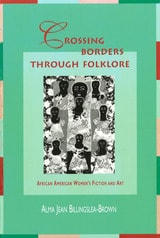
Crossing Borders through Folklore
African American Women's Fiction and ArtAlma Jean Billingslea-Brown
University of Missouri Press, 1999
Examining works by Toni Morrison, Paule Marshall, Faith Ringgold, and Betye Saar, this innovative book frames black women's aesthetic sensibilities across art forms. Investigating the relationship between vernacular folk culture and formal expression, this study establishes how each of the four artists engaged the identity issues of the 1960s and used folklore as a strategy for crossing borders in the works they created during the following two decades.
As a dynamic, open-ended process, folklore historically has enabled African-descended people to establish differential identity, resist dominance, and affirm group solidarity. This book documents the use of expressive forms of folklore in the fiction of Morrison and Marshall and the use of material forms of folklore in the visual representations of Ringgold and Saar. Offering a conceptual paradigm of a folk aesthetic to designate the practices these women use to revise and reverse meanings—especially meanings imposed on images such as Aunt Jemima and Sambo—Crossing Borders through Folklore explains how these artists locate sites of intervention and reconnection. From these sites, in keeping with the descriptive and prescriptive formulations for art during the sixties, Morrison, Marshall, Ringgold, and Saar articulate new dimensions of consciousness and creatively theorize identity.
Crossing Borders through Folklore is a significant and creative contribution to scholarship in both established and still- emerging fields. This volume also demonstrates how recent theorizing across scholarly disciplines has created elastic metaphors that can be used to clarify a number of issues. Because of its interdisciplinary approach, this study will appeal to students and scholars in many fields, including African American literature, art history, women's studies, diaspora studies, and cultural studies.
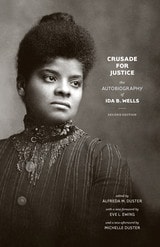
Crusade for Justice
The Autobiography of Ida B. Wells, Second EditionIda B. Wells
University of Chicago Press, 2020
Ida B. Wells is an American icon of truth telling. Born to slaves, she was a pioneer of investigative journalism, a crusader against lynching, and a tireless advocate for suffrage, both for women and for African Americans. She co-founded the NAACP, started the Alpha Suffrage Club in Chicago, and was a leader in the early civil rights movement, working alongside W. E. B. Du Bois, Madam C. J. Walker, Mary Church Terrell, Frederick Douglass, and Susan B. Anthony.
This engaging memoir, originally published 1970, relates Wells’s private life as a mother as well as her public activities as a teacher, lecturer, and journalist in her fight for equality and justice. This updated edition includes a new foreword by Eve L. Ewing, new images, and a new afterword by Ida B. Wells’s great-granddaughter, Michelle Duster.