Results by title
84 books match the query 'Aims and objectives' and 8 start with c
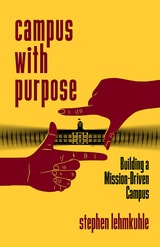
Campus with Purpose
Building a Mission-Driven CampusStephen Lehmkuhle
Rutgers University Press, 2021
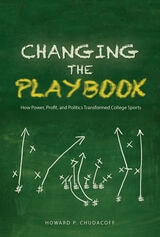
Changing the Playbook
How Power, Profit, and Politics Transformed College SportsHoward Chudacoff
University of Illinois Press, 2015
- the failed 1950 effort to pass a Sanity Code regulating payments to football players;
- the thorny racial integration of university sports programs;
- the boom in television money;
- the 1984 Supreme Court decision that settled who could control skyrocketing media revenues;
- Title IX's transformation of women's athletics;
- the cheating, eligibility, and recruitment scandals that tarnished college sports in the 1980s and 1990s;
- the ongoing controversy over paying student athletes a share of the enormous moneys harvested by schools and athletic departments.
A thought-provoking journey into the whos and whys of college sports history, Changing the Playbook reveals how the turning points of yesterday and today will impact tomorrow."
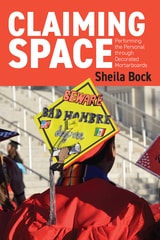
Claiming Space
Performing the Personal through Decorated MortarboardsSheila Bock
Utah State University Press, 2023
Claiming the space of these graduation caps is a popular and widespread way that individuals make their voices heard, or rather seen, in the visual landscape of commencement ceremonies. The forms and meanings of these material displays take shape in relation to broader, ongoing conversations about higher education in the United States, conversations grounded in discourses of belonging, citizenship, and the promises of the American Dream. Integrating observational fieldwork with extensive interviews and surveys, author Sheila Bock highlights the interpretations of individuals participating in this tradition. She also attends to the public framings of this tradition, including how images of mortarboards have grounded online enactments of community through hashtags such as #LatinxGradCaps and #LetTheFeathersFly, as well as what rhetorical framings are employed in news coverage and legal documents in cases where the value of the practice is both called into question and justified.
As university administrators and cultural commentators seek to make sense of the current state of higher education, these forms of material expression offer insight into how students themselves are grappling with higher ed's promises and shortcomings. Claiming Space is a meaningful contribution to folklore, cultural studies, media studies, and education.
Composition and Rhetoric in Contentious Times
Rachel McCabe
Utah State University Press, 2023
Editors Rachel McCabe and Jennifer Juszkiewicz consider how educators can respond to multiple current crises relating to composition and rhetoric with generosity and cautious optimism; in the process, they address the current concerns about the longevity of the humanities. By engaging with social constructivist, critical race, socioeconomic, and activist pedagogies, each chapter provides an answer to the question, How can our courses help students become stronger writers while contending with current social, environmental, and ethical questions posed by the world around them? The contributors consider this question from numerous perspectives, recognizing the important ways that power and privilege affect our varying means of addressing this question.
Relying on both theory and practice, Composition and Rhetoric in Contentious Times engages the future of composition and rhetoric as a discipline shaped by recent and current global events. This text appeals to early-career writing program administrators, writing center directors, and professional specialists, as well as Advanced Placement high school instructors, graduate students, and faculty teaching graduate-level pedagogy courses.
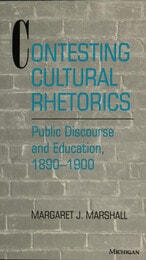
Contesting Cultural Rhetorics
Public Discourse and Education, 1890-1900Margaret J. Marshall
University of Michigan Press, 1995
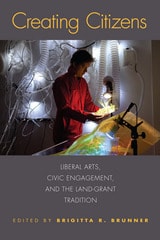
Creating Citizens
Liberal Arts, Civic Engagement, and the Land-Grant TraditionEdited by Brigitta R. Brunner
University of Alabama Press, 2016
Creating Citizens is a collection of essays about Community and Civic Engagement (CCE) learning at land-grant universities.
In Creating Citizens, professors and administrators at Auburn University’s College of Liberal Arts recount valuable, first-hand experiences teaching Community and Civic Engagement (CCE). They demonstrate that, contrary to many expectations, CCE instruction both complements the mission of liberal arts curricula and powerfully advances the fundamental mission of American land-grand institutions.
The nine essays in Creating Citizens offer structures for incorporating CCE initiatives into university programs, instructional methods and techniques, and numerous case studies and examples undertaken at Auburn University but applicable at any university. Many contributors describe their own rewarding experiences with CCE and emphasize the ways outreach efforts reinvigorate their teaching or research.
Creating Citizens recounts the foundation of land-grant institutions by the Morrill Act of 1862. Their mission is to instruct in agriculture, military science, and mechanics, but these goals augmented rather than replaced an education in the classics, or liberal arts. Land-grant institutions, therefore, have a special calling to provide a broad spectrum of society with an education that not only enriched the personal lives of their students, but the communities they are a part of. Creating Citizens demonstrates the important opportunities CCE instruction represents to any university but are especially close to the heart of the mission of land-grant colleges.
In open societies, the role and mission of public institutions of higher learning that are supported by public subsidies are perennial subjects of interest and debate. Creating Citizens provides valuable insights of interest to educators, education administrators, students, and policy makers involved in the field of higher education.
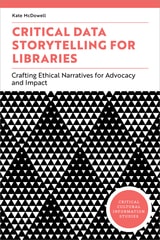
Critical Data Storytelling for Libraries
Crafting Ethical Narratives for Advocacy and ImpactKate McDowell
American Library Association, 2025
- the dynamic interrelationships between storyteller, audience, and story which lie at the heart of storytelling;
- ways to mesh library data collection processes with long-term storytelling potential, prioritizing interaction over transaction;
- three time-honored and effective narrative strategies for organizing the informational and emotional content of library data stories, easily adaptable for any situation;
- approaches for emphasizing inclusivity and justice to ensure that library advocates can tell stories that challenge stereotypes, promote equity, and align their efforts with broader ethical and social goals;
- audience attitudes as challenges and opportunities for library data communication; and
- strategies for maintaining open and transparent public communication in the face of rampant misinformation and active disinformation campaigns.
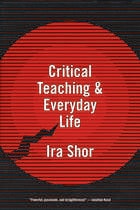
Critical Teaching and Everyday Life
Ira Shor
University of Chicago Press, 1987