Results by title
935 books match the query 'Ancient' and 78 start with c
CP vol 110 num 1
The University of Chicago Press
University of Chicago Press Journals, 2015
Caesar in Gaul and Rome
War in WordsBy Andrew M. Riggsby
University of Texas Press, 2006
Winner, AAP/PSP Award for Excellence, Classics and Ancient History, 2006
Anyone who has even a passing acquaintance with Latin knows "Gallia est omnis divisa in partes tres" ("All Gaul is divided into three parts"), the opening line of De Bello Gallico, Julius Caesar's famous commentary on his campaigns against the Gauls in the 50s BC. But what did Caesar intend to accomplish by writing and publishing his commentaries, how did he go about it, and what potentially unforeseen consequences did his writing have? These are the questions that Andrew Riggsby pursues in this fresh interpretation of one of the masterworks of Latin prose.
Riggsby uses contemporary literary methods to examine the historical impact that the commentaries had on the Roman reading public. In the first part of his study, Riggsby considers how Caesar defined Roman identity and its relationship to non-Roman others. He shows how Caesar opens up a possible vision of the political future in which the distinction between Roman and non-Roman becomes less important because of their joint submission to a Caesar-like leader. In the second part, Riggsby analyzes Caesar's political self-fashioning and the potential effects of his writing and publishing the Gallic War. He reveals how Caesar presents himself as a subtly new kind of Roman general who deserves credit not only for his own virtues, but for those of his soldiers as well. Riggsby uses case studies of key topics (spatial representation, ethnography, virtus and technology, genre, and the just war), augmented by more synthetic discussions that bring in evidence from other Roman and Greek texts, to offer a broad picture of the themes of national identity and Caesar's self-presentation.
Caesar
A Life in Western CultureMaria Wyke
University of Chicago Press, 2008
Cairo Pop
Youth Music in Contemporary EgyptDaniel J. Gilman
University of Minnesota Press, 2014
Cairo Pop is the first book to examine the dominant popular music of Egypt, shababiyya. Scorned or ignored by scholars and older Egyptians alike, shababiyya plays incessantly in Cairo, even while Egyptian youth joined in mass protests against their government, which eventually helped oust longtime Egyptian president Hosni Mubarak in early 2011. Living in Cairo at the time of the revolution, Daniel Gilman saw, and more importantly heard, the impact that popular music can have on culture and politics. Here he contributes a richly ethnographic analysis of the relationship between mass-mediated popular music, modernity, and nationalism in the Arab world.
Before Cairo Pop, most scholarship on the popular music of Egypt focused on musiqa al-ṭarab. Immensely popular in the 1950s and ’60s and even into the ’70s, musiqa al-ṭarab adheres to Arabic musical theory, with non-Western scales based on tunings of the strings of the ‘ud—the lute that features prominently, nearly ubiquitously, in Arabic music. However, today one in five Egyptians is between the ages of 15 and 24; half the population is under the age of 25. And shababiyya is their music of choice. By speaking informally with dozens of everyday young people in Cairo, Gilman comes to understand shababiyya as more than just a musical genre: sometimes it is for dancing or seduction, other times it propels social activism, at others it is simply sonic junk food.
In addition to providing a clear Egyptian musical history as well as a succinct modern political history of the nation, Cairo Pop elevates the aural and visual aesthetic of shababiyya—and its role in the lives of a nation’s youth.
Capturing Troy
The Narrative Functions of Landscape in Archaic and Early Classical Greek ArtGuy Hedreen
University of Michigan Press, 2002
Guy Michael Hedreen is Professor of Art, Williams College.
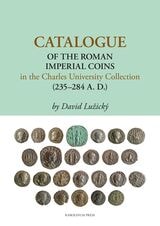
Catalogue of the Roman Imperial Coins in the Charles University Collection (235–284 A.D.)
David Lužický
Karolinum Press, 2026
Spotlights over five hundred Roman Imperial coins from Charles University's vast collection of ancient coins.
Charles University’s collection of ancient coins in its present state has existed since l945. Greek, Roman, and other ancient coins were entrusted to the care of the Seminar for Ancient History and compiled into a single collection along with antique coins from the original collection of the Czech University. The collection contains about 4,000 pieces altogether, mostly in silver and bronze.
This publication presents a catalogue of 564 Roman Imperial coins dating from 235 to 284 A. D. and is part of efforts to gradually catalogue the entirety of Charles University’s collection of ancient coins, stored in the depository of the CU Institute of Greek and Latin Studies. The book builds upon Václav Marek’s 1985 monograph, The Roman Republican Coins in the Collection of Charles University, and Federico Gambacorta’s 2013 continuation titled Catalogue of the Late Roman, Byzantine and Barbaric Coins in the Charles University Collection (364–1092 A. D.).
Catiline, The Monster of Rome
An Ancient Case of Political AssassinationFrancis Galassi
Westholme Publishing, 2014
In 62 BC, Roman Senator Lucius Sergius Catiline lay dead on a battlefield in Tuscany. He was slain along with his soldiers after his conspiracy to overthrow the Roman Republic had been exposed by his adversary Cicero. It was an ignominious end for a man described at the time as a perverted, insane monster who had attempted to return his family to fortune and social standing. Chroniclers were not kind to Catiline, and his name over the centuries was synonymous with treachery. Recently, scholars have been reappraising the life and influence of this ancient Roman. In Catiline, The Monster of Rome: An Ancient Case of Political Assassination, economic historian Francis Galassi provides the first book-length account of Catiline in more than a generation.
Rome first achieved a status as an empire during Catiline’s lifetime. The republic was, however, constantly at war with foreign powers and occasionally its own allies, and the disparity between the wealthy and the poor threatened to destabilize society. Catiline was from an aristocratic but impoverished family and first served as an officer with Cornelius Sulla during that general’s purges against Gaius Marius, the supposed champion of the oppressed masses. Catiline’s goal was to serve Sulla and then use that as a springboard to public office where he could recover his family’s former wealth and honor. However, the senatorial elite became suspicious if not threatened by the upstart Catiline and blocked his ambitions. Catiline was dogged by trumped-up charges, including raping a Vestal virgin and murdering his brother-in-law; he was acquitted each time, but his political life was ruined. With citizens demanding land and agrarian reform, Catiline genuinely embraced their dissatisfaction, and realizing that the elite would stop his attempt to gain status through elections, he organized a conspiracy to take control of Roman government through arms. Once his actions had been made public, many of his supporters and co-conspirators left him; but honoring the course he had chosen, he and his remaining soldiers fought a Roman army to their deaths. Rather than the “monster” as portrayed by his contemporaries, the author contends that Catiline was compelled to act for the benefit of common Romans to save Rome even if it meant overthrowing the government. As Galassi notes, Catiline’s contemporary, the slave Spartacus, has been a symbol of social reform for centuries, but it was actually Catiline, not Spartacus, who attempted to change Rome.
Cato the Censor and the Beginnings of Latin Prose
From Poetic Translation to Elite TranscriptionEnrica Sciarrino
The Ohio State University Press, 2011
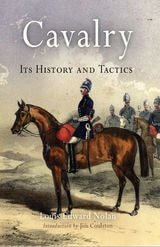
Cavalry
Its History and TacticsLouis Edward Nolan
Westholme Publishing, 2020
A New Edition of One of the Great Military Treatises of the Nineteenth Century
First published in 1853, Cavalry: Its History and Tactics had a major impact on military theorists and officers for decades—it was reprinted as a manual during the American Civil War—and its influence on European cavalry performance can be traced into World War I. It is an intelligent work which discusses the history and development of cavalry over the ages, advocates a program of reform for Britain’s horsed troops, and covers many aspects of equipment, training, drill, organization, formation, and battlefield tactics. The author, an experienced and gifted cavalryman, first served in the Austrian army, then joined the British army’s 15th Hussars in 1839, fought in India, and became the regimental riding master. Captain Nolan’s 1852 tour of European armies, wide reading in many languages, and service in Europe and India makes Cavalry an extraordinary statement on mid-nineteenth-century theory and practice.
As historian Jon Coulston explains in his introduction, Nolan was writing at the cusp of technological change, drawing upon the experiences of the Napoleonic Wars, continental suppression of the 1848 Revolutions, and Britain’s wars in India, but with an eye to firepower developments on the eve of the Crimean War. In 1854, at the Battle of Balaklava, Nolan rode with the written order which unleashed the Charge of the Light Brigade, an action in which he lost his life. Presented here as the first modern reprint, complete with a new introduction and further reading, Nolan’s Cavalry remains a hallmark of military history.
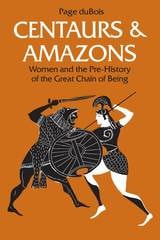
Centaurs and Amazons
Women and the Pre-History of the Great Chain of BeingPage duBois
University of Michigan Press, 1991
In Centaurs and Amazons, Page duBois offers a prehistory of hierarchy. Using structural anthropology, symbolic analysis, and recent literary theory, she demonstrates a shift in Greek thought from the fifth to the fourth century B.C. that had a profound influence upon subsequent Western culture and politics.
Through an analysis of mythology, drama, sculpture, architecture, and Greek vase painting, duBois documents the transition from a system of thought that organized the experience of difference in terms of polarity and analogy to one based upon a relatively rigid hierarchical scheme. This was the beginning of "the great chain of being," the philosophical construct that all life was organized in minute gradations of superiority and inferiority. This scheme, in various guises, has continued to influence philosophical and political thought.
The author's intelligent and discriminating use of scholarship from various fields makes Centaurs and Amazons an impressive interdisciplinary study of interest to classicists, feminist scholars, historians, art historians, anthropologists, and political scientists.
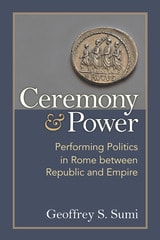
Ceremony and Power
Performing Politics in Rome between Republic and EmpireGeoffrey S. Sumi
University of Michigan Press, 2015
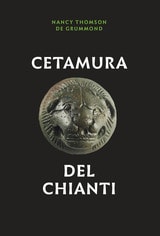
Cetamura del Chianti
By Nancy Thomson de Grummond
University of Texas Press, 2020
Expanding the study of Etruscan habitation sites to include not only traditional cities but also smaller Etruscan communities, Cetamura del Chianti examines a settlement that flourished during an exceptional time period, amid wars with the Romans in the fourth to first centuries BCE.
Situated in an ideal hilltop location that was easy to defend and had access to fresh water, clay, and timber, the community never grew to the size of a city, and no known references to it survive in ancient writings; its ancient name isn’t even known. Because no cities were ever built on top of the site, excavation is unusually unimpeded. Intriguing features described in Cetamura del Chianti include an artisans’ zone with an adjoining sanctuary, which fostered the cult worship of Lur and Leinth, two relatively little known Etruscan deities, and ancient wells that reveal the cultural development and natural environment, including the vineyards and oak forests of Chianti, over a period of some six hundred years. Deeply enhancing our understanding of an intriguing economic, political, and cultural environment, this is a compelling portrait of a singular society.
Changes in Sacred Texts and Traditions
Methodological Encounters and DebatesMartti Nissinen
SBL Press, 2024
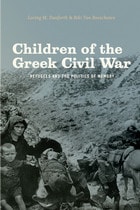
Children of the Greek Civil War
Refugees and the Politics of MemoryLoring M. Danforth and Riki Van Boeschoten
University of Chicago Press, 2011
Marshalling archival records, oral histories, and ethnographic fieldwork, the authors analyze the evacuation process, the political conflict surrounding it, the children’s upbringing, and their fates as adults cut off from their parents and their homeland. They also give voice to seven refugee children who poignantly recount their childhood experiences and heroic efforts to construct new lives in diaspora communities throughout the world. A much-needed corrective to previous historical accounts, Children of the Greek Civil War is also a searching examination of the enduring effects of displacement on the lives of refugee children.
Christians and Muslims in Early Islamic Egypt
Lajos Berkes, Editor
University of Michigan Press, 2022
This volume collects studies exploring the relationship of Christians and Muslims in everyday life in Early Islamic Egypt (642–10th c.) focusing mainly, but not exclusively on administrative and social history. The contributions concentrate on the papyrological documentation preserved in Greek, Coptic, and Arabic. By doing so, this book transcends traditional disciplinary boundaries and offers results based on a holistic view of the documentary material. The articles of this volume discuss various aspects of change and continuity from Byzantine to Islamic Egypt and offer also the (re)edition of 23 papyrus documents in Greek, Coptic, and Arabic. The authors provide a showcase of recent papyrological research on this under-studied, but dynamically evolving field.
After an introduction by the editor of the volume that outlines the most important trends and developments of the period, the first two essays shed light on Egypt as part of the Caliphate. The following six articles, the bulk of the volume, deal with the interaction and involvement of the Egyptian population with the new Muslim administrative apparatus. The last three studies of the volume focus on naming practices and language change.

Chronologies in Old World Archaeology
Third EditionEdited by Robert W. Ehrich
University of Chicago Press, 1992
Cicero's Use of Judicial Theater
Jon Hall
University of Michigan Press, 2014
While Cicero’s Use of Judicial Theater will be of interest primarily to professional scholars and students studying the speeches of Cicero, its wider analyses, both of Roman cultural customs and the idiosyncratic practices of the courts, will prove relevant also to social historians, as well as historians of legal procedure.
Citizens on Stage
Comedy and Political Culture in the Athenian DemocracyJames F. McGlew
University of Michigan Press, 2002
Old Comedy gives Citizens on Stage its chronological backbone; the beginning and end of Aristophanes' career roughly define the period on which the book concentrates. Reading and interpreting comedy provides a model for reading Athenian politics itself. McGlew argues that the plays of Old Comedy, with their fantastic stories of common individuals triumphing over the various social and political dilemmas of democratic Athens, interpreted the relationship of private life and political activity for an Athenian audience, dramatically reaffirming the ties between citizens' personal desires and the will of the collective body. In particular, McGlew argues that comedy transforms private fantasies of personal power and pleasures--what seem most to keep the individual audience members apart--into a collective possession and touchstone of democratic citizen identity.
Citizens on Stage focuses primarily on the democratic citizen and on contemporary representations of him as a decision maker. McGlew shows that the democratic individual, sometimes idealized, sometimes despised, was a dominant concern of the literature and politics of late fifth- and early fourth-century Athens. This book will appeal to students of ancient theater and drama, Athenian politics and democracy, and the relationships between theater and politics. Social historians will also find it an invaluable resource.
James F. McGlew is Assistant Professor of Foreign Languages and Literatures and Classical Studies, Iowa State University.
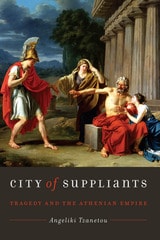
City of Suppliants
Tragedy and the Athenian EmpireBy Angeliki Tzanetou
University of Texas Press, 2012
After fending off Persia in the fifth century BCE, Athens assumed a leadership position in the Aegean world. Initially it led the Delian League, a military alliance against the Persians, but eventually the league evolved into an empire with Athens in control and exacting tribute from its former allies. Athenians justified this subjection of their allies by emphasizing their fairness and benevolence towards them, which gave Athens the moral right to lead. But Athenians also believed that the strong rule over the weak and that dominating others allowed them to maintain their own freedom. These conflicting views about Athens’ imperial rule found expression in the theater, and this book probes how the three major playwrights dramatized Athenian imperial ideology.
Through close readings of Aeschylus’ Eumenides, Euripides’ Children of Heracles, and Sophocles’ Oedipus at Colonus, as well as other suppliant dramas, Angeliki Tzanetou argues that Athenian tragedy performed an important ideological function by representing Athens as a benevolent and moral ruler that treated foreign suppliants compassionately. She shows how memorable and disenfranchised figures of tragedy, such as Orestes and Oedipus, or the homeless and tyrant-pursued children of Heracles were generously incorporated into the public body of Athens, thus reinforcing Athenians’ sense of their civic magnanimity. This fresh reading of the Athenian suppliant plays deepens our understanding of how Athenians understood their political hegemony and reveals how core Athenian values such as justice, freedom, piety, and respect for the laws intersected with imperial ideology.
City of the Dead
Thebes in EgyptLise Manniche
University of Chicago Press, 1987
The author traces the history of the site discussing the more important tombs in some detail, and sheds new light on the symbolism used in painting to help the deceased in the Afterlife. She also surveys the role of the treasure hunters and travellers of the eighteenth and early nineteenth-centuries and the pioneer epigraphers who followed them and paved the way for the archeological investigation and research that continues today.
Classical Myth
An IntroductionBarry B. Powell
University of Michigan Press, 2024
In Classical Myth: An Introduction, Barry B. Powell provides the historical and theoretical background necessary for us to understand not only the concept of what a myth is, but the cultural context of how it emerged, and the different approaches to interpreting myth that were put forward by ancient theorists and their more recent successors. Then he helps readers to understand classical myth as it is found in its primary sources: the works of Homer and Hesiod, and the Greek tragedians and historians, Ovid and Vergil. By examining a number of prominent themes in classical myth, this textbook explores the relationship between myth and art, politics, society, and history of the ancient world. This completely revised second edition features new illustrations and will help readers who want to understand myths or study their original sources.
Classical Philology, volume 116 number 4 (October 2021)
The University of Chicago Press
University of Chicago Press Journals, 2021
Classical Philology, volume 117 number 1 (January 2022)
The University of Chicago Press
University of Chicago Press Journals, 2022
Classical Philology, volume 117 number 2 (April 2022)
The University of Chicago Press
University of Chicago Press Journals, 2022
Classical Philology, volume 117 number 3 (July 2022)
The University of Chicago Press
University of Chicago Press Journals, 2022
Classical Philology, volume 117 number 4 (October 2022)
The University of Chicago Press
University of Chicago Press Journals, 2022
Classical Philology, volume 118 number 1 (January 2023)
The University of Chicago Press
University of Chicago Press Journals, 2023
Classical Philology, volume 118 number 2 (April 2023)
The University of Chicago Press
University of Chicago Press Journals, 2023
Classical Philology, volume 118 number 3 (July 2023)
The University of Chicago Press
University of Chicago Press Journals, 2023
Classical Philology, volume 119 number 1 (January 2024)
The University of Chicago Press
University of Chicago Press Journals, 2024
Classical Philology, volume 119 number 2 (April 2024)
The University of Chicago Press
University of Chicago Press Journals, 2024
Classical Philology, volume 119 number 3 (July 2024)
The University of Chicago Press
University of Chicago Press Journals, 2024
Classical Philology, volume 119 number 4 (October 2024)
The University of Chicago Press
University of Chicago Press Journals, 2024
Classical Philology, volume 120 number 1 (January 2025)
The University of Chicago Press
University of Chicago Press Journals, 2025
Classical Philology, volume 120 number 2 (April 2025)
The University of Chicago Press
University of Chicago Press Journals, 2025
Classical Philology, volume 120 number 3 (July 2025)
The University of Chicago Press
University of Chicago Press Journals, 2025
Classical Philology, volume 120 number 4 (October 2025)
The University of Chicago Press
University of Chicago Press Journals, 2025
Classical Philology, volume 121 number 1 (January 2026)
The University of Chicago Press
University of Chicago Press Journals, 2026
Classical Philology, volume 121 number 2 (April 2026)
The University of Chicago Press
University of Chicago Press Journals, 2026
Classical Philology, volume 121 number 3 (July 2026)
The University of Chicago Press
University of Chicago Press Journals, 2026
Classical Philology, volume 121 number 4 (October 2026)
The University of Chicago Press
University of Chicago Press Journals, 2026

Classical Reception in Asian American Literature
Christopher Waldo
University of Michigan Press, 2027
Troubled by the discipline’s historical relationship to white supremacy, classical scholars have begun to reexamine their fundamental assumptions about the relevance of ancient Greece and Rome to the modern world. After decades in which classical reception was relegated to the periphery of the discipline, a consensus has developed that the study of modern interactions with antiquity is inherently valuable. One of the newest branches of classical reception focuses on the cultural productions and political realities of Asian Americans. Contending that the Asian American authors discussed herein understand the ancient world as fundamentally unstable, Classical Reception in Asian American Literature interrogates this instability as manifested in fragmentation, violence, mythology, allusion, performance, and memory.
The study explores the written works of Theresa Hak Kyung Cha, Ocean Vuong, Quan Barry, Chang-rae Lee, David Lau, Sally Wen Mao, Johanna Hedva, Hoa Nguyen, and Vi Khi Nao. Via their written works, Christopher Waldo explores the bond between Demeter and Persephone, Telemachus’ identity as a fatherless son, the relationship between diasporic authors and Sappho, reinventions of mythology surrounding the Trojan War, and more. In Classical Reception in Asian American Literature, the literary traditions of the East and West collide to illuminate the threads of connection between the ancient and modern worlds.
Classical Receptions in the Struggle for Justice
Ellen Perry, Dominic Machado, Marina Haworth
University of Michigan Press, 2027
History is written and constructed by many, not just those few who proclaim themselves “the victors.” Classical Receptions in the Struggle for Justice examines how activists, artists, and writers of the past have found studying ancient Greece and Rome to be hopeful avenues for justice or personal liberation. These individuals, while sometimes critiquing the classical tradition, also saw in it ways to intervene in their contemporary reality for their struggle for justice.
Each contribution to this volume contains original research that highlights how ancient Greece or Rome informed and inspired an individual or movement between the eighteenth and twenty-first centuries, such as the struggles against structural racism, sexism, and homophobia. These engagements included visual arts, poetry, political activism, rhetoric, philosophy, environmentalism, and fiction. Individuals profiled in this volume include Mary Shelley, Henry David Thoreau, and Martin Luther King, Jr., as well as figures whose work remains underrepresented in the study of classical reception. Classical Receptions in the Struggle for Justice speaks to the enduring power of the humanities and the ancient world in difficult times.
Classical and Modern Interactions
Postmodern Architecture, Multiculturalism, Decline, and Other IssuesBy Karl Galinsky
University of Texas Press, 1992
Postmodernism, multiculturalism, the alleged decline of the United States, deconstruction, leadership, and values—these topics have been at the forefront of contemporary intellectual and cultural debate and are likely to remain so for the near future. Participants in the debate can usefully enlarge the perspective to a comparison between the Greco-Roman world and contemporary society. In this thought-provoking work, a noted classics scholar tests the ancient-modern comparison, showing what it can add to the contemporary debates and what its limitations are.
Writing for intellectually adventurous readers, Galinsky explores Greece and Rome as multicultural societies, debates the merits of classicism in postmodern architecture, discusses the reign of Augustus in terms of modern leadership theories, and investigates the modern obsession with finding parallels between the supposed "decline and fall" of Rome and the "decay" of U.S. society.
Within these discussions, Galinsky shows the continuing vitality of the classical tradition in the contemporary world. The Greek and Roman civilizations have provided us not only with models for conscious adaptation but also points for radical departures. This ability to change and innovate from classical models is crucial, Galinsky maintains. It creates a reciprocal process whereby contemporary issues are projected into the past while aspects of the ancient world are redefined in terms of current approaches.
These essays result in a balanced assessment and stimulating restatement of some major issues in both contemporary U.S. society and the Greco-Roman world. The book, which speaks to a wide interdisciplinary audience, is based on a series of lectures that Galinsky gave as a national visiting scholar for Phi Beta Kappa. It concludes with a discussion of the role of classical studies in the United States today.
Classics from Papyrus to the Internet
An Introduction to Transmission and ReceptionBy Jeffrey M. Hunt, R. Alden Smith, and Fabio Stok
University of Texas Press, 2017
Winner, PROSE Award, Classics, Association of American Publishers (AAP), 2018
Writing down the epic tales of the Trojan War and the wanderings of Odysseus in texts that became the Iliad and the Odyssey was a defining moment in the intellectual history of the West, a moment from which many current conventions and attitudes toward books can be traced. But how did texts originally written on papyrus in perhaps the eighth century BC survive across nearly three millennia, so that today people can read them electronically on a smartphone?
Classics from Papyrus to the Internet provides a fresh, authoritative overview of the transmission and reception of classical texts from antiquity to the present. The authors begin with a discussion of ancient literacy, book production, papyrology, epigraphy, and scholarship, and then examine how classical texts were transmitted from the medieval period through the Renaissance and the Enlightenment to the modern era. They also address the question of reception, looking at how succeeding generations responded to classical texts, preserving some but not others. This sheds light on the origins of numerous scholarly disciplines that continue to shape our understanding of the past, as well as the determined effort required to keep the literary tradition alive. As a resource for students and scholars in fields such as classics, medieval studies, comparative literature, paleography, papyrology, and Egyptology, Classics from Papyrus to the Internet presents and discusses the major reference works and online professional tools for studying literary transmission.
Classics, the Culture Wars, and Beyond
Eric Adler
University of Michigan Press, 2016
Beginning with a short intellectual history of the academic culture wars, Eric Adler’s book examines popular polemics including those by Allan Bloom and Dinesh D’Souza, and considers the oddly marginal role of classical studies in these conflicts. In presenting a brief history of classics in American education, the volume sheds light on the position of the humanities in general.
Adler dissects three significant controversies from the era: the so-called AJP affair, which supposedly pitted a conservative journal editor against his feminist detractors; the brouhaha surrounding Martin Bernal’s contentious Black Athena project; and the dustup associated with Victor Davis Hanson and John Heath’s fire-breathing jeremiad, Who Killed Homer? He concludes by considering these controversies as a means to end the crisis for classical studies in American education. How can the study of antiquity—and the humanities—thrive in the contemporary academy? This book provides workable solutions to end the crisis for classics and for the humanities as well.
This major work also includes findings from a Web survey of American classical scholars, offering the first broadly representative impression of what they think about their discipline and its prospects for the future. Adler also conducted numerous in-depth interviews with participants in the controversies discussed, allowing readers to gain the most reliable information possible about these controversies.
Those concerned about the liberal arts and the best way to educate young Americans should read this book. Accessible and jargon-free, this narrative of scholarly scandals and their context makes for both enjoyable and thought-provoking reading.
Clemency and Cruelty in the Roman World
Melissa Barden Dowling
University of Michigan Press, 2006
In this first thorough study of the origins of clemency, Dowling provides a vivid look at the ideology of clemency and new philosophies of mercy and cruelty in Western society, through an examination of ancient art, literature, historical documents, and archaeological artifacts. By illuminating the emergence of mercy and forgiveness as social concepts, and the mechanisms by which peoples are transformed in response to changes in power structures, Dowling makes an important contribution to the study of the ancient Roman world, as well as to modern Western culture.
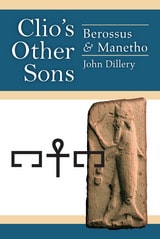
Clio's Other Sons
Berossus and ManethoJohn Dillery
University of Michigan Press, 2015
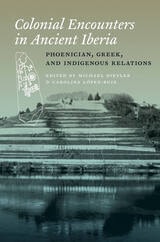
Colonial Encounters in Ancient Iberia
Phoenician, Greek, and Indigenous RelationsEdited by Michael Dietler and Carolina López-Ruiz
University of Chicago Press, 2009
During the first millennium BCE, complex encounters of Phoenician and Greek colonists with natives of the Iberian Peninsula transformed the region and influenced the entire history of the Mediterranean.
One of the first books on these encounters to appear in English, this volume brings together a multinational group of contributors to explore ancient Iberia’s colonies and indigenous societies, as well as the comparative study of colonialism. These scholars—from a range of disciplines including classics, history, anthropology, and archaeology—address such topics as trade and consumption, changing urban landscapes, cultural transformations, and the ways in which these issues played out in the Greek and Phoenician imaginations. Situating ancient Iberia within Mediterranean colonial history and establishing a theoretical framework for approaching encounters between colonists and natives, these studies exemplify the new intellectual vistas opened by the engagement of colonial studies with Iberian history.
Commentary on Thucydides, Book 3
Rachel Bruzzone
University of Michigan Press, 2025
Commentary on Thucydides, Book 3 remedies this situation by offering detailed linguistic explanations and grammatical clarifications designed to appeal both to seasoned Classicists and to a broader group of non-specialist readers who may still be developing their Greek language skills. Starting with 428 BCE, Book 3 covers a critical period of the Peloponnesian War in which the conflict began to manifest its extraordinary violence and scale. The book contains influential and controversial discussions, including Thucydides’ own analysis of the nature of war and the ways that it teaches “lessons of violence” to individuals and states. Book 3 also features the famous Mytilenean Debate, an argument premised on the thesis that all international relations are, or should be, fundamentally amoral. Educated readers have always looked to Thucydides in turbulent times, and this commentary will open up his text to a wider audience.