Results by title
166 books match the query 'Archives' and 2 start with c
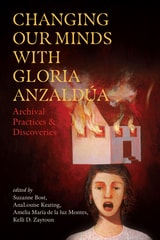
Changing Our Minds with Gloria Anzaldúa
Archival Practices and Discoveriesedited by Suzanne Bost, AnaLouise Keating, Amelia María de la luz Montes, Kelli D. Zaytoun
University of Texas Press, 2026
A collection of essays using Gloria Anzaldúa’s archival works to further explore and reassess the meaning of her legacy.
In the 1980s, Gloria Anzaldúa’s pioneering Borderlands/La Frontera and This Bridge Called My Back created new and durable trajectories for feminist, queer, Latinx, and postcolonial thought. Still, much of her writing was never published. Drawing on Anzaldúa’s impressive archive—manuscript drafts, personal memorabilia, correspondence, and drawings held at the Benson Collection at the University of Texas, Austin—this volume explores what we are still learning from a pathbreaking scholar more than twenty years after her death.
Changing Our Minds with Gloria Anzaldúa gathers essays from eleven writers working in diverse fields, including philosophy, literature, geography, performance studies, and visual arts. All have been powerfully influenced by Anzaldúa, and after examining her archives, all came to know her work anew. Each chapter relates discoveries among the unpublished materials, illuminating Anzaldúa’s celebrated texts and raising novel questions. A meditation, as well, on archivalism itself, Changing Our Minds reckons with the power of dusty papers to motivate new generations of readers outside the geographies and academic departments in which Anzaldúa has long been a fixture.
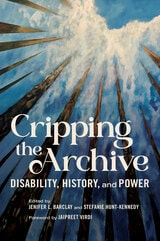
Cripping the Archive
Disability, History, and PowerEdited by Jenifer L. Barclay and Stefanie Hunt-Kennedy Foreword by Jaipreet Virdi
University of Illinois Press, 2025
Jenifer L. Barclay and Stefanie Hunt-Kennedy edit a collection of interdisciplinary essays that consider how and why physical, sensory, intellectual, and psychological disabilities are underrepresented, erased, or distorted in the historical record. The contributors draw on the methodology and practice of cripping to uncover disability in contested archives and explore ways to build inclusive archives accountable to, and centered on, disabled people and disability justice. Throughout, they show ableness informing the politics of the archive as a physical space, a discriminatory record, and a collection of silences.
An essential contribution to research methods and disability justice, Cripping the Archive offers a blueprint for intersectional and interdisciplinary approaches that bridge disability studies, history, and archival studies.