Results by title
133 books match the query 'Argentina' and 12 start with c
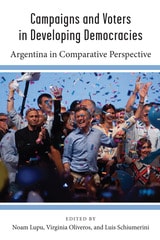
Campaigns and Voters in Developing Democracies
Argentina in Comparative PerspectiveEdited by Noam Lupu, Virginia Oliveros, and Luis Schiumerini
University of Michigan Press, 2019

Care without Pathology
How Trans- Health Activists Are Changing MedicineChristoph Hanssmann
University of Minnesota Press, 2023
Examining trans- healthcare as a key site through which struggles for health and justice take shape
Over the past two decades, medical and therapeutic approaches to transgender patients have changed radically, from treating a supposed pathology to offering gender-affirming care. Based on ethnographic fieldwork in New York City and Buenos Aires, Care without Pathology moves across the Americas to show how trans- health activists have taken on the project of depathologization.
In New York, Christoph Hanssmann examines activist attempts to overturn bans on using public health dollars to fund trans- health care. In Argentina, he traces how trans- activists marshaled medical statistics and personal biographies to reveal state violence directed against trans- people and travestis. Hanssmann also demonstrates the importance of understanding transphobia in the broader context of gendered racism, ableism, and antipoverty, arguing for the rise of a thoroughly coalition-based mass mobilization.
Care without Pathology highlights the distributive arguments activists made to access state funding for health care, combating state arguments that funding trans- health care is too specialized, too expensive, and too controversial. Hanssmann situates trans- health as a crucible within which sweeping changes are taking place—with potentially far-reaching effects on the economic and racial barriers to accessing care.
Certificate of Absence
By Sylvia Molloy
University of Texas Press, 1989
Originally published in 1981 as En breve cárcel,Certificate of Absence is the first novel of the Argentinian scholar-critic Sylvia Molloy. Innovative in its treatment of women's relationships and in its assertion of woman's right to author her own text, the novel has won wide approval in Latin America and the United States.
The novel centers around a woman writing in a small room. As she writes, remembering a past relationship and anticipating a future one, the room becomes a repository for nostalgia, violence, and desire, a space in which writing and remembering become life-sustaining ceremonies. The narrator reflects on the power of love to both shelter and destroy. She meditates on the act of writing, specifically on writing as a woman, in a voice that goes against the grain of established, canonical voices.
Latin American male writers are prone to self-portrayal in their texts. Certifcate of Absence is one of the few novels by Latin American women that successfully use this technique to open new windows on women's experiences.
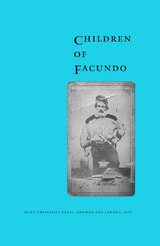
Children of Facundo
Caudillo and Gaucho Insurgency during the Argentine State-Formation Process (La Rioja, 1853-1870)Ariel de la Fuente
Duke University Press, 2000
La Rioja, a province in the northwest section of the country, was the land of the caudillos immortalized by Domingo F. Sarmiento, particularly in his foundational and controversial book Facundo. De la Fuente focuses on the repeated rebellions in this district during the 1860s, when Federalist caudillos and their followers, the gauchos, rose up against the new Unitarian government. In this social and cultural analysis, de la Fuente argues that the conflict was not a factional struggle between two ideologically identical sectors of the elite, as commonly depicted. Instead, he believes, the struggle should be seen from the perspective of the lower-class gauchos, for whom Unitarianism and Federalism were highly differentiated party identities that represented different experiences during the nineteenth century. To reconstruct this rural political culture de la Fuente relies on sources that heretofore have been little used in the study of nineteenth-century Latin American politics, most notably a rich folklore collection of popular political songs, folktales, testimonies, and superstitions passed down by old gauchos who had been witnesses or protagonists of the rebellions. Criminal trial records, private diaries, and land censuses add to the originality of de la Fuente’s study, while also providing a new perspective on Sarmiento’s works, including the classic Facundo.
This book will interest those specializing in Latin American history, literature, politics, and rural issues.
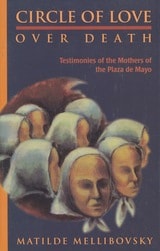
Circle of Love Over Death
The Story of the Mothers of the Plaza de MayoMatilde Mellibovsky
Northwestern University Press, 1996
Concrete Dreams
Practice, Value, and Built Environments in Post-Crisis Buenos AiresNicholas D'Avella
Duke University Press, 2019
Contentious Lives
Two Argentine Women, Two Protests, and the Quest for RecognitionJavier Auyero
Duke University Press, 2003
Auyero reconstructs Nana’s and Laura’s biographies through oral histories and diaries. Drawing on interviews with many other protesters, newspaper articles, judicial records, government reports, and video footage, he provides sociological and historical context for their stories. The women’s accounts reveal the frustrations of lives overwhelmed by gender domination, the deprivations brought about by hyper-unemployment and the withering of the welfare component of the state, and the achievements and costs of collective action. Balancing attention to large-scale political and economic processes with acknowledgment of the plurality of meanings emanating from personal experiences, Contentious Lives is an insightful, penetrating, and timely contribution to discussions of popular resistance and the combined effects of globalization, neoliberal economic policies, and political corruption in Argentina and elsewhere.

Couture and Consensus
Fashion and Politics in Postcolonial ArgentinaRegina A. Root
University of Minnesota Press, 2010
Creating Worlds Otherwise
Art, Collective Action, and (Post)ExtractivismPaula Serafini
Vanderbilt University Press, 2022
Extractivism has increasingly become the ground on which activists and scholars in Latin America frame the dynamics of ecological devastation, accumulation of wealth, and erosion of rights. These maladies are the direct consequences of long-standing extraction-oriented economies, and more recently from the expansion of the extractive frontier and the implementation of new technologies in the extraction of fossil fuels, mining, and agriculture. But the fields of sociology, political ecology, anthropology, and geography have largely ignored the role of art and cultural practices in studies of extractivism and post-extractivism.
The field of art theory, on the other hand, has offered a number of texts that put forward insightful analyses of artwork addressing extraction, environmental devastation, and the climate crisis. However, an art theory perspective that does not engage firsthand and in depth with collective action remains limited and fails to provide an account of the role, processes, and politics of art in anti- and post-extractivist movements.
Creating Worlds Otherwise examines the narratives that subaltern groups generate around extractivism, and how they develop, communicate, and mobilize these narratives through art and cultural practices. It reports on a six-year project on creative resistance to extractivism in Argentina and builds on long-term engagement working on environmental justice projects and campaigns in Argentina and the UK.
It is an innovative contribution to the fields of Latin American studies, political ecology, cultural studies, and art theory, and addresses pressing questions regarding what post-extractivist worlds might look like as well as how such visions are put into practice.
Crisis and Capitalism in Contemporary Argentine Cinema
Joanna Page
Duke University Press, 2009
Page focuses particularly on films associated with New Argentine Cinema, but she also discusses highly experimental films and genre movies that borrow from the conventions of crime thrillers, Westerns, and film noir. She analyzes films that have received wide international recognition alongside others that have rarely been shown outside Argentina. What unites all the films she examines is their attention to shifts in subjectivity provoked by political or economic conditions and events. Page emphasizes the paradoxes arising from the circulation of Argentine films within the same global economy they so often critique, and she argues that while Argentine cinema has been intent on narrating the collapse of the nation-state, it has also contributed to the nation’s reconstruction. She brings the films into dialogue with a broader range of issues in contemporary film criticism, including the role of national and transnational film studies, theories of subjectivity and spectatorship, and the relationship between private and public spheres.
Crossing Borders, Claiming a Nation
A History of Argentine Jewish Women, 1880–1955Sandra McGee Deutsch
Duke University Press, 2010
Drawing on extensive archival research and original oral histories, Deutsch tells the stories of individual women, relating their sentiments and experiences as both insiders and outsiders to state formation, transnationalism, and cultural, political, ethnic, and gender borders in Argentine history. As agricultural pioneers and film stars, human rights activists and teachers, mothers and doctors, Argentine Jewish women led wide-ranging and multifaceted lives. Their community involvement—including building libraries and secular schools, and opposing global fascism in the 1930s and 1940s—directly contributed to the cultural and political lifeblood of a changing Argentina. Despite their marginalization as members of an ethnic minority and as women, Argentine Jewish women formed communal bonds, carved out their own place in society, and ultimately shaped Argentina’s changing pluralistic culture through their creativity and work.
Culture of Class
Radio and Cinema in the Making of a Divided Argentina, 1920-1946Matthew B. Karush
Duke University Press, 2012