Results by title
197 books match the query 'Arts' and 16 start with c
Celibacies
American Modernism and Sexual LifeBenjamin Kahan
Duke University Press, 2013
Challenging the Prison-Industrial Complex
Activism, Arts, and Educational AlternativesEdited by Stephen John Hartnett
University of Illinois Press, 2011
Chicago Makes Modern
How Creative Minds Changed SocietyEdited by Mary Jane Jacob and Jacquelynn Baas
University of Chicago Press, 2012
Chicago is a city dedicated to the modern—from the skyscrapers that punctuate its skyline to the spirited style that inflects many of its dwellings and institutions, from the New Bauhaus to Hull-House. Despite this, the city has long been overlooked as a locus for modernism in the arts, its rich tradition of architecture, design, and education disregarded. Still the modern in Chicago continues to thrive, as new generations of artists incorporate its legacy into fresh visions for the future. Chicago Makes Modern boldly remaps twentieth-century modernism from our new-century perspective by asking an imperative question: How did the modern mind—deeply reflective, yet simultaneously directed—help to dramatically alter our perspectives on the world and make it new?
Returning the city to its rightful position at the heart of a multidimensional movement that changed the face of the twentieth century, Chicago Makes Modern applies the missions of a brilliant group of innovators to our own time. From the radical social and artistic perspectives implemented by Jane Addams, John Dewey, and Buckminster Fuller to the avant-garde designs of László Moholy-Nagy and Mies van der Rohe, the prodigious offerings of Chicago's modern minds left an indelible legacy for future generations. Staging the city as a laboratory for some of our most heralded cultural experiments, Chicago Makes Modern reimagines the modern as a space of self-realization and social progress—where individual visions triggered profound change. Featuring contributions from an acclaimed roster of contemporary artists, critics, and scholars, this book demonstrates how and why the Windy City continues to drive the modern world.

Chimera
The Expanded Body for a New Ecosophy of the ArtsMarco Mancuso
Intellect Books, 2026
Exploring the evolving relationship between the human body, technoscience, and the environment, Chimera introduces the concept of the “expanded body” as a transdisciplinary meeting point between art, design, technology, and science. Through a critical examination of developments such as biomechanics, prosthetics, body hacking, and biotechnology, the book investigates how these innovations alter our bodily, sensory, and cognitive capacities. Providing a unique methodological systematization of the main ecological and posthuman philosophy theories, it argues for a new framework in which the human is deeply entangled with both human and nonhuman elements in a shared environment.
Building on ideas from both past and present—ranging from twentieth-century research to current discussions in neuroscience, design, and media theory—Chimera offers a thoughtful response to common fears about futures driven by technology and science. Instead of imagining a world dominated by machines or centered only on human needs, the book imagines fluid, queer, and nonhierarchical relational models between human bodies and the environment. Essential reading for scholars and students in contemporary art, new media, science and technology studies, and environmental and posthuman studies, Chimera also speaks to a wider audience interested in how technology and science are reshaping our understanding of life, identity, and ethical coexistence.
Chroma
A Book of ColorDerek Jarman
University of Minnesota Press, 2010
Couplets
Travels in Speculative PragmatismBrian Massumi
Duke University Press, 2021
Creating Worlds Otherwise
Art, Collective Action, and (Post)ExtractivismPaula Serafini
Vanderbilt University Press, 2022
Extractivism has increasingly become the ground on which activists and scholars in Latin America frame the dynamics of ecological devastation, accumulation of wealth, and erosion of rights. These maladies are the direct consequences of long-standing extraction-oriented economies, and more recently from the expansion of the extractive frontier and the implementation of new technologies in the extraction of fossil fuels, mining, and agriculture. But the fields of sociology, political ecology, anthropology, and geography have largely ignored the role of art and cultural practices in studies of extractivism and post-extractivism.
The field of art theory, on the other hand, has offered a number of texts that put forward insightful analyses of artwork addressing extraction, environmental devastation, and the climate crisis. However, an art theory perspective that does not engage firsthand and in depth with collective action remains limited and fails to provide an account of the role, processes, and politics of art in anti- and post-extractivist movements.
Creating Worlds Otherwise examines the narratives that subaltern groups generate around extractivism, and how they develop, communicate, and mobilize these narratives through art and cultural practices. It reports on a six-year project on creative resistance to extractivism in Argentina and builds on long-term engagement working on environmental justice projects and campaigns in Argentina and the UK.
It is an innovative contribution to the fields of Latin American studies, political ecology, cultural studies, and art theory, and addresses pressing questions regarding what post-extractivist worlds might look like as well as how such visions are put into practice.
Creative Alaska
A Ten-Year Retrospective of Support for Alaska Artists, 2004-2013Edited by Sven Haakanson and Amy Steffian
University of Alaska Press, 2016
Creative Alaska profiles the award winners from 2004 to 2013 in three categories: Distinguished Artists, Fellowships, and Project Awards. Richly illustrated accounts of each of the artists and their work illuminate the challenges and opportunities of the artistic life in Alaska and the powerful impact of the Rasmuson Foundation’s support.
Creative Communities
Regional Inclusion and the ArtsEdited by Janet McDonald and Robert Mason
Intellect Books, 2015
Critical Questions
On Music and Letters, Culture and Biography, 1940-1980Jacques Barzun
University of Chicago Press, 1982
For anyone unfamiliar with Barzun's work, Critical Questions will serve as a valuable introduction to one of the most important cultural historians of our time. Others will be glad to have these pieces—most of them no longer easily available—brought together in a single volume. Uniformly insightful, provocative, and a pleasure to read, they show the consistency of Barzun's thought even as they exhibit diversity.
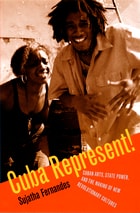
Cuba Represent!
Cuban Arts, State Power, and the Making of New Revolutionary CulturesSujatha Fernandes
Duke University Press, 2006
Combining textual analyses of films, rap songs, and visual artworks; ethnographic material collected in Cuba; and insights into the nation’s history and political economy, Fernandes details the new forms of engagement with official institutions that have opened up as a result of changing relationships between state and society in the post-Soviet period. She demonstrates that in a moment of extreme hardship and uncertainty, the Cuban state has moved to a more permeable model of power. Artists and other members of the public are collaborating with government actors to partially incorporate critical cultural expressions into official discourse. The Cuban leadership has come to recognize the benefits of supporting artists: rappers offer a link to increasingly frustrated black youth in Cuba; visual artists are an important source of international prestige and hard currency; and films help unify Cubans through community discourse about the nation. Cuba Represent! reveals that part of the socialist government’s resilience stems from its ability to absorb oppositional ideas and values.
Cultural Democracy
The Arts, Community, and the Public PurposeJames Bau Graves
University of Illinois Press, 2004
Drawing upon a range of scholarship and illustrative anecdotes from his own experiences with cultural programs in ethnically diverse communities, Graves explains in convincing detail the dynamics of how traditional and grassroots cultures may survive and thrive--or not--and what we can do to provide them opportunities equal to those of mainstream, Eurocentric culture.
Cultural Excursions
Marketing Appetites and Cultural Tastes in Modern AmericaNeil Harris
University of Chicago Press, 1990
The essays fall into three general sections: the first treats the history of cultural institutions, highlighting the role of museums; the second section focuses on some literary, artistic, and entrepreneurial responses to the new mass culture; and the final group of essays explores the social history of art and architecture. Throughout Harris's diverse writings certain themes recur—the redefining of boundaries between high art and popular culture, the relationship between public taste and technological change, and the very notion of what constitutes a shared social experience. Harris's pioneering work has broadened the field of cultural history and encouraged whole new areas of inquiry. Cultural Excursions will be useful for those in American and culture studies, as well as for the general reader trying to make sense of the culture in which we live.
Cultural Industries in Shanghai
Policy and Planning inside a Global CityEdited by Rong Yueming and Justin O’Connor
Intellect Books, 2018
Culture Incorporated
Museums, Artists, And Corporate SponsorshipsMark W. Rectanus
University of Minnesota Press, 2002
An exposé of the hidden costs of corporate funding of the arts
Photographer Annie Leibowitz collaborates with American Express on a portrait exhibition. Absolut Vodka engages artists for their advertisements. Philip Morris mounts an "Arts Against Hunger" campaign in partnership with prominent museums. Is it art or PR, and where is the line that separates the artistic from the corporate? According to Mark Rectanus, that line has blurred. These mergers of art, business, and museums, he argues, are examples of the worldwide privatization of cultural funding.
In Culture Incorporated, Rectanus calls for full disclosure of corporate involvement in cultural events and examines how corporations, art institutions, and foundations are reshaping the cultural terrain. In turn, he also shows how that ground is destabilized by artists subverting these same institutions to create a heightened awareness of critical alternatives. Rectanus exposes how sponsorship helps maintain social legitimation in a time when corporations are the target of significant criticism. He provides wide-ranging examples of artists and institutions grappling with corporate sponsorship, including artists’s collaboration with sponsors, corporate sponsorship of museum exhibitions, festivals, and rock concerts, and cybersponsoring. Throughout, Rectanus analyzes the convergence of cultural institutions with global corporate politics and its influence on our culture and our communities.
Curtains?
The Future of the Arts in AmericaMichael M. Kaiser
Brandeis University Press, 2015