Results by title
112 books match the query 'Body' and 7 start with c
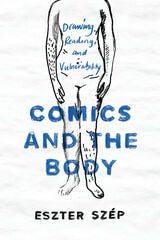
Comics and the Body
Drawing, Reading, and VulnerabilityEszter Szép
The Ohio State University Press, 2020
Confronting Vulnerability
The Body and the Divine in Rabbinic EthicsJonathan Wyn Schofer
University of Chicago Press, 2010
While imparting their ethical lessons, rabbinic texts often employ vivid images of death, aging, hunger, defecation, persecution, and drought. In Confronting Vulnerability, Jonathan Wyn Schofer carefully examines these texts to find out why their creators thought that human vulnerability was such a crucial tool for instructing students in the development of exemplary behavior.
These rabbinic texts uphold virtues such as wisdom and compassion, propound ideal ways of responding to others in need, and describe the details of etiquette. Schofer demonstrates that these pedagogical goals were achieved through reminders that one’s time on earth is limited and that God is the ultimate master of the world. Consciousness of death and of divine accounting guide students to live better lives in the present. Schofer’s analysis teaches us much about rabbinic pedagogy in late antiquity and also provides inspiration for students of contemporary ethics. Despite their cultural distance, these rabbinic texts challenge us to develop theories and practices that properly address our frailties rather than denying them.
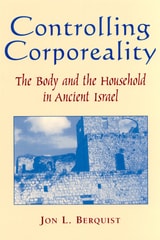
Controlling Corporeality
The Body and the Household in Ancient IsraelBerquist, Jon L.
Rutgers University Press, 2002
Human bodily existence is at the core of the Torah and the rest of the Hebrew Scriptures—from birth to death. From God’s creation of Adam out of clay, to the narratives of priests and kings whose regulations governed bodily practices, the Hebrew Bible focuses on the human body. Moreover, ancient Israel’s understanding of the human body has greatly influenced both Judaism and Christianity. Despite this pervasive influence, ancient Israel’s view of the human body has rarely been studied and, until now, has been poorly understood.
In this beautifully written book, Jon L. Berquist guides the reader through the Hebrew Bible, examining ancient Israel’s ideas of the body, the unstable roles of gender, the deployment of sexuality, and the cultural practices of the time. Conducting his analysis with reference to contemporary theories of the body, power, and social control, Berquist offers not only a description and clarification of ancient Israelite views of the body, but also an analysis of how these views belong to the complex logic of ancient social meanings. When this logic is understood, the familiar Bible becomes strange and opens itself to a wide range of new interpretations.
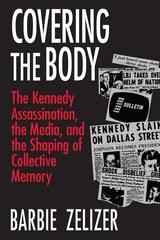
Covering the Body
The Kennedy Assassination, the Media, and the Shaping of Collective MemoryBarbie Zelizer
University of Chicago Press, 1992
Covering the Body (the title refers to the charge given journalists to follow a president) is a powerful reassessment of the media's role in shaping our collective memory of the assassination—at the same time as it used the assassination coverage to legitimize its own role as official interpreter of American reality. Of the more than fifty reporters covering Kennedy in Dallas, no one actually saw the assassination. And faced with a monumentally important story that was continuously breaking, most journalists had no time to verify leads or substantiate reports. Rather, they took discrete moments of their stories and turned them into one coherent narrative, blurring what was and was not "professional" about their coverage.
Through incisive analyses of the many accounts and investigations in the years since the shooting, Zelizer reveals how journalists used the assassination not just to relay the news but to address the issues they saw as central to the profession and to promote themselves as cultural authorities. Indeed, argues Zelizer, these motivations are still alive and are at the core of the controversy surrounding Oliver Stone's movie, JFK.
At its heart, Covering the Body raises serious questions about the role of the media in defining our reality, and shaping our myths and memories. In tracing how journalists attempted to answer questions that still trouble most Americans, Zelizer offers a fascinating analysis of the role of the media as cultural authorities.
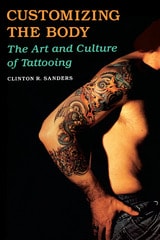
Customizing The Body
Clinton Sanders
Temple University Press, 1990
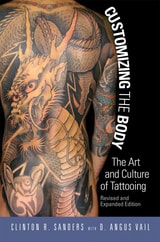
Customizing the Body
The Art and Culture of TattooingClinton Sanders
Temple University Press, 2008
Originally published in 1989, this ground-breaking ethnographic exploration of tattooing—and the art world surrounding it—covers the history, anthropology and sociology of body modification practices; the occupational experience of the tattooist; the process and social consequences of becoming a tattooed person; and the prospects of "serious" tattooing becoming an accepted art form. Curiously, despite the greater prevalence of tattoos and body modification in today’s society, there is still a stigma of deviance associated with people who get or ink tattoos.
Retaining the core of the original book, this revised and expanded edition offers a new preface by the author and a new chapter focusing on the changes that have occurred in the tattoo world. A section on the new scholarly literature that has emerged, as well as the new modes of body modification that have come into vogue are included along with a new gallery of photographs that shows some splendid examples of contemporary tattoo art. A directory of artists' websites invites readers to discover the range of work being done around the world—from “suits” (full body tattoos) to skulls.
Cyborgs, Sexuality, and the Undead
The Body in Mexican and Brazilian Speculative FictionM. Elizabeth Ginway
Vanderbilt University Press, 2020
In Cyborgs, Sexuality, and the Undead, M. Elizabeth Ginway examines all these issues from a number of theoretical perspectives, most importantly through the lens of Bolívar Echeverría’s “baroque ethos,” which emphasizes the strategies that subaltern populations may adopt in order to survive and prosper in the face of massive historical and structural disadvantages. Foucault’s concept of biopolitics is developed in discussion with Roberto Esposito’s concept of immunity and Giorgio Agamben’s distinction between “political life” and “bare life.”
This book will be of interest to scholars of speculative fiction, as well as Mexicanists and Brazilianists in history, literary studies, and critical theory.