71 books match the query 'Cancer' and 8 start with c

cover of Cancer Activism: Gender, Media, and Public Policy

Cancer Activism

Gender, Media, and Public Policy

Karen M. Kedrowski and Marilyn Stine Sarow

University of Illinois Press, 2010

The first comparison of the breast cancer and the prostate cancer movements

Cancer Activism explores the interplay between advocacy, the media, and public perception through an analysis of breast cancer and prostate cancer activist groups over a nearly twenty-year period. Despite both diseases having nearly identical mortality and morbidity rates, Karen M. Kedrowski and Marilyn Stine Sarow present evidence from more than 4,200 news articles to show that the different groups have had markedly different impacts. They trace the rise of each movement from its beginning and explore how discussions about the diseases appeared on media, public, and government agendas. In an important exception to the feminist tenet that women as a group hold less power than men, Kedrowski and Sarow demonstrate that the breast cancer movement is not only larger and better organized than the prostate cancer movement, it is also far more successful at shaping media coverage, public opinion, and government policy.
[more]
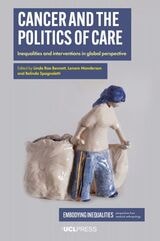
cover of Cancer and the Politics of Care: Inequalities and Interventions in Global Perspective

Cancer and the Politics of Care

Inequalities and Interventions in Global Perspective

Edited by Linda Rae Bennett, Lenore Manderson, and Belinda Spagnoletti

University College London, 2023

An ethnographic examination of the effects of structural inequalities on cancer treatment around the world.
 
Taking an ethnographic approach, the contributors to this book offer new examinations of cancer and its treatment to show how social, economic, race, gender, and other structural inequalities intersect, compound, and complicate health inequalities. Cancer experiences and impacts are explored across eleven countries: Argentina, Brazil, Denmark, France, Greece, India, Indonesia, Italy, Senegal, the United Kingdom, and the United States. The volume engages with specific cancers from the point of primary prevention to screening, diagnosis, treatment (or its absence), and end-of-life care. Cancer and the Politics of Care traverses new theoretical terrain by explicitly critiquing cancer interventions, their limitations and success, the politics that drive them, and their embeddedness in local cultures and value systems. Its diversity and innovation ensure its wide utility among those working in and studying medical anthropology, social anthropology, and other fields at the intersections of social science, medicine, and health equity.
 
[more]
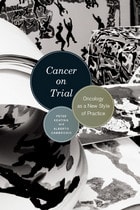
cover of Cancer on Trial: Oncology as a New Style of Practice

Cancer on Trial

Oncology as a New Style of Practice

Peter Keating and Alberto Cambrosio

University of Chicago Press, 2011

Until the early 1960s, cancer treatment consisted primarily of surgery and radiation therapy. Most practitioners then viewed the treatment of terminally ill cancer patients with heroic courses of chemotherapy as highly questionable. The randomized clinical trials that today sustain modern oncology were relatively rare and prompted stiff opposition from physicians, who were loath to assign patients randomly to competing treatments. Yet today these trials form the basis of medical oncology. How did such a spectacular change occur? How did medical oncology pivot from a nonentity and, in some regards, a reviled practice to the central position it now occupies in modern medicine?
           
In Cancer on Trial Peter Keating and Alberto Cambrosio explore how practitioners established a new style of practice, at the center of which lies the cancer clinical trial. Far from mere testing devices, these trials have become full-fledged experiments that have redefined the practices of clinicians, statisticians, and biologists. Keating and Cambrosio investigate these trials and how they have changed since the 1960s, all the while demonstrating their significant impact on the progression of oncology. A novel look at the institution of clinical cancer research and therapy, this book will be warmly welcomed by historians, sociologists, and anthropologists of science and medicine, as well as clinicians and researchers in the cancer field.
[more]
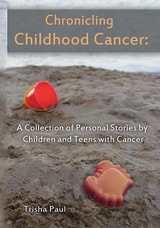
cover of Chronicling Childhood Cancer: A Collection of Personal Stories by Children and Teens with Cancer

Chronicling Childhood Cancer

A Collection of Personal Stories by Children and Teens with Cancer

Trisha Karena Paul

Michigan Publishing Services, 2014

In this narrative collection, ten children and teens use their own words and colorful drawings to share their personal experiences with cancer. This diverse collection of patient stories provides insight into the unique lives of these individuals; some are recently diagnosed and undergoing treatment for cancer while others are in remission or have relapsed. These children and teens are honest and perceptive, their stories told with heartfelt emotion. 
 
This book is a resource for all those interested in learning more about childhood cancer, including health practitioners, family, and friends. These stories also have the potential to help other youth diagnosed with cancer.  
 
All of the proceeds received by the University of Michigan Division of Pediatric Hematology/Oncology for this book will be donated: 50% to the Block Out Cancer campaign for pediatric cancer research at the University of Michigan and 50% to the Child and Family Life Program at the University of Michigan C.S. Mott Children’s Hospital.

[more]
cover of Clinical Trials in Ovarian Cancer

Clinical Trials in Ovarian Cancer

Walsh, Christine S

Rutgers University Press, 2017
When a patient is diagnosed with a gynecological malignancy, she and her doctors must make urgent, high-risk decisions about her course of treatment. In selecting an appropriate plan of care, physicians must weigh the patient’s individual needs, the tumor’s specific characteristics, and the treatment’s potential side effects. Because there is no one-size-fits-all treatment solution, a plethora of clinical trials have been performed on ovarian cancer patients, but clinicians may struggle to keep up with this ever-growing body of research.   
 
Collecting and synthesizing research findings from a wide array of medical journal articles and book chapters, Clinical Trials in Ovarian Cancer provides physicians with an invaluable resource. Gynecologic oncologist Christine S. Walsh systematically outlines each of the seminal Phase III trials that have shaped the treatment of ovarian cancers, detailing the rationale for the trial, the patient population studied, treatment delivery methods, efficacy, toxicity, and trial conclusions. She provides a clear overview of established treatments, as well as still-controversial experimental approaches. 
 
The first book to organize this cutting-edge research into an easy-to-use reference, Clinical Trials in Ovarian Cancer should help medical personnel at all levels provide their patients with the highest standard of care. 
 
[more]
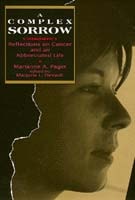
cover of Complex Sorrow: Reflections on Cancer and an Abbreviated Life

Complex Sorrow

Reflections on Cancer and an Abbreviated Life

Marianne Paget

Temple University Press, 1993
"The author's multiple voices--scholar, sociologist, victim--provide an academic, yet personal, professional, yet poignant, story....Readers face...the 'contradictory meanings' that an especially articulate woman brings to the final chapter of her life." --Women and Health In 1988, Marianne Paget published the Unity of Mistakes: A Phenomenological Interpretation of Medical Work (Temple) in which she argued that error is an intrinsic feature in medicine--an experimental and uncertain activity. Her subsequent research focused on medical negligence and on miscommunication and silence a as cause and product of error in medicine. While pursuing her research on negligence, she found out that she was an example of it. Chronic back pain that had been misdiagnosed as muscle spasms turned out to be a symptom of a rare and fatal cancer that claimed Paget's life in December 1989. This collection of her personal and professional writings on the phenomenon of error in medicine chronicles a young scholar's courageous struggle to make sense of a tragic coincidence. Discovering that she was living the charges and painful topic that she had studied so deeply, Paget write poignantly and analytically until the last week of her life about this uncanny parallel. "It is very tricky to come to terms with the reality of death without becoming trapped in that reality," wrote "Tracy" Paget to her friends. In this book, she describes "the odd way my life began to mirror my work"; her search for "life rites" when face with tasks involving wills, last rites, and farewells; and her indomitable and forthright attempt to remain intensely alive in the face of death. A Complex Sorrow, her final project, comprises essays, letters, and a journal recording her last year. Ever critical of the distanced and dispassionate stance taken in much social analysis, Paget had experimented with performance as a form for enlivening social science research. The script for her play, "The Work of Talk," about communication problems between a physician and his cancer patient, is also included. Her compelling life-text speaks to those living with illness and those who care for and about them, as the investigation and representation of lived experience. Excerpt Excerpt available at www.temple.edu/tempress "Strangely, my knowledge of error has helped me deal with the errors in my care. Had I not known about the prevalence of error in medicine I would not have been able to process what has happened to me without bitterness. But I had thought these matters through already, and more than once. I now live out the complex sorrow I have before described." --Marianne A. Paget Reviews "Paget's book is stunning. It's a tribute to the invulnerable human spirit. The woman burned like a flame; obviously she died well, because she lived well; she was loved because she was loving. The book is tremendously sad, but it isn't depressing; somehow, one is left with a sense of human possibility." --Joan Cassell, author of Expected Miracles: Surgeons at Work
[more]
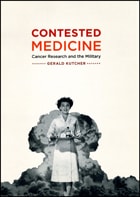
cover of Contested Medicine: Cancer Research and the Military

Contested Medicine

Cancer Research and the Military

Gerald Kutcher

University of Chicago Press, 2009

In the 1960s University of Cincinnati radiologist Eugene Saenger infamously conducted human experiments on patients with advanced cancer to examine how total body radiation could treat the disease. But, under contract with the Department of Defense, Saenger also used those same patients as proxies for soldiers to answer questions about combat effectiveness on a nuclear battlefield.
 

Using the Saenger case as a means to reconsider cold war medical trials, Contested Medicine examines the inherent tensions at the heart of clinical studies of the time. Emphasizing the deeply intertwined and mutually supportive relationship between cancer therapy with radiation and military medicine, Gerald Kutcher explores post–World War II cancer trials, the efforts of the government to manage clinical ethics, and the important role of military investigations in the development of an effective treatment for childhood leukemia. Whereas most histories of human experimentation judge research such as Saenger’s against idealized practices, Contested Medicine eschews such an approach and considers why Saenger’s peers and later critics had so much difficulty reaching an unambiguous ethical assessment. Kutcher’s engaging investigation offers an approach to clinical ethics and research imperatives that lays bare many of the conflicts and tensions of the postwar period.

[more]
cover of Country Songs for Alice

Country Songs for Alice

Emma Binder

Tupelo Press, 2024

An examination of obsession, gender, love, and loss in contemporary rural America.

In Country Songs for Alice, a nonbinary, queer narrator passes through the crucible of love, romance, and heartbreak against the backdrop of rural America—a landscape which offers luminous belonging, even as the hazards of homophobia, loneliness, and isolation loom large. Part roadtrip, part mixtape, these poems are explorations of love, music, romance, pageantry, loneliness, and belonging in the rural places and small towns that seem to preclude queer culture. Country Songs for Alice not only tells the story of a relationship and its dissolution but reclaims country western imagery and aesthetics for a queer audience, dousing the narrator’s experience in the language of cowboys, horses, rodeos, trucks, and desert skies.
 
[more]