Results by title
69 books match the query 'Capital' and 14 start with c
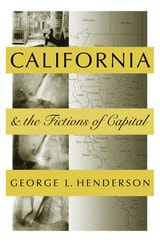
California And The Fictions Of Capital
George Henderson
Temple University Press, 2003
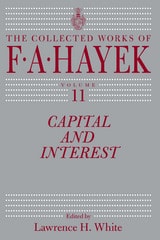
Capital and Interest
F. A. Hayek
University of Chicago Press, 2015
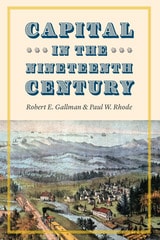
Capital in the Nineteenth Century
Robert E. Gallman and Paul W. Rhode
University of Chicago Press, 2020
When we think about history, we often think about people, events, ideas, and revolutions, but what about the numbers? What do the data tell us about what was, what is, and how things changed over time? Economist Robert E. Gallman (1926–98) gathered extensive data on US capital stock and created a legacy that has, until now, been difficult for researchers to access and appraise in its entirety.
Gallman measured American capital stock from a range of perspectives, viewing it as the accumulation of income saved and invested, and as an input into the production process. He used the level and change in the capital stock as proxy measures for long-run economic performance. Analyzing data in this way from the end of the US colonial period to the turn of the twentieth century, Gallman placed our knowledge of the long nineteenth century—the period during which the United States began to experience per capita income growth and became a global economic leader—on a strong empirical foundation. Gallman’s research was painstaking and his analysis meticulous, but he did not publish the material backing to his findings in his lifetime. Here Paul W. Rhode completes this project, giving permanence to a great economist’s insights and craftsmanship. Gallman’s data speak to the role of capital in the economy, which lies at the heart of many of the most pressing issues today.
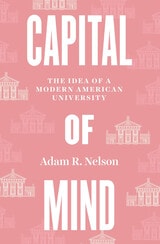
Capital of Mind
The Idea of a Modern American UniversityAdam R. Nelson
University of Chicago Press, 2024
Capital of Mind is the second volume in a breathtakingly ambitious new economic history of American higher education. Picking up from the first volume, Exchange of Ideas, Adam R. Nelson looks at the early decades of the nineteenth century, explaining how the idea of the modern university arose from a set of institutional and ideological reforms designed to foster the mass production and mass consumption of knowledge. This “industrialization of ideas” mirrored the industrialization of the American economy and catered to the demands of a new industrial middle class for practical and professional education. From Harvard in the north to the University of Virginia in the south, new experiments with the idea of a university elicited intense debate about the role of scholarship in national development and international competition, and whether higher education should be supported by public funds, especially in periods of fiscal austerity. The history of capitalism and the history of the university, Nelson reveals, are intimately intertwined—which raises a host of important questions that remain salient today. How do we understand knowledge and education as commercial goods? Should they be public or private? Who should pay for them? And, fundamentally, what is the optimal system of higher education for a capitalist democracy?
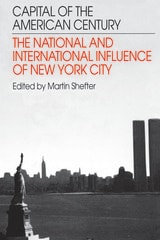
Capital of the American Century
The National and International Influence of New York CityMartin Shefter
Russell Sage Foundation, 1993

Capital, Class & Technology in Contemporary American Culture
Projecting Post-FordismNick Heffernan
Pluto Press, 2000
He turns to the stories we generate and tell ourselves - via fiction, film journalism, theory - to see how change is registered. By investigating a variety of texts, he observes how structural change affects the way people organise their lives economically, socially and culturally. Case studies include Ridley Scott's Blade Runner, William Gibson's cyberspace trilogy, Thomas Pynchon's The Crying of Lot 49, and Wim Wenders's Until the End of the World.
Using the links between narrative cultural forms and the process of historical understanding, he brings together debates that have so far been conducted largely within the separate domains of political economy, social theory and cultural criticism to provide a compelling analysis of contemporary cultural change. By relocating postmodernism in the context of changing modes of capitalism, Heffernan puts the question of class and class agency back at the centre of the critical agenda.

Capital, Interrupted
Agrarian Development and the Politics of Work in IndiaVinay Gidwani
University of Minnesota Press, 2008
The central Gujarat region of western India is home to the entrepreneurial landowning Patel caste who have leveraged their rural dominance to become a powerful global diaspora of merchants, industrialists, and professionals. Investigating the Patels’ intriguing ascent, Vinay Gidwani analyzes its broad implications for the nature of labor and capital worldwide.
With the Patels as his central case, Gidwani interrogates established concepts of value, development, and the relationship between capital and history. Capitalism, he argues, is not a frame of economic organization based on the smooth, consistent operation of a series of laws, but rather an assemblage of contingent and interrupted logics stitched together into the appearance of a deus ex machina. Following this line of thinking, Gidwani points to ways in which political economy might be freed of its lingering Eurocentrism, raises questions about the adequacy of postcolonial studies’ critique of Marx and capitalism, and opens the possibility of situating capitalism as a geographically uneven social formation in which different normative or value-creating practices are imperfectly sutured together in ways that can equally impair and enable profit and accumulation.
Both theoretically astute and empirically informed, Capital, Interrupted unsettles encrusted understandings of staple concepts within the human sciences such as hegemony, governmentality, caste, and agency and, ultimately, does nothing less than rethink the very constitution of capitalism.
Vinay Gidwani is associate professor of geography and global studies at the University of Minnesota.

Capital, State, Empire
The New American Way of Digital WarfareScott Timcke
University of Westminster Press, 2017
The United States presents the greatest source of global geo-political violence and instability. Guided by the radical political economy tradition, this book offers an analysis of the USA’s historical impulse to weaponize communication technologies.
Scott Timcke explores the foundations of this impulse and how the militarization of digital society creates structural injustices and social inequalities. He analyses how new digital communication technologies support American paramountcy and conditions for worldwide capital accumulation. Identifying selected features of contemporary American society, Capital, State, Empire undertakes a materialist critique of this digital society and of the New American Way of War. At the same time it demonstrates how the American security state represses activists—such as Black Lives Matter—who resist this emerging security leviathan. The book also critiques the digital positivism behind the algorithmic regulation used to control labour and further diminish prospects for human flourishing for the ‘99%’.
Capital, State, Empire contributes to a broader understanding of the dynamics of global capitalism and political power in the early 21st century.
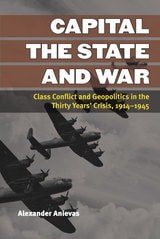
Capital, the State, and War
Class Conflict and Geopolitics in the Thirty Years' Crisis, 1914-1945Alexander Anievas
University of Michigan Press, 2014
The history of the modern social sciences can be seen as a series of attempts to confront the challenges of social disorder and revolution wrought by the international expansion of capitalist social relations. Alexander Anievas focuses on one particularly significant aspect of this story: the intersocietal or geosocial origins of the two world wars, and, more broadly, the confluence of factors behind the Thirty Years’ Crisis between 1914 and 1945.
Anievas presents the Thirty Years’ Crisis as a result of the development of global capitalism with all its destabilizing social and geopolitical consequences, particularly the intertwined and co-constitutive nature of imperial rivalries, social revolutions, and anti-colonial struggles. Building on the theory of uneven and combined development, he unites geopolitical and sociological explanations into a single framework, thereby circumventing the analytical stalemate between primacy of domestic politics and primacy of foreign policy approaches.
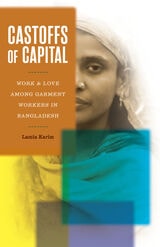
Castoffs of Capital
Work and Love among Garment Workers in BangladeshLamia Karim
University of Minnesota Press, 2022
FINALIST FOR THE GREGORY BATESON PRIZE FROM THE AMERICAN ANTHROPOLOGICAL ASSOCIATION
Dispelling stereotypes about garment workers in the global apparel industry
Castoffs of Capital examines how female garment workers experience their work and personal lives within the stranglehold of global capital. Drawing on fieldwork in Bangladesh, anthropologist Lamia Karim focuses attention onto the lives of older women aged out of factory work, heretofore largely ignored, thereby introducing a new dimension to the understanding of a female-headed workforce that today numbers around four million in Bangladesh.
Bringing a feminist labor studies lens, Castoffs of Capital foregrounds these women not only as workers but as mothers, wives, sisters, lovers, friends, and political agents. Focusing on relations among work, gender, and global capital’s targeting of poor women to advance its market penetration, Karim shows how women navigate these spaces by adopting new subject formations. She locates these women’s aspirations for the “good life” not only in material comforts but also in their longings for love and sexual fulfillment that help them momentarily forget the precarity of their existence under the shadow of capital.
Through richly detailed ethnographic studies, this innovative and beautifully written book examines the making and unmaking of these women’s wants and desires, loves and tribulations, hopes and despairs, and triumphs and struggles.
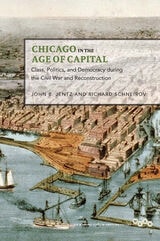
Chicago in the Age of Capital
Class, Politics, and Democracy during the Civil War and ReconstructionJohn B. Jentz and Richard Schneirov
University of Illinois Press, 2015
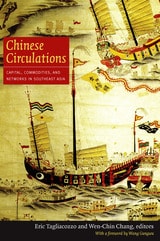
Chinese Circulations
Capital, Commodities, and Networks in Southeast AsiaEric Tagliacozzo and Wen-Chin Chang, eds.
Duke University Press, 2011
Contributors. Leonard Blussé, Wen-Chin Chang, Lucille Chia, Bien Chiang, Nola Cooke, Jean DeBernardi, C. Patterson Giersch, Takeshi Hamashita, Kwee Hui Kian, Li Tana, Lin Man-houng, Masuda Erika, Adam McKeown, Anthony Reid , Sun Laichen, Heather Sutherland, Eric Tagliacozzo, Carl A. Trocki, Wang Gungwu, Kevin Woods, Wu Xiao
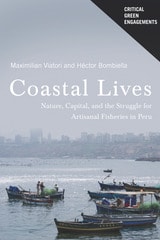
Coastal Lives
Nature, Capital, and the Struggle for Artisanal Fisheries in PeruMaximilian Viatori and Héctor Bombiella
University of Arizona Press, 2019
In Coastal Lives, Maximilian Viatori and Héctor Bombiella argue that this has not made Peru’s fisheries more sustainable. Through a fine-grained ethnographic and historical account of Lima’s fisheries, the authors reveal that new government regimes of entrepreneurial agency have placed overwhelming burdens on the city’s impoverished artisanal fishers to demonstrate that they are responsible producers and have created failures that can be used to justify closing these fishers’ traditional use areas and to deny their historically sanctioned rights. The result is a critical examination of how neoliberalized visions of nature and individual responsibility work to normalize the dispossessions that have enabled ongoing capital accumulation at the cost of growing social dislocations and ecological degradation.
The authors’ innovative approach to the politics of constructing and degrading coastal lives will interest a wide range of scholars in cultural anthropology, environmental humanities, and Latin American studies, as well as policymakers and anyone concerned with inequality, global food systems, and multispecies ecologies.

Cotton and Capital
Boston Businessmen and Antislavery Reform, 1854-1868Richard H. Abbott
University of Massachusetts Press, 1991