Results by title
335 books match the query 'Caribbean & Latin American Studies' and 30 start with c
Callaloo Nation
Metaphors of Race and Religious Identity among South Asians in TrinidadAisha Khan
Duke University Press, 2004
Khan combines ethnographic research she conducted in Trinidad over the course of a decade with extensive archival research to explore how Hindu and Muslim Indo-Trinidadians interpret authority, generational tensions, and the transformations of Indian culture in the Caribbean through metaphors of mixing. She demonstrates how ambivalence about the desirability of a callaloo nation—a multicultural society—is manifest around practices and issues, including rituals, labor, intermarriage, and class mobility. Khan maintains that metaphors of mixing are pervasive and worth paying attention to: the assumptions and concerns they communicate are key to unraveling who Indo-Trinidadians imagine themselves to be and how identities such as race and religion shape and are shaped by the politics of multiculturalism.
Carceral Citizens
Labor and Confinement in Puerto RicoCaroline M. Parker
University of Chicago Press, 2024
In Carceral Citizens, anthropologist Caroline M. Parker offers an ethnographic portrait of therapeutic communities in Puerto Rico, the oldest colony in the Americas. As nonprofits nested within the carceral state, therapeutic communities serve as reeducation and recovery centers for the mostly male drug offenders who serve out their sentences engaged in manual labor and prayer. The most surprising aspect of these centers, however, is that their “graduates” often remain long after the completion of their term, working as self-appointed peer counselors in a mixture of volunteer and low-wage positions.
Parker seeks to explain this dynamic by showing how, in these therapeutic communities, criminalized men find new and meaningful ways of living in the shadow of the prison. Through their participation in the day-to-day functioning of the centers, they discover and cultivate alternative forms of belonging, livelihood, and citizenship, despite living within the restrictions of the carceral state. Situating her study against the backdrop of Puerto Rico’s colonial history, and with findings that extend across Latin America, Parker challenges common assumptions about confinement, labor, and rehabilitation. By delving into lives shaped by the convergence of imperialism, the carceral state, and self-help, she offers a fresh understanding of the transformations of labor and social life brought about by mass incarceration.
Carceral Citizens
Labor and Confinement in Puerto RicoCaroline M. Parker
University of Chicago Press, 2024
In Carceral Citizens, anthropologist Caroline M. Parker offers an ethnographic portrait of therapeutic communities in Puerto Rico, the oldest colony in the Americas. As nonprofits nested within the carceral state, therapeutic communities serve as reeducation and recovery centers for the mostly male drug offenders who serve out their sentences engaged in manual labor and prayer. The most surprising aspect of these centers, however, is that their “graduates” often remain long after the completion of their term, working as self-appointed peer counselors in a mixture of volunteer and low-wage positions.
Parker seeks to explain this dynamic by showing how, in these therapeutic communities, criminalized men find new and meaningful ways of living in the shadow of the prison. Through their participation in the day-to-day functioning of the centers, they discover and cultivate alternative forms of belonging, livelihood, and citizenship, despite living within the restrictions of the carceral state. Situating her study against the backdrop of Puerto Rico’s colonial history, and with findings that extend across Latin America, Parker challenges common assumptions about confinement, labor, and rehabilitation. By delving into lives shaped by the convergence of imperialism, the carceral state, and self-help, she offers a fresh understanding of the transformations of labor and social life brought about by mass incarceration.
Care and Agency
The Andean Community through the Eyes of ChildrenJeanine Anderson
Rutgers University Press, 2025
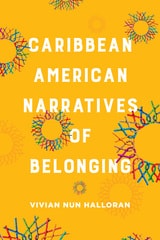
Caribbean American Narratives of Belonging
Vivian Nun Halloran
The Ohio State University Press, 2023
In Caribbean American Narratives of Belonging, Vivian Nun Halloran analyzes memoirs, picture books, comic books, young adult novels, musicals, and television shows through which Caribbean Americans recount and celebrate their contributions to contemporary politics, culture, and activism in the United States. The writers, civil servants, illustrators, performers, and entertainers whose work is discussed here show what it is like to fit in and be included within the body politic. From civic memoirs by Sonia Sotomayor and others, to West Side Story, Hamilton, and Into the Spider-Verse, these texts share a forward-looking perspective, distinct from the more nostalgic rhetoric of traditional diasporic texts that privilege connections to the islands of origin.
There is no one way of being Caribbean. Diasporic communities exhibit a broad spectrum of ethnic, racial, religious, linguistic, and political qualities. Claiming a Caribbean American identity asks wider society to recognize and affirm hybridity in ways that challenge binaristic conceptions of race and nationality. Halloran provides a common language and critical framework to discuss the achievements of members of the Caribbean diaspora and their considerable cultural and political capital as evident in their contributions to literature and popular culture.
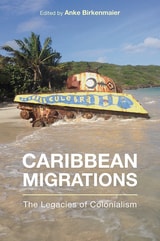
Caribbean Migrations
The Legacies of ColonialismAnke Birkenmaier
Rutgers University Press, 2021
With mass migration changing the configuration of societies worldwide, we can look to the Caribbean to reflect on the long-standing, entangled relations between countries and areas as uneven in size and influence as the United States, Cuba, Hispaniola, Puerto Rico, and Jamaica. More so than other world regions, the Caribbean has been characterized as an always already colonial region. It has long been a key area for empires warring over influence spheres in the new world, and where migration waves from Africa, Europe, and Asia accompanied every political transformation over the last five centuries. In Caribbean Migrations, an interdisciplinary group of humanities and social science scholars study migration from a long-term perspective, analyzing the Caribbean's "unincorporated subjects" from a legal, historical, and cultural standpoint, and exploring how despite often fractured public spheres, Caribbean intellectuals, artists, filmmakers, and writers have been resourceful at showcasing migration as the hallmark of our modern age.
Caribes 2.0
New Media, Globalization, and the Afterlives of DisasterJossianna Arroyo
Rutgers University Press, 2023
Casa Pueblo
A Puerto Rican Model of Self-GovernanceAlexis Massol González, Translated by Ashwin Ravikumar and Paul Schroeder Rodríguez
Lever Press, 2022
Challenged Sovereignty
The Impact of Drugs, Crime, Terrorism, and Cyber Threats in the CaribbeanIvelaw Lloyd Griffith
University of Illinois Press, 2024
Informed and up to date, Challenged Sovereignty explains the effects of today’s globalized problems on the contemporary Caribbean.
Channeling Knowledges
Water and Afro-Diasporic Spirits in Latinx and Caribbean WorldsRebeca L. Hey-Colón
University of Texas Press, 2023
2024 Honorable Mention, Isis Duarte Book Prize, Haiti/ Dominican Republic section, Latin American Studies Association
How water enables Caribbean and Latinx writers to reconnect to their pasts, presents, and futures.
Water is often tasked with upholding division through the imposition of geopolitical borders. We see this in the construction of the Rio Grande/Río Bravo on the US-Mexico border, as well as in how the Caribbean Sea and the Pacific Ocean are used to delineate the limits of US territory. In stark contrast to this divisive view, Afro-diasporic religions conceive of water as a place of connection; it is where spiritual entities and ancestors reside, and where knowledge awaits.
Departing from the premise that water encourages confluence through the sustainment of contradiction, Channeling Knowledges fathoms water’s depth and breadth in the work of Latinx and Caribbean creators such as Mayra Santos-Febres, Rita Indiana, Gloria Evangelina Anzaldúa, and the Border of Lights collective. Combining methodologies from literary studies, anthropology, history, and religious studies, Rebeca L. Hey-Colón’s interdisciplinary study traces how Latinx and Caribbean cultural production draws on systems of Afro-diasporic worship—Haitian Vodou, La 21 División (Dominican Vodou), and Santería/Regla de Ocha—to channel the power of water, both salty and sweet, in sustaining connections between past, present, and not-yet-imagined futures.
Children of Cuarón
Speculative Futures Through Cinematic FictionMatt Garcia
Rutgers University Press, 2027
Alfonso Cuarón’s Children of Men thrusts readers into a gripping near-future world where environmental collapse and global infertility have fortified borders and torn apart the fabric of society. Its stark depictions of mass deportation, lawless border zones, and the desperate fight for survival echo powerfully through Octavia Butler’s prophetic novels Parable of the Sower and Parable of the Talents, where environmental breakdown, migration, childbirth, and the resilience of women’s bodies form the core of her visionary storytelling. Remarkably, the futures imagined in these works are no longer distant—Butler’s 2024 has arrived, and Cuarón’s 2027 is nearly here. Children of Cuarón: Speculative Futures Through Cinematic Fiction ignites bold, necessary conversations about borders, immigration, and the urgent political, environmental, and social challenges facing our world today. By examining how speculative fiction dares to imagine what comes next, this book invites readers to confront the realities of our present—and the possibilities of our future—with fresh eyes and uncompromising clarity.
Children of the Rainforest
Shaping the Future in AmazoniaCamilla Morelli
Rutgers University Press, 2023
Chosen Women and Inka Statecraft
Bioarchaeology, Gender, and Foodways at SaqsaywamanBethany L. Turner
University of Alabama Press, 2026
A bioarchaeological study of chosen women’s labor, identity, and health in the Inka ceremonial center of Saqsaywaman
Chosen Women and Inka Statecraft illuminates the intersections between foodways, diet, gender, and power in the expansive Inka ceremonial complex of Saqsaywaman, Peru. Bioarchaeologist Bethany L. Turner weaves together geochemical and osteological research techniques to create osteobiographies for people who were likely special servants to the Inka royalty in the heart of the vast empire. These skeletal individuals, interred in a special cemetery atop Saqsaywaman, date to the fifteenth and sixteenth centuries and were previously excavated by Peruvian archaeologists.
By weaving her own data together with existing archaeological, osteological, and ethnohistoric studies of Saqsaywaman, Turner opens a rare window into everyday life among the aqllakuna, “chosen women” who grew, prepared, and served food and drink to the Inka elite. She argues that the embodied experiences of these individuals underscore the ways in which they were “made performative artifacts of Inka statecraft.” This statecraft was based on reciprocity, “to feed and be fed,” and the lived experiences of the people who lived under it left telltale signs in their bones and teeth. An important finding is that the aqllakuna, who prepared lavish feasts and heroic quantities of the finest maize beer, chicha, were likely not consuming it. However, they showed poor dental health as a result of chewing the maize to process it during brewing. This significant oral decay likely made them susceptible to chronic diseases and may have shortened their lives. Turner also asserts that the aqllakuna at Saqsaywaman included individuals whose skeletons were estimated to have been male but who likely performed feminine roles, reflecting the fluidity of gendered duality in indigenous Andean cosmology. In Chosen Women and Inka Statecraft, archaeologists, anthropologists, Andeanists, and food scholars will find new ways to consider life in the Inka past.
Christianity, Social Change, and Globalization in the Americas
Peterson, Anna L
Rutgers University Press, 2001
Organized around three central themes-family, youth, and community; democratization, citizenship, and political participation; and immigration and transnationalism-the book argues that, at the local level, religion helps people, especially women and youths, solidify their identities and confront the challenges of the modern world. Religious communities are seen as both peaceful venues for people to articulate their needs, and forums for building participatory democracies in the Americas. Finally, the contributors examine how religion enfranchises poor women, youths, and people displaced by war or economic change and, at the same time, drives social movements that seek to strengthen family and community bonds disrupted by migration and political violence.
Cinema as Infrastructure
Visuality, Power, and the Latin American SouthAdriana Michele Campos Johnson
University of Texas Press, 2027
Examining the interplay of visuality and infrastructure in Latin American films.
Images do far more than we realize. They do not simply represent or depict; they run our world. Surveillance cameras and drones, medical imaging, social media platforms, market-data visualization––these and other technologies make the image an infrastructure of power, a tool for organizing and governing, impressing labor and extracting value.
Adriana Johnson draws on the medium of film to sensitize us to the logics of visuality as a technology of power. In particular, Latin American cinema presents a key site for both crystallizing and retreating from these logics. Through close readings of Argentine, Paraguayan, and Brazilian movies—including the documentary Bus 174, the dystopian sci-fi The Aerial,and the farcical The Gold Bug—Johnson shows how filmmakers can amplify or attenuate the infrastructural reach of visuality. They also reveal visuality’s otherwise-submerged power, and even engage in something like piracy: hacking into, rerouting, and deconstituting the workings of visual infrastructures. A deeply insightful and theoretically rich account, Cinema as Infrastructure reframes the political stakes of filmmaking in an era when visual forms have become means of production and order.
Circuits of the Sacred
A Faggotology in the Black Latinx CaribbeanCarlos Ulises Decena
Duke University Press, 2023
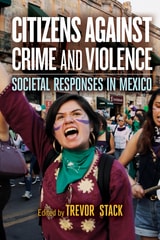
Citizens against Crime and Violence
Societal Responses in MexicoTrevor Stack
Rutgers University Press, 2022
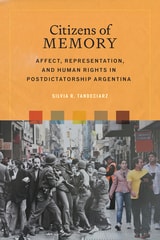
Citizens of Memory
Affect, Representation, and Human Rights in Postdictatorship ArgentinaSilvia R. Tandeciarz
Bucknell University Press, 2026
Published by Bucknell University Press. Distributed worldwide by Rutgers University Press.
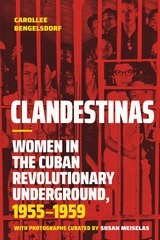
Clandestinas
Women in the Cuban Revolutionary Underground, 1955–1959Carollee Bengelsdorf. With Photographs Curated by Susan Meiselas.
Duke University Press, 2025
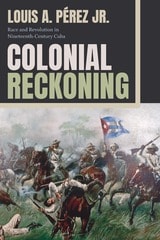
Colonial Reckoning
Race and Revolution in Nineteenth-Century CubaLouis A. Pérez Jr.
Duke University Press, 2023
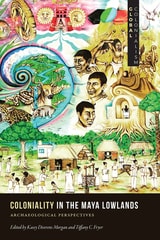
Coloniality in the Maya Lowlands
Archaeological Perspectivesedited by Kasey Diserens Morgan &Tiffany C. Fryer
University Press of Colorado, 2022
The work takes a hemispheric approach to the historical and material analysis of colonialism, bridging the often disparate literatures on coloniality and settler colonialism. Archaeologists and anthropologists working in what are today southeastern Mexico, Belize, Guatemala, and Honduras grapple with the material realities of coloniality at a regional level. They provide sustained discussions of Maya experiences with wide-ranging colonial endurances: violence, resource insecurity, land rights, refugees, the control of borders, the movement of contraband, surveillance, individual and collective agency, consumption, and use of historic resources.
Considering a future for historical archaeologies of the Maya region that bridges anthropology, ethnohistory, Indigenous studies, settler colonial studies, and Latin American studies, Coloniality in the Maya Lowlands presents a new understanding of how ways of being in the Maya world have formed and changed over time, as well as the shared investments of historical archaeologists and sociocultural anthropologists working in the Maya region.
Contributors: Fernando Armstrong-Fumero, Alejandra Badillo Sánchez, Adolfo Iván Batún Alpuche, A. Brooke Bonorden, Maia C. Dedrick, Scott L. Fedick, Fior García Lara, John Gust, Brett A. Houk, Rosemary A. Joyce, Gertrude B. Kilgore, Jennifer P. Mathews, Patricia A. McAnany, James W. Meierhoff, Fabián A. Olán de la Cruz, Julie K. Wesp
Colorblind Tools
Global Technologies of Racial PowerMarzia Milazzo
Northwestern University Press, 2023
Winner of the 2023 Association for Ethnic Studies Outstanding Book Award
A study of anti-Blackness and white supremacy across four continents demonstrates that colorblindness is neither new nor a subtype of racist ideology, but a constitutive technology of racism
In Colorblind Tools, Marzia Milazzo offers a transnational account of anti-Blackness and white supremacy that pushes against the dominant emphasis on historical change pervading current racial theory. This emphasis on change, she contends, misses critical lessons from the past.
Bringing together a capacious archive of texts on race produced in Brazil, Cuba, Mexico, Panama, the United States, and South Africa from multiple disciplines and genres, Milazzo uncovers transnational continuities in structural racism and white supremacist discourse from the inception of colonial modernity to the present. In the process, she traces the global workings of what she calls colorblind tools: technologies and strategies that at once camouflage and reproduce white domination. Whether examining Rijno van der Riet’s defense of slavery in the Cape Colony, discourses of racial mixture in Latin American eugenics and their reverberations in contemporary scholarship, the pitfalls of white “antiracism,” or Chicana indigenist aesthetics, Milazzo illustrates how white people collectively disavow racism to maintain power across national boundaries, and how anti-Black and colonial logics can be reproduced even in some decolonial literatures. Milazzo’s groundbreaking study proves that colorblindness is not new, nor is it a subtype of racist ideology or a hallmark of our era. It is a constitutive technology of racism—a tool the master cannot do without.
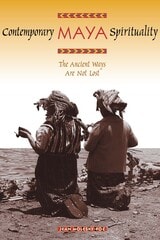
Contemporary Maya Spirituality
The Ancient Ways Are Not LostBy Jean Molesky-Poz
University of Texas Press, 2006
Since the mid-1980s, when Guatemala returned to civilian rule and achieved relative peace and stability, the Maya have begun openly expressing their spiritual beliefs and practices. Jean Molesky-Poz draws on in-depth dialogues with Maya Ajq'ijab' (keepers of the ritual calendar), her own participant observation, and inter-disciplinary resources to offer a comprehensive, innovative, and well-grounded understanding of contemporary Maya spirituality and its theological underpinnings. She reveals significant continuities between contemporary and ancient Maya worldviews and spiritual practices.
Molesky-Poz opens with a discussion of how the public emergence of Maya spirituality is situated within the religious political history of the Guatemalan highlands, particularly the recent pan-Maya movement. She investigates Maya cosmovision and its foundational principles, as expressed by Ajq'ijab'. At the heart of this work, Ajq'ijab' interpret their obligation, lives, and spiritual work. In subsequent chapters, Molesky-Poz explores aspects of Maya spirituality—sacred geography (the reciprocal relationship between the earth and humans, sacred places, and the significance of the cross or quatrefoil map), sacred time (how the 260-day sacred calendar is "the heart of the wisdom of the Maya," the matrix of Maya culture), and ritual practice (the distinct way and method of ancestral study, with special attention to fire ceremonialism). She confirms contemporary Maya spirituality as a faith tradition with elaborate historical roots that has significance for individual, collective, and historical lives, reaffirming its own public space and legal right to be practiced.
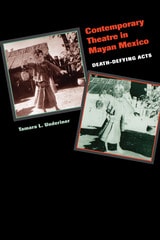
Contemporary Theatre in Mayan Mexico
Death-Defying ActsBy Tamara L. Underiner
University of Texas Press, 2004
From the dramatization of local legends to the staging of plays by Shakespeare and other canonical playwrights to the exploration of contemporary sociopolitical problems and their effects on women and children, Mayan theatre is a flourishing cultural institution in southern Mexico. Part of a larger movement to define Mayan self-identity and reclaim a Mayan cultural heritage, theatre in Mayan languages has both reflected on and contributed to a growing awareness of Mayans as contemporary cultural and political players in Mexico and on the world's stage.
In this book, Tamara Underiner draws on fieldwork with theatre groups in Chiapas, Tabasco, and Yucatán to observe the Maya peoples in the process of defining themselves through theatrical performance. She looks at the activities of four theatre groups or networks, focusing on their operating strategies and on close analyses of selected dramatic texts. She shows that while each group works under the rubric of Mayan or indigenous theatre, their works are also in constant dialogue, confrontation, and collaboration with the wider, non-Mayan world. Her observations thus reveal not only how theatre is an agent of cultural self-definition and community-building but also how theatre negotiates complex relations among indigenous communities in Mayan Mexico, state governments, and non-Mayan artists and researchers.
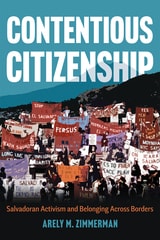
Contentious Citizenship
Salvadoran Activism and Belonging Across BordersArely M. Zimmerman
University of Arizona Press, 2026
Drawing on nearly fifty interviews with activists who fled El Salvador, Zimmerman traces how political refugees carried with them strategies of resistance and community organizing that shaped social justice movements in the United States. The book addresses the political turmoil and grassroots mobilizations in El Salvador, the sanctuary movement of the 1980s, contemporary activism, and the impact of women’s strategies and forms of resistance.
Essential reading for scholars and students of migration, Central American studies, and political movements, Contentious Citizenship is a bold intervention into contemporary debates on identity, legality, and resistance. Zimmerman’s work honors the ingenuity and resilience of Salvadoran activists and invites readers to consider what it means to belong.
Contradictory Indianness
Indenture, Creolization, and Literary ImaginaryAtreyee Phukan
Rutgers University Press, 2022
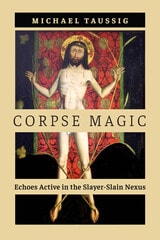
Corpse Magic
Echoes Active in the Slayer-Slain NexusMichael Taussig
University of Chicago Press, 2025
Corpse Magic is a response to the global ubiquity of violence. In this bracing new work, the influential anthropologist Michael Taussig puts killings in Colombia, by gangs and guerrillas, police and the military, and agents of agribusiness, in conversation with mass shootings and police killings, disproportionately of Black people, in the United States. In both contexts, he examines the effects of violent killing on its victims, its perpetrators, and those who witness and relive it through media footage.
Drawing from literature, religion, philosophy, and anthropology, Taussig traces the idea that the act of killing “infects” the killer and spreads outward, then connects this concept of contagion to beliefs in Colombia and elsewhere that the souls of the slain possess those of their slayers and that magic can be used to empower or thwart corpses as agents of vengeance. In this powerful and imaginative work, Taussig asks what kind of power the dead continue to have; what kinds of magic can manage that power; and what, if anything, can stop seemingly endless cycles of violence.
Criminalization of Women
Abortion, Inequity, and Resistance in ChileMichele Eggers-Barison
University of Illinois Press, 2025
Eggers-Barison uncovers the narratives of economically disadvantaged, Indigenous, and immigrant women who broke the Chilean law by terminating a pregnancy. Their stories reveal how laws and policies that regulate and control women’s reproductive lives also construct women as criminals. As Eggers-Barison shows, systems of inequality legitimize and sustain harmful attitudes and practices while creating concrete expressions of discrimination and other forms of violence against women. Their experience with abortion remains hidden within spaces of illegality and only becomes visible due to health or legal consequences. Yet despite the obstacles, women used individual and collective forms of group action to resist anti-abortion laws.
Timely and vivid, Criminalization of Women shows how abortion’s illegality inscribes itself on a woman’s body and reality.
Cuban Underground Hip Hop
Black Thoughts, Black Revolution, Black ModernityBy Tanya L. Saunders
University of Texas Press, 2015
Honorable Mention, Barbara T. Christian Literary Award, Caribbean Studies Association, 2017
In the wake of the 1959 Cuban Revolution, a key state ideology developed: racism was a systemic cultural issue that ceased to exist after the Revolution, and any racism that did persist was a result of contained cases of individual prejudice perpetuated by US influence. Even after the state officially pronounced the end of racism within its borders, social inequalities tied to racism, sexism, and homophobia endured, and, during the economic liberalization of the 1990s, widespread economic disparities began to reemerge.
Cuban Underground Hip Hop focuses on a group of self-described antiracist, revolutionary youth who initiated a social movement (1996–2006) to educate and fight against these inequalities through the use of arts-based political activism intended to spur debate and enact social change. Their “revolution” was manifest in altering individual and collective consciousness by critiquing nearly all aspects of social and economic life tied to colonial legacies. Using over a decade of research and interviews with those directly involved, Tanya L. Saunders traces the history of the movement from its inception and the national and international debates that it spawned to the exodus of these activists/artists from Cuba and the creative vacuum they left behind. Shedding light on identity politics, race, sexuality, and gender in Cuba and the Americas, Cuban Underground Hip Hop is a valuable case study of a social movement that is a part of Cuba’s longer historical process of decolonization.
Culinary Colonialism, Caribbean Cookbooks, and Recipes for National Independence
Keja L. Valens
Rutgers University Press, 2024