Results by title
501 books match the query 'Catholic Church' and 41 start with c
Cajetan on Sacred Doctrine
Hieromonk Gregory Hrynkiw
Catholic University of America Press, 2020
Called to Holiness
Pope Emeritus Benedict XVI Pope Emeritus Benedict XVI
Catholic University of America Press, 2017
Canon Law and Cloistered Women
Periculoso and Its Commentators, 1298–1545 (Studies in Medieval and Early Modern Canon Law, Volume 5)Elizabeth Makowski
Catholic University of America Press, 1997
ABOUT THE AUTHOR: Elizabeth Makowski is associate professor of history at Southwest Texas State University. She is the coauthor of Wykked Wyves and the Woes of Marriage: Misogamous Literature from Juvenal to Chaucer (SUNY Press, 1989) and the author of numerous articles and book reviews. PRAISE FOR THE BOOK: "This is a significant contribution to the study of female monasticism. . . . Makowski's work is a welcome effort to understand the monastic discipline of enclosure and its application to convents. . . . What Makowski does in this fine study is to help scholars understand what [Periculoso] meant, both in the context in which it was fashioned and in the world of subsequent commentary. . . . An important book that should be required reading for all scholars of male and female monasticism."—Sixteenth Century Journal
"This is a clearly written survey of the decree and of medieval commentaries on it up to the Council of Trent. It will be of interest to historians both of legal and social history as well as throwing light upon the background of a much debated topic among religious orders."—English Historical Review "[The] work is well-written, contains helpful information on the topic in context, and should be a useful resource for those interested in this historical era as well as for those intrigued by the institutional Church's less than even-handed treatment of cloistered contemplative women through the centuries."—Studia Canonica "The clearly written survey of legal commentary on Periculoso is this book's greatest contribution. Even technical points of law are explained with sufficient clarity, so that the matters at issue can be understood even by one who is not a specialist in mediaeval canon law."—Ecclesiastical Law Journal
"This study provides insight into the way in which the leaders of the late medieval Church dealt with what they saw as the threat that women's spirituality posed to the Church and how to control it. To that extent alone, it is a valuable contribution to scholarship."—Catholic Historical Review
"Makowski has explored the comment
Canon Law, Religion, and Politics
"Liber Amicorum" Robert SomervilleUta-Renate Blumenthal
Catholic University of America Press, 2012
Catechesis for the New Evangelization
Vatican II, John Paul II, and the Unity of Revelation and ExperienceBrian Pedraza
Catholic University of America Press, 2020

Catholic Collecting
Catholic Reflection 1538-1850: Objects as a Measure of Reflection on a Catholic Past and the Construction of Recusant Identity in England and AmericaVirginia C. Raguin
Catholic University of America Press, 2006
Catholic Dogmatic Theology
A Synthesis, Book 3: On the Church and the SacramentsJean-Herve Nicolas
Catholic University of America Press, 2024
Catholic Dogmatic Theology
A Synthesis: Book 1, On the Trinitarian Mystery of GodJean Herve Nicolas, OP
Catholic University of America Press, 2021
Catholic Dogmatic Theology
A Synthesis: Book 2: On the Incarnation and RedemptionJean-Herve Nicolas
Catholic University of America Press, 2022
Catholic Dogmatic Theology
A Synthesis: Book 4: On Creation and the CreatorJean-Herve Nicolas, OP, Jean-Herve
Catholic University of America Press, 2024
Catholic Labor Movements in Europe
Paul Misner
Catholic University of America Press, 2015
Catholic Lives, Contemporary America
Thomas J. Ferraro, ed.
Duke University Press, 1997
Edited and with an introduction by Thomas J. Ferraro, Catholic Lives, Contemporary America offers a banquet of essays and interviews, at once subtle and accessible, treating American Catholic lives and legacies with compassion and flair.
Contributors. Patrick Allitt, Paul Crowley, Thomas J. Ferraro, James T. Fisher, Paul Giles, Mary Gordon, Stanley Hauerwas, Frank Lentricchia, Robert A. Orsi, Camille Paglia, David Plante, Richard Rodriguez, Kathy Rudy, Andrew Sullivan, Mary Jo Weaver
Catholic Modernism and the Irish "Avant-Garde
" The Achievement of Brian Coffey, Denis Devlin, and Thomas MacGreeveyJames Matthew Wilson
Catholic University of America Press, 2023
Catholic Social Teaching
Mary Hobgood
Temple University Press, 1991
Catholicism and Liberal Democracy
Forgotten Roots and Future ProspectsJames Martin Carr
Catholic University of America Press, 2022
Catholicism and Politics in Communist Societies
Pedro Ramet, ed.
Duke University Press, 1990
Catholicism has, on the one hand, traditionally regarded earthly life as of secondary importance—as an instrument of spiritual transformation—and, on the other, has ascribed great value to the early institutions of the church, taking great interest in temporal matters that affects its institutional concerns. Against the backdrop of this duality, the church has changed over the centuries, adapting to local and national conditions. Catholicism and Politics in Communist Societies surveys these local and national adaptations in their historical contexts, linking the past experience of the church to its present circumstances. Organized around themes of tradition vs. modernity, hierarchy vs. lower clergy, and institutional structure vs. grass-roots organization, this comprehensive volume presents a detailed, country-by-country portrait of the political and social status of the church today in communist and socialist settings.
Contributors. Pedro Ramet, Arthur F. McGovern, Roman Solchanyk, Ivan Hvat, Robert F. Goeckel, C. Chrypinski, Milan J. Reban, Leslie Laszlo, Janice Broun, Eric O. Hanson, Stephen Denney, Thomas E. Quigley, Humberto Belli, Hansjakob Stehle, George H. Williams
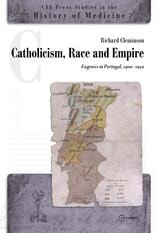
Catholicism, Race and Empire
Eugenics in Portugal, 1900-1950Richard Cleminson
Central European University Press, 2014
Catholics and Jews in Twentieth-Century America
Egal Feldman
University of Illinois Press, 2006
Focusing primarily on the Catholic doctrinal view of the Jews and its ramifications, Egal Feldman traces the historicalroots of anti-Semitism, examining tenacious Catholic beliefsincluding the idea that the Jews lost their place as the chosen people with the coming of Christianity, deicide, and the conviction that their purported responsibility for the Crucifixion justified subsequent Jewish misery.
A new era of Catholic-Jewish relations opened in 1962 with Vatican II’s Declaration on the Jews, reversing the theology of contempt. Feldman explores the strides made in improving relations, such as the Vatican’s diplomatic recognition of the Jewish state, as well as a number of recent issues.
Changing Unjust Laws Justly
Pro-Life Solidarity with "The Last and Least"Colin Harte
Catholic University of America Press, 2005
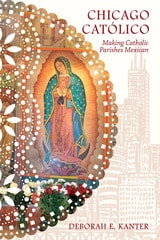
Chicago Católico
Making Catholic Parishes MexicanDeborah E. Kanter
University of Illinois Press, 2020
Deborah E. Kanter tells the story of neighborhood change and rebirth in Chicago's Mexican American communities. She unveils a vibrant history of Mexican American and Mexican immigrant relations as remembered by laity and clergy, schoolchildren and their female religious teachers, parish athletes and coaches, European American neighbors, and from the immigrant women who organized as guadalupanas and their husbands who took part in the Holy Name Society. Kanter shows how the newly arrived mixed memories of home into learning the ways of Chicago to create new identities. In an ever-evolving city, Mexican immigrants and Mexican Americans’ fierce devotion to their churches transformed neighborhoods such as Pilsen.
The first-ever study of Mexican-descent Catholicism in the city, Chicago Católico illuminates a previously unexplored facet of the urban past and provides present-day lessons for American communities undergoing ethnic integration and succession.
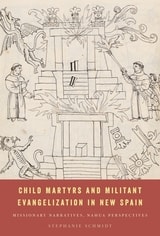
Child Martyrs and Militant Evangelization in New Spain
Missionary Narratives, Nahua PerspectivesStephanie Schmidt
University of Texas Press, 2025
Examines the many iterations of a story of child martyrdom in colonial Mexico.
A cornerstone of the evangelization of early New Spain was the conversion of Nahua boys, especially the children of elites. They were to be emissaries between Nahua society and foreign missionaries, hastening the transmission of the gospel. Under the tutelage of Franciscan friars, the boys also learned to act with militant zeal. They sermonized and smashed sacred objects. Some went so far as to kill a Nahua religious leader. For three boys from Tlaxcala, the reprisals were just as deadly.
In Child Martyrs and Militant Evangelization in New Spain, Stephanie Schmidt sheds light on a rare manuscript about Nahua child converts who were killed for acts of zealotry during the late 1520s. This is the Nahuatl version of an account by an early missionary-friar, Toribio de Benavente Motolinía. To this day, Catholics venerate the slain boys as Christian martyrs who suffered for their piety. Yet Franciscan accounts of the boys’ sacrifice were influenced by ulterior motives, as the friars sought to deflect attention from their missteps in New Spain. Illuminating Nahua perspectives on this story and period, Schmidt leaves no doubt as to who drove this violence as she dramatically expands the knowledgebase available to students of colonial Latin America.
Christ Our Hope
An Introduction to EschatologyPaul O'Callaghan
Catholic University of America Press, 2011
Christ and Spirituality in St. Thomas Aquinas
Jean-Pierre Torrell
Catholic University of America Press, 2011
Christian faith & human understanding
studies on the Eucharist, Trinity, and the human personRobert Sokolowski
Catholic University of America Press, 2006
Church and Communion
An Introduction to Ecumenical Theology, Second EditionPhilip Goyret
Catholic University of America Press, 2021
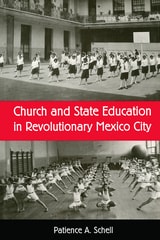
Church and State Education in Revolutionary Mexico City
Patience A. Schell
University of Arizona Press, 2003
Church, State, and Society
An Introduction to Catholic Social DoctrineJ. Brian Benestad
Catholic University of America Press, 2011
Church, State, and Society
An Introduction to Catholic Social Doctrine, Second EditionJ. Brian Benestad
Catholic University of America Press, 2025
Churches and Charity in the Immigrant City
Religion, Immigration, and Civic Engagement in MiamiStepick, Alex
Rutgers University Press, 2009
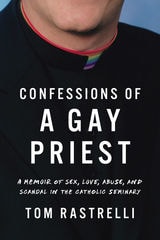
Confessions of a Gay Priest
A Memoir of Sex, Love, Abuse, and Scandal in the Catholic SeminaryTom Rastrelli
University of Iowa Press, 2020
Tom Rastrelli is a survivor of clergy-perpetrated sexual abuse who then became a priest in the early days of the Catholic Church’s ongoing scandals. Confessions of a Gay Priest divulges the clandestine inner workings of the seminary, providing an intimate and unapologetic look into the psychosexual and spiritual dynamics of celibacy and lays bare the “formation” system that perpetuates the cycle of abuse and cover-up that continues today.
Under the guidance of a charismatic college campus minister, Rastrelli sought to reconcile his homosexuality and childhood sexual abuse. When he felt called to the priesthood, Rastrelli began the process of “priestly discernment.” Priests welcomed him into a confusing clerical culture where public displays of piety, celibacy, and homophobia masked a closeted underworld in which elder priests preyed upon young recruits.
From there he ventured deeper into the seminary system seeking healing, hoping to help others, and striving not to live a double life. Trained to treat sexuality like an addiction, he and his brother seminarians lived in a world of cliques, competition, self-loathing, alcohol, hidden crushes, and closeted sex. Ultimately, the “formation” intended to make Rastrelli a compliant priest helped to liberate him.
Consensual Incapacity to Marry
Catherine Godfrey-Howell
St. Augustine's Press, 2019
The anthropology that supports marriage perceives justice to be a particular reality, and for this reason marriage will always be a subject of law and of great interest to jurists and sociologists alike. With respect to the realization of justice in marriage, understood as the moment the bond is created, Catholic ecclesiology and canon law articulate an original legal category––namely, the consensual incapacity to marry. In the last fifty years, however, and despite the juridical innovations provided by the current Code of Canon Law promulgated in 1983, American canonical practice in the sphere of marriage law has lost its foundation. The consequences of this include mechanisms of judgment that are rendered incoherent although not inactive, particularly in local tribunals reviewing claims of marriage nullity. In other words, the application of law in the Catholic Church moves forward without a clear indication of its anthropological basis. Canon law, then, on the issue of marriage is perceived to be purposefully oppressive or absolutely meaningless.
Jurists, scholars, and members of the Roman Curia acknowledge that, more than a general response to this crisis of law and marriage, what might be needed most is greater scrutiny of the canon in which the formula for consensual incapacity appears. It is furthermore acknowledged that American canonical practice is perhaps the most influential in the world, and is responsible for shaping and sustaining the global attention given to this issue. To fully grasp the crisis and the best way forward, a profile of this canon in American jurisprudence is fundamental and demanded presently. The new course charted by canonical studies and formation of jurists, as well as the new developments in ecclesiastical legislation, will find guidance in this study provided by Catherine Godfrey-Howell, and further insight in the foreword given by the American Cardinal prelate and former Prefect of the Apostolic Signatura, Raymond Leo Cardinal Burke.
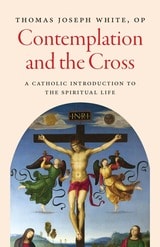
Contemplation and the Cross
A Catholic Introduction to the Spiritual LifeThomas Joseph White, OP
Catholic University of America Press, 2025
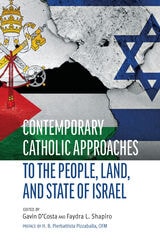
Contemporary Catholic Approaches to the People, State, and Land of Israel
Gavin D'Costa
Catholic University of America Press, 2021
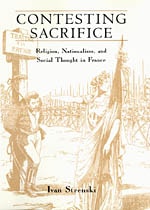
Contesting Sacrifice
Religion, Nationalism, and Social Thought in FranceIvan Strenski
University of Chicago Press, 2002
Strenski suggests that the annihilating spirituality rooted in the Catholic model of Eucharistic sacrifice persuaded the judges in the Dreyfus Case to overlook or play down his possible innocence because a scapegoat was needed to expiate the sins of France and save its army from disgrace. Strenski also suggests that the French army's strategy in World War I, French fascism, and debates over public education and civic morals during the Third Republic all owe much to Catholic theology of sacrifice and Protestant reinterpretations of it. Pointing out that every major theorist of sacrifice is French, including Bataille, Durkheim, Girard, Hubert, and Mauss, Strenski argues that we cannot fully understand their work without first taking into account the deep roots of sacrificial thought in French history.
Contraception and Persecution
Charles E. Rice
St. Augustine's Press, 2014
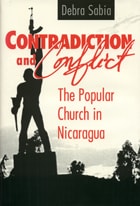
Contradiction and Conflict
The Popular Church in NicaraguaDebra Sabia
University of Alabama Press, 2013
Debra Sabia describes and analyzes the rise, growth, and fragmentation of the popular church and assesses the effect of the Christian base communities on religion, politics, and the nation's social revolutionary experiment.
Controversial Concordats
The Vatican's Relations with Napoleon, Mussolini, and HitlerFrank J. Coppa
Catholic University of America Press, 1999
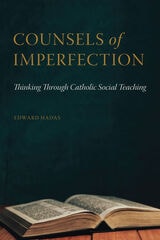
Counsels of Imperfection
Thinking Through Catholic Social TeachingEdward Hadas
Catholic University of America Press, 2021
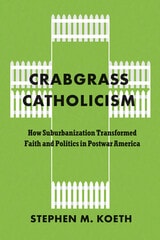
Crabgrass Catholicism
How Suburbanization Transformed Faith and Politics in Postwar AmericaStephen M. Koeth
University of Chicago Press, 2025
The 1960s in America were a time of revolt against the stifling conformism embodied in the sprawling, uniform suburbs of the 1950s. Typically, the reforms of the Catholic Church’s Second Vatican Council, which aimed to make the Church more modern and accessible, are seen as one result of that broader cultural liberalization. Yet in Crabgrass Catholicism, Stephen M. Koeth demonstrates that the liberalization of the Church was instead the product of the mass suburbanization that began some fifteen years earlier. Koeth argues that postwar suburbanization revolutionized the Catholic parish, the relationship between clergy and laity, conceptions of parochial education, and Catholic participation in US politics, and thereby was a significant factor in the religious disaffiliation that only accelerated in subsequent decades.
A novel exploration of the role of Catholics in postwar suburbanization, Crabgrass Catholicism will be of particular interest to urban historians, scholars of American Catholicism and religious studies, and Catholic clergy and laity.
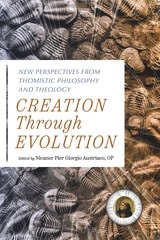
Creation through Evolution
New Perspectives from Thomistic Theology and PhilosophyNicanor Pier Giorgio Austriaco
Catholic University of America Press, 2025
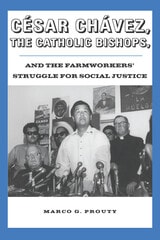
César Chávez, the Catholic Bishops, and the Farmworkers’ Struggle for Social Justice
Marco G. Prouty
University of Arizona Press, 2006