208 books match the query 'Christian Church' and 15 start with c
cover of Canon Law in the Age of Reforms (c. 1000 to c. 1150)

Canon Law in the Age of Reforms (c. 1000 to c. 1150)

Christof Rolker

Catholic University of America Press, 2023
This monograph addresses the history of canon law in Western Europe between ca. 1000 and ca. 1150, specifically the collections compiled and the councils held in that time. The main part consists of an analysis of all major collections, taking into account their formal and material sources, the social and political context of their origin, the manuscript transmission, and their reception more generally. As most collections are not available in reliable editions, a considerable part of the discussion involves the analysis of medieval manuscripts. Specialized research is available for many but not all these works, but tends to be scattered across miscellaneous publications in English, German, French, Italian, and Spanish; one purpose of the book is thus to provide relatively uniform, up-to-date accounts of all major collections of the period. At the same time, the book argues that the collections are much more directly influenced by the social milieux from which they emerged, and that more groups were involved in the development of high medieval canon law than it has previously been thought. In particular, the book seeks to replace the still widely held belief that the development of canon law in the century before Gratian’s Decretum (ca. 1140) was largely driven by the Reform papacy. Instead, it is crucial to take into account the contribution of bishops, monks, and other groups with often conflicting interests. Put briefly, local needs and conflicts played a considerably more important role than central (papal) ‘reform’, on which older scholarship has largely focused.
[more]
cover of Canon Law, Religion, and Politics: "Liber Amicorum" Robert Somerville

Canon Law, Religion, and Politics

"Liber Amicorum" Robert Somerville

Uta-Renate Blumenthal

Catholic University of America Press, 2012

Canon Law, Religion, and Politics extends and honors the work of the distinguished historian Robert Somerville, a preeminent expert on medieval church councils, law, and papal history.
[more]
cover of Canonical Collections of the Early Middle Ages (ca. 400-1400)

Canonical Collections of the Early Middle Ages (ca. 400-1400)

Lotte Kery

Catholic University of America Press, 1999
[more]
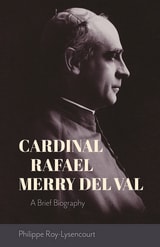
cover of Cardinal Rafael Merry del Val

Cardinal Rafael Merry del Val

Philippe Roy-Lysencourt

Catholic University of America Press, 2021
Rafael Merry del Val (1865-1930) was a cardinal of the Roman Catholic Church who had one of the most dazzling careers in ecclesiastical history: he was a secret supernumerary chamberlain at the age of 21, a secret participating chamberlain at the age of 26, an apostolic delegate to Canada at age 31, president of the Academy of Ecclesiastical Nobles and archbishop at age 34, secretary of state for Pius X (1903-1914) and cardinal at age 38, archpriest of St. Peter’s Basilica and prefect of the Fabric of St. Peter at age 48, secretary of the Congregation of the Holy Office at age 49. In 1953, his beatification process was introduced to the Congregation for Rites. In this study, Philippe Roy-Lysencourt presents the life of this personage, his curial charges, his relations with the popes he served (Leo XIII, Pius X, Benedict XV, and Pius XI), his apostolate, his unexpected death and the furor it caused. The book includes an inventory of sources for understanding Cardinal Merry del Val’s life, a list of his published writings, as well as a bibliography of the works written about him.
[more]
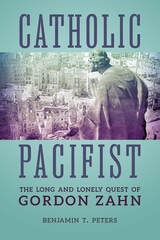
cover of Catholic Pacifist: The Long and Lonely Quest of Gordon Zahn

Catholic Pacifist

The Long and Lonely Quest of Gordon Zahn

Benjamin Peters

Catholic University of America Press, 2026
A study of the life and work of Gordon Zahn (1918-2007), one of the most significant and formative figures in the history of the US Catholic peace movement. During World War II, Zahn was one of only a handful of US Catholic conscientious objectors, an experience that first put him in contact with Dorothy Day and the Catholic Worker. Following the war, Zahn completed a PhD in sociology at The Catholic University of America where Paul Hanly Furfey’s “supernatural sociology” had a profound effect on him. After joining the faculty at Loyola University, Chicago, Zahn won a Fulbright year in Germany (1956-57) where he discovered the story of Franz Jägerstätter, the Austrian Catholic farmer, husband, and father who was beheaded by the Nazis in 1943 for refusing to participate in Hitler’s military. It was Zahn’s 1964 book In Solitary Witness that introduced Jägerstätter to an international audience and led to his beatification by Pope Benedict XVI in 2007. This work, along with Zahn’s several other books, secured his place as a leading intellectual in the Catholic peace movement. His work influenced the discussions of war and peace at the Second Vatican Council and he was enlisted as an expert witness during the drafting of the US Catholic Bishops’ pastoral letter on nuclear weapons, The Challenge of Peace (1983). Zahn made one of the most intellectually developed cases in the US for "Catholic pacifism"—two terms that both Catholics and pacifists had long regarded as deeply incompatible. Forging a Catholic pacifist position led him to be far more perceptive and critical of US political and military institutions than most of fellow US Catholics. Ultimately, Zahn saw the Catholic Church as the only institution capable of resisting, and support those who resist, modern warfare and the modern war-making state. His traditional view of the Church grounded his claim that Catholics can be pacifist and his further assertion that the Church should serve as a “source of dissent” for Catholics and others, especially during times of war. While marginalized within the broader US Catholic intellectual community, Zahn found common cause with other Catholic luminaries who are now seen to be ahead of their time, including Dorothy Day, Thomas Merton, and Daniel Berrigan. Gordon Zahn’s story serves as a template for telling the broader story of the US Catholic peace movement and the development of Catholic attitudes on war and conscientious objection that took place within the twentieth century.
[more]
cover of Christian Circulations: Global Christianity and the Local Church in Penang and Singapore, 1819-2000

Christian Circulations

Global Christianity and the Local Church in Penang and Singapore, 1819-2000

Jean DeBernardi

National University of Singapore Press, 2020
In postcolonial Singapore and Malaysia, Pentecostal megachurches dominate the Christian landscape, but the "big four" Protestant churches—Anglican, Methodist, Presbyterian, and Brethren—remain religions of heritage for many. Sixty Malaysian and nineteen Singaporean assemblies identify themselves as Christian Brethren, and most trace their roots to independent local churches formed in Penang and Singapore in the 1860s. After World War II, the Brethren promoted new forms of evangelical practice, and former Brethren elders founded independent churches, from charismatic local churches to Pentecostal megachurches. This study is a transregional history of the Brethren movement and its emplacement in Singapore and Malaysia, and it is also a history of discontinuous continuities that have shaped the modern field of religious practice in China and Southeast Asia.
 
[more]
cover of Christians and Muslims in Early Islamic Egypt

Christians and Muslims in Early Islamic Egypt

Lajos Berkes, Editor

University of Michigan Press, 2022

This volume collects studies exploring the relationship of Christians and Muslims in everyday life in Early Islamic Egypt (642–10th c.) focusing mainly, but not exclusively on administrative and social history. The contributions concentrate on the papyrological documentation preserved in Greek, Coptic, and Arabic. By doing so, this book transcends traditional disciplinary boundaries and offers results based on a holistic view of the documentary material. The articles of this volume discuss various aspects of change and continuity from Byzantine to Islamic Egypt and offer also the (re)edition of 23 papyrus documents in Greek, Coptic, and Arabic. The authors provide a showcase of recent papyrological research on this under-studied, but dynamically evolving field.

After an introduction by the editor of the volume that outlines the most important trends and developments of the period, the first two essays shed light on Egypt as part of the Caliphate. The following six articles, the bulk of the volume, deal with the interaction and involvement of the Egyptian population with the new Muslim administrative apparatus. The last three studies of the volume focus on naming practices and language change.
[more]
cover of Collectio CCCC capituloru, The Collection in 400 Chapters: Introduction and Text

Collectio CCCC capituloru, The Collection in 400 Chapters

Introduction and Text

Sven Meeder

Catholic University of America Press, 2024
Surviving in three ninth-century manuscripts, the collection of canon law known as the Collectio 400 capitulorum is a remarkable and understudied witness to the scholarly vitality of the Carolingian period. Its 404 chapters offer ecclesiastical rules and moral guidelines taken from an unusually wide variety of authoritative sources. In addition to the customary canonical texts, such as the acts of the ecumenical councils and papal letters, the compiler of this collection drew his canons from the bible, Roman law, local Gallic synods, the Church Fathers, as well as Frankish and Insular penitential works. Although the Collectio 400 capitulorum is a so-called systematic collection, eminent scholars of canon law commented on its lack of structure. Even ‘with the best will in the world’, the collection’s system eluded them. Despite its flaws, however, there is evidence that the collection gained some popularity in the ninth century, apparently providing the basis for the Poenitentiale Martenianum, directly or indirectly influencing Hrabanus Maurus and Benedictus Levita. The ninth-century appreciation is understandable for, as one of the many products of the vigorous canonical activity of the eighth and ninth centuries, the Collectio 400 capitulorum impresses in its handling of the canonical material as well as the breadth of sources and the topics covered. This book constitutes the first in-depth study of this intriguing canonical collection, with a detailed description of the extant manuscript witnesses, its sources, and its influence. The critical edition offers scholars of the early Middle Ages in general and canon law in particular access to an instructive, if unpolished, product of Carolingian legal thought.
[more]
cover of Colors and Textures of Roman North Africa: Essays in Memory of Maureen A. Tilley

Colors and Textures of Roman North Africa

Essays in Memory of Maureen A. Tilley

Elizabeth A. Clark

Catholic University of America Press, 2023
This book serves two purposes: first, it celebrates the career of the late Maureen Tilley; second, it provides a “state of the field” look at some of the latest scholarship on Christian North Africa in late antiquity. The chapters, written by both senior scholars and the next generation of North African researchers, fills gaps in some of our understandings of the colorful people, places, and disputes that arose in the unique environment of Christian North Africa. The book centers around Augustine, Donatist studies, and North African biblical interpretation, representing Tilley’s major areas of interest, while also ensuring coverage of Tertullian (a major figure in the North African church and one of Tilley’s hobbyhorses) and the pilgrimages to North Africa and other places. It contributes to the field(s) by providing new scholarship from some of the biggest names in Christian North Africa studies (Patout Burns, Robin Jensen, Bill Tabbernee, Anthony Dupont, and Allan Fitzgerald) and in Patristic/early Christian studies writ large (Blake Leyerle and Geoffrey Dunn) while demonstrating the new trajectories of Christian North Africa research from early career (Alden Bass) and emerging (Colum Dever) scholars. The editors were Tilley’s dissertation director (the late Liz Clark) and one of her last mentees (Zach Smith), so the entire collection has a meta-view of academic genealogy – knowledge flowing from Tilley’s mentor, through colleagues and mentees, and down through and to the next generation who carry on those legacies.
[more]
cover of Conflict and Negotiation in the Early Church: Letters from Late Antiquity, Translated from the Greek, Latin, and Syriac

Conflict and Negotiation in the Early Church

Letters from Late Antiquity, Translated from the Greek, Latin, and Syriac

Bronwen Neil

Catholic University of America Press, 2020

Recent decades have seen great progress made in scholarship towards understanding the major civic role played by bishops of the eastern and western churches of Late Antiquity. Brownen Neil and Pauline Allen explore and evaluate one aspect of this civic role, the negotiation of religious conflict.

Conflict and Negotiation in the Early Church focuses on the period 500 to 700 CE, one of the least documented periods in the history of the church, but also one of the most formative, whose conflicts resonate still in contemporary Christian communities, especially in the Middle East.

To uncover the hidden history of this period and its theological controversies, Neil and Allen have tapped a little known written source, the letters that were exchanged by bishops, emperors and other civic leaders of the sixth and seventh centuries. This was an era of crisis for the Byzantine empire, at war first with Persia, and then with the Arab forces united under the new faith of Islam. Official letters were used by the churches of Rome and Constantinople to pursue and defend their claims to universal and local authority, a constant source of conflict. As well as the east-west struggle, Christological disagreements with the Syrian church demanded increasing attention from the episcopal and imperial rulers in Constantinople, even as Rome set itself adrift and looked to the West for new allies.

From this troubled period, 1500 letters survive in Greek, Latin, and Syriac. With translations of a number of these, many rendered into English for the first time, Conflict and Negotiation in the Early Church examines the ways in which diplomatic relations between churches were developed, and in some cases hindered or even permanently ruptured, through letter-exchange at the end of Late Antiquity.
[more]
cover of Consensual Incapacity to Marry

Consensual Incapacity to Marry

Catherine Godfrey-Howell

St. Augustine's Press, 2019

The anthropology that supports marriage perceives justice to be a particular reality, and for this reason marriage will always be a subject of law and of great interest to jurists and sociologists alike. With respect to the realization of justice in marriage, understood as the moment the bond is created, Catholic ecclesiology and canon law articulate an original legal category––namely, the consensual incapacity to marry.  In the last fifty years, however, and despite the juridical innovations provided by the current Code of Canon Law promulgated in 1983, American canonical practice in the sphere of marriage law has lost its foundation. The consequences of this include mechanisms of judgment that are rendered incoherent although not inactive, particularly in local tribunals reviewing claims of marriage nullity. In other words, the application of law in the Catholic Church moves forward without a clear indication of its anthropological basis. Canon law, then, on the issue of marriage is perceived to be purposefully oppressive or absolutely meaningless.

 Jurists, scholars, and members of the Roman Curia acknowledge that, more than a general response to this crisis of law and marriage, what might be needed most is greater scrutiny of the canon in which the formula for consensual incapacity appears. It is furthermore acknowledged that American canonical practice is perhaps the most influential in the world, and is responsible for shaping and sustaining the global attention given to this issue. To fully grasp the crisis and the best way forward, a profile of this canon in American jurisprudence is fundamental and demanded presently. The new course charted by canonical studies and formation of jurists, as well as the new developments in ecclesiastical legislation, will find guidance in this study provided by Catherine Godfrey-Howell, and further insight in the foreword given by the American Cardinal prelate and former Prefect of the Apostolic Signatura, Raymond Leo Cardinal Burke.
[more]
cover of Cosmas of Prague: The Chronicle of the Czechs

Cosmas of Prague

The Chronicle of the Czechs

Petra Mutlová

Central European University Press, 2020

The Latin-English bilingual volume presents the text of The Chronicle of the Czechs by Cosmas of Prague. Cosmas was born around 1045, educated in Liège, upon his return to Bohemia, he got married as well as became a priest. In 1086 he was appointed prebendary, a senior member of clergy in Prague. He completed the first book of the Chronicle in 1119, starting with the creation of the world and the earliest deeds of the Czechs up to Saint Adalbert. In the second and third books Cosmas presents the preceding century in the history of Bohemia, and succeeds in reporting about events up to 1125, the year when he died.


The English translation was done by Petra Mutlova and Martyn Rady with the cooperation of Libor Švanda. The introduction and the explanatory notes were written by Jan Hasil with the cooperation of Irene van Rensvoude.T
[more]
cover of Crabgrass Catholicism: How Suburbanization Transformed Faith and Politics in Postwar America

Crabgrass Catholicism

How Suburbanization Transformed Faith and Politics in Postwar America

Stephen M. Koeth

University of Chicago Press, 2025

How suburbanization was a crucial catalyst for reforms in the Catholic Church.
 
The 1960s in America were a time of revolt against the stifling conformism embodied in the sprawling, uniform suburbs of the 1950s. Typically, the reforms of the Catholic Church’s Second Vatican Council, which aimed to make the Church more modern and accessible, are seen as one result of that broader cultural liberalization. Yet in Crabgrass Catholicism, Stephen M. Koeth demonstrates that the liberalization of the Church was instead the product of the mass suburbanization that began some fifteen years earlier. Koeth argues that postwar suburbanization revolutionized the Catholic parish, the relationship between clergy and laity, conceptions of parochial education, and Catholic participation in US politics, and thereby was a significant factor in the religious disaffiliation that only accelerated in subsequent decades.

A novel exploration of the role of Catholics in postwar suburbanization, Crabgrass Catholicism will be of particular interest to urban historians, scholars of American Catholicism and religious studies, and Catholic clergy and laity.
 
[more]
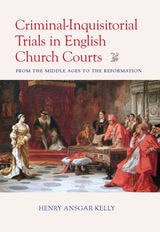
cover of Criminal-Inquisitorial Trials in English Church Trials: From the Middle Ages to the Reformation

Criminal-Inquisitorial Trials in English Church Trials

From the Middle Ages to the Reformation

Henry Ansgar Kelly

Catholic University of America Press, 2023
After inquisitorial procedure was introduced at the Fourth Lateran Council in Rome in 1215 (the same year as England’s first Magna Carta), virtually all court trials initiated by bishops and their subordinates were inquisitions. That meant that accusers were no longer needed. Rather, the judges themselves leveled charges against persons when they were publicly suspected of specific offenses—like fornication, or witchcraft, or simony. Secret crimes were off limits, including sins of thought (like holding a heretical belief). Defendants were allowed full defenses if they denied charges. These canonical rules were systematically violated by heresy inquisitors in France and elsewhere, especially by forcing self-incrimination. But in England, due process was generally honored and the rights of defendants preserved, though with notable exceptions. In this book, Henry Ansgar Kelly, a noted forensic historian, describes the reception and application of inquisition in England from the thirteenth century onwards and analyzes all levels of trial proceedings, both minor and major, from accusations of sexual offenses and cheating on tithes to matters of religious dissent. He covers the trials of the Knights Templar early in the fourteenth century and the prosecutions of followers of John Wyclif at the end of the century. He details how the alleged crimes of “criminous clerics” were handled, and demonstrates that the judicial actions concerning Henry VIII’s marriages were inquisitions in which the king himself and his queens were defendants. Trials of Alice Kyteler, Margery Kempe, Eleanor Cobham, and Anne Askew are explained, as are the unjust trials condemning Bishop Reginald Pecock of error and heresy (1457-59) and Richard Hunne for defending English Bibles (1514). He deals with the trials of Lutheran dissidents at the time of Thomas More’s chancellorship, and trials of bishops under Edward VI and Queen Mary, including those against Stephen Gardiner and Thomas Cranmer. Under Queen Elizabeth, Kelly shows, there was a return to the letter of papal canon law (which was not true of the papal curia). In his conclusion he responds to the strictures of Sir John Baker against inquisitorial procedure, and argues that it compares favorably to the common-law trial by jury.
[more]
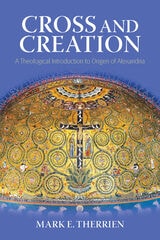
cover of Cross and Creation: A Theological Introduction to Origen of Alexandria

Cross and Creation

A Theological Introduction to Origen of Alexandria

Mark E. Therrien

Catholic University of America Press, 2022

Even though the theology of Origen of Alexandria has shaped the Christian Tradition in almost every way, the controversies over his legacy have been seemingly endless. One major interpretative trend, for example, has suggested Origen’s theology is really akin to the heterodox Gnostics against whom he wrote than the actual teaching of the Gospel, since he (supposedly) had a disdainful attitude towards Creation and ultimately saw little redemptive meaning in the Passion. In Cross and Creation: A Theological Introduction to Origen of Alexandria, Mark Therrien offers an original interpretation of Origen’s theology. Focusing on some of Origen’s most important works (especially On First Principles and the Commentary on John, but ultimately making reference to his writings more broadly), this book retrieves and examines some of the foundational pillars of Origen’s theology through close readings and re-examinations of those texts. It examines eight of these theological foundations: God, Christ, the Holy Spirit, the end, the soul, the world, the cross, and deification. Moreover, by showing the connections between Origen’s understanding of these foundational pillars, it also shows the coherence of his theology as a whole. Taken collectively, what emerges from these eight chapters is that two doctrines specially shape Origen’s theology: Cross and Creation. As Therrien shows, Origen did not hold contempt for Creation. Rather, Origen thinks that Creation emerges from the very life of God as eternally foreknown and provided for in the person of Christ, the Wisdom of God the Father. Moreover, he also holds that, though fallen, Creation will be restored according to its original, eternal intention in God precisely through the Passion of Jesus Christ on the Cross. The Cross is thus not minimalized in Origen’s theology; it is rather its very center.
[more]