Results by title
303 books match the query 'Church history' and 26 start with c

Cane Ridge
America's PentecostPaul K. Conkin
University of Wisconsin Press, 1990
Paul Conkin tells the story of Cane Ridge in all its dimensions. The backdrop involves the convoluted history of Scotch-Irish Presbyterianism in America, the pluralistic religious environment in early Kentucky, and the gradual evolution of a new form of evangelical religious culture in eighteenth-century America.
The aftermath was complex. Cane Ridge helped popularize religious camps and influenced the subsequent development of planned camp meetings. It exposed deep and developing divisions of doctrine among Presbyterian clergy, and contributed to the birth of two new denominations —Christians (Disciples of Christ) and Cumberland Presbyterians and furthered the growth of a new revival culture, keyed to a crisis-like conversion experience, even as it marked a gradual decline in sacramentalism.
Canon Law, Religion, and Politics
"Liber Amicorum" Robert SomervilleUta-Renate Blumenthal
Catholic University of America Press, 2012
Catholicism and Politics in Communist Societies
Pedro Ramet, ed.
Duke University Press, 1990
Catholicism has, on the one hand, traditionally regarded earthly life as of secondary importance—as an instrument of spiritual transformation—and, on the other, has ascribed great value to the early institutions of the church, taking great interest in temporal matters that affects its institutional concerns. Against the backdrop of this duality, the church has changed over the centuries, adapting to local and national conditions. Catholicism and Politics in Communist Societies surveys these local and national adaptations in their historical contexts, linking the past experience of the church to its present circumstances. Organized around themes of tradition vs. modernity, hierarchy vs. lower clergy, and institutional structure vs. grass-roots organization, this comprehensive volume presents a detailed, country-by-country portrait of the political and social status of the church today in communist and socialist settings.
Contributors. Pedro Ramet, Arthur F. McGovern, Roman Solchanyk, Ivan Hvat, Robert F. Goeckel, C. Chrypinski, Milan J. Reban, Leslie Laszlo, Janice Broun, Eric O. Hanson, Stephen Denney, Thomas E. Quigley, Humberto Belli, Hansjakob Stehle, George H. Williams

Catholics, Anglicans, and Puritans
Seventeenth-Century EssaysHugh Trevor-Roper
University of Chicago Press, 1988
The opening essay, a skillful work of historical detection, investigates the strange career of Nicholas Hill. In "Laudianism and Political Power," Trevor-Roper returns to the subject of his first, now classic, book. He analyzes the real significance of the ecclesiastical movement associated with Archbishop Laud and speculates on what might have happened if the Stuarts had not abandoned it. "James Ussher, Archbishop of Armagh" deals with a key figure in the intellectual and religious life of his time. A long essay on "The Great Tew Circle" reinstates Lord Falkland as an important influence on the continuity of ideas through the English revolution. The final essay reassesses the political ideology of Milton.
English intellectual history, as Trevor-Roper constructs it here for the seventeenth century, is conditioned by its social and political context. Always engaging and fresh, these essays deal with currently interesting historical topics and up-to-date controversies.
Charity and Religion in Medieval Europe
James William Brodman
Catholic University of America Press, 2009
Christianity and European Culture (Selections from the Work of Christopher Dawson)
Christopher Dawson
Catholic University of America Press, 1998
Christianity and Modernity in Eastern Europe
Bruce R. Berglund
Central European University Press, 2010
Christianity and Philosophical Culture in the Fifth Century
The controversy about the Human Soul in the WestErnest Fortin
St. Augustine's Press, 2019
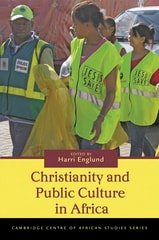
Christianity and Public Culture in Africa
Harri Englund
Ohio University Press, 2011
Christianity and Public Culture in Africa takes readers beyond familiar images of religious politicians and populations steeped in spirituality. It shows how critical reason and Christian convictions have combined in surprising ways as African Christians confront issues such as national constitutions, gender relations, and the continuing struggle with HIV/AIDS.
The wide-ranging essays included here explore rural Africa and the continent’s major cities, colonial and missionary legacies, and mass media images in the twenty-first century. They also reveal the diversity of Pentecostalism in Africa and highlight the region’s remarkable denominational diversity. Scholars and students alike will find these essays timely and impressive.
The contributors demonstrate how the public significance of Christianity varies across time and place. They explore rural Africa and the continent’s major cities, and colonial and missionary situations, as well as mass-mediated ideas and images in the twenty-first century. They also reveal the plurality of Pentecostalism in Africa and keep in view the continent’s continuing denominational diversity. Studentsand scholars will find these topical studies to be impressive in scope.
Contributors: Barbara M. Cooper, Harri Englund, Marja Hinfelaar, Nicholas Kamau-Goro, Birgit Meyer, Michael Perry Kweku Okyerefo, Damaris Parsitau, Ruth Prince, James A. Pritchett, Ilana van Wyk
Christianity, Social Change, and Globalization in the Americas
Peterson, Anna L
Rutgers University Press, 2001
Organized around three central themes-family, youth, and community; democratization, citizenship, and political participation; and immigration and transnationalism-the book argues that, at the local level, religion helps people, especially women and youths, solidify their identities and confront the challenges of the modern world. Religious communities are seen as both peaceful venues for people to articulate their needs, and forums for building participatory democracies in the Americas. Finally, the contributors examine how religion enfranchises poor women, youths, and people displaced by war or economic change and, at the same time, drives social movements that seek to strengthen family and community bonds disrupted by migration and political violence.
Church History in an Age of Uncertainty
Historiographical Patterns in the United States, 1906 - 1990Henry Warner Bowden
Southern Illinois University Press, 1991
Essential to Catholic, Protestant, and even secular scholars of American religious history this is the first historiographical analysis of the work of Henry K. Rowe, James H. Nichols, Leonard J. Trinterud, H. Shelton Smith, John T. McNeill, Herbert W. Schneider, Robert T. Handy, John T. Ellis, and Jaroslav Pelikan.
Aware that every generation rewrites history, Bowden bases his investigation of major twentieth-century church historians on two questions: Why are young historians dissatisfied with earlier treatments? What leads them to believe their version is better?
Henry Warner Bowden’s extensive bibliography includes A Century of Church History: The Legacy of Philip Schaff.
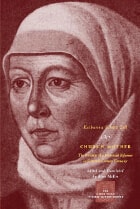
Church Mother
The Writings of a Protestant Reformer in Sixteenth-Century GermanyKatharina Schütz Zell
University of Chicago Press, 2006
Though a commoner, Schütz Zell participated actively in public life and wrote prolifically, including letters of consolation, devotional writings, biblical meditations, catechetical instructions, a sermon, and lengthy polemical exchanges with male theologians. The complete translations of her extant publications, except for her longest, are collected here in Church Mother, offering modern readers a rare opportunity to understand the important work of women in the formation of the early Protestant church.
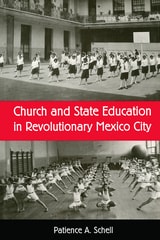
Church and State Education in Revolutionary Mexico City
Patience A. Schell
University of Arizona Press, 2003

Churching Of America
Finke, Roger
Rutgers University Press, 1992
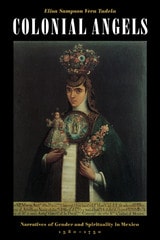
Colonial Angels
Narratives of Gender and Spirituality in Mexico, 1580-1750By Elisa Sampson Vera Tudela
University of Texas Press, 2000
Spain's attempt to establish a "New Spain" in Mexico never fully succeeded, for Spanish institutions and cultural practices inevitably mutated as they came in contact with indigenous American outlooks and ways of life. This original, interdisciplinary book explores how writing by and about colonial religious women participated in this transformation, as it illuminates the role that gender played in imposing the Spanish empire in Mexico.
The author argues that the New World context necessitated the creation of a new kind of writing. Drawing on previously unpublished writings by and about nuns in the convents of Mexico City, she investigates such topics as the relationship between hagiography and travel narratives, male visions of the feminine that emerge from the reworking of a nun's letters to her confessor into a hagiography, the discourse surrounding a convent's trial for heresy by the Inquisition, and the reports of Spanish priests who ministered to noble Indian women. This research rounds out colonial Mexican history by revealing how tensions between Spain and its colonies played out in the local, daily lives of women.
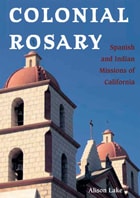
Colonial Rosary
The Spanish and Indian Missions of CaliforniaAlison Lake
Ohio University Press, 2006
California would be a different place today without the imprint of Spanish culture and the legacy of Indian civilization. The colonial Spanish missions that dot the coast and foothills between Sonoma and San Diego are relics of a past that transformed California’s landscape and its people.
In a spare and accessible style, Colonial Rosary looks at the complexity of California’s Indian civilization and the social effects of missionary control. While oppressive institutions lasted in California for almost eighty years under the tight reins of royal Spain, the Catholic Church, and the government of Mexico, letters and government documents reveal the missionaries’ genuine concern for the Indian communities they oversaw for their health, spiritual upbringing, and material needs.
With its balanced attention to the variety of sources on the mission period, Colonial Rosary illuminates ongoing debates over the role of the Franciscan missions in the settlement of California.
By sharing the missions’ stories of tragedy and triumph, author Alison Lake underlines the importance of preserving these vestiges of California’s prestatehood period. An illustrated tour of the missions as well as a sensitive record of their impact on California history and culture, Colonial Rosary brings the story of the Spanish missions of California alive.
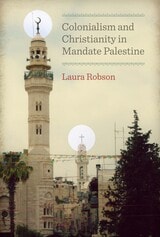
Colonialism and Christianity in Mandate Palestine
By Laura Robson
University of Texas Press, 2011
Drawing on a rich base of British archival materials, Arabic periodicals, and secondary sources, Colonialism and Christianity in Mandate Palestine brings to light the ways in which the British colonial state in Palestine exacerbated sectarianism. By transforming Muslim, Christian, and Jewish religious identities into legal categories, Laura Robson argues, the British ultimately marginalized Christian communities in Palestine. Robson explores the turning points that developed as a result of such policies, many of which led to permanent changes in the region's political landscapes. Cases include the British refusal to support Arab Christian leadership within Greek-controlled Orthodox churches, attempts to avert involvement from French or Vatican-related groups by sidelining Latin and Eastern Rite Catholics, and interfering with Arab Christians' efforts to cooperate with Muslims in objecting to Zionist expansion. Challenging the widespread but mistaken notion that violent sectarianism was endemic to Palestine, Colonialism and Christianity in Mandate Palestine shows that it was intentionally stoked in the wake of British rule beginning in 1917, with catastrophic effects well into the twenty-first century.
Conceived in Doubt
Religion and Politics in the New American NationAmanda Porterfield
University of Chicago Press, 2012
Americans have long acknowledged a deep connection between evangelical religion and democracy in the early days of the republic. This is a widely accepted narrative that is maintained as a matter of fact and tradition—and in spite of evangelicalism’s more authoritarian and reactionary aspects.
In Conceived in Doubt, Amanda Porterfield challenges this standard interpretation of evangelicalism’s relation to democracy and describes the intertwined relationship between religion and partisan politics that emerged in the formative era of the early republic. In the 1790s, religious doubt became common in the young republic as the culture shifted from mere skepticism toward darker expressions of suspicion and fear. But by the end of that decade, Porterfield shows, economic instability, disruption of traditional forms of community, rampant ambition, and greed for land worked to undermine heady optimism about American political and religious independence. Evangelicals managed and manipulated doubt, reaching out to disenfranchised citizens as well as to those seeking political influence, blaming religious skeptics for immorality and social distress, and demanding affirmation of biblical authority as the foundation of the new American national identity.
As the fledgling nation took shape, evangelicals organized aggressively, exploiting the fissures of partisan politics by offering a coherent hierarchy in which God was king and governance righteous. By laying out this narrative, Porterfield demolishes the idea that evangelical growth in the early republic was the cheerful product of enthusiasm for democracy, and she creates for us a very different narrative of influence and ideals in the young republic.
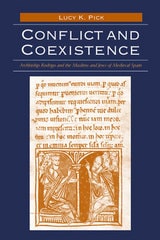
Conflict and Coexistence
Archbishop Rodrigo and the Muslims and Jews of Medieval SpainLucy K. Pick
University of Michigan Press, 2004
---J. N. Hillgarth, Professor Emeritus, University of Toronto
"By focusing on the diversified activities of the talented mid-thirteenth-century archbishop of Toledo, Lucy Pick brilliantly illuminates the complex relations between the Christian conquerors of Spain and the conquered Muslim and Jewish populations. Students of medieval Spain, of the medieval Roman Catholic Church, of medieval Muslims and Islam, and of medieval Jews and Judaism will benefit from this excellent study."
---Robert Chazan, New York University.
In Conflict and Coexistence, Lucy Pick sets out to explain how Christians, Muslims, and Jews lived alongside one another in medieval Spain. By examining the life and works of Rodrigo Jiménez de Rada, the Archbishop of Toledo (1209-47), Pick explains that the perceived threat of the non-Christian presence was managed through the subordination of Muslims and Jews.
Rodrigo stood at the center of a transformative period of history in the Iberian peninsula. During his long and varied career as archbishop, he acted as scholar, warrior, builder, and political leader. The wave of victories he helped initiate were instrumental in turning back the tide of Muslim attacks on Christian Spain and restarting the process of Christian territorial conquest. However, Toledo was still a multiethnic city in which Christians lived side by side with Jews and Muslims. As archbishop, he was faced with the considerable challenge of maintaining peace and prosperity in a city where religious passions and intolerance were a constant threat to stability.
This work seeks to examine Rodrigo's relations with the Muslims and Jews of his community both as he idealized them on paper and as he worked through them in real life. Though Rodrigo wrote an anti-Jewish polemic, and set out to conquer Muslim-held lands, he also used scholarly patronage and literary creation to combat internal and external, Christian and non-Christian threats alike. His intended and actual consequences of these varied techniques were to allow Christians, Muslims, and Jews to live together under Christian authority. Rodrigo was bound by practical necessity to find a means of accommodating these groups that was both effective and theologically satisfactory. Throughout this influential work, Pick examines the various aspects of Rodrigo's life and career that led to his policies and the consequences that his work and beliefs brought about in medieval Spain.
This book will be of interest to anyone who studies the history, religion, and literature of medieval Spain, to those interested in the transmission of learning from the Muslim to the Christian world, and to those who study intellectual life and development in medieval Europe.
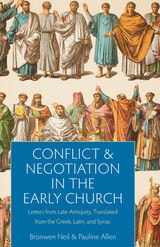
Conflict and Negotiation in the Early Church
Letters from Late Antiquity, Translated from the Greek, Latin, and SyriacBronwen Neil
Catholic University of America Press, 2020
Conflict and Negotiation in the Early Church focuses on the period 500 to 700 CE, one of the least documented periods in the history of the church, but also one of the most formative, whose conflicts resonate still in contemporary Christian communities, especially in the Middle East.
To uncover the hidden history of this period and its theological controversies, Neil and Allen have tapped a little known written source, the letters that were exchanged by bishops, emperors and other civic leaders of the sixth and seventh centuries. This was an era of crisis for the Byzantine empire, at war first with Persia, and then with the Arab forces united under the new faith of Islam. Official letters were used by the churches of Rome and Constantinople to pursue and defend their claims to universal and local authority, a constant source of conflict. As well as the east-west struggle, Christological disagreements with the Syrian church demanded increasing attention from the episcopal and imperial rulers in Constantinople, even as Rome set itself adrift and looked to the West for new allies.
From this troubled period, 1500 letters survive in Greek, Latin, and Syriac. With translations of a number of these, many rendered into English for the first time, Conflict and Negotiation in the Early Church examines the ways in which diplomatic relations between churches were developed, and in some cases hindered or even permanently ruptured, through letter-exchange at the end of Late Antiquity.
Congregation and Community
Ammerman, Nancy
Rutgers University Press, 1996
Change--in population, economy, and culture--is sweeping through American communities. Corner groceries are stocking new foods. New roads are being built and Main Streets abandoned. Schools have come and gone, and old friends move away as strangers arrive. But in every community, no matter how volatile, religious institutions provide for their members places of moral guidance and spiritual nurture, civic participation, and identity.
How do congregations react to significant community change? Why do some religious institutions decline in the face of racial integration while others adapt and grow? How do congregations make sense of economic distress? Do they provide havens from community upheaval or vehicles for change? Congregation and Community is the most comprehensive study to date of congregations in the face of community transformation. Nancy Ammerman and her colleagues include stories of over twenty congregations in nine communities from across the nation, communities with new immigrant populations, growing groups of gays and lesbians, rapid suburbanization, and economic dislocations.
With almost half of the nation's population attending religious services each week, it is impossible to understand change in American society without a close look at congregations. Congregation and Community will exist as a standard resource for years to come, and clergy, academics, and general readers alike will benefit from its insights.
Constantinople and the West
Essays on the Late Byzantine (Palaeologan) and Italian Renaissances and the Byzantine and Roman ChurchesDeno John Geanakoplos
University of Wisconsin Press, 1989
Contested Canonizations
The Last Medieval Saints, 1482-1523Ronald C. Finucane
Catholic University of America Press, 2011
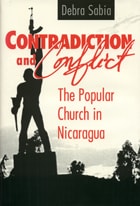
Contradiction and Conflict
The Popular Church in NicaraguaDebra Sabia
University of Alabama Press, 2013
Debra Sabia describes and analyzes the rise, growth, and fragmentation of the popular church and assesses the effect of the Christian base communities on religion, politics, and the nation's social revolutionary experiment.
Crisis of Conscience
Arkansas Methodists and the Civil Rights StruggleJames T. Clemons
Butler Center for Arkansas Studies, 2007
Culture and Identity in Early Modern Europe (1500-1800)
Essays in Honor of Natalie Zemon DavisBarbara B. Diefendorf and Carla Hesse, Editors
University of Michigan Press, 1993