Results by title
617 books match the query 'Civil War Period (1850-1877)' and 48 start with c
Cahaba Prison and the Sultana Disaster
William O. Bryant
University of Alabama Press, 1990
With a death rate of 5 percent, Alabama's Cahaba Federal Prison boasted a better survival rate than the notorious Confederate prisoner-of-war camps of Andersonville, Libby Prison, Elmira, Rock Island, Johnson's Island, and Camp Douglas. Yet it was a ghastly facility, a hastily converted agricultural warehouse so overcrowded that each man barely had space to lie down to sleep.
At the war's conclusion in 1865, however, in a harrowing reversal of the inmates' fates, captured Union soldiers were sent on a grueling overland march to the Mississippi River. Held there in camps at Vicksburg along with other prisoners of war, the soldiers embarked on the steamship Sultana for transportation north.
Traveling first to New Orleans and then heading north, the vessel held by some estimates six times more passengers than its safe limit, many of them ill, injured, or malnourished. The flow of the swollen Mississippi that April was wide, swift, and cold, and the Sultana struggled to make the journey. Then, on April 27, 1865, seven miles north of Memphis, a series of three boilers exploded within seconds of one another.
The lucky passengers were flung into the water as chunks of the Sultana blasted apart. The remaining wooden structure caught fire and the upper deck collapsed. Only an estimated one third of the passengers survived, hundreds of whom later died from their wounds.
First published in 1988, Bryant's account weaves together the many strands of the Cahaba story. Combining masterful storytelling and insightful analysis, he describes Civil War prisons, the history of the Cahaba Federal Prison and its construction, as well as the prison's commanders, prisoners, and local women who provided medical care and food to the prisoners. He tells of the violent struggles among Union inmates, a mutiny and flood that occurred during the final days of the camp, and the harrowing deaths of the liberated soldiers aboard the Sultana. Bryant's Cahaba Prison and the Sultana Disaster remains a vital part of any library of Civil War history.
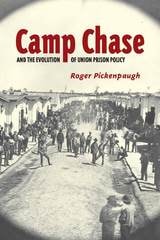
Camp Chase and the Evolution of Union Prison Policy
Roger Pickenpaugh
University of Alabama Press, 2007
Camp Chase was a major Union POW camp and also served at various times as a Union military training facility and as quarters for Union soldiers who had been taken prisoner by the Confederacy and released on parole or exchanged. As such, this careful, thorough, and objective examination of the history and administration of the camp will be of true significance in the literature on the Civil War.
Cannoneers in Gray
The Field Artillery of the Army of TennesseeLarry J. Daniel
University of Alabama Press, 1989
This enlarged edition of Cannoneers in Gray provides new detail concerning the activities of artillery units operating in key campaigns of the western theater of the Civil War—at Stones River, Missionary Ridge, Kennesaw Mountain, Shiloh, Peachtree Creek. Larry Daniel traces the four-year history of the artillery branch of the Army of Tennessee from its organization through its demise at the war's end. He shows that Civil War cannons were of little consequence when used as offensive weapons but could be highly effective in defense.
Includes five new maps of campaigns and battles central to his discussion of larger issues, such as command and strategy on the western front.
Capitalism, Politics, and Railroads in Jacksonian New England
Michael J. Connolly
University of Missouri Press, 2003
Captives in Blue
The Civil War Prisons of the ConfederacyRoger Pickenpaugh
University of Alabama Press, 2013
A gripping account of Union soldiers behind Confederate bars—where survival, sacrifice, and the unforgiving realities of Civil War imprisonment collide.
In Captives in Blue, Roger Pickenpaugh examines the ways the Confederate army contended with the growing prison population, the variations in the policies and practices of different Confederate prison camps, the effects these policies and practices had on Union prisoners, and the logistics of prisoner exchanges. He explores conditions that arose from conscious government policy decisions and conditions that were the product of local officials or unique local situations. He also considers how Confederate prisons and policies dealt with African American Union soldiers. Black soldiers held captive in Confederate prisons faced uncertain fates; many former slaves were returned to their former owners, while others faced harsh treatment in the camps. Drawing on prisoner diaries, Pickenpaugh provides compelling first-person accounts of life in prison camps often overlooked by scholars in the field.
This study of Union captives in Confederate prisons is a companion to Roger Pickenpaugh’s earlier groundbreaking book Captives in Gray: The Civil War Prisons of the Union and extends his examination of Civil War prisoner-of-war facilities into the Confederacy.
Captives in Gray
The Civil War Prisons of the UnionRoger Pickenpaugh
University of Alabama Press, 2009
“This is a vivid description of conditions and events rarely described: the imprisonment of captured Confederate soldiers during the Civil War. Its many parallels to circumstances in Andersonville are especially intriguing.” —Jimmy Carter, 39th President of the United States
Contains contemporary reports from prisoners and witnesses humanize the grim realities of the POW camps.
Captives in Gray is Civil War prison camp authority Roger Pickenpaugh’s acclaimed and definitive account of the Union’s POW camps. Combining his own extensive research into official records and a rich variety of letters and diaries with the best contemporary scholarship, Pickenpaugh covers every major northern camp.
Because the Union won few victories in 1861 and took few prisoners, the North had time to plan and build prison camps, an opportunity it largely squandered. Pickenpaugh gives illuminating accounts of the role and leadership of thrifty Lieutenant Colonel William Hoffman, the commissary general of prisoners for most of the conflict, and President Abraham Lincoln's secretaries of war, the incompetent Simon Cameron and the malignant Edwin M. Stanton.
Death came in many ways. Soldiers from the Deep South had no experience with extreme cold, and they died by the hundreds each winter. In one memorable freeze, Rock Island, Illinois, saw temperatures between twenty-eight and thirty-one degrees below zero. With insufficient fuel and inadequate shelter, clothing, and blankets, prisoners there and in other camps froze to death. Food rations varied widely. A few Confederates enjoyed better rations than they had in the CSA armies, but the majority supplemented their meager rations by eating rats, dogs, cats, and seagulls.
Poor medical care added to the death toll. Treatment was bad even by the standards of Civil War medicine, often due to Hoffman's reluctance to spend. Prisoners suffered from lice and scurvy, as well as pneumonia, measles, and a variety of fevers. As in both armies, diarrhea and dysentery were chronic. Smallpox epidemics killed many. Poor sanitation and drainage caused 385 deaths at Elmira, New York, in September 1864 alone.
During the war, over 12 percent of rebel prisoners, or 25,976 of the 214,865, died in captivity. Together with his Captives in Blue, Captives in Gray gives the fullest account of the experiences of prisoners of war in the American Civil War.
Carrying the Colors
The Life and Legacy of Medal of Honor Recipient Andrew Jackson SmithW. Robert Beckman
Westholme Publishing, 2025
An Escaped Slave who Fought for the Union and Whose Wartime Heroism was Finally Recognized with the Nation's Highest Honor for Military Valor
In 1862, Andrew “Andy” Jackson Smith, son of a white landowner and enslaved woman, escaped to Union troops operating in Kentucky, made his way to the North, and volunteered for the 55th Massachusetts, one of the newly formed African American regiments. The regiment was deployed to South Carolina, and during a desperate assault on a Confederate battery, the color bearer was killed. Before the flag was lost, Smith quickly retrieved it and under heavy fire held the colors steady while the decimated regiment withdrew. The regiment’s commanding officer promoted Smith to color sergeant and wrote him a commendation for both saving the regimental flag and bravery under fire. Honorably discharged, Smith returned to Kentucky, where over the course of the next forty years he invested in land. In the early twentieth century, Burt G. Wilder, medical officer of the 55th, contacted Smith about his experiences for a book he was writing. During their correspondence, Wilder realized Smith was eligible for the nation’s highest award. In 1916, Wilder applied to the army, but his request for Smith’s medal was denied due to the “absence of records.” At Smith’s death in 1932, his daughter Caruth received a box of his papers revealing the extent of her father’s heroism. Her nephew took up the cause and through long and painstaking research located the lost records. With the help of historians, local politicians, and others, Andrew Jackson Smith received his long overdue Medal of Honor in 2001.
In Carrying the Colors: The Life and Legacy of Medal of Honor Recipient Andrew Jackson Smith, the riveting journey from slavery to a White House ceremony is revealed, with the indomitable spirit of Smith—slave, soldier, landowner, father—mirrored by the dogged pursuit of his grandson and his allies in the quest to discover the truth about an American who dedicated his life to the service of his community and country.
Cavalry of the Heartland
The Mounted Forces of the Army of TennesseeEdward G. Longacre
Westholme Publishing, 2009
A History of the Finest and Most Flamboyant Cavalry Arm of the Civil War
While Robert E. Lee’s Army of Northern Virginia prosecuted the war in the East for the Confederacy, the Army of Tennessee fought in the West, ranging over a tremendous expanse during the course of the Civil War, from southern Ohio and eastern Kentucky all the way to Georgia and the Carolinas. Unlike Lee’s army, however, the Army of Tennessee suffered at the hands of a series of uninspired commanders and had few impressive victories. It did have, however, arguably the best cavalry of any army in the war in terms of numbers and leadership. Led by some of the most colorful officers of the Civil War—the brilliant, passionate Nathan Bedford Forrest, the flamboyant but erratic John Hunt Morgan, and the quietly competent “Fightin’ Joe” Wheeler—and grabbing headlines for daring raids, such as Morgan’s foray into Ohio, the mounted forces of the Army of Tennessee developed a strategy of a highly mobile fighting unit that could be deployed rapidly in strength to strike deep behind enemy lines and maneuver at a moment’s notice during a battle, tactics that were to have the most impact on military operations in the future.
As distinguished historian Edward G. Longacre chronicles in Cavalry of the Heartland: The Mounted Forces of the Army of Tennessee, the army’s top generals failed to recognize the battle-winning potential of their cavalry and instead sent them off on sideshow operations rather than deploying them consistently to assist the main body’s efforts. Based on a wide array of research materials, Cavalry of the Heartland is the only book-length study of the strategy and tactics of the Army of Tennessee’s mounted forces from its inception in the spring of 1861 to its final bow at Bentonville, North Carolina, four years later. Throughout, numerous campaigns and battles are described in full detail, including Fort Donelson, Shiloh, Perryville, Murfreesboro (Stones River), Tullahoma, Chickamauga, Chattanooga, Atlanta, Nashville, and the Carolinas.
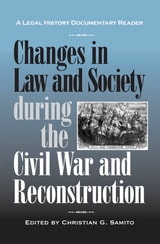
Changes in Law and Society during the Civil War and Reconstruction
A Legal History Documentary ReaderEdited by Christian G. Samito
Southern Illinois University Press, 2009
The first comprehensive collection of legal history documents from the Civil War and Reconstruction, this volume shows the profound legal changes that occurred during the Civil War era and highlights how law, society, and politics inextricably mixed and set American legal development on particular paths that were not predetermined. Editor Christian G. Samito has carefully selected excerpts from legislation, public and legislative debates, court cases, investigations of white supremacist violence in the South, and rare court-martial records, added his expert analysis, and illustrated the selections with telling period artwork to create an outstanding resource that demonstrates the rich and important legal history of the era.
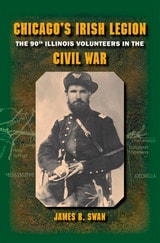
Chicago's Irish Legion
The 90th Illinois Volunteers in the Civil WarJames B. Swan
Southern Illinois University Press, 2009
Extensively documented and richly detailed, Chicago’s Irish Legion tells the compelling story of Chicago’s 90th Illinois Volunteer Infantry, the only Irish regiment in Major General William Tecumseh Sherman’s XV Army Corps. Swan’s sweeping history of this singular regiment and its pivotal role in the Western Theater of the Civil War draws heavily from primary documents and first-person observations, giving readers an intimate glimpse into the trials and triumphs of ethnic soldiers during one of the most destructive wars in American history.
At the onset of the bitter conflict between the North and the South, Irish immigrants faced a wall of distrust and discrimination in the United States. Many Americans were deeply suspicious of Irish religion and politics, while others openly doubted the dedication of the Irish to the Union cause. Responding to these criticisms with a firm show of patriotism, the Catholic clergy and Irish politicians in northern Illinois—along with the Chicago press and community—joined forces to recruit the Irish Legion. Composed mainly of foreign-born recruits, the Legion rapidly dispelled any rumors of disloyalty with its heroic endeavors for the Union. The volunteers proved to be instrumental in various battles and sieges, as well as the marches to the sea and through the Carolinas, suffering severe casualties and providing indispensable support for the Union. Swan meticulously traces the remarkable journey of these unique soldiers from their regiment’s inception and first military engagement in 1862 to their disbandment and participation in the Grand Review of General Sherman’s army in 1865.
Enhancing the volume are firsthand accounts from the soldiers who endured the misery of frigid winters and brutal environments, struggling against the ravages of disease and hunger as they marched more than twenty-six hundred miles over the course of the war. Also revealed are personal insights into some of the war’s most harrowing events, including the battle at Chattanooga and Sherman’s famous campaign for Atlanta. In addition, Swan exposes the racial issues that affected the soldiers of the 90th Illinois, including their reactions to the Emancipation Proclamation and the formations of the first African American fighting units. Swan rounds out the volume with stories of survivors’ lives after the war, adding an even deeper personal dimension to this absorbing chronicle.
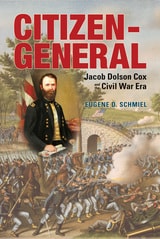
Citizen-General
Jacob Dolson Cox and the Civil War EraEugene D. Schmiel
Ohio University Press, 2014
The wrenching events of the Civil War transformed not only the United States but also the men unexpectedly called on to lead their fellow citizens in this first modern example of total war. Jacob Dolson Cox, a former divinity student with no formal military training, was among those who rose to the challenge. In a conflict in which “political generals” often proved less than competent, Cox, the consummate citizen general, emerged as one of the best commanders in the Union army.
During his school days at Oberlin College, no one could have predicted that the intellectual, reserved, and bookish Cox possessed what he called in his writings the “military aptitude” to lead men effectively in war. His military career included helping secure West Virginia for the Union; jointly commanding the left wing of the Union army at the critical Battle of Antietam; breaking the Confederate supply line and thereby precipitating the fall of Atlanta; and holding the defensive line at the Battle of Franklin, a Union victory that effectively ended the Confederate threat in the West.
At a time when there were few professional schools other than West Point, the self-made man was the standard for success; true to that mode, Cox fashioned himself into a Renaissance man. In each of his vocations and avocations—general, governor, cabinet secretary, university president, law school dean, railroad president, historian, and scientist—he was recognized as a leader. Cox’s greatest fame, however, came to him as the foremost participant historian of the Civil War. His accounts of the conflict are to this day cited by serious scholars and serve as a foundation for the interpretation of many aspects of the war.
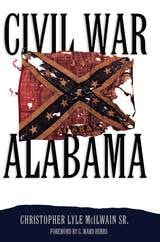
Civil War Alabama
Christopher Lyle McIlwain, Sr.
University of Alabama Press, 2016
The definitive study of Alabama's divided path through the Civil War.
Christopher McIlwain’s Civil War Alabama is a landmark book that sheds invigorating new light on the causes, the course, and the outcomes in Alabama of the nation’s greatest drama and trauma. Based on twenty years of exhaustive research that draws on a vast trove of primary sources such as letters, newspapers, and personal journals, Civil War Alabama presents compelling new explanations for how Alabama’s white citizens came to take up arms against the federal government.
A fledgling state at only forty years old, Alabama approached the 1860s with expanding populations of both whites and black slaves. They were locked together in a powerful yet fragile economic engine that produced and concentrated titanic wealth in the hands of a white elite. Perceiving themselves trapped between a mass of disenfranchised black slaves and the industrializing and increasingly abolitionist North, white Alabamians were led into secession and war by a charismatic cohort who claimed the imprimatur of biblical scripture, romanticized traditions of chivalry, and the military mantle of the American Revolution.
And yet, Alabama’s white citizens were not a monolith of one mind. McIlwain dispels the received wisdom of a white citizenry united behind a cadre of patriarchs and patriots. Providing a fresh and insightful synthesis of military events, economic factors such as inflation and shortages, politics and elections, the pivotal role of the legal profession, and the influence of the press, McIlwain’s Civil War Alabama illuminates the fissiparous state of white, antebellum Alabamians divided by class, geography, financial interests, and political loyalties.
Vital and compelling, Civil War Alabama will take its place among the definitive books about Alabama’s doomed Confederate experiment and legacy. Although he rigorously dismantles idealized myths about the South’s “Lost Cause,” McIlwain restores for contemporary readers the fervent struggles between Alabamians over their response to the epic crisis of their times.
Civil War Arkansas
Beyond Battles and LeadersAnne Bailey
University of Arkansas Press, 2000
Civil War Chicago
Eyewitness to HistoryTheodore J. Karamanski
Ohio University Press, 2014
The American Civil War was a crucial event in the development of Chicago as the metropolis of the heartland. Not only did Chicagoans play an important role in the politics of the conflict, encouraging emancipation and promoting a “hard war” policy against Southern civilians, but they supported the troops materially through production of military supplies and foodstuffs as well as morally and spiritually through patriotic publications and songs. The Civil War transformed Chicago from a mere commercial center to an industrial power as well as the nation’s railroad hub and busiest port. The war also divided Chicago, however, between Lincoln supporters and Copperheads, whites and blacks, workers and owners, natives and newcomers.
The city played a key role in elevating Abraham Lincoln to the Republican presidential nomination in 1860, yet only four years later a Chicago politician’ s influence was key in declaring the war a failure and promoting a platform of peace with the Confederacy. Using seldom seen or newly uncovered sources, this book tells the story of the Civil War through the eyes of those who lived that history. Photographs throughout the book effectively convey the geography of events in this pivotal period of Chicago’s history, and the editors have provided a useful driving guide to Civil War sites in and around the city.
Civil War Congress and the Creation of Modern America
A Revolution on the Home FrontPaul Finkelman
Ohio University Press, 2018
Most literature on the Civil War focuses on soldiers, battles, and politics. But for every soldier in the United States Army, there were nine civilians at home. The war affected those left on the home front in many ways. Westward expansion and land ownership increased. The draft disrupted families while a shortage of male workers created opportunities for women that were previously unknown.
The war also enlarged the national government in ways unimagined before 1861. The Homestead Act, the Land Grant College Act, civil rights legislation, the use of paper currency, and creation of the Internal Revenue Service to collect taxes to pay for the war all illustrate how the war fundamentally, and permanently, changed the nation.
The essays in this book, drawn from a wide range of historical expertise and approaching the topic from a variety of angles, explore the changes in life at home that led to a revolution in American society and set the stage for the making of modern America.
Contributors: Jean H. Baker, Jenny Bourne, Paul Finkelman, Guy Gugliotta, Daniel W. Stowell, Peter Wallenstein, Jennifer L. Weber.
Civil War Nurse Narratives, 1863-1870
Daneen Wardrop
University of Iowa Press, 2015
As a subgenre of war literature, the Civil War nurse narrative offered realistic reportage of medical experiences and declined to engage with military strategies or Congressional politics. Instead, nurse narrators chronicled the details of attending wounded soldiers in the hospital, where a kind of microcosm of US democracy-in-progress emerged. As the war reshaped the social and political ideologies of the republic, nurses labored in a workplace that reflected cultural changes in ideas about gender, race, and class. Through interactions with surgeons and other officials they tested women’s rights convictions, and through interactions with formerly enslaved workers they wrestled with the need to live up to their own often abolitionist convictions and support social equality.
By putting these accounts in conversation with each other, Civil War Nurse Narratives productively explores a developing genre of war literature that has rarely been given its due and that offers refreshing insights into women’s contributions to the war effort. Taken together, these stories offer an impressive and important addition to the literary history of the Civil War.
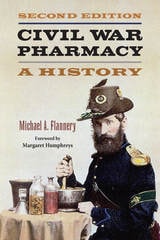
Civil War Pharmacy
A HistoryMichael A. Flannery, with a foreword by Margaret Humphreys
Southern Illinois University Press, 2017
Winner (first edition), Archivists and Librarians in the History of the Health Sciences, Best Book Award
Civil War Weather in Virginia
Robert K. Krick
University of Alabama Press, 2007
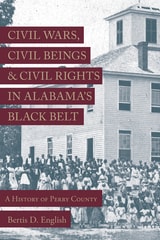
Civil Wars, Civil Beings, and Civil Rights in Alabama's Black Belt
A History of Perry CountyBertis D. English, Foreword by Wayne Flynt
University of Alabama Press, 2020
Reconstruction politics and race relations between freed blacks and the white establishment in Perry County, Alabama
In his fascinating, in-depth study, Bertis D. English analyzes why Perry County, situated in the heart of a violence-prone subregion of Alabama, enjoyed more peaceful race relations and less bloodshed than several neighboring counties. Choosing an atypical locality as central to his study, English raises questions about factors affecting ethnic disturbances in the Black Belt and elsewhere in Alabama. He also uses Perry County, which he deems an anomalous county, to caution against the tendency of some scholars to make sweeping generalizations about entire regions and subregions.
English contends Perry County was a relatively tranquil place with a set of extremely influential African American businessmen, clergy, politicians, and other leaders during Reconstruction. Together with egalitarian or opportunistic white citizens, they headed a successful campaign for black agency and biracial cooperation that few counties in Alabama matched. English also illustrates how a significant number of educational institutions, a high density of African American residents, and an unusually organized and informed African American population were essential factors in forming Perry County’s character. He likewise traces the development of religion in Perry, the nineteenth-century Baptist capital of Alabama, and the emergence of civil rights in Perry, an underemphasized center of activism during the twentieth century.
This well-researched and comprehensive volume illuminates Perry County’s history from the various perspectives of its black, interracial, and white inhabitants, amplifying their own voices in a novel way. The narrative includes rich personal details about ordinary and affluent people, both free and unfree, creating a distinctive resource that will be useful to scholars as well as a reference that will serve the needs of students and general readers.
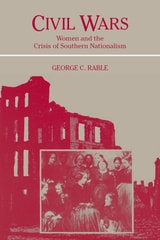
Civil Wars
Women and the Crisis of Southern NationalismGeorge C. Rable
University of Illinois Press, 1989
Winner of the 1989 Jefferson Davis Award of the Museum of the Confederacy, 1989. Winner of the Julia Cherry Spruill Prize of the Southern Association of Women Historians, 1991.
Claiming Union Widowhood
Race, Respectability, and Poverty in the Post-Emancipation SouthBrandi Clay Brimmer
Duke University Press, 2020
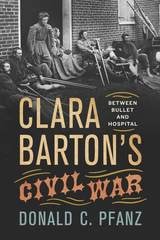
Clara Barton's Civil War
Between Bullet and HospitalDonald C. Pfanz
Westholme Publishing, 2018
“I always tried to succor the wounded until medical aid and supplies could come up—I could run the risk; it made no difference to anyone if I were shot or taken prisoner.” So recorded Clara Barton, the most famous woman to emerge from the American Civil War. In an age when few women worked in hospitals, much less at the front, Barton served in at least four Union armies, providing food and assistance to wounded soldiers on battlefields stretching from Maryland to South Carolina. Thousands of soldiers benefited from her actions, and she is unquestionably an American heroine. But how much do we really know about her actual wartime service? Most information about Barton’s activities comes from Barton herself. After the war, she toured the country recounting her wartime experiences to overflowing audiences. In vivid language, she described crossing the Rappahannock River under fire to succor wounded Union soldiers at Fredericksburg, transporting critical supplies to field hospitals at Antietam, and enduring searing heat and brackish water on the sunscorched beaches of South Carolina. She willingly braved hardship and danger in order to help the young men under her care, receiving in return their love and respect. Most of Barton’s biographers have accepted her statements at face value, but in doing so, they stand on shaky ground, for Barton was a relentless selfpromoter and often embellished her stories in an effort to enhance her accomplishments.
In Clara Barton’s Civil War: Between Bullet and Hospital, distinguished historian Donald Pfanz revisits Barton’s claims, comparing the information in her speeches with contemporary documents, including Barton’s own wartime diary and letters. In doing so, he provides the first balanced and accurate account of her wartime service—a service that in the end needed no exaggeration.

Co. Aytch, or a Side Show of the Big Show
A New Edition Introduced and Annotated by Philip LeighSam Watkins
Westholme Publishing, 2013
Co. Aytch, or a Side Show of the Big Show is perhaps the finest memoir of an ordinary Confederate soldier. According to Margaret Mitchell, “a better book there never was.” Sam Watkins served in Company H of the First Tennessee Infantry for the duration of the Civil War. Remarkably, he survived some of the most intense battles of the war, including Shiloh, Chickamauga, Kennesaw Mountain, Atlanta, and Franklin. He was one of only seven of the original members of Company H when it surrendered in April 1865. Watkins’s memoir was written in the winter of 1882–83. The humor and depth of writing at times rises to a level resembling Mark Twain; thus, twenty-first-century readers can still discover the everlasting treasures of Private Sam Watkins’s story just as it was. It is this reason that excerpts were featured frequently in Ken Burns’s documentary on the Civil War. However, since most of Sam’s original readers—or some of their family members—actually lived through the Civil War, much of the context for the narrative was common knowledge. But what was once received history has gradually disappeared, and presently only specialists can fully understand and appreciate Sam’s tale.
The chief aim for this new annotated edition of Co. Aytch—the first of its kind—is to amplify the experience for today’s readers by providing the missing context. Over 240 annotations clarify the situational backgrounds, personalities, and terminology that might not be familiar to most readers. The annotations also identify and explain errors mostly resulting from Sam’s occasionally faulty memory or limited perspective. Similarly, twentyfour battlefield and war theater maps enable readers to track Sam’s combat participation as well as his journeys while marching with the army. Finally fifteen photographs and prints illustrate some of the battles, people, towns, buildings, tools of war, and ruins that Sam witnessed. As someone once cleverly observed, “It’s not an adventure until something goes wrong.” If nothing else, Sam’s memoir is a foot soldier’s view of the resulting horrors, heroics, and healing humor when war planning routinely goes awry.
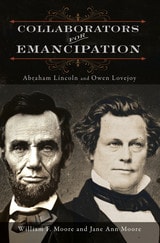
Collaborators for Emancipation
Abraham Lincoln and Owen LovejoyWilliam F. Moore and Jane Ann Moore
University of Illinois Press, 2019
In Collaborators for Emancipation: Abraham Lincoln and Owen Lovejoy, the authors examine the thorny issue of the pragmatism typically ascribed to Lincoln versus the radicalism of Lovejoy, and the role each played in ending slavery. Exploring the men's politics, personal traits, and religious convictions, the book traces their separate paths in life as well as their frequent interactions. Collaborators for Emancipation shows how Lincoln and Lovejoy influenced one another and analyzes the strategies and systems of belief each brought to the epic controversies of slavery versus abolition and union versus disunion.
Moore and Moore, editors of a previous volume of Lovejoy's writings, use their deep knowledge of his words and life to move beyond mere politics to a nuanced perspective on the fabric of religion and personal background that underlay the minister's worldview. Their multifaceted work of history and biography reveals how Lincoln embraced the radical idea of emancipation, and how Lovejoy shaped his own radicalism to wield the pragmatic political tools needed to reach that ultimate goal.
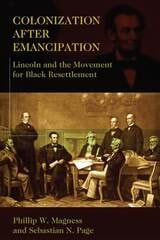
Colonization After Emancipation
Lincoln and the Movement for Black ResettlementPhillip W. Magness and Sebastian N. Page
University of Missouri Press, 2011
Colonization after Emancipation: Lincoln and the Movement for Black Resettlement explores the previously unknown truth about Lincoln’s attitude toward colonization. Scholars Phillip W. Magness and Sebastian N. Page combed through extensive archival materials, finding evidence, particularly within British Colonial and Foreign Office documents, which exposes what history has neglected to reveal—that Lincoln continued to pursue colonization for close to a year after emancipation. Their research even shows that Lincoln may have been attempting to revive this policy at the time of his assassination.
Using long-forgotten records scattered across three continents—many of them untouched since the Civil War—the authors show that Lincoln continued his search for a freedmen’s colony much longer than previously thought. Colonization after Emancipation reveals Lincoln’s highly secretive negotiations with the British government to find suitable lands for colonization in the West Indies and depicts how the U.S. government worked with British agents and leaders in the free black community to recruit emigrants for the proposed colonies. The book shows that the scheme was never very popular within Lincoln’s administration and even became a subject of subversion when the president’s subordinates began battling for control over a lucrative “colonization fund” established by Congress.
Colonization after Emancipation reveals an unexplored chapter of the emancipation story. A valuable contribution to Lincoln studies and Civil War history, this book unearths the facts about an ill-fated project and illuminates just how complex, and even convoluted, Abraham Lincoln’s ideas about the end of slavery really were.
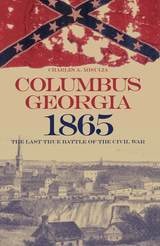
Columbus, Georgia, 1865
The Last True Battle of the Civil WarCharles A. Misulia
University of Alabama Press, 2010
Columbus, Georgia, 1865 is a comprehensive study of the Easter Sunday, April 16, 1865, conflict, which occurred in the dark of night and extended over a mile and half through a series of forts and earthworks and was finally decided in an encounter on a bridge a thousand feet in length. This volume offers the first complete account of this battle, examining and recounting in depth not only the composition and actions of the contending forces, which numbered some three thousand men on each side, but meticulously detailing the effect of the engagement on the city of Columbus and its environs.
Misulia’s study fills in an omission in the grand account of our cataclysmic national struggle and adds a significant chapter to the history of an important regional city. In addition, Misulia takes on the long-vexing question of which encounter should be recognized as the last battle of the Civil War and argues persuasively that Columbus, Georgia, qualifies for this distinction on a number of counts.
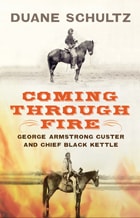
Coming Through Fire
George Armstrong Custer and Chief Black KettleDuane Schultz
Westholme Publishing, 2012
The cold dawn of November 27, 1868, was the moment George Armstrong Custer had longed for ever since the Civil War ended three years before. It was also the moment Black Kettle of the Cheyenne nation had feared ever since he had survived the deadly attack on his people at Sand Creek, Colorado Territory. Custer, who gloried in battle, was no longer the national hero, the celebrity he had been in wartime. He was a forgotten man who had failed in his first Indian campaign the year before. He needed a resounding victory to resurrect the attention he craved, and the sleepy Cheyenne village along the banks of the Washita River—ironically near present-day Cheyenne, Oklahoma—proved irresistible. Custer led his 7th U.S. Cavalry in an early morning charge that wiped out the encampment, killing those who resisted and some of those who fled. Black Kettle’s Cheyenne had signed documents of peace with the U.S. Government as they had done before Sand Creek, but once again that did not protect them. Custer ordered his troops to capture women and children and traveled with these prisoners as a way to shield his column from a retaliatory strike on their way back to their post. Called both a massacre and a battle, the action at the Washita River returned Custer to national prominence as the “greatest Indian fighter of all.”
Coming Through Fire: George Armstrong Custer and Chief Black Kettle tells the converging stories of a Civil War hero and a native warrior who met along the Washita River. Black Kettle had given up fighting—he had “come through the fire”— and made his mark on treaty after treaty to try to save the Cheyenne and their way of life from the encroachments of the U.S. government and white settlers. He watched the government breach the terms of each treaty, yet he continued to work for a compromise, knowing that negotiations were the only way his people could survive. But the flood of wagon trains and settlements, the killing of the great buffalo herds, the new diseases and broken promises, political ambition, naked greed, and continuing restrictions on land, food, and shelter persisted. As the U.S. Army, including Custer, continued to attack and forceably move Indians to reservations despite treaties indicating otherwise, Black Kettle’s dreams of peace were shattered. He ended his life face down in the freezing waters of the Washita River, shot by one of Custer’s troopers. The “greatest Indian fighter” would not survive the Indian Wars either, cut down near the Little Big Horn River, in part for his actions against Black Kettle and the Cheyenne.
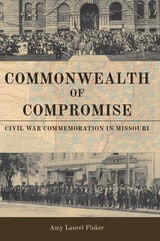
Commonwealth of Compromise
Civil War Commemoration in MissouriAmy Laurel Fluker
University of Missouri Press, 2020
Acts of Civil War commemoration have long been controversial and were never undertaken for objective purposes, but instead served to transmit particular values to future generations. Understanding this process lends informative context to contemporary debates about Civil War memory.
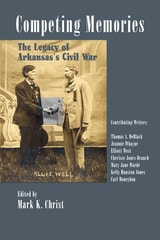
Competing Memories
The Legacy of Arkansas's Civil WarMark Christ
Butler Center for Arkansas Studies, 2016
Between 2011 and 2015, Arkansas commemorated the 150th anniversary of the American Civil War with re-enactments, lectures, placement of historical markers, and a wide variety of other events that were collectively attended by more than 375,000 people. While the sesquicentennial commemoration highlighted the Civil War events that occurred in the state and honored the people who experienced the war in Arkansas, the question of the war’s significance to modern Arkansas remained.
Competing Memories: The Legacy of Arkansas’s Civil War collects the proceedings of the final seminar sponsored by the Arkansas Civil War Sesquicentennial Commission, which sought to define the lasting impact that the nation’s deadliest conflict had on the state by bringing together some of the state’s leading historians.
In these essays, Thomas A. DeBlack explores the post-war lives of both Union and Confederate soldiers who played prominent roles in Civil War Arkansas. Cherisse Jones-Branch delves into the lives of black Arkansans during the war and Reconstruction. Jeannie Whayne discusses the many ways the Civil War affected the state’s economic development, while Kelly Houston Jones investigates the Civil War’s impact on Arkansas women. Mary Jane Warde examines the devastating effects of the Civil War on Native Americans in Arkansas and the Indian Territory. Elliott West scrutinizes Civil War Arkansas from a continental perspective, and Carl Moneyhon considers the evolution of how we remember the Civil War.
Together, the essays in Competing Memories: The Legacy of Arkansas’s Civil War provide a compelling account of how America’s bloodiest war continues to affect Arkansas and its people today.
Confederate Bushwhacker
Mark Twain in the Shadow of the Civil WarJerome Loving
University Press of New England, 2013
Confederate Cavalry West of the River
By Stephen B. Oates
University of Texas Press, 1961
Another Confederate cavalry raid impends. You hear the snort of an impatient horse, the leathery squeaking of saddles, the low-voiced commands of officers, the muffled cluck of guns cocked in preparation—then the sudden rush of motion, the din of another attack.
This classic story seeks to illuminate a little-known theater of the Civil War—the cavalry battles of the Trans-Mississippi West, a region that included Missouri, Arkansas, Texas, the Indian Territory, and part of Louisiana. Stephen B. Oates traces the successes and defeats of the cavalry; its brief reinvigoration under John S. "Rip" Ford, who fought and won the last battle of the war at Palmetto Ranch; and finally, the disintegration of this once-proud fighting force.
Confederate Cities
The Urban South during the Civil War EraEdited by Andrew L. Slap and Frank Towers
University of Chicago Press, 2015
Confederate Cities, edited by Andrew L. Slap and Frank Towers, shifts the focus from the agrarian economy that undergirded the South to the cities that served as its political and administrative hubs. The contributors use the lens of the city to examine now-familiar Civil War–era themes, including the scope of the war, secession, gender, emancipation, and war’s destruction. This more integrative approach dramatically revises our understanding of slavery’s relationship to capitalist economics and cultural modernity. By enabling a more holistic reading of the South, the book speaks to contemporary Civil War scholars and students alike—not least in providing fresh perspectives on a well-studied war.
Confederate Colonels
A Biographical RegisterBruce S. Allardice
University of Missouri Press, 2008
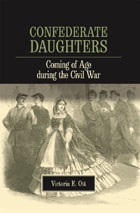
Confederate Daughters
Coming of Age during the Civil WarVictoria E. Ott
Southern Illinois University Press, 2008
Confederate Daughters: Coming of Age during the Civil War explores gender, age, and Confederate identity by examining the lives of teenage daughters of Southern slaveholding, secessionist families. These young women clung tenaciously to the gender ideals that upheld marriage and motherhood as the fulfillment of female duty and to the racial order of the slaveholding South, an institution that defined their status and afforded them material privileges. Author Victoria E. Ott discusses how the loyalty of young Southern women to the fledgling nation, born out of a conservative movement to preserve the status quo, brought them into new areas of work, new types of civic activism, and new rituals of courtship during the Civil War.
Social norms for daughters of the elite, their preparation for their roles as Southern women, and their material and emotional connections to the slaveholding class changed drastically during the Civil War. When differences between the North and South proved irreconcilable, Southern daughters demonstrated extraordinary agency in seeking to protect their futures as wives, mothers, and slaveholders.
From a position of young womanhood and privilege, they threw their support behind the movement to create a Confederate identity, which was in turn shaped by their participation in the secession movement and the war effort. Their political engagement is evident from their knowledge of military battles, and was expressed through their clothing, social activities, relationships with peers, and interactions with Union soldiers.
Confederate Daughters also reveals how these young women, in an effort to sustain their families throughout the war, adjusted to new domestic duties, confronting the loss of slaves and other financial hardships by seeking paid work outside their homes.
Drawing on their personal and published recollections of the war, slavery, and the Old South, Ott argues that young women created a unique female identity different from that of older Southern women, the Confederate bellehood. This transformative female identity was an important aspect of the Lost Cause mythology—the version of the conflict that focused on Southern nationalism—and bridged the cultural gap between the antebellum and postbellum periods.
Augmented by twelve illustrations, this book offers a generational understanding of the transitional nature of wartime and its effects on women’s self-perceptions. Confederate Daughters identifies the experiences of these teenage daughters as making a significant contribution to the new woman in the New South.
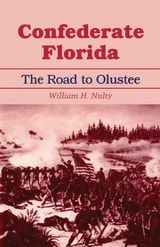
Confederate Florida
The Road to OlusteeWilliam H. Nulty
University of Alabama Press, 1990
At the end of 1863 the Federal forces in the Department of the South were tied up in siege operations against Charleston and Savannah, operations that showed little progress or promise. The commander of the Department, Major General Quincy A. Gillmore, led an expedition into Florida to recruit blacks, cut off commissary supplies headed for other parts of the Confederacy, and disrupt the railroad system within Florida. Expedition forces landed at Jacksonville on February 7, 1864.
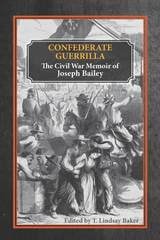
Confederate Guerrilla
The Civil War Memoir of Joseph M. BaileyT. Lindsay Baker
University of Arkansas Press, 2007
Joseph M. Bailey’s memoir, Confederate Guerrilla, provides a unique perspective on the fighting that took place behind Union lines in Federal-occupied northwest Arkansas during and after the Civil War. This story—now published for the first time—will appeal to modern readers interested in the grassroots history of the Trans-Mississippi war. Bailey participated in the Battle of Pea Ridge and the siege of Port Hudson, eventually escaping to northwest Arkansas where he fought as a guerrilla against Federal troops and civilian unionists. After Federal forces gained control of the area, Bailey rejoined the Confederate army and continued in regular service in northeast Texas until the end of the war.
Historians will find the descriptions of military campaigns and the observations on guerrilla war especially valuable. According to Bailey, Southern guerrillas were motivated less by a sense of loyalty to either the Confederate or Union side than by a determination to protect their families and neighbors from the “Mountain Federals.” This partisan war waged between the rebel guerrillas and Southern Unionists was essentially a “struggle for supremacy and revenge.”
Comprehensive annotations are provided by editor T. Lindsay Baker to illuminate the clarity and reliability of Bailey’s late-life memoir.
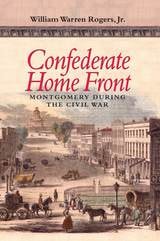
Confederate Home Front
Montgomery during the Civil WarWilliam Warren Rogers, Jr.
University of Alabama Press, 2001
Drawing from a wealth of historic documents and personal papers, William Warren Rogers, Jr., provides a fascinating and detailed political, economic, social, and commercial history of Montgomery from 1860 to 1865. His account begins with an examination of daily life in the city before the war began-how slaves outnumbered whites, how an unvarnished frontier atmosphere prevailed on the streets despite citizens' claims to refinement, how lush crops of corn and cotton grew in fields right up to the city limits, and how class divisions were distinct and immovable.
Rogers arranges his material topically, covering the events that led to the decision for secession and Montgomery's heady days as the Confederacy's first capital; the industrialization of the city's war effort as it became a hub of activity and served as a military post; the city's business patterns and administration as it attempted to promote the Confederacy and defend itself from federal forces; and the plight of the small group of Unionists who inhabited Montgomery through the war. Rogers concludes with chapters examining the situation in Montgomery as the Confederacy unraveled and the city fell to Union troops.
The Montgomery experience offers a microcosm of life on the Confederate home front and demonstrates that citizens generally experienced the same hopes, deprivations, and tragedies that other Southerners did at this time. Rogers's well-written, comprehensive history of the wartime city makes an original contribution to Civil War homefront and community studies that should appeal to general readers and scholars alike.
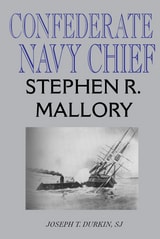
Confederate Navy Chief
Stephen R. MalloryJoseph T. Durkin
University of Alabama Press, 2005
The book tells of Stephen R. Mallory's support of naval inventions, strategy, and ideas. It also sheds light on the the successes and failures of Jefferson Davis. Durkin gives a well-balanced biography of Mallory and his life in the Confederate navy.
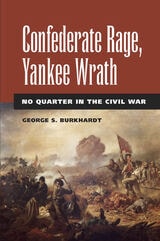
Confederate Rage, Yankee Wrath
No Quarter in the Civil WarGeorge S. Burkhardt
Southern Illinois University Press, 2006
Author George S. Burkhardt details a fascinating case that the Confederates followed a consistent pattern of murder against the black soldiers who served in Northern armies after Lincoln’s 1863 Emancipation Proclamation. He shows subsequent retaliation by black soldiers and further escalation by the Confederates, including the execution of some captured white Federal soldiers, those proscribed as cavalry raiders, foragers, or house-burners, and even some captured in traditional battles.
Further disproving the notion of Confederates as victims who were merely trying to defend their homes, Burkhardt explores the motivations behind the soldiers’ actions and shows the Confederates’ rage at the sight of former slaves—still considered property, not men—fighting them as equals on the battlefield.
Burkhardt’s narrative approach recovers important dimensions of the war that until now have not been fully explored by historians, effectively describing the systemic pattern that pushed the conflict toward a black flag, take-no-prisoners struggle.
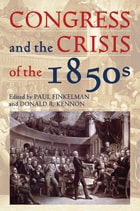
Congress and the Crisis of the 1850s
Paul Finkelman
Ohio University Press, 2011
During the long decade from 1848 to 1861 America was like a train speeding down the track, without an engineer or brakes. The new territories acquired from Mexico had vastly increased the size of the nation, but debate over their status—and more importantly the status of slavery within them—paralyzed the nation. Southerners gained access to the territories and a draconian fugitive slave law in the Compromise of 1850, but this only exacerbated sectional tensions. Virtually all northerners, even those who supported the law because they believed that it would preserve the union, despised being turned into slave catchers. In 1854, in the Kansas-Nebraska Act, Congress repealed the ban on slavery in the remaining unorganized territories. In 1857, in the Dred Scott case, the Supreme Court held that all bans on slavery in the territories were unconstitutional. Meanwhile, northern whites, free blacks, and fugitive slaves resisted the enforcement of the 1850 fugitive slave law. In Congress members carried weapons and Representative Preston Brooks assaulted Senator Charles Sumner with a cane, nearly killing him. This was the decade of the 1850s and these were the issues Congress grappled with.
This volume of new essays examines many of these issues, helping us better understand the failure of political leadership in the decade that led to the Civil War.
Contributors
Spencer R. Crew
Paul Finkelman
Matthew Glassman
Amy S. Greenberg
Martin J. Hershock
Michael F. Holt
Brooks D. Simpson
Jenny Wahl
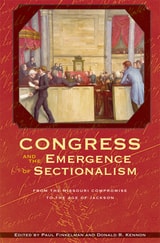
Congress and the Emergence of Sectionalism
From the Missouri Compromise to the Age of JacksonPaul Finkelman
Ohio University Press, 2008
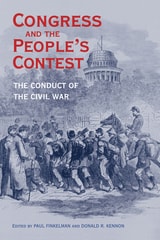
Congress and the People’s Contest
The Conduct of the Civil WarPaul Finkelman
Ohio University Press, 2018
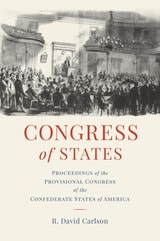
Congress of States
Proceedings of the Provisional Congress of the Confederate States of AmericaR. David Carlson
University of Alabama Press, 2023
A landmark publication of public reports that reveal the founding of the Confederate government
Past publications of the proceedings of the Confederate Congress have focused on the public sessions of the Regular Confederate States Congress that met in Richmond, Virginia from February 1862 to March 1865. Omitted were the formative early sessions of the Montgomery, Alabama and Richmond, Virginia Provisional Congresses of 1861 and 1862. In Congress of States, David Carlson reveals these critical early meetings.
To illuminate this pivot point in American and Southern history, Carlson has drawn on detailed and often verbatim minutes reported in Richmond, Montgomery, Charleston, New Orleans, Savannah, and Augusta newspapers, assembling here a unique set of transcriptions that reveal the birth of the Confederate government.
Congress of States provides an introduction to the Provisional Confederate Congress and the purpose of this work relative to the Southern Historical Society’s landmark 1923 publication “Proceedings of the Confederate Congress,” which detailed the 1862–1865 Regular Confederate Congress. He also includes a chronology outlining the major events of the secession crisis, annotated minutes for the Provisional Confederate Congress’s five sessions, appendices featuring the leadership and committees of the Provisional Congress, and fascinating examples of the proposed Confederate emblem and flags debated by the delegates.
A key set of primary sources that scholars, historians, librarians, and political scientists will value for years to come, Congress of States will also be essential reading for the general reader interested in American and Southern history, the Antebellum South, and the Civil War.
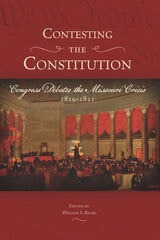
Contesting the Constitution
Congress Debates the Missouri Crisis, 1819-1821William S. Belko
University of Missouri Press, 2021
The larger question with which the legislators grappled were the limits of the Constitution’s provisions granting Congress the authority to affect the institution of slavery—both where it already existed and where it could expand. The issue—what would come to be known as the Missouri Crisis—severely tested the still young republic and, some four decades later, would all but rend it asunder. This timely collection of original essays thoughtfully engages the intersections of history and constitutional law, and is certain to find eager readers among historians, legal scholars, political scientists, as well as many who call Missouri home.
Contributing Authors:
William S. Belko
Christopher Childers
John Eastman
Brook Poston
John R. Van Atta
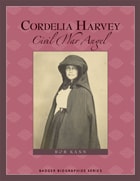
Cordelia Harvey
Civil War AngelBob Kann
Wisconsin Historical Society Press, 2011
Cordelia Harvey: Civil War Angel includes sidebars on medical care, early nursing, and military prisons. A timeline, glossary of terms, and suggestions for activities and discussion round out this spirited narrative.

Cotton and Capital
Boston Businessmen and Antislavery Reform, 1854-1868Richard H. Abbott
University of Massachusetts Press, 2009
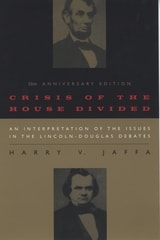
Crisis of the House Divided
An Interpretation of the Issues in the Lincoln-Douglas Debates, 50th Anniversary EditionHarry V. Jaffa
University of Chicago Press, 2009
The definitive account of the Lincoln-Douglas debates and their importance to American history
A lasting classic, Crisis of the House Divided offers an unparalleled account of the Lincoln-Douglas debates. Harry Jaffa provides the definitive analysis of the political principles that guided Lincoln from his reentry into politics in 1854 through his Senate campaign against Douglas in 1858.
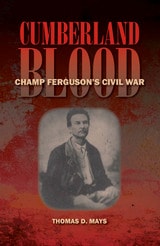
Cumberland Blood
Champ Ferguson's Civil WarThomas D. Mays
Southern Illinois University Press, 2008
By the end of the Civil War, Champ Ferguson had become a notorious criminal whose likeness covered the front pages of Harper’s Weekly, Leslie’s Illustrated, and other newspapers across the country. His crime? Using the war as an excuse to steal, plunder, and murder Union civilians and soldiers.
Cumberland Blood: Champ Ferguson’s Civil War offers insights into Ferguson's lawless brutality and a lesser-known aspect of the Civil War, the bitter guerrilla conflict in the Appalachian highlands, extending from the Carolinas through Tennessee, Kentucky, Virginia, and West Virginia. This compelling volume delves into the violent story of Champ Ferguson, who acted independently of the Confederate army in a personal war that eventually garnered the censure of Confederate officials.
Author Thomas D. Mays traces Ferguson's life in the Cumberland highlands of southern Kentucky, where—even before the Civil War began—he had a reputation as a vicious killer.
Ferguson, a rising slave owner, sided with the Confederacy while many of his neighbors and family members took up arms for the Union. For Ferguson and others in the highlands, the war would not be decided on the distant fields of Shiloh or Gettysburg: it would be local—and personal.
Cumberland Blood describes how Unionists drove Ferguson from his home in Kentucky into Tennessee, where he banded together with other like-minded Southerners to drive the Unionists from the region. Northern sympathizers responded, and a full-scale guerrilla war erupted along the border in 1862. Mays notes that Ferguson's status in the army was never clear, and he skillfully details how raiders picked up Ferguson's gang to work as guides and scouts. In 1864, Ferguson and his gang were incorporated into the Confederate army, but the rogue soldier continued operating as an outlaw, murdering captured Union prisoners after the Battle of Saltville, Virginia.
Cumberland Blood, enhanced by twenty-one illustrations, is an illuminating assessment of one of the Civil War's most ruthless men.
Ferguson's arrest, trial, and execution after the war captured the attention of the nation in
1865, but his story has been largely forgotten. Cumberland Blood: Champ Ferguson's Civil War returns the story of Ferguson's private civil war to its place in history.