Results by title
143 books match the query 'Class' and 26 start with c
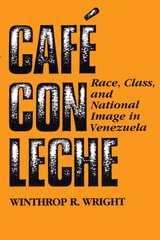
Café con leche
Race, Class, and National Image in VenezuelaBy Winthrop R. Wright
University of Texas Press, 1990
For over a hundred years, Venezuelans have referred to themselves as a café con leche (coffee with milk) people. This colorful expression well describes the racial composition of Venezuelan society, in which European, African, and Indian peoples have intermingled to produce a population in which almost everyone is of mixed blood. It also expresses a popular belief that within their blended society Venezuelans have achieved a racial democracy in which people of all races live free from prejudice and discrimination. Whether or not historical facts actually support this popular perception is the question Winthrop Wright explores in this study.
Wright's research suggests that, contrary to popular belief, blacks in Venezuela have not enjoyed the full benefits of racial democracy. He finds that their status, even after the abolition of slavery in 1854, remained low in the minds of Venezuelan elites, who idealized the European somatic type and viewed blacks as inferior. Indeed, in an effort to whiten the population, Venezuelan elites promoted European immigration and blocked the entry of blacks and Asians during the early twentieth century.
These attitudes remained in place until the 1940s, when the populist Acción Democrática party (AD) challenged the elites' whitening policies. Since that time, blacks have made significant strides and have gained considerable political power. But, as Wright reveals, other evidence suggests that most remain social outcasts and have not accumulated significant wealth. The popular perception of racial harmony in Venezuela hides the fact of ongoing discrimination.

Capital, Class & Technology in Contemporary American Culture
Projecting Post-FordismNick Heffernan
Pluto Press, 2000
He turns to the stories we generate and tell ourselves - via fiction, film journalism, theory - to see how change is registered. By investigating a variety of texts, he observes how structural change affects the way people organise their lives economically, socially and culturally. Case studies include Ridley Scott's Blade Runner, William Gibson's cyberspace trilogy, Thomas Pynchon's The Crying of Lot 49, and Wim Wenders's Until the End of the World.
Using the links between narrative cultural forms and the process of historical understanding, he brings together debates that have so far been conducted largely within the separate domains of political economy, social theory and cultural criticism to provide a compelling analysis of contemporary cultural change. By relocating postmodernism in the context of changing modes of capitalism, Heffernan puts the question of class and class agency back at the centre of the critical agenda.
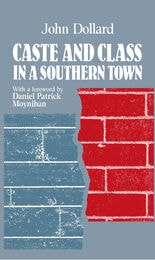
Caste and Class in a Southern Town
John Dollard
University of Wisconsin Press, 1989
An extraordinary powerful exposition of social patterns in a small town, Caste and Class in a Southern Town has become a benchmark in social science methodology and a classic in American studies. Now fifty years after its original publication, John Dollard’s most famous work offers timeless insights and remains essential to those interested in race-related social issues.
In 1937, W. E. B. Du Bois observed, "Dr. Dollard’s study is one of the most interesting and penetrating that has been made concerning the South and is marked by courage and real insight. . . . Dr. Dollard’s book marks a distinct advance in the study of the Southern scene."
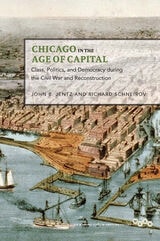
Chicago in the Age of Capital
Class, Politics, and Democracy during the Civil War and ReconstructionJohn B. Jentz and Richard Schneirov
University of Illinois Press, 2015

Chicago
Race, Class, and the Response to Urban DeclineGregory Squires
Temple University Press, 1989
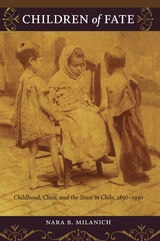
Children of Fate
Childhood, Class, and the State in Chile, 1850–1930Nara B. Milanich
Duke University Press, 2009
Milanich pays particular attention to family law, arguing that liberal legal reforms wrought in the 1850s, which left the paternity of illegitimate children purposely unrecorded, reinforced not only patriarchal power but also hierarchies of class. Through vivid stories culled from judicial and notarial sources and from a cache of documents found in the closet of a Santiago orphanage, she reveals how law and bureaucracy helped create an anonymous underclass bereft of kin entitlements, dependent on the charity of others, and marginalized from public bureaucracies. Milanich also challenges the recent scholarly emphasis on state formation by highlighting the enduring importance of private, informal, and extralegal relations of power within and across households. Children of Fate demonstrates how the study of children can illuminate the social organization of gender and class, liberalism, law, and state power in modern Latin America.

Citrus, Strategy, And Class
Development In Southern BelizeMark Moberg
University of Iowa Press, 1992
City Trenches
Urban Politics and the Patterning of Class in the United StatesIra Katznelson
University of Chicago Press, 1982
City of Women
Sex and Class in New York, 1789-1860Christine Stansell
University of Illinois Press, 1987
City of Women delves into the misfortunes that New York City's laboring women suffered and the problems that resulted. Looking at how and why a community of women workers came into existence, Christine Stansell analyzes the social conflicts surrounding laboring women and they social pressure these conflicts brought to bear on others. The result is a fascinating journey into economic relations and cultural forms that influenced working women's lives—one that reveals at last the female city concealed within America's first great metropolis.
Class
Andrea Cavalletti
Seagull Books, 2019
Class, by Andrea Cavalletti, is a striking montage of diverse materials—Marx and Jules Verne, Benjamin and Gabriel Tarde. In it, Cavalletti asks whether the untimely concept of class is once again thinkable. Faced with new pogroms and state racism, he challenges us to imagine a movement that would unsettle and eventually destroy the crowd.
Class And Its Others
J. K. Gibson-Graham
University of Minnesota Press, 2000
A surprising and innovative look at class that proposes new approaches to this important topic
While references to gender, race, and class are everywhere in social theory, class has not received the kind of theoretical and empirical attention accorded to gender and race. A welcome and much-needed corrective, this book offers a novel theoretical approach to class and an active practice of class analysis.
The authors offer new and compelling ways to look at class through examinations of such topics as sex work, the experiences of African American women as domestic laborers, and blue- and white-collar workers. Their work acknowledges that individuals may participate in various class relations at one moment or over time and that class identities are multiple and changing, interacting with other aspects of identity in contingent and unpredictable ways.
The essays in the book focus on class difference, class transformation and change, and on the intersection of class, race, gender, sexuality, and other dimensions of identity. They find class in seemingly unlikely places-in households, parent-child relationships, and self-employment-and locate class politics on the interpersonal level as well as at the level of enterprises, communities, and nations. Taken together, they will prompt a rethinking of class and class subjectivity that will expand social theory.
Contributors: Enid Arvidson, U of Texas, Arlington; Jenny Cameron, Monash U, Australia; Harriet Fraad; Janet Hotch; Susan Jahoda, U of Massachusetts, Amherst; Amitava Kumar, U of Florida; Cecilia Marie Rio; Jacquelyn Southern; Marjolein van der Veen.
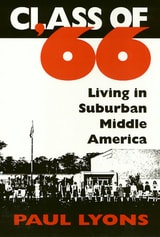
Class Of '66
Living in Suburban Middle AmericaPaul Lyons
Temple University Press, 1994
Paul Lyons interviewed 47 members of the class of 1966, recording recollections of their school days, politics, work, family life, community, and expectations for future careers and family. Each chapter is complemented by personal profiles of individual "Coasters." Removed from both the urban experience and that of the elite suburbs, these teenagers disprove popular cultural assumptions that all baby boomers, with few exceptions, went to Woodstock, protested against the Vietnam War, engaged in drug experimentation, or joined the hippie counter-culture. Instead, Lyons' study explores how their then relative ambivalence to political and cultural rebellion did not preclude many "Coasters" from indirectly incorporating over the years certain core Sixties values on issues of race, gender, mobility, and patriotism.
Class and Conformity
A Study in ValuesMelvin Kohn
University of Chicago Press, 1989
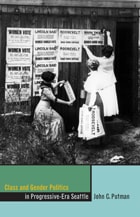
Class and Gender Politics in Progressive-Era Seattle
John C. Putman
University of Nevada Press, 2008
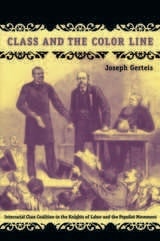
Class and the Color Line
Interracial Class Coalition in the Knights of Labor and the Populist MovementJoseph Gerteis
Duke University Press, 2007
While scholars have long debated whether the Knights and the Populists were genuine in their efforts to cross the color line, Joseph Gerteis shifts attention from that question to those of how, where, and when the movements’ organizers drew racial boundaries. Arguing that the movements were simultaneously racially inclusive and exclusive, Gerteis explores the connections between race and the movements’ economic and political interests in their cultural claims and in the dynamics of local organizing.
Interpreting data from the central journals of the Knights of Labor and the two major Populist organizations, the Farmers’ Alliance and the People’s Party, Gerteis explains how the movements made sense of the tangled connections between race, class, and republican citizenship. He considers how these collective narratives motivated action in specific contexts: in Richmond and Atlanta in the case of the Knights of Labor, and in Virginia and Georgia in that of the Populists. Gerteis demonstrates that the movements’ collective narratives galvanized interracial organizing to varying degrees in different settings. At the same time, he illuminates the ways that interracial organizing was enabled or constrained by local material, political, and social conditions.

Class in the Composition Classroom
Pedagogy and the Working ClassGenesea M. Carter
Utah State University Press, 2017
Class in the Composition Classroom considers what college writing instructors should know about their working-class students—their backgrounds, experiences, identities, learning styles, and skills—in order to support them in the classroom, across campus, and beyond. In this volume, contributors explore the nuanced and complex meaning of “working class” and the particular values these college writers bring to the classroom.
The real college experiences of veterans, rural Midwesterners, and trade unionists show that what it means to be working class is not obvious or easily definable. Resisting outdated characterizations of these students as underprepared and dispensing with a one-size-fits-all pedagogical approach, contributors address how region and education impact students, explore working-class pedagogy and the ways in which it can reify social class in teaching settings, and give voice to students’ lived experiences.
As community colleges and universities seek more effective ways to serve working-class students, and as educators, parents, and politicians continue to emphasize the value of higher education for students of all financial and social backgrounds, conversations must take place among writing instructors and administrators about how best to serve and support working-class college writers. Class in the Composition Classroom will help writing instructors inside and outside the classroom prepare all their students for personal, academic, and professional communication.
Contributors: Aaron Barlow, Cori Brewster, Patrick Corbett, Harry Denny, Cassandra Dulin, Miriam Eisenstein Ebsworth, Mike Edwards, Rebecca Fraser, Brett Griffiths, Anna Knutson, Liberty Kohn, Nancy Mack, Holly Middleton, Robert Mundy, Missy Nieveen Phegley, Jacqueline Preston, James E. Romesburg, Edie-Marie Roper, Aubrey Schiavone, Christie Toth, Gail G. Verdi
Colonial Inscriptions
Race, Sex, and Class in KenyaCarolyn Martin Shaw
University of Minnesota Press, 1995
In Kenyan colonialist imagery, the Kikuyu were vilified as deceitful servants while the Maasai were romanticized as noble savages in a fashion similar to American representation of the Black slave and the "wild" Indian. Carolyn Martin Shaw examines this imagery in the works of historians and ethnographers, as well as in novels and films.
Through the works of Louis Leakey, Jomo Kenyatta, Elspeth Huxley, and Isak Dinesen, along with her own ethnographic research, Martin Shaw investigates the discourses that shaped inequalities, rivalries, and fantasies in colonial Kenya. She explores narratives of domination and subordination, arguing that Europeans brought to Africa long-established ideas of difference that influenced racial inequalities in the colonial situation. Including discussion of the controversial practice of female genital mutilation, Colonial Inscriptions presents an African American woman's views of how images of African colonialism have been influenced by European and American racism and sexual fantasies.
Contentious Republicans
Popular Politics, Race, and Class in Nineteenth-Century ColombiaJames E. Sanders
Duke University Press, 2004
Beginning in the late 1840s, subaltern groups entered the political arena to forge alliances, both temporary and enduring, with the elite Liberal and Conservative Parties. In the process, each group formed its own political discourses and reframed republicanism to suit its distinct needs. These popular liberals and popular conservatives bargained for the parties’ support and deployed a broad repertoire of political actions, including voting, demonstrations, petitions, strikes, boycotts, and armed struggle. By the 1880s, though, many wealthy Colombians of both parties blamed popular political engagement for social disorder and economic failure, and they successfully restricted lower-class participation in politics. Sanders suggests that these reactionary developments contributed to the violence and unrest afflicting modern Colombia. Yet in illuminating the country’s legacy of participatory politics in the nineteenth century, he shows that the current situation is neither inevitable nor eternal.
Contested Communities
Class, Gender, and Politics in Chile’s El Teniente Copper Mine, 1904-1951Thomas Miller Klubock
Duke University Press, 1998
Klubock shows how a militant working-class community was established through the interplay between capitalist development, state formation, and the ideologies of gender. In describing how the North American copper company attempted to reconfigure and reform the work and social-cultural lives of men and women who migrated to the mine, Klubock demonstrates how struggles between labor and capital took place on a gendered field of power and reconstituted social constructions of masculinity and femininity. As a result, Contested Communities describes more accurately than any previous study the nature of grassroots labor militancy, working-class culture, and everyday politics of gender relations during crucial years of the Chilean Popular Front in the 1930s and 1940s.

Corruption, Class, and Politics in Ghana
Ernest Harsch
Ohio University Press, 2024
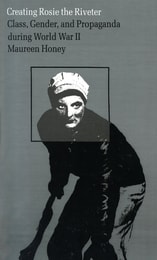
Creating Rosie the Riveter
Class, Gender, and Propaganda during World War IIMaureen Honey
University of Massachusetts Press, 1984
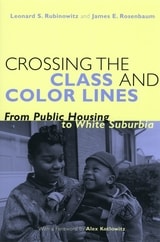
Crossing the Class and Color Lines
From Public Housing to White SuburbiaLeonard S. Rubinowitz and James E. Rosenbaum
University of Chicago Press, 2000
"This book's history of Chicago public housing should be required reading for anyone interested in social policy in the United States."—Jens Ludwig, Social Service Review
"[The authors'] work is rightly cited as one of the important precedents in the field. . . . This is a remarkable, unassailable accomplishment and this book is an important record of their scholarly contribution."—John M. Goering, Ethnic and Racial Studies
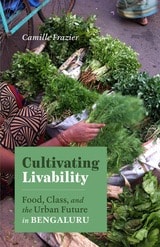
Cultivating Livability
Food, Class, and the Urban Future in BengaluruCamille Frazier
University of Minnesota Press, 2024
What urban food networks reveal about middle class livability in times of transformation
In recent years, the concept of “livability” has captured the global imagination, influencing discussions about the implications of climate change on human life and inspiring rankings of “most livable cities” in popular publications. But what really makes for a livable life, and for whom?
Cultivating Livability takes Bengaluru, India, as a case study—a city that is alternately described as India’s most and least livable megacity, where rapid transformation is undergirded by inequalities evident in the food networks connecting peri-urban farmers and the middle-class public. Anthropologist Camille Frazier probes the meaning of “livability” in Bengaluru through ethnographic work among producers and consumers, corporate intermediaries and urban information technology professionals.
Examining the varying efforts to reconfigure processes of food production, distribution, retail, and consumption, she reveals how these intersections are often rooted in and exacerbate ongoing forms of disenfranchisement that privilege some lives at the expense of others.
Culture of Class
Radio and Cinema in the Making of a Divided Argentina, 1920-1946Matthew B. Karush
Duke University Press, 2012
Culture, Class, and Politics in Modern Appalachia
Essays in Honor of Ronald L. LewisEdited by Jennifer Egolf, Ken Fones-Wolf, and Louis C. Martin
West Virginia University Press, 2009
Culture, Class, and Politics in Modern Appalachia takes stock of the field of Appalachian studies as it explores issues still at the center of its scholarship: culture, industrialization, the labor movement, and twentieth-century economic and political failure and their social impact. A new generation of scholars continues the work of Appalachian studies’ pioneers, exploring the diversity and complexity of the region and its people. Labor migrations from around the world transformed the region during its critical period of economic growth. Collective struggles over occupational health and safety, the environment, equal rights, and civil rights challenged longstanding stereotypes. Investigations of political and economic power and the role of social actors and social movements in Appalachian history add to the foundational work that demonstrates a dynamic and diverse region.
Curating Poverty
Public Histories of Class in Museums and Historic SitesKristin O'Brassill-Kulfan
University of Massachusetts Press, 2027
Asking how Americans’ fraught relationship with class has played out in public history
In 1966, a Smithsonian curator proposed recreating a “slum” dwelling inside the Museum of History and Technology, complete with rats in the walls, synthesized smells, and heat in summer and cold in winter. The public was not pleased. One editorialist called it “preserving a very insignificant aspect of civilization.” A Life magazine reporter worried that schoolchildren on field trips might find the exhibit’s horrors “pretty tame compared to their own homes.” The proposal was shelved. But the debate it ignited over whether poverty could or should be presented in museums cast a long shadow in US public history.
In Curating Poverty, Kristin O’Brassill-Kulfan examines how public historians have curated, preserved, and interpreted the experiences of people living in poverty—and how different publics have responded to these efforts. Poverty and economic inequality have shaped the lives of millions of Americans since the colonial period. For most of the nation’s history, welfare institutions such as almshouses and poor farms could be found in nearly every county in the United States. Yet explicit interpretation of poverty, welfare, and inequality remains an outlier in public history.
Documenting attempts to incorporate histories of poverty and class into exhibitions from the 1930s to the present, O’Brassill-Kulfan interrogates institutions of varying sizes and missions, paying particular attention to museums within the Smithsonian network. She traces how communities and public historians have remembered, neglected, erased, and sometimes reclaimed the surviving landscapes of poverty relief—from preserved almshouses and poor farm cemeteries to tenement museums and public housing sites. By placing poverty at the center of public history, Curating Poverty reveals how Americans have constructed, contested, and obscured histories of class and inequality and what it might look like to finally tell those stories honestly.