Results by title
122 books match the query 'Climatic changes' and 17 start with c
Carbon Criminals, Climate Crimes
Ronald C. Kramer
Rutgers University Press, 2020
Carbon Criminals, Climate Crimes analyzes the looming threats posed by climate change from a criminological perspective. It advances the field of green criminology through a examination of the criminal nature of catastrophic environmental harms resulting from the release of greenhouse gases. The book describes and explains what corporations in the fossil fuel industry, the U.S. government, and the international political community did, or failed to do, in relation to global warming. Carbon Criminals, Climate Crimes integrates research and theory from a wide variety of disciplines, to analyze four specific state-corporate climate crimes: continued extraction of fossil fuels and rising carbon emissions; political omission (failure) related to the mitigation of these emissions; socially organized climate change denial; and climate crimes of empire, which include militaristic forms of adaptation to climate disruption. The final chapter reviews policies that could mitigate greenhouse gas emissions, adapt to a warming world, and achieve climate justice.
Changing Arctic Landscape
Ken Tape
University of Alaska Press, 2010
The resulting volume is a stunning reminder of inexorable change; divided into sections on vegetation, permafrost, and glaciers, the images show the startling effects of climate change. In addition, each section presents a short biography of a pioneering scientist who was instrumental in both obtaining the antique photographs and advancing the study of arctic ecosystems, as well as interviews with scientists who have spent decades working in Alaska for the United States Geological Survey. The Changing Arctic Landscape is a profile of transformation—complex and not yet fully understood.
China Lake
A Journey into the Contradicted Heart of a Global Climate CatastropheBarret Baumgart
University of Iowa Press, 2017
Stalking the fringes of Internet conspiracy, speculative science, and contemporary archaeology, Baumgart weaves memoir, military history, and investigative journalism in a dizzying journey that carries him from the cornfields of Iowa to drought-riddled California, from the Vietnam jungle to the caves of prehistoric Europe and eventually the walls of the US Capitol, the sparkling white hallways of the Pentagon, and straight into the contradicted heart of a worldwide climate emergency.
Clean Air and Good Jobs
U.S. Labor and the Struggle for Climate JusticeTodd E. Vachon
Temple University Press, 2023
The labor–climate movement in the U.S. laid the groundwork for the Green New Deal by building a base within labor for supporting climate protection as a vehicle for good jobs. But as we confront the climate crisis and seek environmental justice, a “jobs vs. environment” discourse often pits workers against climate activists. How can we make a “just transition” moving away from fossil fuels, while also compensating for the human cost when jobs are lost or displaced?
In his timely book, Clean Air and Good Jobs, Todd Vachon examines the labor–climate movement and demonstrates what can be envisioned and accomplished when climate justice is on labor’s agenda and unions work together with other social movements to formulate bold solutions to the climate crisis. Vachon profiles the workers and union leaders who have been waging a slow, but steadily growing revolution within their unions to make labor as a whole an active and progressive champion for both workers and the environment.
Clean Air and Good Jobs examines the “movement within the movement” offering useful solutions to the dual crises of climate and inequality.
Climate Bridge
An International Perspective on How to Enact Climate Action at the Government Public InterfaceWolfram Höfer
Rutgers University Press, 2025
Climate Change in the Great Lakes Region
Navigating an Uncertain FutureThomas Dietz
Michigan State University Press, 2012
People living in the Great Lakes region are already feeling the effects of a changing climate. Shifts in seasonal temperatures and precipitation patterns could have dramatic impacts on the economy, ecology, and quality of life. In this illuminating and thorough volume, leading scholars address the challenge of preparing for climate change in the region, where decision makers from various sectors—government, agriculture, recreation, and tourism—must increasingly be aware of the need to incorporate climate change into their short- and long-term planning. The chapters in this revealing book, written by some of the foremost climate change scholars in North America, outline the major trends in the climate of the Great Lakes region, how humans might cope with the uncertainty of climate change impacts, and examples of on-the-ground projects that have addressed these issues.
Climate Conundrums
What the Climate Debate Reveals About UsWilliam B. Gail
American Meteorological Society, 2014
Climate Conundrums is a journey through how we as humans think, individually and collectively, about the debate. It eschews rhetoric or fist-pounding conclusions and instead explores our ongoing attempts to reach a societal understanding about climate change and how we should respond to it. The essays throughout are broadly organized around our relationship with nature, the challenges facing human society, and the path ahead for civilization. Each begins with a question—Can we make nature better? Could science and religion reconcile?—and from there follows an introspective path through all sides of the debates. Some are longstanding issues, such as whether humans are growing increasingly distant from nature. Others are brought on by recent developments, such as whether technology can eventually solve all of society’s needs.
While no final answers are given, the insights that come from reflecting on these questions can help us better find our way and better connect with each other across the climate divide.
Climate Games
Experiments on How People Prevent DisasterTalbot M. Andrews, Andrew W. Delton, and Reuben Kline
University of Michigan Press, 2024
Yet real climate change is a complex social dilemma involving the world’s nearly eight billion inhabitants. In the real world, the worst effects of climate change are likely to be felt by developing countries, while most of the decisions will be made by rich, industrialized countries. And while the world as a whole would be better off if all nations reduced their greenhouse gas emissions, any given nation could decide it would be even better off if it continued emitting and let other nations take care of the problem. These disaster experiments test how real people respond to climate change’s unique constellation of challenges and deliver a positive message: People will prevent disaster.
Climate Justice and Public Health
Realities, Responses, and Reimaginings for a Better FutureEdited by Rajini Srikanth and Linda Thompson
University of Massachusetts Press, 2024
When climate disasters like hurricanes, heatwaves, and tsunamis strike, they reveal the inequities of our social, political, and economic structures. They also lay bare the negative impacts of these structures on the health and safety of all people, and particularly socioeconomically vulnerable groups. With original contributions from scholars from a wide range of diverse fields—including environmental studies, public health, legal studies, urban planning, literary studies, and nursing—Climate Justice and Public Health examines this nexus of climate change, which has become impossible to ignore in the twenty-first century.
Expanding the climate and health equity discussions to populations all over the globe, the contributors in this volume address an impressive and broad range of topics that include Indigenous health and cultural practices, mental and emotional health, senior health, and impacts on African American communities. Collectively, they present radical new ways of confronting these issues and propose holistic solutions.
Climate Machines, Fascist Drives, and Truth
William E. Connolly
Duke University Press, 2019
Climate Politics on the Border
Environmental Justice RhetoricsKenneth Walker
University of Alabama Press, 2022
Explores the ways climate change and extreme weather are negotiated politically in a border community
As a borderland city with generations of slow violence and extreme weather events like flash flooding and intense heat waves, San Antonio, Texas, speaks directly to global issues in climate politics. In Climate Politics on the Border: Environmental Justice Rhetorics, Kenneth Walker takes a place-based approach to his study of San Antonio to explore how extreme weather events and responses to them shape local places, publics, and politics, with an eye toward a future characterized by severe climate breakdown.
Attending to the local histories and micropolitics of San Antonio, Walker examines the effects of extreme weather events as they are experienced across radically inequitable social categories. These local histories serve as a guide, not just for future climates, which stand to be unprecedented, but for the necessary public and political responses to them. He shows how extreme weather events in the past have reinforced colonial social orders that weaken democratic goals of pluralism and equity. Conversely, he also shows how diverse coalitions have resisted and responded to these forces.
Walker examines the ethics of Latinx and Anglo relations within state-sponsored productions of racial inequity and environmental degradation, the coalitional capacities of environmental activists and second-wave Chicana/o organizations to protect clean water and transform local political representation, the obligations of place-keeping in Latinx urban design and ecological restoration, and the need to foster pluriversal worlds in city-level climate action and adaptation plans. Collectively these chapters rethink tropes of adaptation, resilience, and coalition as rhetorical and ecological capacities for public and political responses to extractivism.
Based on years of archival work and fieldwork, Climate Politics on the Border demonstrates vividly why ecological and anticolonial approaches to rhetoric are essential for grappling with climate politics. Overall, this is a timely study of how environmental degradation, pollution, and climate change are disputed and negotiated at the local political level in a borderland community.
Climate in the Age of Empire
Weather Observers in Colonial CanadaVictoria C. Slonosky
American Meteorological Society, 2018
Climate, Capitalism and Communities
An Anthropology of Environmental OverheatingAstrid B. Stensrud
Pluto Press, 2019
Cold Latitudes
Rosemary McGuire
University of Alaska Press, 2021
Colorado Trail in Crisis
A Naturalist’s Field Report on Climate Change in Mountain EcosystemsKarl Ford
University Press of Colorado, 2024
Using his hike along the popular five-hundred-mile Colorado Trail to present his personal observations about more than a hundred miles of dead and dying forest, Karl Ford presents a brief environmental history of these areas of the state, weaving in scientific studies about forest mortality caused by insect infestations, wildfire, drought, and loss of snowpack, and describes the poor current prospects for reforestation as the climate continues to warm. His own Lakota ancestry, as well as historical references to local Tabeguache Ute Chief Ouray and displaced Ute populations, meaningfully frames important conversations about caretaking and connection to place. Ford also proposes potential solutions to drought and forest mortality problems, as well as varying approaches and limitations to mitigation efforts.
The Colorado Trail in Crisis appeals to hikers and nature lovers seeking to learn about the natural history, beauty, and serenity of the Colorado Trail, as well as students, conservationists, and scientists researching climate change effects on Colorado mountain ecosystems.
Core Samples
A Climate Scientist's Experiments in Politics and MotherhoodAnna Farro Henderson
University of Minnesota Press, 2024
People live by their stories—how can we use them to accelerate action on climate change?
Climate scientist and policy expert Anna Farro Henderson embarks on a remarkable narrative journey in Core Samples, exploring how science is done, discussed, legislated, and imagined. Through stories both raucous and poignant—of far-flung expeditions, finding artistic inspiration in research, and traversing the systemic barriers women and mothers face in science and politics—she brings readers into the daily rhythms and intimacies of scientific research and political negotiation.
Grounded in her experiences as a climate scientist, an environmental policy advisor to Minnesota Senator Al Franken and Governor Mark Dayton, and a constant juggler of the many roles and responsibilities of professional moms, Henderson’s eclectic, unconventional essays range from observations, confessions, and meditations on lab and fieldwork to a packing list for a trip to the State Capitol and a lactation diary. Readers are invited on voyages as far afield as the Trinity nuclear test site in New Mexico, the Juneau Icefield in Alaska, and a meteor crater in Ghana—and as close to home as a town hall meeting in America’s corn belt.
A love letter to science and a bracing (and sometimes hilarious) portrait of the many obstacles women, mothers, and people digging for truth navigate, Core Samples illuminates the messy, contradictory humanity of our scientific and political institutions. Bringing us behind the closed doors of discovery and debate, Henderson exposes the flaws in research institutions, the halls of government, and the role of science in policy, yet she shows how each crack is also an invitation for camaraderie, creativity, and change.
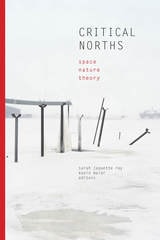
Critical Norths
Space, Nature, TheoryEdited by Sarah J. Ray and Kevin Maier
University of Alaska Press, 2017
This book brings together scholars from a range of disciplines to ask key questions about the North and how we’ve conceived it—and how conceiving of it in those terms has caused us to fail the region’s human and nonhuman life. Engaging questions of space, place, indigeneity, identity, nature, the environment, justice, narrative, history, and more, it offers a crucial starting point for an essential rethinking of both the idea and the reality of the North.