Results by title
50 books match the query 'Cognitive Psychology & Cognition' and 5 start with c
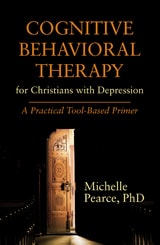
Cognitive Behavioral Therapy for Christians with Depression
A Practical Tool-Based PrimerMichelle Pearce
Templeton Press, 2016
For anyone in the helping profession, whether as mental health professional or religious leader, this question is bound to arise. Many mental health professionals feel uncomfortable discussing religion. In contrast, many religious leaders feel uncomfortable referring their congregants to professionals who do not know their faith or intent to engage with it.
And yet Michelle Pearce, PhD, assistant professor and clinical psychologist at the Center for Integrative Medicine at the University of Maryland, argues that if religion is essential to a client, religion will be a part of psychotherapy, whether it is discussed or not. Clients cannot check their values at the door more than the professionals who treat them.
To Pearce, the question isn’t really, “does religion belong?” but rather, “how can mental health professionals help their religious clients engage with and use their faith as a healing resource in psychotherapy?”
Cognitive Behavioral Therapy for Christian Clientswith Depression is the answer to that question, as the book’s purpose is to educate mental health professionals and pastoral counselors about religion’s role in therapy, as well as equip them to discuss religious issues and use evidence-based, religiously-integrated tools with Christian clients experiencing depression.
In this book, readers will find the following resources in an easy-to-use format:
- An overview of the scientific benefits of integrating clients’ religious beliefs and practices in psychotherapy
- An organizing therapeutic approach for doing Christian CBT
- Seven tools specific to Christian CBT to treat depression
- Suggested dialogue for therapists to introduce concepts and tools
- Skill-building activity worksheets for clients
- Clinical examples of Christian CBT and the seven tools in action
Cognitive Behavioral Therapy for Christian Clients with Depression is a practical guide for mental health professionals and pastoral counselors who want to learn how to use Christian-specific CBT tools to treat depression in their Christian clients.
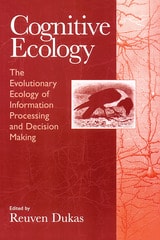
Cognitive Ecology
The Evolutionary Ecology of Information Processing and Decision MakingEdited by Reuven Dukas
University of Chicago Press, 1998
Individual chapters consider such issues as the evolution of learning and its influence on behavior; the effects of cognitive mechanisms on the evolution of signaling behavior; how neurobiological and evolutionary processes have shaped navigational activities; functional and mechanical explanations for altered behaviors in response to changing environments; how foragers make decisions and how these decisions are influenced by the risks of predation; and how cognitive mechanisms affect partner choice.
Cognitive Ecology will encourage biologists to consider how animal cognition affects behavior, and will also interest comparative psychologists and cognitive scientists.
Cognitive Science, Religion, and Theology
From Human Minds to Divine MindsJustin L. Barrett
Templeton Press, 2011
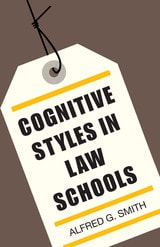
Cognitive Styles in Law Schools
By Alfred G. Smith
University of Texas Press, 1979
People differ in their cognitive styles—their ways of getting and using information to solve problems and make decisions. Alfred G. Smith and his associates studied these differences in a selected group of over 800 students at a score of law schools throughout the United States. Two major cognitive styles were identified: that of the monopath, who follows a single route of established principles and procedures, and that of the polypath, who takes many routes, as circumstances suggest.
A battery of both original and standard tests was administered to both law students and their professors to investigate differences in cognitive style and their relationships to self-image, anxiety, and academic achievement. This also revealed differences in prevailing styles at different schools.
The results will be of special interest to readers concerned with legal education, to psychologists, and to behavioral scientists. The research format developed here will serve equally well for raising significant questions about the professions of medicine, education, social work, and others in which cognitive and communication styles play a central role in determining outcomes.
Connectionism and Psychology
A Psychological Perspective on New Connectionist ResearchPhilip T. Quinlan
University of Chicago Press, 1991
Examples of new connectionist models of learning, vision, language and thought are described in detail. Both neurological and psychological considerations are used in assessing its theoretical contributions. The status of the basic predicates like exclusive-OR is examined, the limitations of perceptrons are explained and properties of multi-layer networks are described in terms of many examples of psychological processes. The history of neural networks is discussed from a psychological perspective which examines why certain issues have become important. The book ends with a general critique of the new connectionist approach.
It is clear that new connectionism work provides a distinctive framework for thinking about central questions in cognition and perception. This new textbook provides a clear and useful introduction to its theories and applications.